

As Searing Heat Worsens Food Inflation, Let's Not Forget the Boring Task of Fixing Supply Chains


March 2022 in India was the hottest in 122 years. Then April was Pakistan’s hottest on record. May experienced more record temperatures, hitting 49°C in Delhi. The UK Met Office is blaming climate change for the extreme heat, forecasting more days like these with greenhouse gas emissions rising.
Amongst the many problems such heat causes, food loss is often overlooked. According to the Central Institute of Post-Harvest Engineering and Technology, Ludhiana (CIPHET), an institution of the Indian Council of Agricultural Research (ICAR), post-harvest losses were estimated to be worth Rs 92,651 crore in 2012-13. The losses could well be higher this year due to extra ordinary temperatures in March onwards this year.
The term ‘food loss’ is used for loss between the farm and the market; ‘food wastage’ is loss at the retail, food service, and household level. While food losses are high in India, the food wastage, in per capita terms, is low.
Unorganised supply chain
One of the reasons for high losses in perishables like fruits, vegetables, fish, eggs and meat is the unorganised nature of retail sale of these products, particularly when temperatures are soaring. Most fruit and vegetables are sold loose in village level markets (haats) as well as weekly markets in different localities in cities. The retailers procure these products from nearby wholesale markets in cities. The wholesale markets and small retailers do not have any facility for sorting, grading, packing or refrigeration. Produce left over at the end of market day is either sold off at very cheap prices or it loses its quality and value and is discarded.
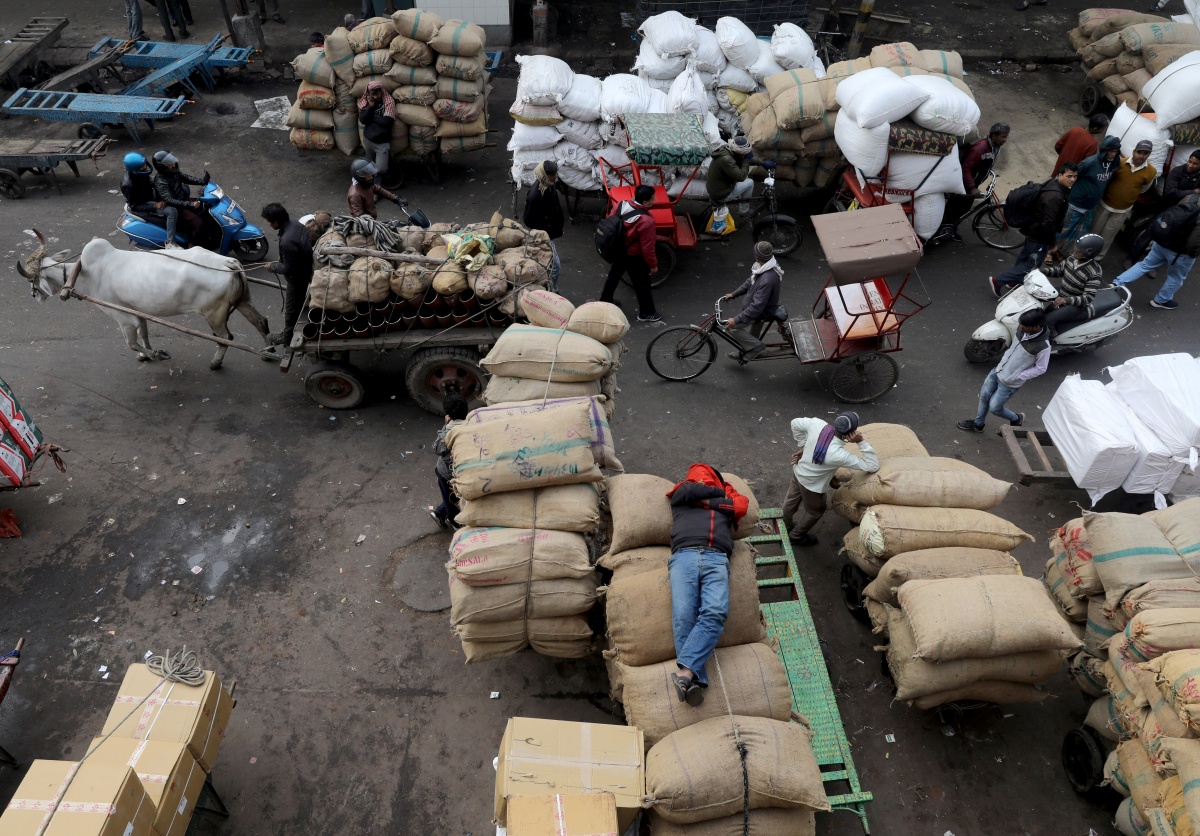
A labourer sleeps on sacks as traffic moves past him in a wholesale market in the old quarters of Delhi, January 7, 2020. Photo: Reuters/Anushree Fadnavis
Another reason for loss is the small size of the farms. After deducting produce retained for self-consumption by farmer, the marketable surplus is very small. Such small portions of produce need aggregation for effective marketing and that is usually done by a middle man: an arthiya, or trader. These long and fragmented value-chains increase chances of value and quantity losses of the produce.
Despite progress in technology of storage and transportation, India continues to witness high loss and wastage of agricultural and horticultural produce, fisheries and poultry.
Also read: Heat, Erosion, Climate Action Failure: Figures Tell Worrying Tales of State of India's Environment
CIPHET conducted a detailed study in 2005-07 and a follow-up in 2012-13. In the intervening seven years, losses had increased in soybean and poultry value chains even as the losses had come down slightly for most agricultural crops. Even sugar cane, supply chain of which is considered to be highly organised and geographically well distributed, saw losses of about 8 percent.
Losses in horticultural crops have come down but they still remain high. The losses in guava were about 16 percent while mango, sapota, apple and citrus experienced losses of about 10 percent each. Tomatoes saw losses of about 12 percent while cauliflower and mushroom saw losses of about 10 percent each.
Marine fish at 10.5 percent also saw high losses. Losses in sheep and goat meat were about 3 percent while chicken meat incurred losses of about 7 percent.
Meat transportation, even worse
Almost all the meat sold in India is in fresh form. Unlike fruits, vegetables and fish, meat is transported in a small geographical area. A handful of modern abattoirs approved by APEDA (Agricultural and Processed Food Products Export Development Authority) meet global standards of hygiene and pollution control. But they are used for export and not for meeting domestic demand. Abattoirs for meeting domestic demand are in pathetic condition.
In Uttar Pradesh, the Municipal Boards were responsible for construction and maintenance of abattoirs until the relevant Act was amended in 2018. Now the Municipal boards have regulatory powers over abattoirs but they are nor involved in actual operation of the same.
Despite the challenges, some sectors are succeeding in their fight against food losses. The production and marketing of eggs is well organised. Private sector integrators have modernised the supply chain and brought efficiency to it by shielding the poultry farmers from price risk.
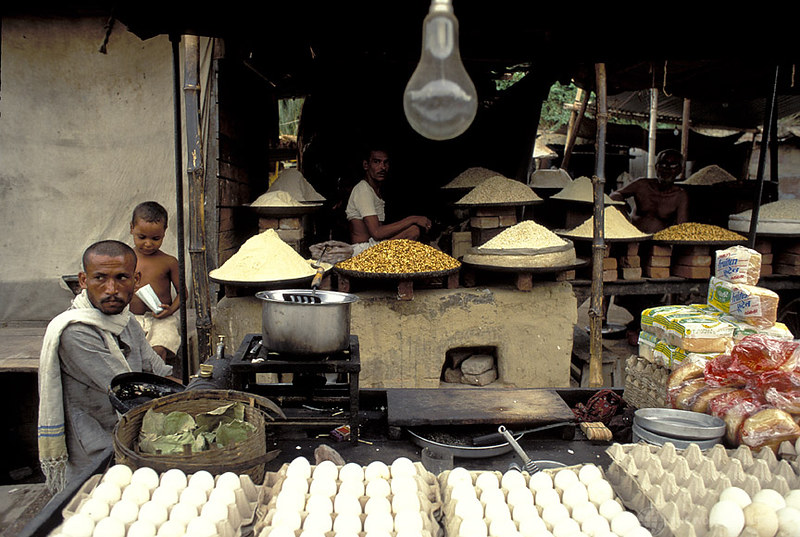
'The production and marketing of eggs is well organised.' Photo: World Bank Photo Collection/Flickr (CC BY-NC-ND 2.0)
India produced 210 million tonnes of milk in 2020-21 and is the largest producer of milk in the world. Despite the production being mainly a small holder activity, co-operatives, and lately the private sector, have made the supply chain efficient and losses were less than 1 percent.
Production and export of grapes is another success story in India. In 2020-21, India exported 246,000 tonnes of grapes worth US $ 313.57 million. APEDA has set up GrapeNet, an online service for testing and certification of grapes. However domestic trade in grapes remains fragmented and unorganised, resulting in high losses.
As stated above, private investment in value chains has improved the situation. The supply chain of apples, bananas, mushrooms, milk and potatoes has attracted private investment resulting in these products being available year-round across the entire country, and losses have reduced. Processing of some crops has increased the market availability even in off seasons. For example, frozen peas are consumed year-round since they are easily processed. Similar success could be achieved in case of other fruits and vegetables suitable for freezing.
Also read: India's Curb on Future Trade Threatens Food Supply Chain
Efforts to modernise the supply chains of perishables have largely come from private sector in the form of investment in packing houses, cold storage, refrigerated vans and other technologies to increase shelf life and prevent degradation of quality. Various government agencies have been providing grants for setting up of cold storages. Due to various reasons including the threat of Essential Commodities Act, private sector is reluctant to invest without a grant from the Government.
In July 2020, the Ministry of Food Processing Industries (MoFPI) has awarded another study to NABARD Consultancy Services (NABCONS) to assess the post-harvest losses in agriculture and allied products. The study will cover the post-harvest losses in 54 commodities across the five agro-climatic zones of India. It is expected that the study will highlight progress made in reducing post-harvest losses.
One of the ways to address the threat of climate change is to minimise the food losses in supply chains. By learning from successful sectors, and taking aggressive action to reduce food losses, India can increase availability of food which can also check food inflation and address the challenge of under-nutrition.
Pulkit Khatri is a Research Consultant with Arcus.
Siraj Hussain is former Union Secretary, Ministry of Food Processing Industries and Agriculture. He is a co-promoter of Arcus Policy Research.
This article went live on June sixth, two thousand twenty two, at ten minutes past one in the afternoon.The Wire is now on WhatsApp. Follow our channel for sharp analysis and opinions on the latest developments.


