

The Man Who Hates Banks and the Demon of Demonetisation


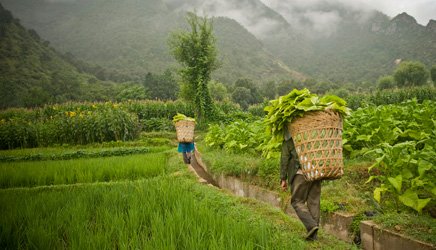
Economy in the city meant keeping a watch on the Gross Domestic Product (GDP), inflation, our industrial growth rate and the Reserve Bank of India (RBI) repo rates. Here in the village, it was just simple economics. Do you have money to survive? Most of the village was dependent on agriculture when I moved here in 2004. Everyone had children who were either in school or college. The parents worked the land all year long and just about made money to survive.
Decades ago the village was completely dependent on the monsoon for agriculture till the Surya canal project got them water for a second crop. The land holdings kept dropping as each generation distributed the land amongst themselves. The land is now completely fragmented. Everyone has pieces of land here and there. No one has contiguous pieces of land so they can think of investing in a fence to ward of cattle. If they had a fence they could grow vegetables and fruit trees which could augment their income.
They grow rice and some pulses in the monsoon. The canal water is used to grow groundnuts for oil or rice again. Other than that they have a few vegetables that they grow around their houses. For the rest of their existence they need the elusive cash.
Cash usually comes from the sale of paddy straw or rice if they have excess. The paddy straw market is like the stock exchange, going up on demand and crashing on excess supply. Some years you can get Rs 1500 for 500 kilograms and sometimes it crashes to Rs 900 for 500 kilograms. Though the government has announced a Minimum Support Price (MSP) for rice the broker who comes to the village rarely gives that price. Rice is usually sold at around Rs 10 a kilo or maximum Rs 12 if the quality is good. Some of the enterprising villagers grow vegetables after the monsoon which they cart to Boisar or Kasa to sell. Depending on the yield they earn about Rs 20–25,000 every season.
Pavan Kaka is a person that one could study to understand the village economy. He lives with his wife in the village while his only son stays with his wife in her village in Saphale close by. They run a garment shop in Manor and for setting it up they had borrowed money from Pavan Kaka. The boy never gives any money to his parents. Pavan Kaka survives on selling his paddy straw and some of the rice he grows.
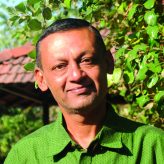
Venkat Iyer. Credit: Penguin India
Though the son never gives a single paisa to his parents, each time he visits the village he would return with loads of stuff. A tin of groundnut oil, a sack of rice, a bag of vegetables and sometimes a can of kerosene too. I saw this once and asked Kaka if his son paid him for all this. Kaka said, ‘He did offer, but I did not take.’ I knew it was a lie to protect his son’s reputation.
Each year before the monsoon, he borrows money from the credit society to buy seeds and fertilizers for his rice. After the paddy is cut and threshed he tries to repay the money by selling the paddy straw. If there is a drop in production for some reason he is left with less money after paying off his debt. It is a balancing act that he performs every year. Both of them are growing old and finding it difficult to till the land. I wonder what will happen when it becomes impossible for them to do so. He is over sixty-five years old and applied for the government pension scheme three years ago. Every year he makes a trip to Dahanu to fill up the forms. He went this year too and is hopeful that it will be cleared and he will start getting the pension.
Most of the families in the village have a similar tale to tell. There are some of them like Dashrath and Prakash who have stopped tilling the land and are working as security guards in Boisar. Arvind moved to the city and is driving an auto there. They at least get some money home at the end of the month….
The Man Who Hates Banks
Damu is the brother of Lahu and Sridhar Kaka, my nearest neighbours in the village. He was an extremely hot-tempered man and used to get into fights with almost everyone in the village. Some thirty-odd years ago, Lahu and Damu had a huge argument over some family matter and in a fit of anger Lahu Kaka hit him on the head with a stout stick. A bleeding Damu was rushed to the hospital. After his recovery in the hospital he vowed never to return to the village and left for a small fishing village—Kharekuran.
He worked on the fishing boats there, never once coming back to the village. Suddenly in 2013, the villagers saw an old balding man with a huge white beard, a stout stick in handand a small plastic bag enter the village. He went straight to Mohan’s house and sat on the porch. Everyone gathered around and someone shouted, ‘It’s Damu. Damu is back!’
The young angry man who had left the village had finally returned a bald old man. Damu returned to his land which is a few metres from our gate. He did not speak to anyone in the village and when I tried to strike up a conversation he just nodded. He got bricks from the nearest kiln, paid in cash for it and built his house all by himself. It was just one room with a couple of asbestos on top for a roof. A small wooden plank was the door.
I passed by his house every day, but he never uttered a word. He got up in the morning and left to do odd jobs for people in the nearby village. He did not work for anyone in the village…
Damu always carried a stick with him. He also had a small bundle wrapped in plastic that he kept under his armpit. He was never seen without it. Even when he went to the river to bathe the bundle would always be with him. There was much speculation on what exactly it contained. It was someone in the village who revealed that it was his life savings, hard cash that he carried on him. It was rumoured that it was around a lakh…
I met some of the elders in the village one day and broached the subject of Damu. I told them that now that it was common knowledge that Damu carried cash with him, he was at risk. He stayed far from the village in a hut with only a plank for a door. He was a sitting duck. What if they harmed him before taking his money? They said, "We have asked him many times to open a bank account, but he does not listen."
I met Damu that evening and asked him if he needed any help to open a bank account. He just nodded his head. I said, "Kaka, I can take you by car to the bank and help you fill the forms." He replied, "They will never give you the money." At first, I could not get the point. I asked, "Who will not give you?" He said, "The bank." It was the end of our conversation.
I spent the next ten minutes explaining the risk of staying alone with so much money which is common knowledge in the village. My monologue was just met with silence. The next day, I went back to him and said, "Kaka, if you don’t like banks we can open an account in the post office. There is one at Tawa." He replied, "They are the same." I just gave up.
A year later our fears came true. One afternoon, we heard some shouts from near the gate and Baban and I went to check. We saw Damu running up and down screaming, "Chor! Chor! (Thief! Thief!)." Damu had come home in the afternoon as usual, entered the house and hung up his precious plastic bundle on a nail near the door. He then proceeded to cook his meal. He claimed to have stepped out of the house for just a minute to get some wood from the heap next to the house. He only realized he had been robbed when he went to pick up the bundle before leaving for work at 2. It was obvious that someone had been watching his routine and had sneaked in at the opportune moment to steal the bundle.
We went down to the river armed with sticks and a while later found the plastic bag in the bushes. It was empty except for his election card. There was nothing around. I asked how much was in the bag. He muttered, "Rs 70,000." I tried to convince Damu to accompany me to the police station to lodge a complaint. He would not agree and asked us to go away. We quietly left to let him mourn his loss alone.
Many people from the village went to console him and some even tried to give him money. They all told him to lodge a complaint but he refused to listen to anyone.
A few months later I spotted Damu on the road with his stick. As I drove past him I noticed the plastic bundle had returned under his armpit though it was much smaller and thinner than the earlier one. It was obvious that the theft had not changed his hatred for the banks.
The Demon of Demonetization
One of the main differences between the city and the village is the complete lack of banking activities in the village. Everything and everybody dealt in cash. They all had bank accounts but no one used them unless they wished to deposit some large sum which anyway was not normal. Each time they received money, be it the loan from the society or some compensation from the government or their pension, they would all rush to the bank and withdraw it, keeping only the minimum required to maintain the account. A few kids who worked in big companies flashed their debit cards and spoke at length on how they could withdraw money from a machine while everyone listened to them in awe.

Venkat Iyer
Moong Over Microchips: Adventures of a Techie-Turned-Farmer
Penguin India, 2018.
I had suggested to Baban that I would transfer his salary to his bank account each month so he got it even if I was not around or did not have the cash to pay him. The nearest ATM is in Boisar and sometimes it runs out of money. He was not comfortable with the suggestion and refused it. He said, "I will have to go to the bank each time I need money and besides the expense of going to Kasa, I will also be wasting a day waiting in the serpentine queues." So it is cash payment that he preferred even if it came a few days late.
When the demonetization of Rs 500 and Rs 1000 notes was announced there was panic in the village. A few elders who could not understand what was happening felt that they had lost all their money. It took a while to explain to them that it was not true and they would get their money exchanged.
Next morning a large crowd gathered at the sub-post office in Kasa. I was part of the crowd as I had some old Rs 500 notes that had to be exchanged. The queue outside the only bank in Kasa was more than a mile long. Someone had informed us that the post office was better as only a few people were aware that the exchange could be done there.
In one corner of the ground of the post office I saw a woman huddled up and crying. I went up to her and asked if I could help. She nodded and showed me her life savings of four Rs 500 notes and a tattered copy of her Aadhaar card. Gajari Anya Dhangad had come from the remote hamlet of Dongripada and had no idea of the upheaval caused by demonetization in the country. Next to her, shivering with fever, was her daughter-in-law, whom she had brought to Kasa to be treated. It was only when the doctors in Kasa refused to take her money that she knew something had to be done.
I helped her fill up the form and submit it at the counter. It was almost 2 p.m. when the postmaster arrived with a bundle of new notes. He agreed to a request that Gajari be given the money first as she had to go to the hospital. She clutched her new Rs 2000 note and left the post office.
The village of Kasa had two banks, the Bank of Maharashtra and the Thane Co-operative Bank. But the latter had closed operations. This meant more crowds at the sub-post office and the only other bank. People spent the entire day waiting for money, only to be told to return the next day.
Not everyone was as lucky as Gajari to get their money exchanged. Ladkya, a daily-wage construction labourer who was among those waiting in line, looked dejected when the postmaster announced that they had run out of money. Spending the day at the post office meant he had lost that day’s daily wage and now faced the prospect of losing a second day’s income too. He had no money to go back to his village, about 10 kilometres from Kasa. He prepared himself for the long walk back home.
As Ladkya walked into the sunset, one of the persons hanging around at the post office remarked in Hindi, "Magarmach ko pakadne ke liye talab khali karen, toh sab machli khatam ho jayenga" (If you drain the lake to catch a crocodile, all the fish will be finished).
With no money in the banks and establishments refusing to take old notes, the villagers were worried about the crops they had sown for the rabi season. They could not buy fertilizers or pesticides and the unexpected cold wave in Maharashtra had caused quite a few pests to appear. Now they faced a bleak season ahead if things did not improve soon.
While the farmers were fretting over their crops and daily existence, the businessmen too were at their wits’ end. Sandeep Pawde, who had a roaring brick kiln business, was worried as no builder was buying his material. He even offered them credit but they were least interested. He wondered what would happen to the money he had invested in making the bricks.
Jinendra, the guy who bought paddy straw from the villagers, had more than Rs 3 lakh in old denominations and the paddy season was about to start. He had no idea how he could exchange so much money and pay the villagers who had already started getting the straw.
I spotted Sitaram of our village nearby and waved to him. He came running and almost fell at my feet. He had come to Kasa to get his money exchanged and now had only the Rs 2000 note with him. No one was willing to give him change and he didn’t know how to return to the village. I offered him a lift back.
As we left the post office after exchanging my old notes, I spotted Gajari and her daughter-in-law sitting by the roadside. She was in despair—no doctor was willing to give her change for Rs 2000. The local grocer was willing to give her change provided she bought provisions for at least Rs 500, which she did not want or need. With no solution that one could think of, I gave her Rs 50 and guided her to the nearest government hospital where they would at least treat the poor woman. I thought of what Damu had said the other day,‘They will never give you the money.’ It was as if his prophecy had come true.
Excerpted with permission from Moong Over Microchips: Adventures of a Techie-Turned-Farmer, by Venkat Iyer, Penguin India, 2018.
This article went live on March thirtieth, two thousand eighteen, at thirty minutes past one in the afternoon.The Wire is now on WhatsApp. Follow our channel for sharp analysis and opinions on the latest developments.


