
Was Not Asked to Take Decision on Demonetisation: Raghuram Rajan
The Wire Staff


Real journalism holds power accountable
Since 2015, The Wire has done just that.
But we can continue only with your support.
Former RBI head says he warned of the potential pitfalls if preparation was not adequate, concludes that demonetisation has not been an "economic success".
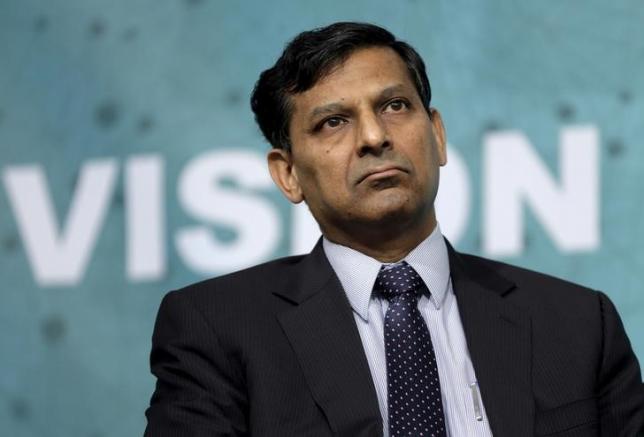
Governor of the Reserve Bank of India Raghuram Rajan speaks at a forum on financial development at the 2016 IMF World Bank Spring Meeting in Washington April 17, 2016. Credit: Reuters/Joshua Roberts/File Photo
New Delhi: Former RBI governor Raghuram Rajan has stated that at no point during his tenure was the central bank asked to take a decision on demonetisation although the Modi government did ask for an opinion on the potential costs and benefits of the move.
In an interview to multiple media publications on Saturday (September 2), Rajan noted that he had warned the government as to what would happen if “preparation was inadequate.
The former IMF economist’s comments come days ahead of the release of his new book titled I Do What I Do: On Reforms Rhetoric and Resolve.
“I was party to the [demonetisation] conversation, as I have already said, on the costs and benefits of the case but not on the date. Separately, we were moving to a new set of notes, not related to the demonetisation exercise necessarily, but as part of a move to a set of newly designed notes. Of course, the accelerated printing of the 2,000-rupee notes did make us better prepared for an eventual demonetisation without a specific date having been fixed,” Rajan said in an interview with The Times of India.
In this new book, the former central banker says that he gave his opinion orally on demonetisation in February 2016 after which the RBI submitted a formal note outlining the steps that would be needed if the Centre went ahead with the move.
"The RBI flagged what would happen if preparation was inadequate," wrote Rajan, who after leaving the RBI returned to University of Chicago’s Booth School of Business as a facutly member.
Economic costs
While acknowledging that demonetisation “intent was good”, Rajan flatly states that it was not an economic success.
“I think the people who mooted this must have thought that some of it would be compensated if money didn't come back into the system. The fact that 99% has been deposited certainly does suggest that aim has not been met,” he said.
“So, I think all said and done, it would be fair to say the intent was good. But certainly at this point, one still cannot in any way say it has been an economic success. But again, as I said, only time will tell.”
GDP can't capture
In the interview, Rajan also notes that "demonetisation has had the largest impact on those people who transact informally", even if it won't be measured by India's GDP indicators.
"Unfortunately, given the way we measure GDP, these are people who are probably not going to be counted that much. The GDP measurement will overlook the stress on these people, and we will only indirectly see this, for example, through the kind of stresses that micro finance institutions are experiencing because they deal with many of these people."
This article went live on September third, two thousand seventeen, at twelve minutes past eleven in the morning.The Wire is now on WhatsApp. Follow our channel for sharp analysis and opinions on the latest developments.