

Why the Election Commission Should Not Just Be Neutral but Also Transparent


On the morning of 17 December 2021, I woke up to a shocking headline in the Indian Express that said the chief election commissioner and the two election commissioners were summoned by the Prime Minister’s Office (PMO) to attend a meeting with the principal secretary to the PM.
My memory went back to 27 June 2006, when I received a call from Pulok Chatterji, principal secretary to the then Prime Minister Manmohan Singh, informing me that I was being considered for appointment as an election commissioner and asking if I would accept it. Postings in the government are not optional; you are just appointed. Why this question, then? The reason was made clear by Chatterji. I would have to resign from the IAS.
S.Y. Quraishi
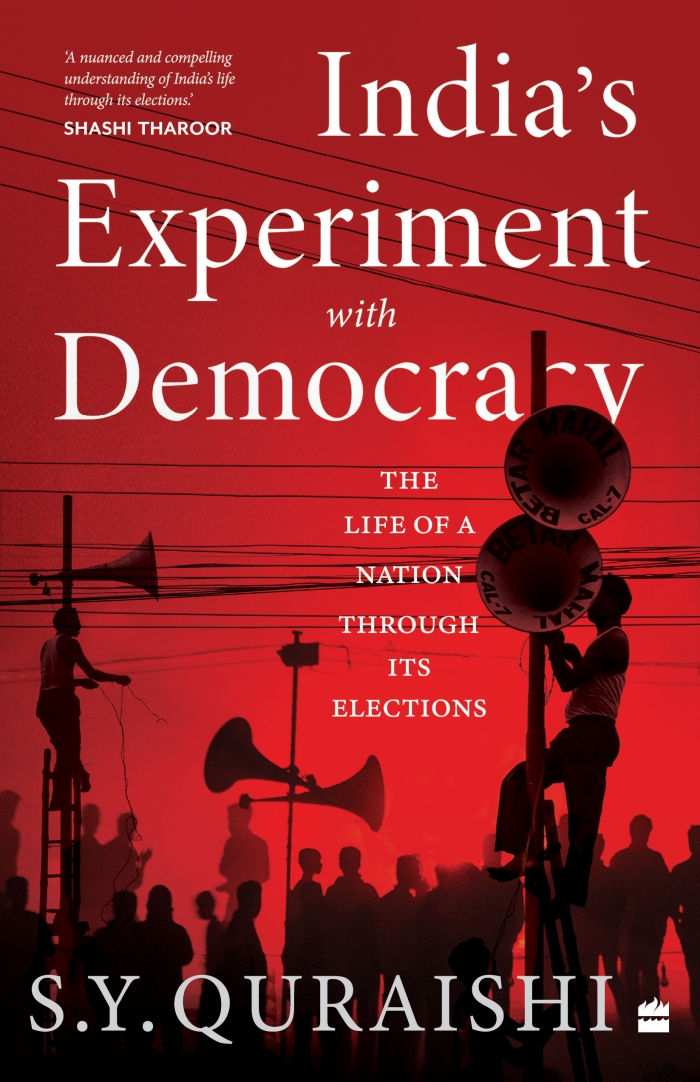
India's Experiment With Democracy: The Life of a Nation Through Its Elections
HarperCollins India (October 2023)
Why was my appointment as an election commissioner conditional on my resignation from the IAS? Therein lies the important constitutional principle of distancing the EC from the executive/government. Importantly, a wall was built between me and the PM who had appointed me.
As a secretary to the government of India, I was at the mercy of the PM, but as an election commissioner, I was independent, neutral and distant from him. There was no question of his calling/summoning me to see him or with any request, let alone give me any direction or instruction. He could appoint me but could not order me or remove me because of the constitutional scheme of things. An independent Election Commission of India is a gift of the Constitution to the nation. Free, fair and credible elections are sine qua non of the ECI. The Supreme Court has repeatedly stressed this point, calling the Commission part of the basic structure of the Constitution.
The PMO’s summoning or ‘inviting’ of not just the CEC but the full bench is in violation of the Constitution, irrespective of how important or urgent the issue is. Let alone the principal secretary to the PM, even on the part of the mighty PM it would be an unacceptable act. Can you imagine the principal secretary to the PM issuing such summons to the CJI, to come over with the full bench of the court and attend a meeting with him on judicial reforms? The secretary would be running for cover with a contempt of court case against him.
In my opinion, there is no difference between the neutrality and independence of the Supreme Court and of the ECI in this context. Both are independent constitutional authorities, deliberately separated from the executive. Forgetting the summoning of the CEC and ECs, the principal secretary to the PM cannot even call on the ECI without public knowledge of the meeting and what transpired in it. Politicians of all hues visit the ECI regularly with petitions, complaints or suggestions, but with full transparency. I never met any of them alone, insisting on the presence of my two colleagues. Transparency is the key word here, and perception of transparency is equally important.
Now, let us talk about the protocol in this matter, though that is secondary. The CEC is very high in the warrant of precedence— ninth—while the principal secretary to the PM is twenty-third. How can such a high-ranking constitutional functionary be summoned to attend a meeting with an officer, howsoever high and mighty? The law ministry, which advises the government on all legal and constitutional matters, should have known better than to convey that it was okay for the PMO to ‘expect’ the CEC/ECs to attend a meeting at the office.
I recall another event. One day, I got a call from Veerappa Moily, the then law minister: ‘Mr Quraishi, you have been raising the issue of electoral reforms. Why don’t you come for a cup of tea in my office so that we discuss them?’ I was in a fix, but only for six seconds. My going there would have been in violation of the spirit of the Constitution. I declined the invite. Instead, I told the honourable minister, ‘Sir, thank you for your kind offer but why don’t you come over instead? I will introduce you to my brother commissioners and senior officers.’ Gracious as he was, Moily came over the next day with four of his top officers. What was expected to be a short semi-courtesy meeting went on for over three hours. He asked whether we would like to join the ministry in hosting seven regional conferences to build a national consensus on electoral reforms. We readily agreed. When all the regional meetings were over, the law minister came over to the Election Commission a second time to discuss the arrangements for the final, national meeting.
Just as the reforms were materializing, Moily was shifted to another ministry and replaced by Salman Khurshid. I called up the PM to protest—just when Moily had built up a national consensus, you have transferred him, undoing all his and our work of six months, I told him. He said, ‘Don’t worry. Salman will carry forward this work. I will send him to you.’ Note that the PM did not say, ‘Go and meet him.’
Sure enough, Khurshid came over to the Commission’s office within a week and reassured us about taking the reforms forward. It’s a different matter that the proposal fizzled out. The important thing is that the Union law minister, who heads the ECI’s administrative ministry and sanctions our budget, visited the ECI thrice in four months, in keeping with the spirit of the Constitution.
The initial reaction of horror and disgust on the part of the CEC and ECs at being called over to the PMO was most heartening, and I salute them. But why they got persuaded to attend the ‘informal interaction’ subsequently puzzles me. A meeting with the principal secretary to the PM, formal or informal, online or in the PMO or at the ECI office just before elections raises unnecessary suspicion. Who knows what was discussed. The election dates? Or something else? This incident is a transgression that should not happen again. The arm’s-length distance envisaged in the Constitution for interactions between certain institutions is sacrosanct. It should not only be maintained but also ‘seen’ to be maintained.
This is an excerpt from former chief election commissioner S.Y. Quraishi's book India's Experiment With Democracy: The Life of a Nation Through Its Elections, published with permission from HarperCollins India.
This article went live on October seventh, two thousand twenty three, at zero minutes past ten in the morning.The Wire is now on WhatsApp. Follow our channel for sharp analysis and opinions on the latest developments.


