

Footnotes to the Mahabharata: No Trunk to This Textual Tree


Excerpted with permission from Footnotes to the Mahabharata, by K. Srilata, Westland Books.
The Mahabharata is a masterpiece in terms of design and structure. What happens in one parva foreshadows or is otherwise connected to what happens in another one. Tales are nested within each other, and so the work of laying out the backstories is complicated. The tales in the Mahabharata call for retrospective sense-making, a piecing together of one enormous jigsaw puzzle.
K. Srilata
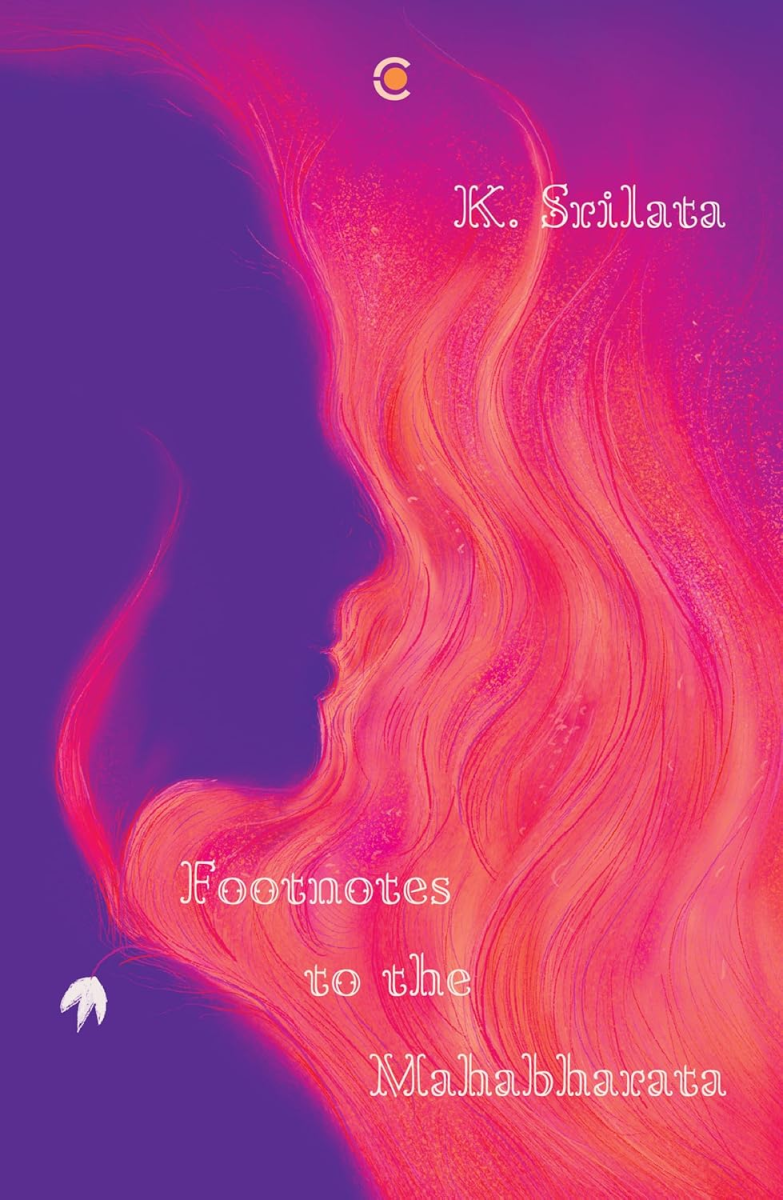
Footnotes to the Mahabharata
Westland Books, 2025
As Norman Brown points out in his foreword to Irawati Karve’s Yuganta, the characters in the Mahabharata, unlike those in the Ramayana, are emotionally complex beings. They are shades of grey, each one of them. Even Duryodhana, who we think of as the villain, has reasons to act as he does. Krishna, despite his divinity, is a master manipulator. Draupadi is often arrogant and Gandhari acts out of anger and resentment when she voluntarily blindfolds herself. The emotional complexity of the epic’s characters perhaps explains its many retellings. Shaped by generations of poets and storytellers, the Mahabharata lives and breathes in these retellings. Its constantly evolving nature means that you can never hope to catch up with it fully. Just when you think you are all caught up, a new tale or an old one differently told surfaces. Each person knows the Mahabharata differently and even this individual knowing changes through time. To assume finiteness of knowing is therefore both pointless and dangerous. Some Mahabharata stories— especially those that are later interpolations such as the Tamil Bharatham, for instance, or the Bhil Mahabharata or the Alli ballad—are not known beyond their places of origin. Some may even be in danger of extinction. If you are lucky, you may discover some of them by accident or serendipity. Versions of the Mahabharata’s tales may oftentimes contradict each another, but that is par for the course and only makes for a richer interpretative field.
The scholar Wendy Doniger points out that the Mahabharata marks the transition from the corpus of Sanskrit texts known as shruti—the Vedic canon of texts dating back to roughly 1500 bce which are unalterable— to those known as smriti, which is ‘the human tradition, constantly revised, the “remembered texts” of human authorship, texts that could be altered.’
There is, of course, a strong human impulse to collate and ‘unify’ the multiple versions of the text, to tidy it all up, to arrive at a sense of that one text. Between the years 1919 and 1966, BORI produced what is known as the critical edition of the Mahabharata, an attempt to unify the text across its various regional variations. The editor of the 1933 first critical BORI edition, V.S. Sukthankar, argues that ‘since not even the seemingly most irrelevant line or stanza, actually found in a Mahābhārata manuscript collated for the edition, is on any account omitted’, this edition would be more complete than any previous one (‘Prolegomena’, p. 4). Sukthankar claims that the first critical BORI edition would prove to be a ‘veritable thesaurus of the Mahābhārata tradition’.
Even as one admires the BORI critical edition’s ambitious scope and the extensive and meticulous scholarship that has gone into its making, one is left with the niggling sense that it is impossible to tidy up the messiness of the Mahabharata and that in fact, this messiness is actually rather delightful. The impulse to modify a tale or to create a new one, to add yet another interpretation or twist, has driven many poets, scholars and writers to retell the Mahabharata, to work with tales or aspects of the text which have either appealed to them or have got under their skin for some reason.
One must make peace with the fact that looking for an urtext, the ‘original’ Mahabharata from which the others flowed, is akin to looking for a needle in a haystack. In fact, there is no such thing as the ‘original’ Mahabharata, only a text which some have constructed as canonical and may, therefore, be received as the ‘original’ by many. As Doniger argues so persuasively: ‘… there is no trunk to this textual tree, no pristine Ur-Mahabharata for scholars to isolate from a mass of corrupted texts; if it is a tree at all, it is a banyan, which must have an original root but sends down so many subsequent roots from its branches (other variants) that one can no longer tell which was the original.’
In so many ways, what we are trained to think of as the ‘original’ Mahabharata anticipates its own retelling. And in the end, it is that openness, the space for yet another teller to jump in, which makes the Mahabharata such a happening text.
I have often asked myself what witchcraft it was that drew me to this long, hyper-linked, circular text. In my own eyes, I was an unlikely candidate. I was not a Sanskritist and the version of the text which enjoys canonical status is in Sanskrit. In the decades leading up to this book, I had not actively thought about or studied the Mahabharata. But like many children of the seventies and eighties, I had grown up on a diet of racially coded Amar Chitra Kathas. My mother and grandmother had told me stories of the Ramayana and the Mahabharata, so I knew who was who and who did what and to whom. I remember being enchanted by these stories, by the comic books’ pictorial representation of characters. I knew the gods (they were all fair-skinned), I knew the Rakshasas (they were all dark-skinned), I knew the chaste and impossibly beautiful women, I knew the brave and handsome warriors. The epics held me then, to the extent any good black-and-white story holds children, and very often for troubling reasons. But as I grew older, that childhood enchantment shattered and was slowly but surely crowded out by other concerns. By the time I got to university, I was knee-deep in feminist theory and was writing my thesis on the Periyarite anti-caste movement in Tamil Nadu. So much about the Ramayana and the Mahabharata had started to feel problematic. The gods, the sages and the Kshatriyas in these stories, and their various shenanigans, felt suspect. I knew, of course, of the existence of retellings and variations of the epics, but I did not have the time or the mind space for them. What followed was a two-and-a-half-decades- long immersion in academia and motherhood, neither of which led me to an engagement with the epics, except briefly, when I tried (and failed) to get my children interested in them. But the Mahabharata re-entered my life serendipitously after a long absence. I was dusting my bookshelves one day when I discovered a brand-new copy of Parva,
S.L. Bhyrappa’s Kannada novel based on the Mahabharata and translated into English by Raghavendra Rao. I had no recollection of when and where I had bought it or even what impulse it was that had prompted the purchase. I flipped it open. Before I knew it, I was lost in its pages, consumed by the story Bhyrappa was telling, and the dusting was abandoned. Bhyrappa’s version of the epic led me to others and those, in turn, to yet others. The epic had mysteriously found its way to me, the proverbial message in a bottle. As I followed fault lines, cracks and fissures in the Mahabharata corpus, what stood out for me were the women’s stories. Some of these, like Kunti’s and Draupadi’s, had already been the subject of quirky and unorthodox tellings, and I have built on the foundations of these.6 Others, such as Alli’s, were marked by silences and gaps which serve as the edifice for my poems.
The five poetic sequences which constitute this collection explore the lives of Alli, Hidimbi, Draupadi, Gandhari and Kunti. I have deliberately chosen to open with Alli—a character exclusive to the Tamil, Dravidian tradition, not on the map of the mainstream Mahabharata. Alli is followed by Hidimbi who, with a few notable exceptions and despite the temple dedicated to her in Manali, has remained but a footnote in the larger narrative about the Pandavas.
Editor's note: The following are the first three poems from the book's first section, 'Alli'.
§
Says the Pandyan King to the Queen
The Daughter We Will Never Have
She reaches for the moon incandescent–
the daughter we will never have,
and your eyes as they follow her are liquid love–
last night's dream
tremulous as a bird wing.
§
Says the Pandyan King to the Queen
Month After Month
ebbs
and flows
month after month
my blood river
month after month
she drowns
our daughter
the one we will never have.
§
Says the Pandyan King to the Queen
So Silken Our Daughter's Skin
Even the water lily
within whose petals
I found her,
is put to shame.
So silken, our daughter's skin.
Run your finger's over it. See you for yourself!
The Wire is now on WhatsApp. Follow our channel for sharp analysis and opinions on the latest developments.


