

Of ‘Comrades and Comebacks’: Will the Left See a New Dawn?


In Kolkata, politics is rarely quiet. The city that was once called the second city of the British Empire has long been a stage where ideas were debated, banners raised, slogans painted and young people conscripted into history’s grand projects.
Its streets have seen revolutions being initiated, trade unionists marching in columns only to be hunted down, poets writing manifestos, and intellectuals staging boycotts and sit-ins.
If Bengal was the ideological heart of India in the 20th century, Kolkata was always its pulse. And it was in Kolkata that I first encountered Saira Shah Halim, not in the quiet of a seminar or the launch of a book, but in the charged atmosphere of an election campaign.
To be precise, it was at Ambassador Sarvajit Chakravarty’s residence, during her candidacy for the prestigious Ballygunge constituency seat.
Saira Shah Halim
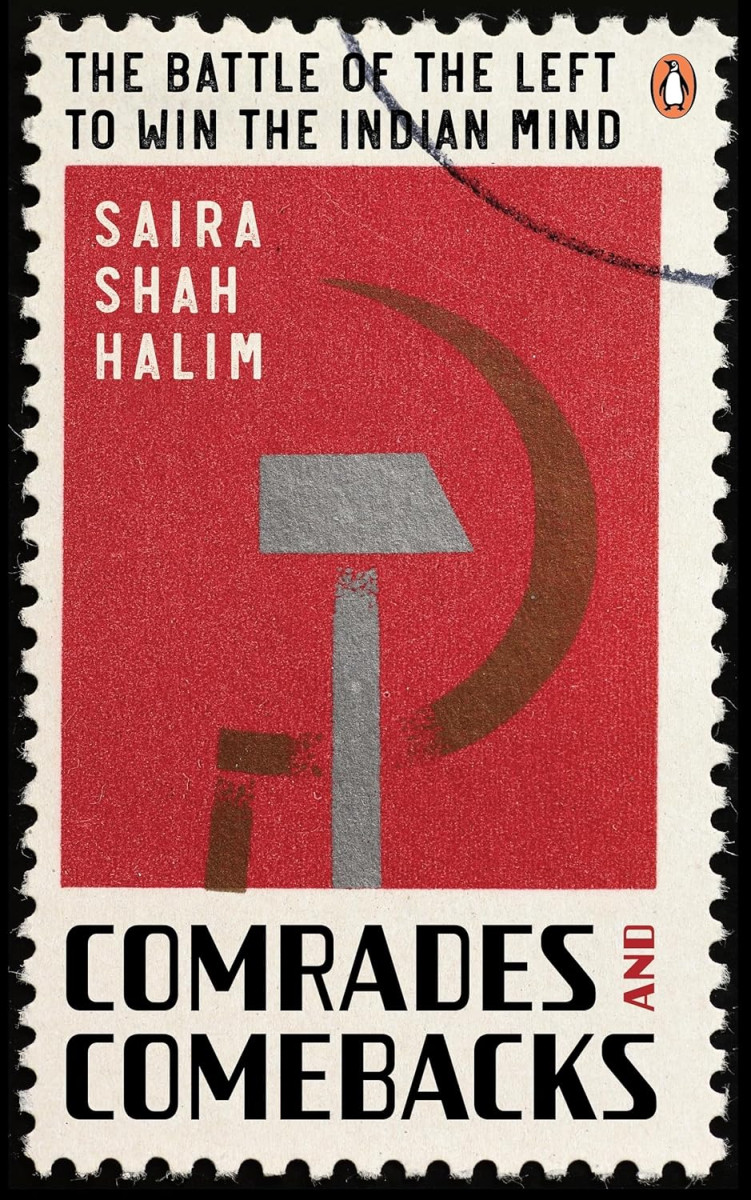
Comrades and Comebacks: The Battle of Left To Win The Indian Mind
Penguin India, 2025
The CPI(M), battered and bruised by repeated electoral losses after an over-three-decade-long stint in power, was fielding her as a new kind of face — articulate, cosmopolitan, a social worker as well as a politician, someone who seemed capable of pulling the Left out of the irrelevance it had manoeuvred itself into.
She represented a fresh whiff of change and stood out in contrast to the usual lot of politicians I had covered in parliament or outside.
On the trail, she cut a striking figure. As dusk settled on the Syed Amir Ali Avenue, Halim rode in a cavalcade alongside party boss Sitaram Yechury, while volunteers carried red banners and shouted slogans with their fists in the air.
The crowds were not the lakhs who thronged the Maidan in the heydays of Jyoti Basu’s rule over Bengal, but still managed to fill up the serpentine avenue which cuts through tony south Kolkata to join the nouveau riche localities with the city’s congested heartland in the north.
Bengal politics had by then been ceded to the muscular confidence of the Trinamool Congress and the right-wing Bharatiya Janata Party. Nevertheless, there was energy in the air, as if an old Bollywood song from the '60s was being strummed again, and a new generation was discovering the old.
Halim’s campaign faced obstacles from every direction — Muslim conservatives accused her of not being “Muslim enough”, while Bengali ‘Bhadralok’ hardliners dismissed her as an “outsider”. And to top it all, her own party could not provide polling agents for nearly a third of her booths.
Many say that if the CPI(M) had found enough agents for her, there would have been fewer instances of vote stuffing and she could have just won, even if by a very slender margin.
Nevertheless, she clawed back over 30% of the vote in Ballygunge, forcing the BJP into a humiliating, distant third position.
For a party that had been reduced to single digits in many Kolkata constituencies, it was, if not a victory, certainly a heartening comeback.
That word — comeback — is central to Halim’s new book, Comrades and Comebacks: The Battle of Left To Win The Indian Mind.
It is part history, part manifesto, and part personal recollection of the story of the Indian Left.
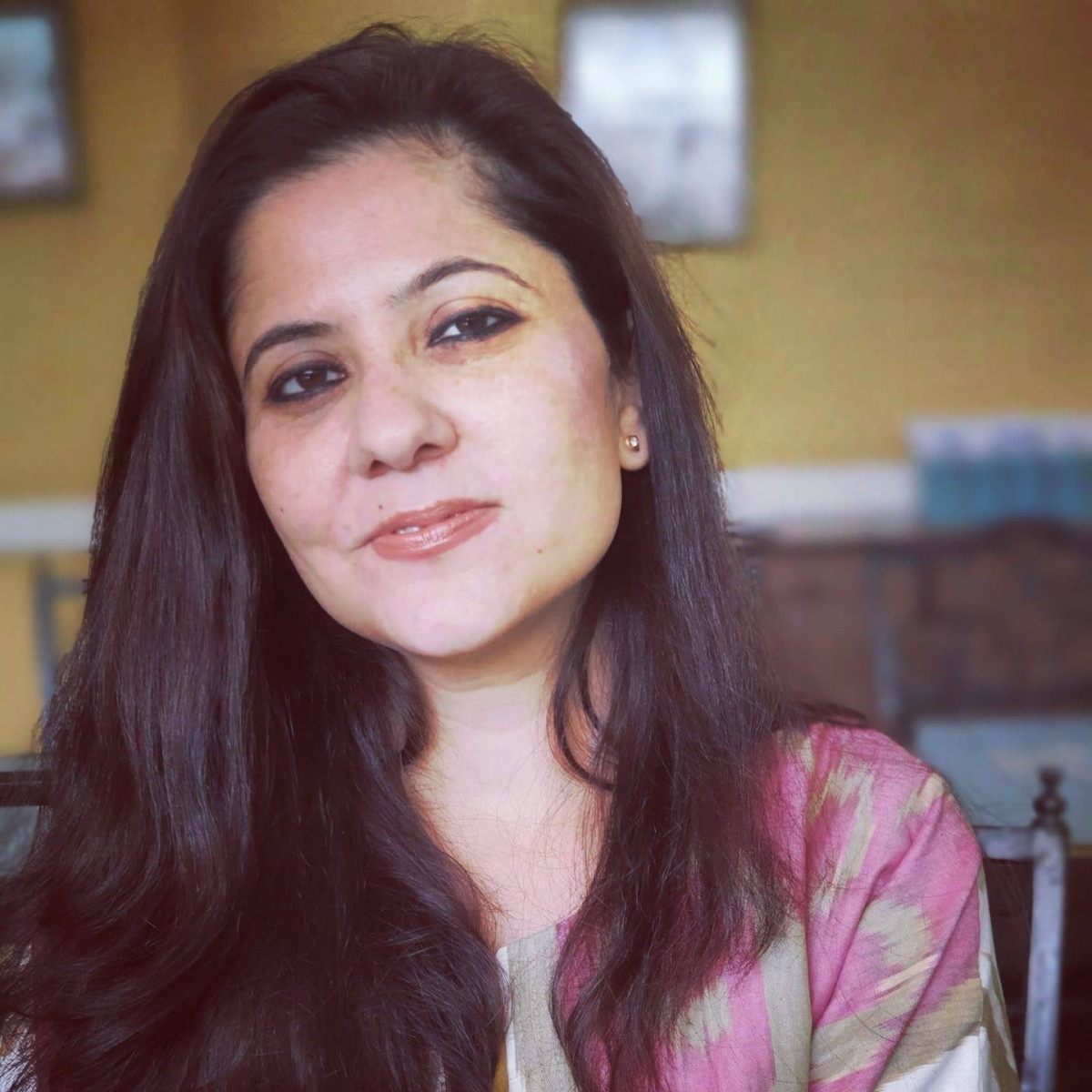
Saira Shah Halim. Photo: Facebook/Saira Shah Halim
If the campaign trail revealed her as a candidate trying to revive the fortunes of a party in decline, the book reveals her as a writer trying to resituate an idea within India’s larger narrative.
Her explicit argument is that the Left is not an alien graft from Europe or for that matter a Moscow-centric import. Rather, it is a deeply Indian construct which sought justice, solidarity and rebellion within the Indian context. A political movement which has always resonated with men and women on this subcontinental nation’s streets.
Halim traces what she calls the “red thread” through movements which shaped India’s trade, peasant and intellectual movements, and culminated in the many facets of the country’s freedom movements and later in nation-building.
She reminds us that the Left was not a post-independence phenomenon, but a protagonist in the anti-colonial struggle itself.
The émigré revolutionaries who gathered in Soviet Russia, the Ghadar Party activists in North America, the prisoners in the Cellular Jail who were not mere faceless martyrs but ideological militants had a ‘red thread’ binding them to the larger movement for India’s independence.
Indeed they form the dramatis personae of her narrative.
By placing communists and socialists at the heart of India’s struggle, she challenges the neat categories that have shaped mainstream history. Many of India’s contemporary historians have painted Gandhi and Nehru as centrists, Bose as the nationalist radical, and communists as footnotes or foreign importations.
In her telling, Bose emerges as a radical socialist (and writings of those times affirm he was), Nehru is shown as far more left-leaning than the college textbooks allow him to be. One wonders how the new purveyors of India’s contemporary history will respond to these dialectics!
There is, of course, a sense of irony here. The Left in India today is a shadow of what it was then or even in the first half of independent India’s life.
In Bengal, which it ruled for 34 long years, it has been reduced to scattered booths and nostalgic slogans painted on walls.
In Kerala, it still governs, but often more as a managerial party than as a revolutionary force. Among young Indians, the appeal of socialism seems muted by the forces of consumerism, nationalism and digital distraction.
University campuses no longer have ‘Lal Salam’ written in dripping red on the walls and the posters are more often than not poems written by ChatGPT, instead of being the kind that Bishnu Dey wrote or Mohit Banerjee translated.
The question which readers of Halim’s book are faced with is whether the Left has lost not only its moral clarity but also its revolutionary vocabulary.
To answer this central question of our times, she looks backward and forward simultaneously. She brings out stories of forgotten comrades from the dusty corners of our library of revolutionary history, while making a case for what she calls a new Indian order.
This order, she would have, would be one that dismantles concentrated privilege and reimagines the Indian republic as an equitable, inclusive and just compact between its people and its rulers.
She calls on the young, not to retreat from politics into cynicism, but to re-engage with the questions of inequality, justice and solidarity that shaped earlier generations.
The book is, in a sense, a missive across time from the bruised dreamers of the past to the hesitant citizens of present day India.
Reading Comrades and Comebacks, I was reminded of the campaign walls in South Kolkata, painted with defiant slogans: “The heart is on the left side, the blood is red, we will return, if not today, tomorrow.”
The book feels like a prose elaboration of that sentiment. It does not pretend that the Left is strong, nor that its path back to relevance is assured. What it does assert, quietly but insistently, is that the Left’s story is far from over.
Halim’s own presence animates the text in ways that history alone could not. Her personal credibility of a clean image, an articulate voice, the association with her husband Dr. Fuad Halim, the “liver doctor for the poor”, infuses the book with a sincerity often absent from party pamphlets or academic tomes.
It is at once intimate and ideological.
What, then, is this book? It is not quite a history, though it is steeped in archival detail. It is not quite a manifesto, though it calls for political action.
It is certainly not a memoir, though the voice is unmistakably personal. Perhaps it is best read as what Halim herself seems to intend: an ode to an idea whose time she believes has made a comeback.
Like the city she hails from, it is unruly, layered and shot through with the conviction that politics is not just about winning elections but about shaping the moral horizon of a society.
In an age where politics is too often reduced to marketing and governance to technocracy, the book insists on returning to first principles. It asks whether justice and solidarity can still speak across the noise of identity, consumerism and majoritarianism. It suggests that even in defeat, there is dignity in holding on to an idea and hoping for a new dawn of reason.
Jayanta Roy Chowdhury is a senior journalist.
This article went live on September eighth, two thousand twenty five, at three minutes past eleven in the morning.The Wire is now on WhatsApp. Follow our channel for sharp analysis and opinions on the latest developments.


