

The Inscrutability of Partition


Sam Dalrymple does a fine job telling a complex history of the unravelling of the British Empire from the 1920s to 1971 in Shattered Lands: Five Partitions and the Making of Modern Asia. Using a plethora of anecdotes, Dalrymple fleshes out the lives of the many characters who shaped and lived through the collapse of the British Indian empire – one that stretched from present day Yemen to Burma/Myanmar.
The book tries to do three things: to make explicable the decision-making that affected, and continues to affect, the billions that live in the region (at that time, only hundreds of millions); to put a human face to the hopes, tragedies, and heroics of the people involved; and to broaden an idea of an “India” that was, and could be, much larger. It succeeds to some degree in the first ambition, very well at the second, and fails horribly at the last.
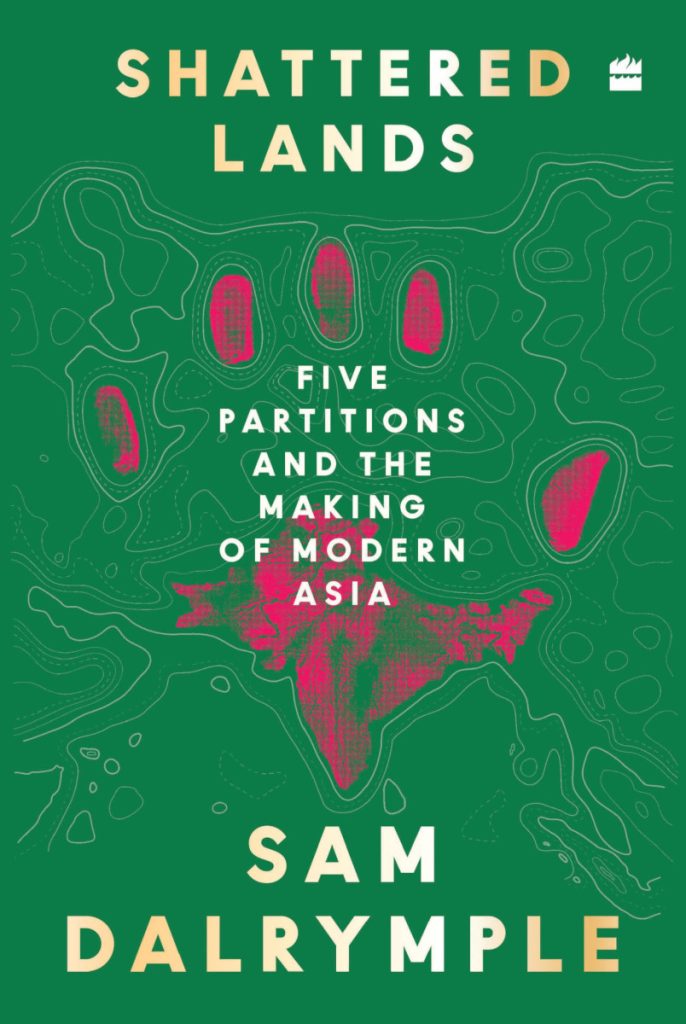
'Shattered Lands : Five Partitions and the Making of Modern Asia', Sam Dalrymple, Fourth Estate India, 2025.
Dalrymple is at his best when it comes to empathy, of digging out a factoid or anecdote from history, and with scrupulous care showing the human angle to a particular situation. There is a visceral description of Indian refugees fleeing Burma/Myanmar in the wake of the Japanese invasion in World War II, and the thoughtful choice of the Gujrati businessman Dhirubhai Ambani choosing to leave Aden as nationalism and Nasserite appeal rose in Yemen. The book is studded with these stories, told in a fine style, interspersed with key quotes.
Unfortunately, the same style does a disservice to major historical characters. Both Gandhi and Jinnah come across as caricatures. To be fair, Jinnah’s romance and heartbreak over his wife, Ruttie, is well told, but Jinnah’s engagement with the Congress and disillusionment over its tactics as Gandhi became the pre-eminent leader is a mess. Taking just one quote, that Jinnah vowed to “show Nehru” as a stand-in for Jinnah’s motives is facile at best. Gandhi is portrayed as erratic and eccentric from 1930 onward, a strange categorisation for a man who was the principal steering power of the Congress. The Khilafat Movement – Gandhi’s first major agitation which disgusted and alienated Jinnah as well as undercut him as a ‘Muslim’ leader – is not even mentioned in passing. Instead, the idea of a Hindu imagining of Bharat is highlighted as part of Gandhi’s reason for not opposing the separation of Burma/Myanmar from India.
Putting it like this, though, does not do justice to the book. Dalrymple is a fine writer, and has done an excellent job at archival research. His writing and knowledge make you feel as if you are in the midst of the action. I felt this in particular as he wrote about the Burma front during World War II, where my grandfather served from 1940-45. The problem is that trying to capture major historical actors in a few broad brushes, based on anecdotes and personal histories, rarely does justice to the complex, conflicted human beings that they were. Much of the problem is also the argument that undergirds Dalrymple’s book – which is that there was a distinct political reality of the areas administered as “India” by the British in 1928. This notion is undercut by the book itself in one of the best written chapters of collapsing the princely states into India and Pakistan (the Fourth ‘Partition’ of the book) when V.P. Menon is quoted as noting, “For the first time India has become an integrated whole in the real sense of the term.”
The British Indian empire of which Dalrymple writes was anything but an integrated whole. Yes, it was part of a cosmopolitan whole governed by the British, but then so were parts of Africa and the Caribbean, where Indians worked for generations. Simply because the areas that Dalrymple writes about were under the oversight of the India Office does not mean that present day Gulf Arab states shared any deep sense of belonging to an ‘India,’ or that Burma did. Bhutan is referred to as part of this ‘India’ but Dalrymple ignores the fact that British India explicitly excluded Bhutan from its domain because it did not want to have a border with China and thus its only form of governance there was in the shape of Political Agent whose principal duties was overseeing Sikkim and not interfering in Bhutan’s affairs.
He also refers multiple times to the tomb of Bahadur Shah Zafar in Rangoon, but never asks the obvious question that if the idea of India coincided with British rule in South Asia, why Zafar was exiled to Burma, well within British control, or why Zafar would write, “Kitna hai badnaseeb Zafar dafn ke liye do gaz zamin bhi na mili kuu-e-yaar mein/How unfortunate is Zafar that he could not receive even two metres to be buried in the land of the Beloved”.
The blunt truth is that, as Manan Ahmed Asif illustrates in his The Loss of Hindustan, a political reality existed before the British, and six centuries of the creation of a Hindustan, from the 13th to 19th century, preceded the British in South Asia. This area, largely analogous to, but not constrained within, the borders of the Sultanate and Mughal Empire had some sense of shared laws, history, and political imagination. Compared to this, the British Indian empire that Dalrymple maps from 1928, and which had its first partition in 1937, is a mere blip in history.
There are other empires that have dissolved, with far longer histories and deeper integration. The dissolution of the British India empire of 1928 led to only 12 successor states, and although the violence has been immense, it pales in comparison to the violence from the dissolution of Austro-Hungarian Monarchy after World War I, which saw far more partitions and led to World War II. Even the dissolution of the Soviet Union – which also existed far longer than the British India empire and was much more institutionally integrated – saw more partitions, creating some successor states that would be appalled at being reintegrated into an imagined post-Soviet space. One of them – Ukraine – is fighting a massive war not to be reintegrated.
The romantic notion in much of South Asia that partitions are ‘bad’ is unsupported by evidence. Its force comes from the catastrophic mishandling of the partitions in the region, most notably between India and Pakistan, but as Dalrymple demonstrates, also India and Burma/Myanmar and others. Borders do not need to mean violence, as the European Union has demonstrated, but too frequently they do because nationalisms are enmeshed with the dehumanisation of ‘others’ based on race or creed. This, really, is the tragedy of our partitioned globe, and despite the problems of Dalrymple’s book, it does a great job in showing how nasty and insane humans can be when they drink from that poison.
Omair Ahmad is an author. His last novel, Jimmy the Terrorist, was shortlisted for the Man Asian Literary Prize, and won the Crossword Award.
This article went live on July twenty-sixth, two thousand twenty five, at thirty-six minutes past seven in the evening.The Wire is now on WhatsApp. Follow our channel for sharp analysis and opinions on the latest developments.


