

Trump Tariff Shock Cripples Bengal’s Leather Hub


Kolkata: An eerie silence looms over the once-bustling Bhojerhat intersection near Kolkata. Not long ago, hundreds of trucks would line up every morning at the gate of Asia’s largest leather complex, bringing raw hides from across the country. Today, that road lies empty.
Inside the sprawling Bantala complex, muddy and waterlogged from monsoon rains, workers struggle to preserve what remains. Adil Ansari, a tannery worker, carefully dries skins under the sun.
“During the monsoon, stored leather gets damp and spoils,” he explains. “There’s no good way to dry it properly without the sun.”
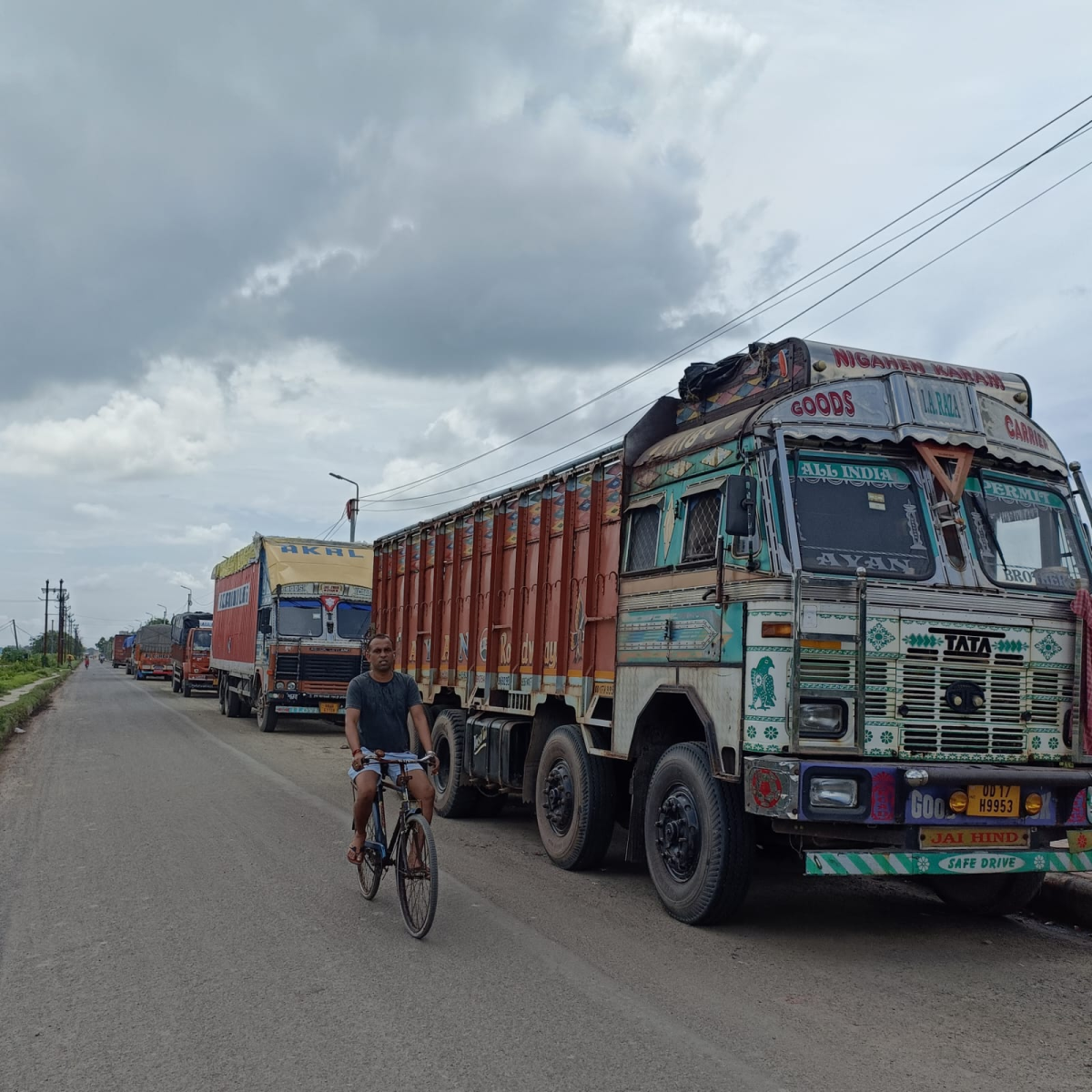
Trucks from across the country usually bring raw hide to Bantala. Photo: Joydeep Sarkar
The 4.5 square km industrial zone, home to 538 tanneries and hundreds of footwear and leather goods units, has slowed dramatically. Some factories have halted production altogether, while others run skeletal shifts just to preserve raw materials.
For daily-wage earners, the consequences are severe.
Shafiqul Sardar, a daily-wage labourer from Sandeshkhali in North 24 Parganas, has been working at the complex for 15 years. He describes the grim reality. “I usually earn Rs 550 to Rs 700 a day. But for the last few months, I’ve been hearing that the market is bad. If there’s no production, where will we work, and how will we survive?”
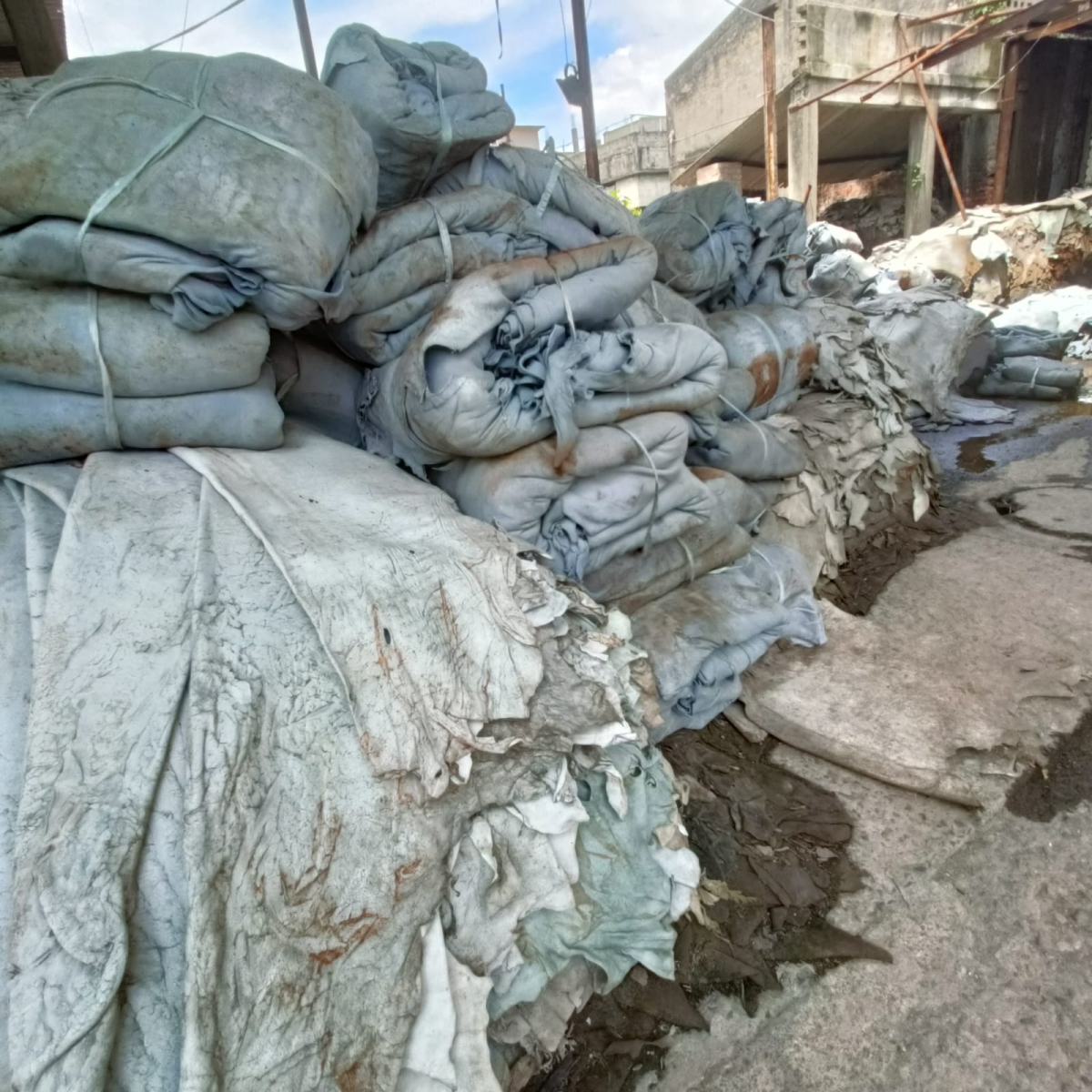
Leather stored at the Bantala complex.
The industrial township once transformed the wetlands stretching from Bamtala to Bhogerhat into a zone of relative prosperity. Now, the industry faces its greatest crisis in decades.
The immediate trigger is Donald Trump’s trade crackdown. The US first imposed a "reciprocal" 25% tariff on a range of Indian goods on August 7, followed by an additional 25% on August 27 in what he said was a response to India’s continued purchases of Russian crude oil.
The combined 50% levy has wiped out India’s cost advantage, making products uncompetitive against exports from Vietnam (20% tariff), China (30% tariff) or Bangladesh (35% tariff). Kolkata, which exports leather goods worth around Rs 870 crore to the US annually, is among the worst hit. Exporters warn that up to 75% of the India-US trade could be lost, squeezing small and medium enterprises and putting thousands out of work.
“This sudden increase makes Indian exports, especially handbags, footwear and accessories, far more expensive in the American market compared to rivals like Vietnam and Indonesia. The impact is severe on hubs like Kolkata, with exporters warning of job losses, squeezed SMEs and shrinking market share,” warns Naresh Juneja, chairman of the Leather Division of the Indian Chamber of Commerce.
“People from seven nearby assembly constituencies are directly or indirectly involved in this industry. We’ve been hit with one crisis after another since Covid. After the lockdown, the Russia-Ukraine war was another setback, and now, with Trump’s announcement, many exportable goods are stuck,” explains Sukanta Naskar, who works in one of the tanneries in Bantala Leather Complex.
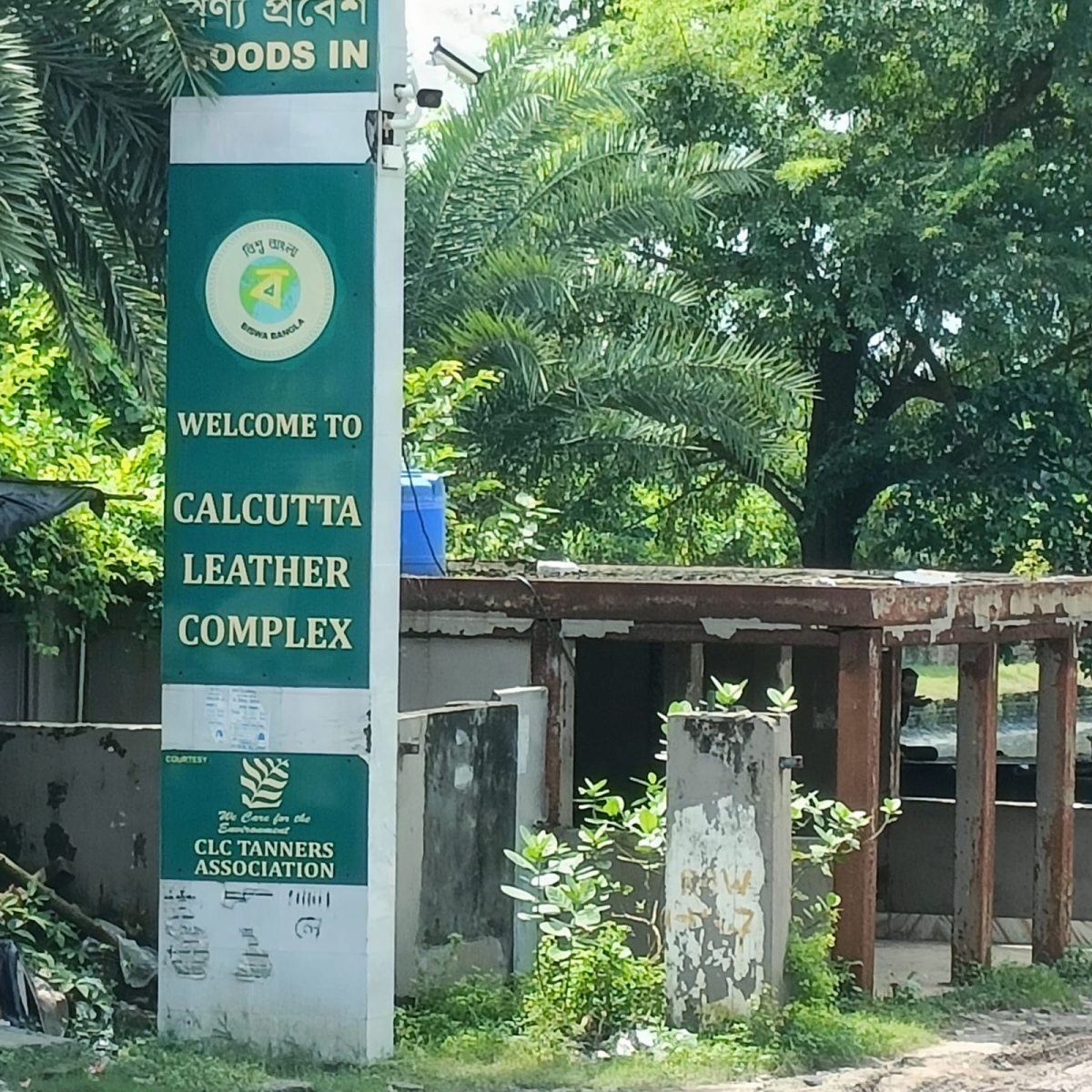
Entrance to the Bantala complex. Photo: Joydeep Sarkar
“Industry bodies have urged the government to step in with relief measures such as soft loans and enhanced drawback facilities to help India stay competitive,” says Juneja.
So far, the state government has not announced relief, but sources say chief minister Mamata Banerjee chaired a meeting with senior ministers and formed a high-level committee to safeguard production and jobs.
At the national level, the government has avoided retaliatory tariffs, focusing instead on a potential Rs 25,000 crore Export Promotion Mission, cheaper credit lines and GST cuts on leather goods to stimulate domestic demand. Exporters are also exploring a “Made in Europe” strategy, routing production through Europe to bypass US tariffs, but the option is far too costly for most small and medium-sized players.
“Both the Union and state governments must act immediately. They should waive electricity bills, provide direct assistance to workers, and offer loan relief to owners. Enough political fights – this is a massive disaster,” cautions economist Indranil Dasgupta.
Translated from Bengali by Aparna Bhattacharya.
This article went live on September fourth, two thousand twenty five, at five minutes past four in the afternoon.The Wire is now on WhatsApp. Follow our channel for sharp analysis and opinions on the latest developments.


