

Mandal, the Face Behind the Six Letters That Changed India in 1990


This article is part of a series by The Wire titled ‘The Early Parliamentarians’, exploring the lives and work of post-independence MPs who have largely been forgotten. The series looks at the institutions they helped create, the enduring ideas they left behind and the contributions they made to nation building.
Date: August 6, 1990
Place: The Prime Minister’s Office, South Block, New Delhi
Event: Meeting of the Union Cabinet
Agenda: Routine
Present: Prime Minister V.P. Singh but not all ministers
Against the backdrop of a power struggle between deputy Prime Minister Devi Lal and the Prime Minister, V.P. Singh stood up and said: “Implementing the Mandal Commission's recommendation is a part of our party's manifesto and now the time has come to implement it in a phased manner. For this purpose, today I place before you the recommendations of the B.P. Mandal Commission, under which a provision of 27 per cent reservation for Other Backward Classes (OBC) in government jobs has been recommended, and I hope that you all will agree to it.”
Outcome: The Union Cabinet approved the proposal.
§
Rarely has a surname stormed the political lexicon with such gale force that it set off the equivalent of an earthquake – “Mandal” rocked pantheons and triggered a regressive backlash but also touched and empowered many lives.
The last name that transformed the Indian electoral landscape belonged to Babu Bindheshwari Prasad Mandal, commonly known as B.P. Mandal. A politician from Bihar known for his advocacy for the backward castes, Mandal did rise to the pinnacle of provincial power by becoming chief minister for a brief while in 1968.
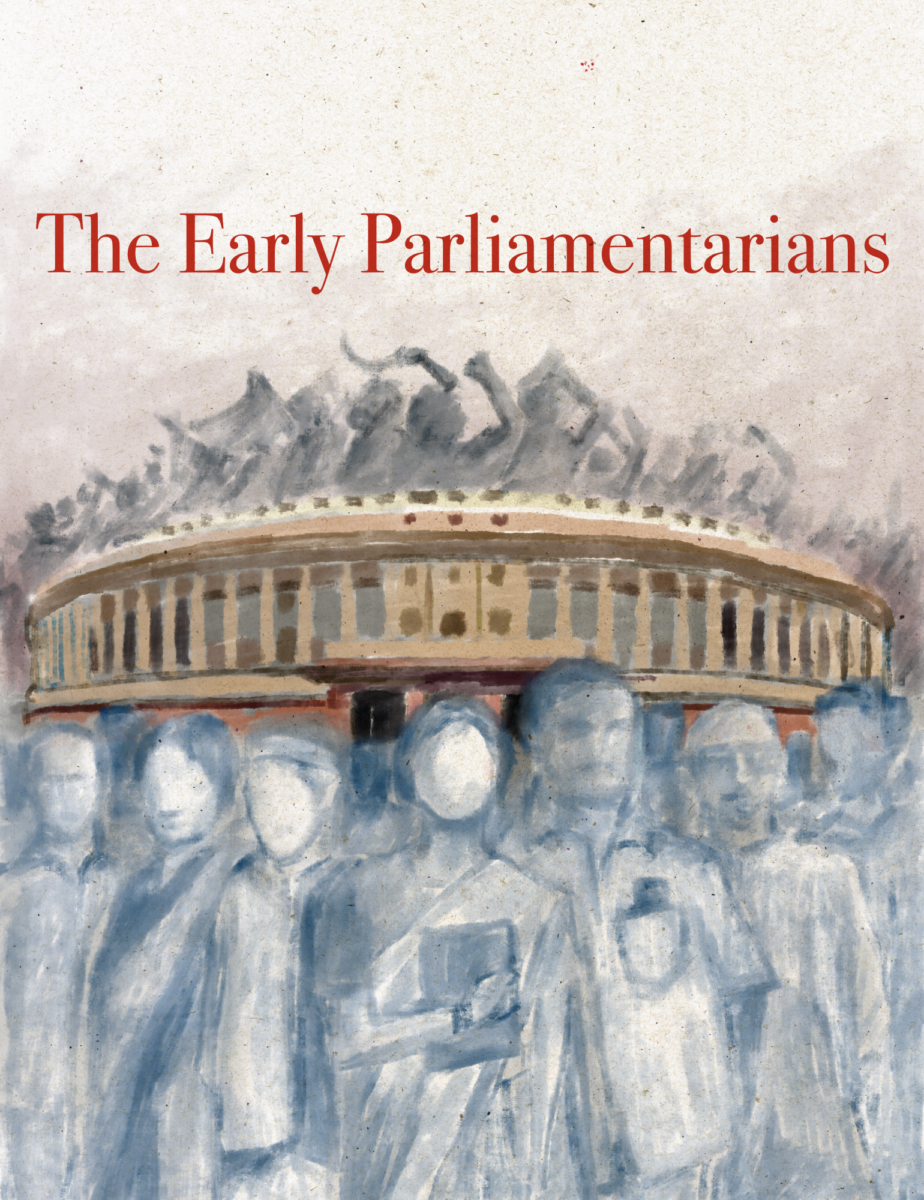
Illustration: Pariplab Chakraborty.
But as a parliamentarian, he served as the chairman of the Second Backward Classes Commission, popularly known as the Mandal Commission. This role would make his surname one of the most consequential in Indian history, for it was he who recommended in 1980 that the Other Backward Classes be given 27% reservation in Union government services.
Once the Union cabinet approved the proposal placed by V.P. Singh, the opposition parties found themselves in a dilemma: to support or not to support the reservation. Protests by sections of upper caste members against the reservation broke out on the streets. Students of backward classes also took out rallies in support of the government decision and clashes were reported. Then a young Supreme Court lawyer, Indra Sawhney approached the court. Taking cognisance of her petition (the case is known as Indra Sawhney vs Union of India), the then Chief Justice Ranganath Mishra stayed the notification on the Mandal Commission with immediate effect. Three years later, a Constitution bench of the Supreme Court decided in favour of the reservation.
Born on August 25, 1918, in Varanasi, Uttar Pradesh, B.P. Mandal learned at a young age about not only the ineffectiveness of wealth in ensuring dignity in a caste-ridden society but also the need for resistance.
Mandal hailed from a wealthy Yadav landlord family from Madhepura in northern Bihar. At his high school hostel in Darbhanga, the ground reality hit him hard: the upper caste boys would first be served food; his turn would come only after that. When it did, he would not even get a bench to sit on. BP gathered the boys of his group and started protesting, forcing the school authorities to change the inexcusable system.
He completed his higher studies from Patna College and got posted as a magistrate in Bhagalpur. In 1941, at 23, he became a member of the Bhagalpur District Council. He actively involved himself in politics and social work throughout his life.
An agriculturist by profession, Mandal was associated with the Congress Party, Samyukta Socialist Party, Shoshit Dal and the Janata Party. He was elected to both the Houses of the Bihar legislature four times and to the Lok Sabha thrice.
During the first election to the Bihar State Assembly in 1952, Mandal won the Madhepura Assembly seat on a Congress ticket, defeating Bhupendra Narayan Mandal of the Socialist Party.The situation was reversed in the 1957 elections. This time, Bhupendra Narayan Mandal, who contested as a Socialist Party candidate, defeated B.P. Mandal. Later, B.P. Mandal and Bhupendra Narayan Mandal became fellow travellers in the socialist movement in Bihar.
Both belonged to the backward Yadav caste. The influence of Yadavs in the district can be gauged from the saying, “if Rome is for the Pope, Madhepura is for the Gopes (Yadavs)”.
B.P. Mandal hit the headlines in 1954, when Rajput landlords of a village in Bihar attacked a Kurmi village, leading to police atrocities against people from the backward classes. Mandal, a ruling party MLA, caught widespread attention when he stood up in the Assembly to seek immediate government action against the police and compensation for the victims.
Pressure was piled on Mandal to withdraw his request, prompting him to move to the opposition benches and continue to fight for the cause, much to the embarrassment of the ruling party.
Impressed by the defiance and protest, socialist leader Rammanohar Lohia made Mandal president of the Samyukta Socialist Party’s Bihar unit. Mandal contested and won the Lok Sabha election on a Samyukta Socialist Party ticket. Following differences with Lohia on joining the Bihar Cabinet, Mandal left the Samyukta Socialist Party and formed a new party called Shoshit Dal in March 1967.
Mandal took oath as the seventh chief minister of Bihar on February 1, 1968. However, he was required to become a member of the Bihar legislature to continue in the post. Satish Singh, an MLA from his party, was made chief minister for four days until Mandal became a member of the Legislative Council and reassumed office.
This was the first time in the history of Bihar that a ministry was composed primarily of representatives from the OBCs rather than the upper castes. Although his government lasted only 47 days, the radical shift in representation infused Indian politics with new energy.
Mandal resigned as chief minister after just 30 days in protest against the Congress’s removal of the Aiyar Commission, headed by T.L. Venkatarama Aiyar, which investigated charges of corruption against several ministers and senior Congress leaders.

Illustration: Pariplab Chakraborty
Mandal became a Lok Sabha member again in 1968 after winning a by-election from the Madhepura parliamentary constituency. Mandal was re-elected as a member of the Bihar Legislative Assembly in 1972 but resigned in 1975 during the JP movement.
Later, Mandal joined Jayaprakash Narayan’s Sampoorna Kranti Andolan, also known as the Bihar Movement (1974–75), protesting against the State Congress government headed by Abdul Ghafoor. In 1977, Mandal contested the Lok Sabha elections from Madhepura on a Janata Party ticket and won, serving until 1979.
The Mandal Commission
In December 1978, Prime Minister Morarji Desai appointed a five-member commission called the Backward Classes Commission. With his long-standing commitment towards uplifting the depressed classes, Mandal was picked as the chairman of the commission. The panel submitted its report in 1980, recommending that a significant proportion of government jobs and educational opportunities be reserved for applicants from the OBCs.
Laying emphasis on equality of opportunity, the report highlighted the need to identify and address gaps in the social, educational and economic systems that disadvantaged large segments of society. The Mandal Commission report thus became a symbol of hope in India’s pursuit of social justice.
Although the report was submitted on December 31, 1980, to the then President, Giani Zail Singh, the then Prime Minister Indira Gandhi and her successor Rajiv Gandhi (1980-89) did not table it in Parliament. That had to wait until V.P. Singh became Prime Minister.
The implementation of Mandal’s recommendations gave rise to new political parties and leaders representing the aspirations of the backward classes and castes. Such leaders include Mulayam Singh Yadav, Ram Vilas Paswan, Sharad Yadav, Lalu Prasad Yadav, Nitish Kumar and Mayawati. It also led to the emergence of social movements and alliances among various subaltern groups, including Dalits and Adivasis, and Muslims and women.
However, it also provoked a backlash from the upper castes and right-wing forces who resorted to communal polarisation and violence to counter the assertion of the backward classes. This period also coincided with the rise of BJP leader L.K. Advani’s Ram Janmabhoomi movement in 1990, throwing up a situation that came to be known as “Mandal versus Kamandal politics”.
Mandal was hailed as a messiah of the backward classes in Bihar. Statues and memorials have been erected in his memory. Dr Sandeep Yadav, professor at the University of Delhi, summed up: “B.P. Mandal was a man of courage and conviction, who stood for the cause of the oppressed and exploited masses. He was a visionary who foresaw the need for a radical transformation of India’s social structure and polity. He was a reformer who advocated for a more inclusive and egalitarian society. He was a leader who inspired millions of people to fight for their rights and dignity. He was a legend who left behind a legacy that continues to shape India’s destiny.”
Mandal did not live to witness the historic impact of his recommendation. He died on April 13, 1982, long before the report was implemented.
But the stirring opening lines of the commission’s report is a testimony to not only his abiding commitment to social justice but also his courage of conviction: “There is equality only among equals. To equate unequals is to perpetuate inequality.”
Qurban Ali is a trilingual journalist who has covered some of modern India’s major political, social and economic developments. He has a keen interest in India’s freedom struggle and is now documenting the history of the socialist movement in the country.
This article went live on August twenty-eighth, two thousand twenty five, at twenty-seven minutes past eleven in the morning.The Wire is now on WhatsApp. Follow our channel for sharp analysis and opinions on the latest developments.


