

'Would You Rather Hold a Pen or a Broom?'


This is the last article in a four-part series on manual scavenging in Tamil Nadu. Read the first three parts here, here and here.
Chennai: While Tamil Nadu’s official stance is that manual scavenging basically doesn't exist in the state, activists working on the ground have a very different tale to tell. Large parts of the state haven’t even been surveyed. And in places where there a robust survey has been done, the problem of sewage, and workers coming in contact with it in some way or the other, isn’t going away.
Near all activists who are working to eradicate manual scavenging in the state themselves belong to families of manual scavengers – either one of their parents, or perhaps an aunt or uncle, was engaged in the caste-based profession.
When Deepthi Sukumar joined the Safai Karamchari Andolan in 1993, she understood how caste had a deep chokehold on everything – even the dreams of children. She saw this firsthand when, that year, she visited a Telugu-medium school in Chennai in which the children of Arunthathiyar manual scavengers studied.
 “I was shocked to find that the children wanted to become manual scavengers too. And then I asked them what they wanted to hold in their hand – a pen or a broom,” said Sukumar, who is also from the same community. “They answered ‘pen’, and that’s how we could start their integration into the mainstream.”
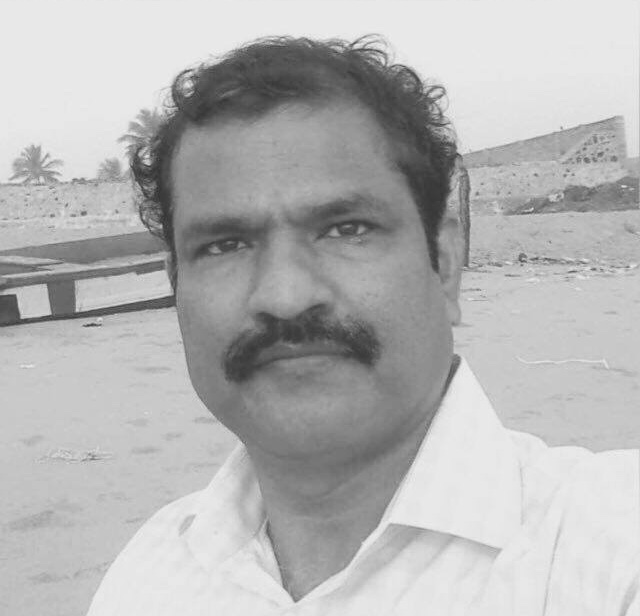
M. Thangavel.
More than 450 km away from Chennai, Tirupur is famous for its textile industry. Here, children of manual scavengers no longer necessarily follow in their parents’ footsteps, thanks to the efforts of activists from the community.
“Forget getting pay, at that time, people from our community were lucky if they got food for picking up excreta from people’s houses,” says M. Thangavel, 47, who started the Vizhuthugal Social Education & Development Trust with his college friends in 1992. The Trust, registered in 2003, was set up to take care of the health of manual scavengers, and secure their children’s futures.
Thangavel was the first from his village, Ramiyam Palaiyam, to go to school. He says his mother, who came from a larger town and saw children going to school, was responsible for sending him to school.
Discrimination was so rampant then that people from the community would never even dare to go to the police station if they were the victims of a crime, he says.
Also read: UP Is Fudging Numbers Under Swachh Bharat to Achieve 'Open Defecation Free' Goal
He and his friends educated the community about their rights, and pushed parents to send their children to school. Over the years, the government procured machines for cleaning septic tanks and sewers, and that has reduced the number of manual scavengers.
But what happened to those who did that work for so many years? In 2011, the Trust gave a list of more than 360 manual scavengers to the local authorities. Only around 70 names from the list were accepted by the government.
Thangavel knows of 80 families who have since been given housing land under the Prohibition of Employment as Manual Scavengers and their Rehabilitation Act, 2013. He says that no one has received the one-time cash assistance, or any other rehabilitation.
When the Trust surveyed 50 manual scavenging families in 2011, they found that 90% of manual scavengers don’t live beyond the age of 65. Thangavel says that alcoholism could be a possible reason, apart from the exposure to toxic waste.
Many scavengers have claimed that they were not able to go into sewers and septic tanks if they were not drunk.
Also read: 'They Were Hired for Housekeeping and Then Forced to Enter the Sewer'
According to data released by the Ministry of Social Justice and Empowerment, not a single person in Tamil Nadu has received comprehensive rehabilitation from the state.
In the Ramanathapuram district, home to the famous Rameshwaram temple, manual scavenging still continues, according to Kannadas, secretary of the local NGO Cultural Education and Rural Development Society (CARDS).
In July or August every year, thousands throng the month-long Erwadi Santhanakoodu festival at the Erwadi dargah in the district. And there simply aren’t enough toilets for so many people. So where do people go?
They defecate in makeshift sheds built of palm fronds. Manual scavengers then come to pick up the excreta, for about Rs 400 per day.
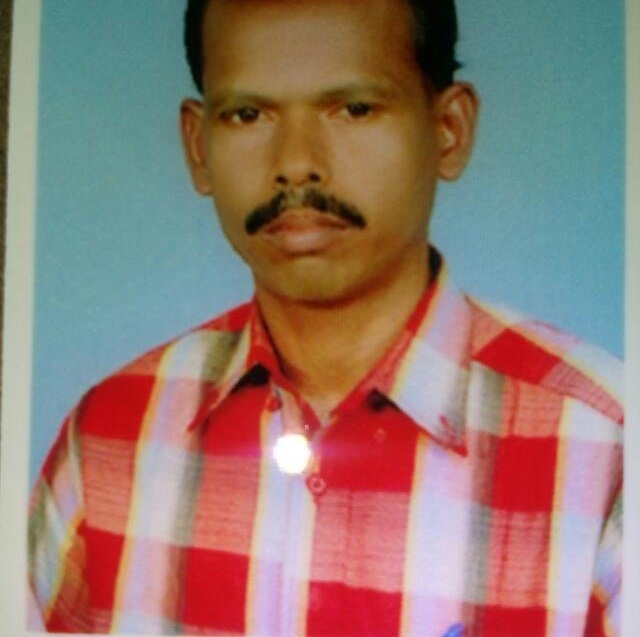
Kannadas
During the annual Panguni Uthiram festival in the district, usually held in April, even these sheds don't exist. People defecate in the open. The four “green” Amma toilets built here are always locked up. And the state’s refusal to accept the reality of manual scavenging now has made the profession clandestine. Contractors make workers clean faeces between 4 am and 6 am, says Kannadas, so that they do not appear in the public eye.
In the absence of state support, it is organisations like the Trust and CARDS that help rehabilitate manual scavengers. In 2010, the Trust provided protective gear to manual scavengers who work in open drains. The government followed their example in 2011.
Also read: For Chennai's Conservancy Workers, 'ODF' Status Doesn't Mean They Don't Have to Clean Faeces
Even if gear is provided, can those working with human waste escape the stigma attached to it? At present, a worker who uses a jet-spray to clean human excreta from railway tracks isn’t considered a manual scavenger under the Act.
But activists say that in reality, workers have to clean stuck excreta using a broom in case supervisors aren’t satisfied. The recently introduced bio-toilets in trains fail to treat waste, according to a study conducted by IIT-Madras, reported Indiaspend.
“And who will clean the blockages in these bio-toilets? It’s the manual scavengers,” says A. Narayanan, director of Change India. “As long as water is mixed with human excreta, disposal will be a problem.”
Sewage – the real problem
Sewage is a problem that is now threatening the city’s water sources. On April 8 this year, Arrapor Iyakkam, a Chennai-based NGO dealing with civic issues, organised a ‘Sakkadai Tiruvizha’ – meaning ‘sewage festival’ – between citizens and officials from the government.
The NGO found through an RTI that there are 1.6 lakh illegal sewer connections to storm-water drains. Only 461 of these have been verified and action has not been taken against any of them.
They also said that the present sewage treatment capacity of 727 MLD (million litres per day) is insufficient, because according to their estimate, 1,952 MLD of sewage is generated. They say that the discrepancy is because the Metrowater’s calculation of sewage generated is based on the water supplied by them alone, and doesn’t account for private groundwater and water obtained from tankers.
Jaishankar, a senior official from Metrowater who was present at the meeting, said that the sewerage infrastructure isn’t designed to handle such large quantities of sewage. Installing large sewage treatment plants requires vast tracts of land.
Also read: Modi Govt Has Not Released a Single Rupee for Rehabilitation of Manual Scavengers
He said the solution was reduction of water usage, reuse of grey water and installing private treatment plants in large residential buildings.
On the other hand, Narayanan says that the long-term solution would be to encourage the use of eco-sanitary toilets that don’t require water. In this model, human waste gets composted and can be used as manure.
The question behind all this is perhaps our attitude towards waste. According to Narayanan, “The government shouldn’t be responsible for our waste. We have to let go of our ‘flush-and-forget’ syndrome.”
In developed countries, a human almost never comes in contact with raw sewage. Machines, like the ones used by Chennai Corporation, do this work. These use water at a very high force, or use a vacuum device. If manual intervention is needed, then a full-body suit is provided, along with gas masks and meters that warn of the presence of poisonous gases in a sewage pit.
In Kerala this year, a group of engineers developed a robot that can be used in sewage cleaning. They call it Bandicoot, and the Kerala government has already placed orders for 50 of these. If it's not the lack of technology that's the problem, then what is? Until we answer this question, manual scavenging will continue to remain a taint on our dreams of a Swachh Bharat.
Simran Bajaj and Anjali Venugopalan are graduates of the Asian College of Journalism, Chennai.
#Grit is an initiative of The Wire dedicated to the coverage of manual scavenging and sanitation and their linkages with caste, gender, policy and apathy. The Manual Scavenging Project is the first in a series of deep dive editorial projects.
This article went live on October eighth, two thousand eighteen, at zero minutes past eight in the morning.The Wire is now on WhatsApp. Follow our channel for sharp analysis and opinions on the latest developments.


