

Ostracised and Exiled, Justice Evades Victims of Customary Bondage System in Puri


Puri: In late July this year, Ashok Sethi (42) and his family were attacked by his village's upper caste men because he opposed the customary bondage system and was fighting for justice. As The Wire had reported, he and his family have been ostracised for almost two decades. Three months after the attack, the local administration's indifferent attitude means that Sethi is still living under constant fear of another attack.
His family, along with two others, were attacked and thrown out of their village Nuagoan in Krushnaprasad block of Odisha’s Puri district by the upper castes. The local administration has temporarily housed them at a cyclone shelter in Brahmagiri block. But no steps are being taken to resolve the issue so that the families can return to their village.
Also Read: In Puri, 'Lower' Castes Face Ostracism for Defying Customary Bondage System
The families were forced into customary bondage to upper castes, a practice that prevails in many areas of Puri district. “We rejected this social obligation and wanted to live with dignity,” said Ashok. On July 23, taking advantage of the absence of male members, a group of people belonging to Karan or Khandayat upper castes, had barged into Sethi's house, attacked female members, destroyed the house and looted important documents and belongings.
“The upper castes threatened him twice before attacking his family on July 23. He had informed the police beforehand, but they did not take any steps to protect them,” alleged Kishan Pattnaik, general secretary, Ambedkar Lohia Bichar Manch (Odisha).
Since then, Ashok and his family have knocked on the doors of all institutions, demanding justice. He also sent a letter to the chief minister’s grievance cell. “We sat on dharna at the local police station for five days to arrest the accused. Then we sat on dharna at Collector’s office. But, all in vain, we are still awaiting justice”, he said with a sigh.

Rama Sethi's left hand was severely injured in the attack. Credit: Rakhi Ghosh
As per the Scheduled Castes and Scheduled Tribes (Prevention of Atrocities) Act, 1995, the district magistrate and the superintendent of police shall visit the place or area where the atrocity has been committed to assess the loss of life and/or damage to property. Also, rule 12 (4) says, the DM or the sub-divisional magistrate or any other executive magistrate shall make necessary administrative and other arrangements and provide relief in cash or in kind or both within seven days to the victims of atrocity.
- In Puri, the people of barber and washerman castes are forced to follow a customary bondage service.
“But, the administration failed to follow these rules in Ashok and the other families's cases,” said Kishan Pattnaik. He added that Ashok had received some financial assistance from the local administration, but it was insufficient to provide for a 12-member family, one of whom was severely injured in the attack and had to undergo surgery.
The cyclone center they have been temporarily housed in is 40 km from their village. “The administration found it safer, but the upper caste people of our village come here regularly, so we are in constant fear,” said Anusuya Sethi, a member of the family.
Ashok's daughter-in-law Anita Sethi (22), the youngest member of the family, says, “There is no relief. During the day, the male members go to work and during the night, the darkness brings more fear. The administration has not thought about the safety of women when they shifted us to this temporary arrangement,” she said. Anita lost all her belongings during the attack. “My in-laws have been ostracised for two decades. We are suffering only because we want to live with dignity,” she said, tears rolling down her cheeks.
Also Read: Financial Inclusion a Step Towards Tackling Abuse of Odisha's Migrant Brick Kiln Workers
Some of the family members have been shifted to relatives’ houses. “They have been staying with relatives for over two months. Our families are poor and we earn a living as daily labourers. It is difficult to request them to keep our family members for so long,” said Anusuya. She still hoped that the government would intervene so they can return home.
The family said, “In a village environment, ostracism is the worst punishment. No one talks to you, no shop agrees to give you groceries. If you pass by, they shut their doors. You are allowed to take water from the public tube well, but only after the others finish their turn.”
In 2012, Ashok’s family was planning his younger brother's marriage. They requested the upper castes to end the ostracism. The upper castes agreed, on the condition that the family deposit Rs 25,000 in four installments. “But, surprisingly, after we deposited Rs 5,000 by taking a loan from our cousins and relatives, they again ostracised us after a week. They wanted Rs 1 lakh. We are poor people. Arranging Rs 5,000 was difficult for us, it is impossible to get Rs 1 lakh. We fell on their feet, but they did not listen,” said Charan Sethi, Ashok’s elder brother.
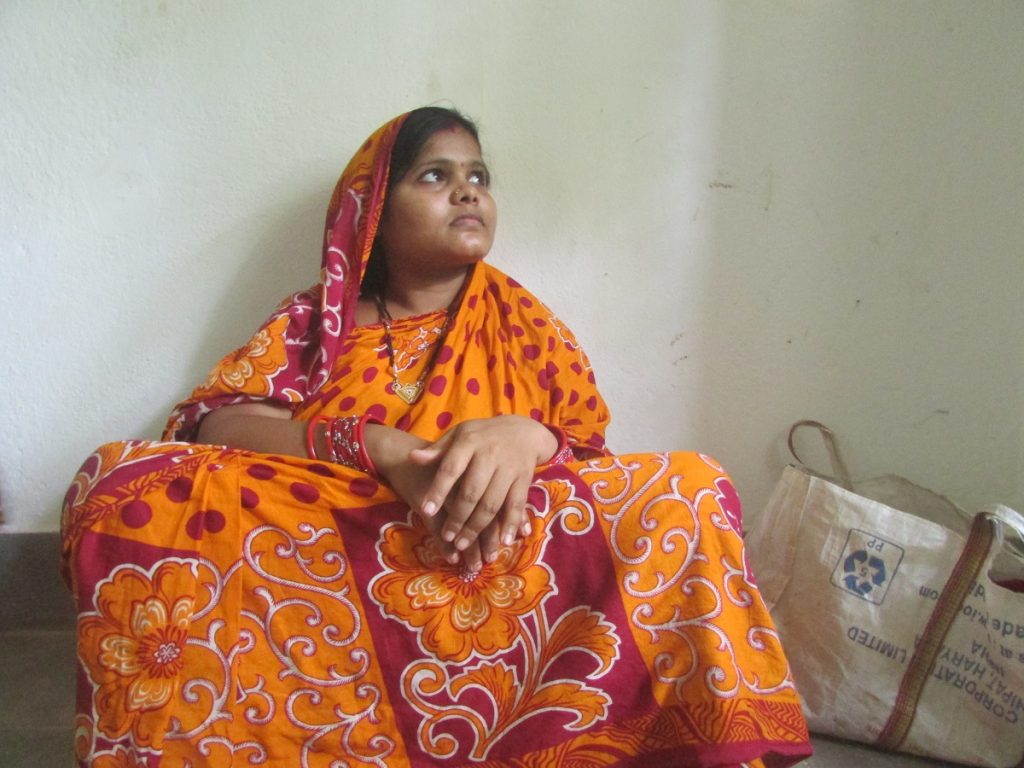
Anita Sethi, the youngest female member among the victims of the atack. Credit: Rakhi Ghosh
An alleged murder of bonded labourer
Kelu Sethi of Satwikpur village in Brahmagiri block, another customary bonded labourer who was ostracised for many years, was allegedly murdered in 2012. His wife Benga Sethi, recalling that horrifying night said, “My husband was fighting against the bondage system. The upper castes had threatened him several times and finally killed him.”
One morning, family members found him hanging from a cashew tree in the backyard of their house. A police investigation said he committed suicide due to depression. Kelu Sethi had been on a dharna for 453 days at the collector's office, demanding that his ostracism be ended. His efforts were in vain and he was allegedly murdered.
After his death, the family surrendered to the demands of the upper castes.
Kelu's family is now concerned about Ashok. “I wish he and his family do not fall prey to such circumstances that we have gone through,” said Benga.
Reasons for attacks on barber and washerman castes
In Puri, the people of barber and washerman castes are forced to follow a customary bondage service. To compensate their services, they used to receive bartan, a payment in paddy, which is calculated according to the number of married males in the upper caste family they serve. For each married male, the family pays 10-15 kg of paddy per year. No further monetary compensation is received. The system compels the lower castes to live at the mercy of the family they serve.
When they opposed payment in paddy and demanded financial compensation, the punishment was social boycott. “According to tradition, during marriage and death ceremonies, people from barber and washerman communities serve the upper caste. But they should be given financial compensation for their services, besides dignity to their work, which is completely absent in this part of the state,” said Kishan Pattnaik adding, “In the name of custom, these people are forced to do inhumane work.”
Also Read: The Bonded Sugarcane Harvesters of South Gujarat
“Because we protested and asked for financial compensation, they want to take away the farm land and house which our forefathers received as a part of services to upper castes”, said Ashok. “We have served them for generations without any financial compensation and it is our right to have the land and house in our name”.
Last year on October 23, founder of Goti Mukti Andolan (Movement for abolition of customary bondage) and chairman of Anti-Slavery India, Baghamber Pattnaik filed a petition before Odisha Human Rights Commission (OHRC) for immediate intervention in the protection of human rights defenders at risk, being themselves harassed on the ground of customary bondage in Puri.
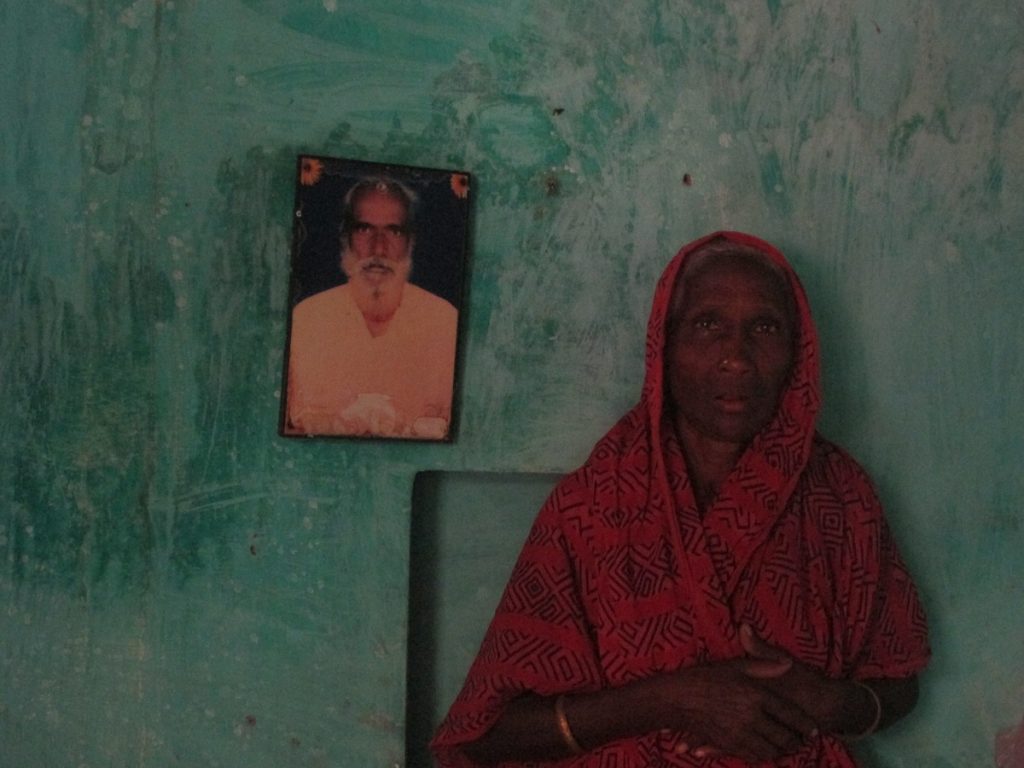
Benga Sethi at her house. Her husband Kelu Sethi (photograph in background) was allegedly murdered after he opposed the bondage system. Credit: Rakhi Ghosh
The Commission passed an order on October 24, directing the district collector and SP of Puri to initiate preventive action under section 108 of the CrPC and legal action under section 153 (A) of the IPC against the trouble mongers and to obtain sanction under section 196 of the CrPC for prosecution of trouble mongers under section 153(A) IPC. The commission wanted their reports submitted to it by November 11, 2017. But no action was taken by the collector or SP.
In July this year, when the upper castes attacked the Ashok's family, Pattnaik raised the matter in the hearing of the case. After another hearing on August 10, 2018, the commission directed the administration to take preventive action and to provide relief, including reconstruction of houses as per rule 12 (4) of the SC/ST (POA) Act.
On the other hand, the OHRC is itself not in a working condition as appointments have not yet been made by the government for the posts of chairperson and members after the acting chairperson's retirement.
However, recently the Puri collector called Pattnaik and the victim Ashok for a discussion on the issues of untouchability and bonded labour system and steps to be taken for its elimination. “I am fully hopeful that the local administration will be sensitised about the issue. When they take action, it will set an example for the state as these kind of caste atrocities are observed in various parts of the state,” said Pattnaik.
Rationalist and activist Debendra Sutar said, “The state government has no data on how many are people have been ostracised in villages. Besides, due to absence of a state Act, the administration is completely blind towards their issues.” He suggested, legislating an Act along the the lines of Maharashtra Prohibition of Social Boycott Act, 2015 to tackle the issue.
Rakhi Ghosh is an Odisha-based freelance journalist. She has held media fellowships with National Foundation for India and Global Alliance Against Trafficking of Women among others. She has thrice received the Laadli Gender Sensitive Award, given by UNFPA and Population Firsts.
This article went live on October twenty-eighth, two thousand eighteen, at zero minutes past seven in the morning.The Wire is now on WhatsApp. Follow our channel for sharp analysis and opinions on the latest developments.


