

Ten Men Lynched a North Bengal Farmer Over a Cow, Says His Family. He Wasn't the First or Last Since BJP Came to Power


Dinhata: On the night of September 20, after dinner, Mir Allama Kabir left his home in Indra Narayan village, in Cooch Behar district of West Bengal, with one of the family’s cows. He planned on walking it for nine kilometres to a relative’s house in Petla village. The paddy was nearly ready, and there was no room in the house to ensure that the animal would be kept away from the crop.
Around 1 am, his brother Ataur Rahman began receiving calls from numbers he did not know.
Ataur narrated to The Wire what happened next: “They said, ‘We have caught a smuggler with a cow. If you want him released, come immediately to Thagertari Primary School with Rs 1 lakh’. I told them there was no question of smuggling. We are local people. This was our cow and my brother was taking it to a relative’s house. Then calls started coming from different numbers.”
“They made me listen to my brother crying while they beat him. They said, ‘The longer you take to pay, the more we will beat your brother',” he recounted.
By the morning, Kabir was dead.
A grave in the garden
Indra Narayan is 11 kilometres from Dinhata, the closest city. When The Wire visited the villages, preparations for Durga Puja were underway. Hindus and Muslims live next to one another here, most families surviving on small plots of land and on cattle. Residents said repeatedly that communal disputes inside the village had never been a feature of ordinary life.
Kabir’s father, Kanchu Mian, has his house in the middle of it, a small tin-roofed home beside a pond, the paddy fields behind it with the new crop just forming.
In the garden in front is the grave where he buried his son, with pieces of bamboo placed around it. When it rains, he covers it with a torn sheet of black plastic.
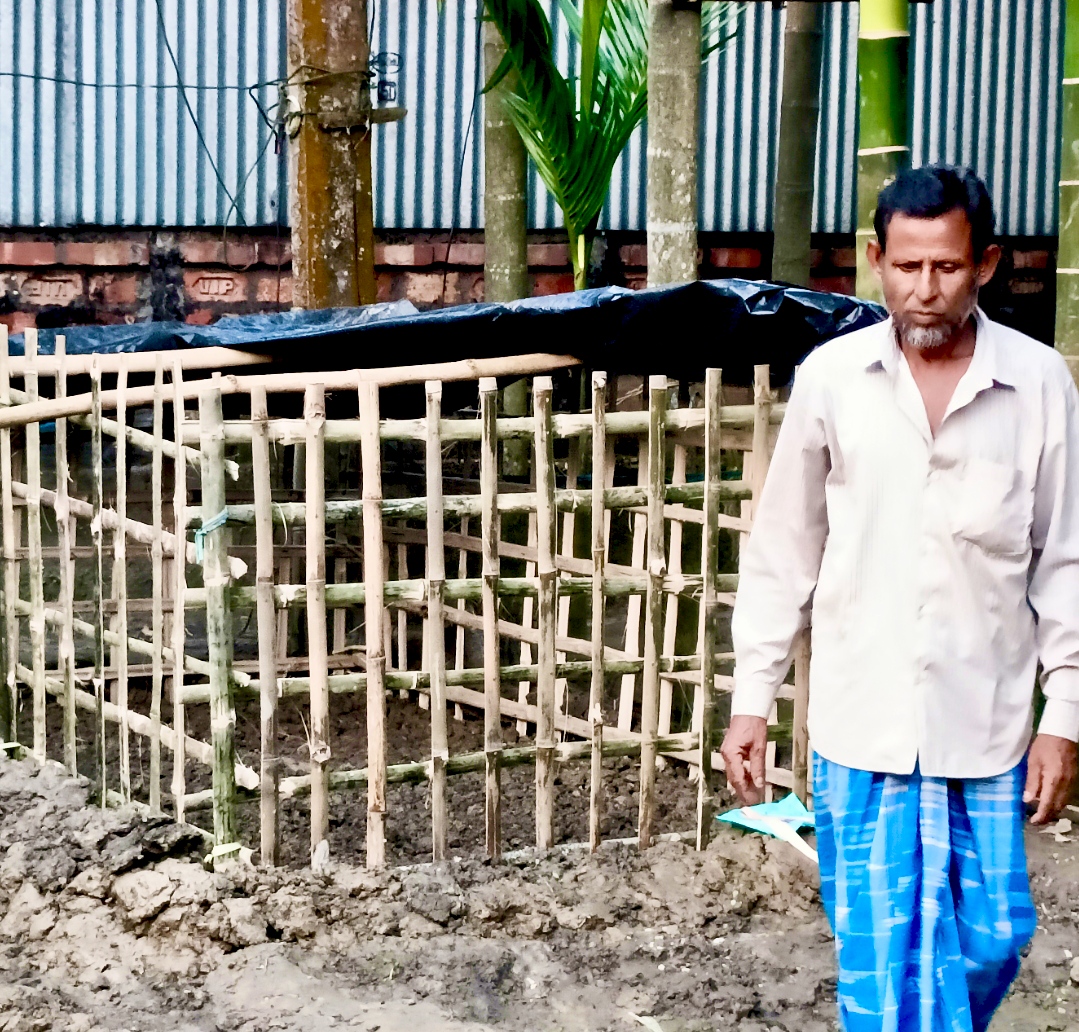
Kanchu Mian beside his son’s grave, under a bamboo covering. Photo: Joydeep Sarkar
He says he does not want rain to fall on him.
The night of September 20
Kabir’s younger brother Ataur was born with a disability. The family says Kabir helped him throughout childhood and supported his education until he graduated. Kabir worked in catering and in agriculture.
After the calls began, the family woke up. It was raining heavily.
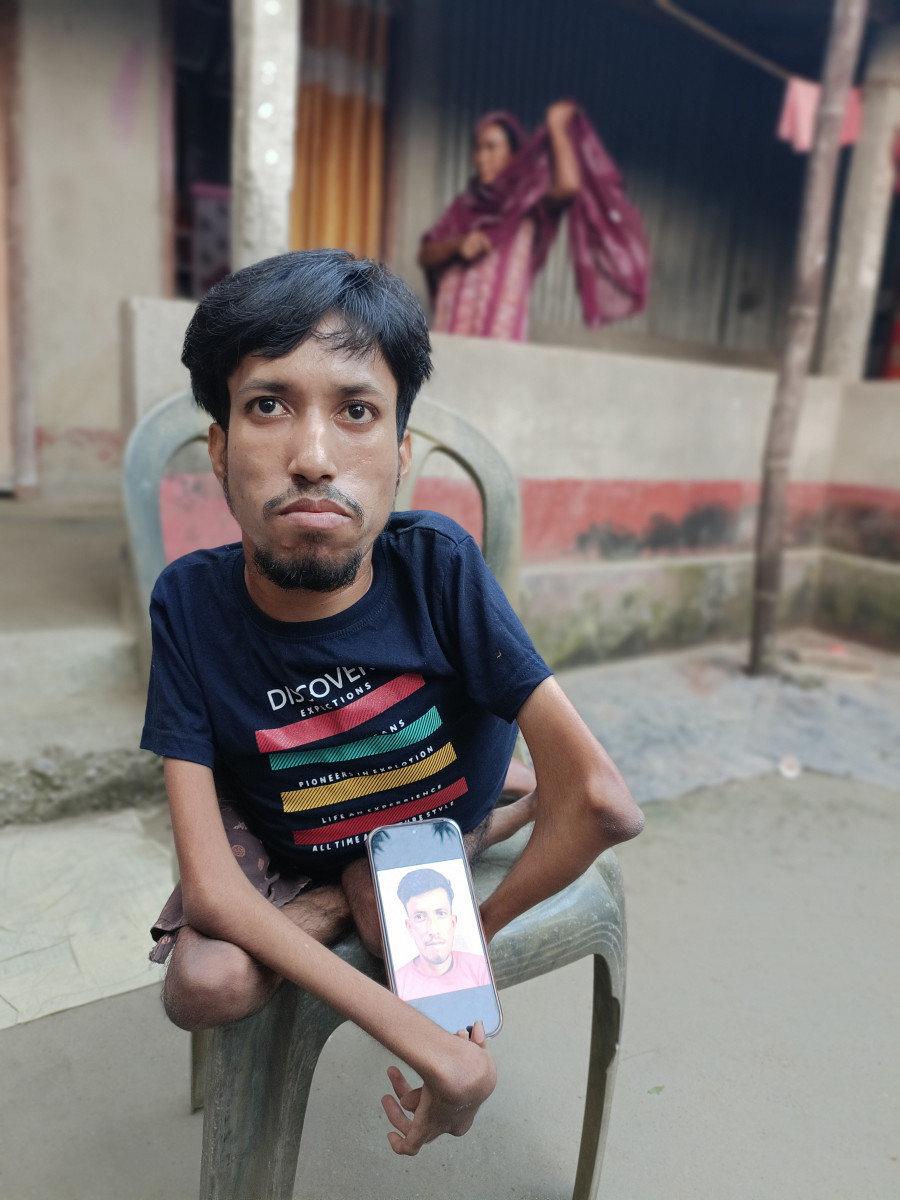
Mir Allama Kabir’s disabled brother, Ataur Rahman. Photo: Joydeep Sarkar
Ataur alleged that one of the names appearing on caller-identification software was Liton Roy, whom local residents describe as associated with cow-vigilante groups and the BJP. Another number displayed the name of a village police functionary, Mithun Barman. The Wire could not independently establish either the identification or the affiliation.
Ataur said he told the callers the family could not possibly arrange Rs 1 lakh. “They weren’t interested in listening.”
After daybreak an elderly relative, Abdus Sattar, went with several neighbours to the place the callers had named.
“The demand had by then fallen from Rs 1 lakh to Rs 25,000,” Ataur said. “We said we couldn’t afford it. We even showed them the bank passbook to explain how little money we had. Finally, they agreed to Rs 5,000.”
Rs 5,000 was transferred online to an account supplied by the group, the family says, and a further Rs 300 handed over in cash. They said they had given the police a screenshot of the transaction as evidence.
“They told us to go to the police station claiming he was there,” Ataur said. “At the police station, we were told he was at the hospital. When we went to the hospital, dada’s (elder brother’s) body was lying there.”
Ataur said the lower part of his brother’s body appeared crushed and the upper body was covered with injuries and dark bruises. “There was blood and bruising across his body.” He and other family members also alleged that Kabir’s face smelled of human urine. No medical finding confirming that was available when The Wire visited.
“It was clear to us that 10 or 12 people had come together to beat one man,” Ataur said. “After the post-mortem, we brought his body home and buried him in our courtyard. We did not protest then. We understand what is happening.”
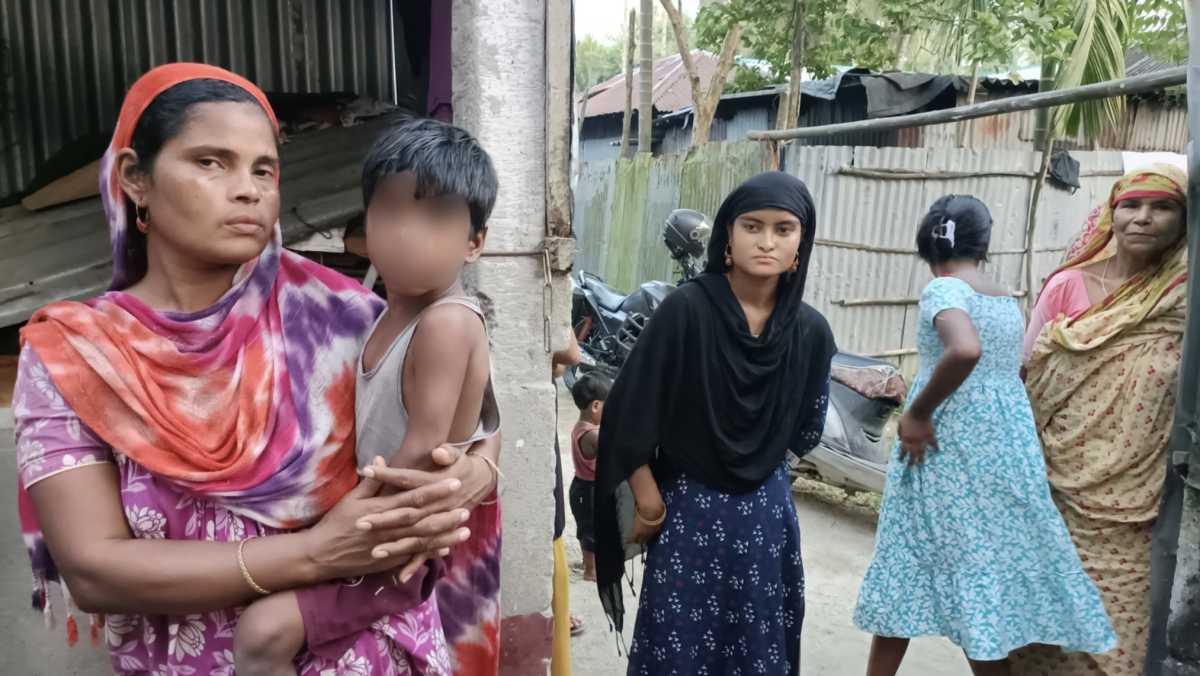
Women in Sitai area of the village. Photo: Joydeep Sarkar
“It is horrifying even to think of such a brutal killing. If the dead man’s face smelled of human urine, it means the killers urinated on him or forced urine into his mouth,” said his neighbour, Aminur Rahman. “Ten or twelve people spent the whole night killing one man. This was entirely religious and political.”
‘How is the family to find witnesses?’
The police arrested four people, Ataur said, “But the people we believe were primarily responsible have not been arrested.”
He said the family raised this at Dinhata police station. “The inspector in charge asked for witnesses and evidence.”
Ataur questioned how a family is supposed to find an eyewitness to a killing on an isolated road in the middle of the night. “At the place where they killed him, who was there apart from those men and a cow?” he said. “How are we supposed to produce a witness?”
The police website identifies Budhaditya Ray as inspector in charge at Dinhata. Ray told The Wire that four people had been arrested and remanded to judicial custody for 14 days. “The investigation is continuing,” he said. “We may get more information after the post-mortem report.”
Eleven days after the death, at the time of The Wire’s visit, the family said it had still not received the post-mortem report.
A village that empties after dark
Residents of Indra Narayan, Hindu and Muslim, told The Wire that everyone now avoids the road after sunset.
One villager, on the condition of anonymity, said that every night, a group gathers near a temple, close to the Thagertari primary school. He alleged that these locals were connected with the BJP and the Bajrang Dal.
He also alleged that many people travelling on the road had been threatened or robbed. “The police are with them,” he said. “Who will investigate?”
The Wire could not verify the affiliations or the allegations against those named.
‘Was told Hindu party would work for Hindus’
In the village, Kabir is remembered for something more than his cattle. Asit Roy, a neighbour, recalled watching him work while taking responsibility for his younger brother’s education.
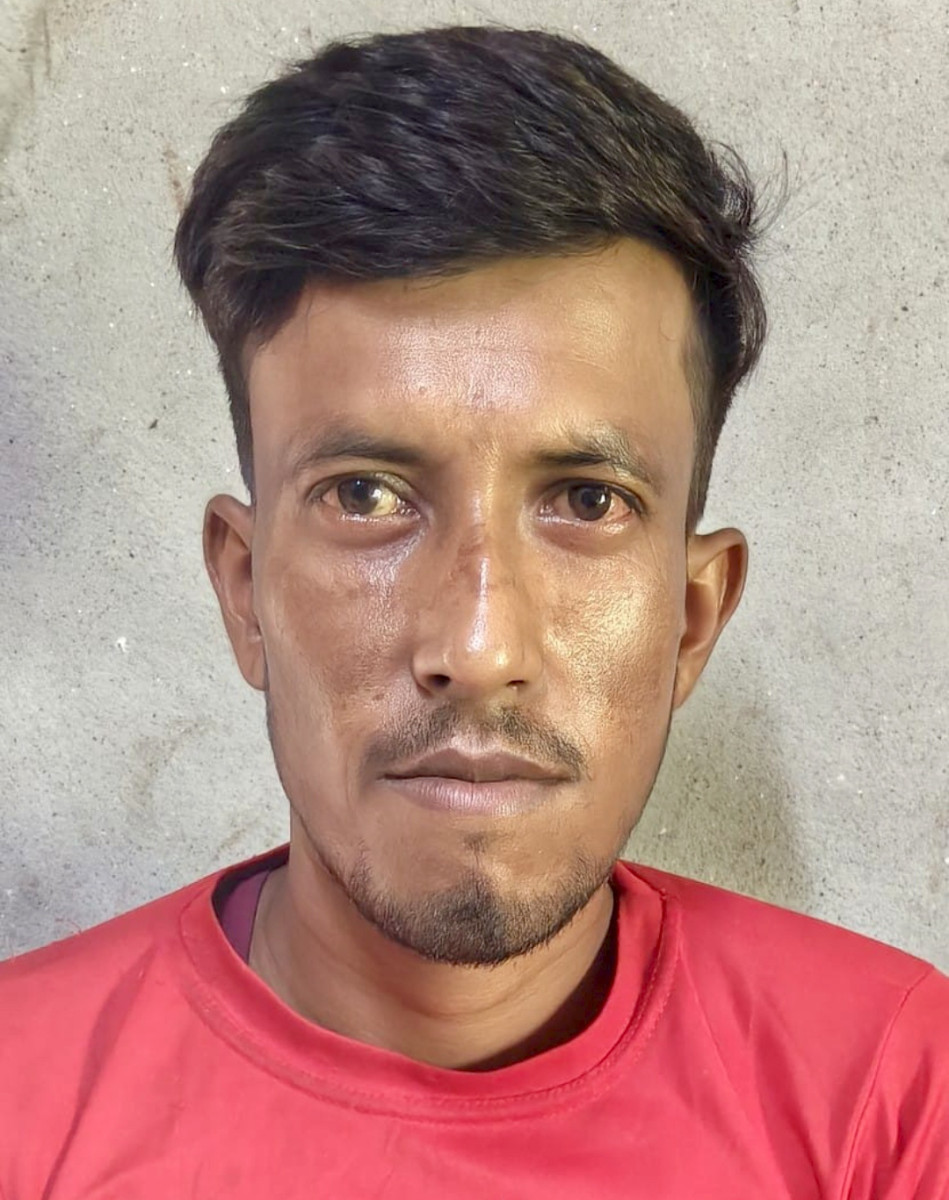
Mir Allama Kabir. Photo: By arrangement
“He studied himself and worked hard so that his disabled brother could study in college and graduate,” Roy said. “That made me respect him.”
Roy, a small businessman, said he had voted for the BJP.
“I was told a Hindu party would work for Hindus and there would be development. But what is happening now?” he asked.
Dinhata MLA Ajay Roy visited Kabir’s family after the killing, and a local report recorded him assuring them that those responsible should face legal action.
“I personally went to meet the family,” Roy told The Wire. “Perhaps the trouble happened because he was taking a cow out at night. But I do not support anyone taking the law into their own hands. The police have arrested the offenders. But the incident is apolitical.”
‘They killed my father in front of the police’
Kabir’s was not the first cattle-related death in the region.
In Singimari village, at the Sitai end of the old Rangpur Road, Faizan Mian drives a toto (colloquial word for an electric rickshaw) that used to belong to his father. He was working as a migrant labourer when his father, Mannaf Mian, was killed earlier this year. Faizan returned upon hearing the news and entered his father's profession.
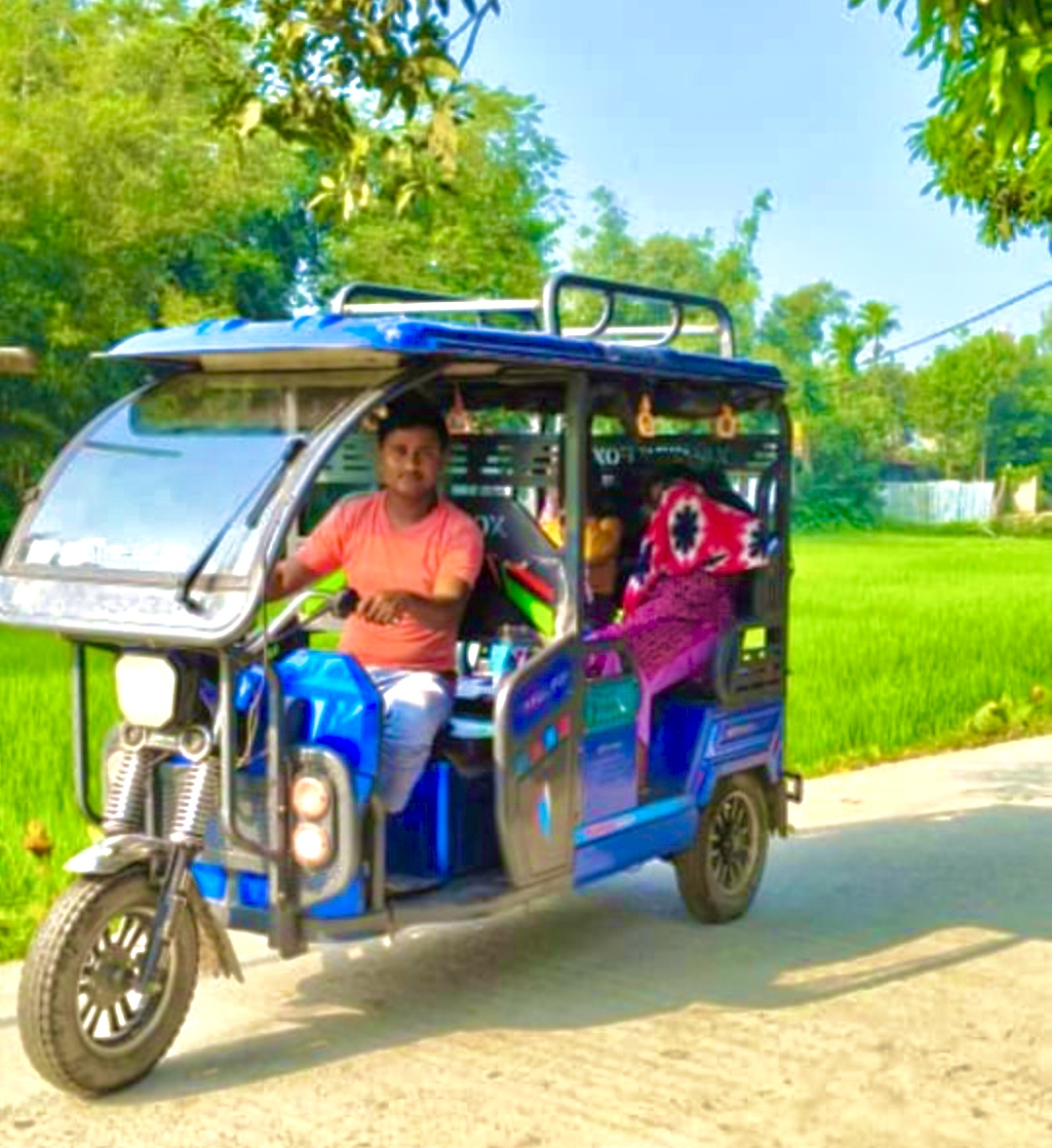
Faizan Mian driving his father’s toto-rickshaw in Singimari village. Photo: Joydeep Sarkar
Residents and the family say that violence began in Singimari on May 5, the day after the West Bengal assembly election results were announced. They allege that Bharatiya Janata Party (BJP) workers attacked a mosque in the locality and this led to residents protesting.
Police from Sitai soon reached the area. Residents also say that a second and larger group of Hindutva supporters arrived shortly after police did. Mannaf Mian was sitting at some distance, watching. But as people started running away, the family alleges, Mian was caught and dragged away.
“At that time there were so many policemen in the entire area that locals thought the police would certainly rescue my father,” Faizan said. “People were running. They could not get hold of anyone else nearby, so they caught my father.”
“We went to the police and pleaded with them to release him. Instead, the police abused us and drove us away. We hid in a corner out of fear. After several hours, the crowd left. The police also left. Then we found my father’s crushed body lying there. They killed my father in front of the police and left,” he said.
Some people were arrested afterwards, Faizan added, but they were eventually acquitted for lack of evidence.
The family went back to Sitai police station recently to ask for a proper investigation. According to Faizan, the investigating officer, Priyaranjan Mishra, told them, “Don’t talk too much. You won’t even be able to remain in your homes.”
The Wire could not independently verify this account.
Aidul Mian, a neighbour who went with them, asked, “How are we supposed to have faith in the justice system?”
“They can come again to loot us or kill us and there will be nowhere to seek help,” Faizan said. “That thought is now in everybody’s mind.”
Montu Mian
In early July, Montu Mian, a resident of the Sitalkuchi area, went missing, and contemporary news reports say his body was recovered the following day near a riverbank.
He was described locally as a garowan, someone who moves cattle between fields, markets and homes, and as a long-time Communist Party of India (Marxist) (CPI(M)) supporter.
The circumstances remain contested. The CPI(M) and his family alleged he had been killed by cow vigilantes while transporting cattle. Local reporting at the time described it as a ‘mysterious death’ and carried the family’s allegation of murder.
The CPI(M)’s Cooch Behar district leader Mahananda Saha said Montu Mian had been with the party for years, and alleged that the incidents at Sitalkuchi, Singimari and Indranarayan were connected to groups aligned with the BJP.
“We have met the families. Their allegations are genuine. They are not getting justice. The police are behaving in a partisan way,” Saha said. “Cattle rearing and buying and selling livestock are being affected. That damages the rural economy and at the same time creates fear among minorities.”
Umar Awais, West Bengal secretary of the Association for Protection of Civil Rights, said an Association for Protection of Civil Rights team had visited Cooch Behar and placed its findings before the district superintendent of police.
“We will fight for justice in the high court and, if necessary, in the Supreme Court,” he said. “We want these incidents to be investigated under judicial supervision.”
Awais also alleged political bias within sections of the police, and that officers with prior Rashtriya Swayamsevak Sangh links had been appointed to key police stations. Neither allegation could be independently verified.
Kabir wasn’t the last
In the early hours of October 3, the geography widened again.
Thirteen days after Kabir died, about 150 kilometres away, five men near the Matigara-Bagdogra border were accused by residents of trying to steal cattle. They were chased, caught and assaulted, and a pickup van was set on fire. Two of them died.
The distance between the two places is considerable. The accusation was the same.
And in both cases, before any court could decide whether a crime involving cattle had occurred, the Hindutva mob had already delivered its own punishment.
This article went live on October seventh, two thousand twenty six, at twelve minutes past three in the afternoon.The Wire is now on WhatsApp. Follow our channel for sharp analysis and opinions on the latest developments.


