

Both TMC and Hindutva Had a Role to Play in Bengal’s Ram Navami Celebrations


Kolkata: Ram Navami celebrations in West Bengal were relatively peaceful this year.
That, in itself, is news. Peace is the keyword here.
Over the past few years, the festival has increasingly been associated with communal tension and street-level unrest. Processions featuring aggressive sloganeering, clashes between groups, and heavy police deployment had become a norm.
This year’s calm stood out. Many breathed a sigh of relief. Yet, this peace feels fleeting. The very need to celebrate peace as an anomaly, rather than an expectation, speaks volumes about the deepening divides that now define West Bengal’s political landscape.
The day began with West Bengal chief minister Mamata Banerjee setting the tone through an early-morning social media appeal for “peaceful” Ram Navami celebrations. Large-scale processions, adorned with saffron flags, chants of “Jai Shri Ram,” and armed displays became the stage of overt political theatrics with the Trinamool Congress (TMC) and the Bharatiya Janata Party (BJP) competing for visibility. That the TMC is actively getting into what was once seen as the BJP’s ideological turf was quite evident.
In Birbhum, TMC MP Shatabdi Roy joined a Ram Navami procession draped in a saffron “Jai Shri Ram” sash. Her conspicuous participation in scorching heat, just two days after skipping a vote on the Waqf Bill citing illness, sent ripples through her constituency, where Muslims constitute over 40% of the population. The move underscored the TMC’s strategic shift to court Hindu voters, even at the risk of alienating minority communities. This confidence likely stems from a calculation that aggressive Hindutva will again drive Muslim voters to polarise in their favour, as seen in 2021.
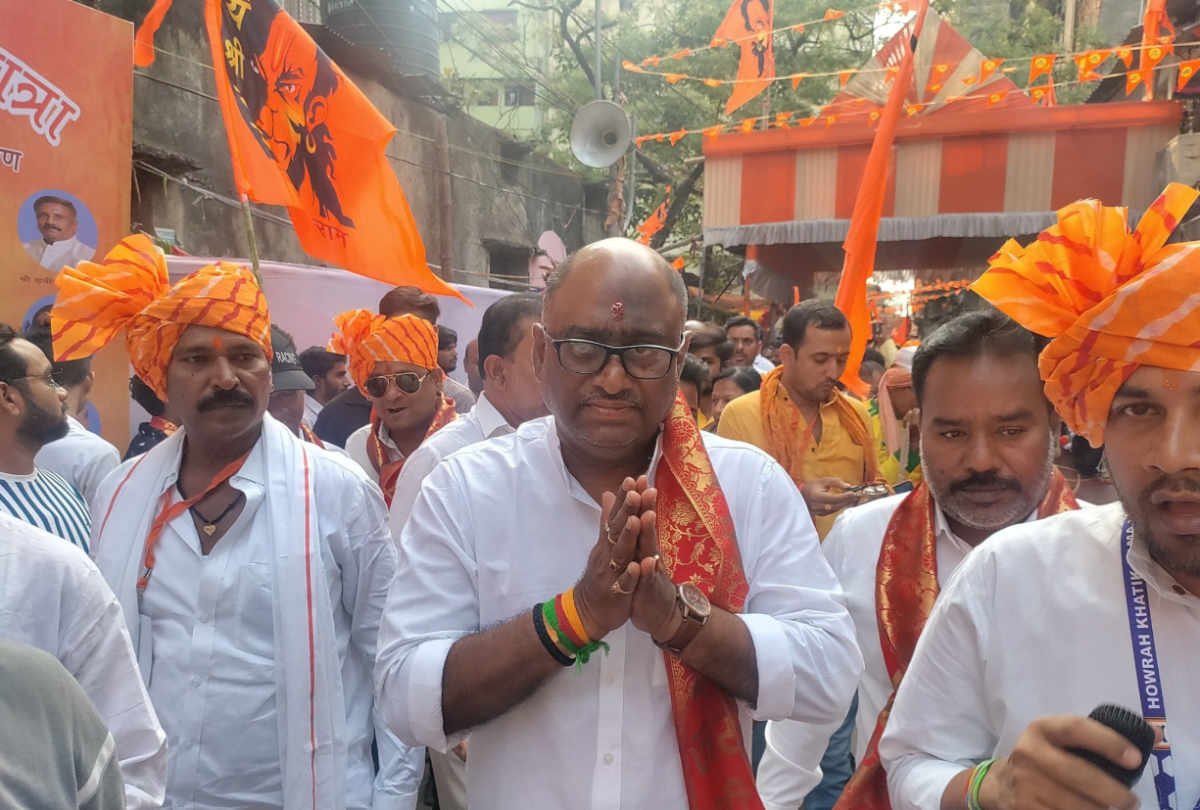
TMC Uttar Howrah MLA Gautam Chowdhury. Photo: Facebook
Two TMC MLAs in Howrah participated in separate, aggressively charged Hindutva rallies. One of these events was organised by the Viswa Hindu Parishad (VHP). The other, widely shared on social media, showed young people in saffron attire waving weapons and dancing wildly to provocative DJ tracks.
In Raiganj, BJP MP Kartik Pal touched the feet of TMC’s Kanaia Lal Agarwal during a procession, while Dubrajpur saw TMC Mayor Piyush Pandey march alongside BJP MLA Anup Saha. TMC strongman Anubrata Mondal, currently on bail in the ration scam, also led a Ram Navami procession in Bolpur, Birbhum.
Ram Navami pujas debuted at Left-leaning Jadavpur University, and processions expanded to villages in Malda, Murshidabad, Birbhum and tribal Jungla Mahal. There was a clear directive from the Calcutta high court against carrying weapons, including sticks in any processions. Yet, across West Bengal, participants, including minors, openly carried swords, tridents, axes, and knives in open defiance of the order.
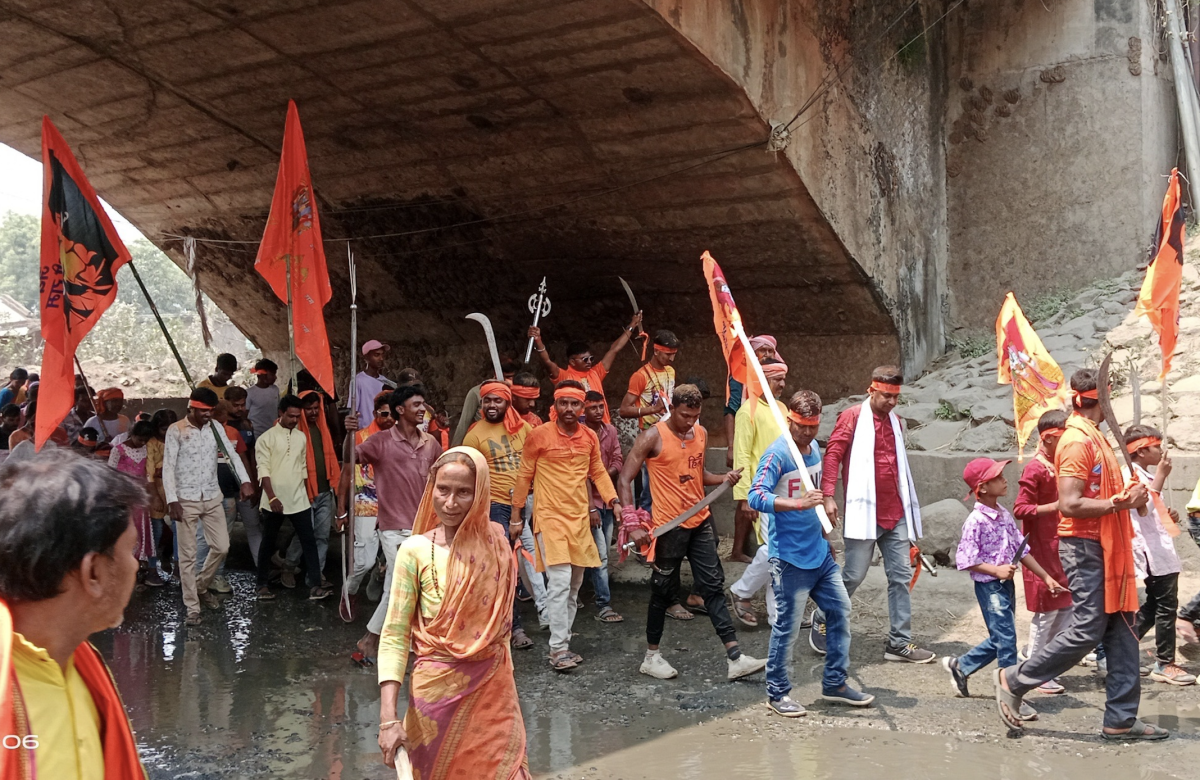
Across West Bengal, participants, including minors, openly carried swords, tridents, axes, and knives in open defiance of the Calcutta high court order. Photo: Facebook
Senior BJP leaders, including Union minister Sukanta Majumdar, Leader of Opposition Suvendu Adhikari, and actor-turned-politician Mithun Chakraborty, led rallies where many participants were visibly armed with sharp weapons. The processions were accompanied by heavy police presence yet they made no apparent effort to enforce the court's directive.
This selective tolerance stands in stark contrast to how police respond to other forms of public dissent. Just weeks ago, during a Democratic Youth Federation of India-led (DYFI-led) protest in North Bengal, police cracked down swiftly and forcefully. The double standard raises troubling questions about the state government’s approach toward weaponized religiosity versus rigidity toward secular dissent.
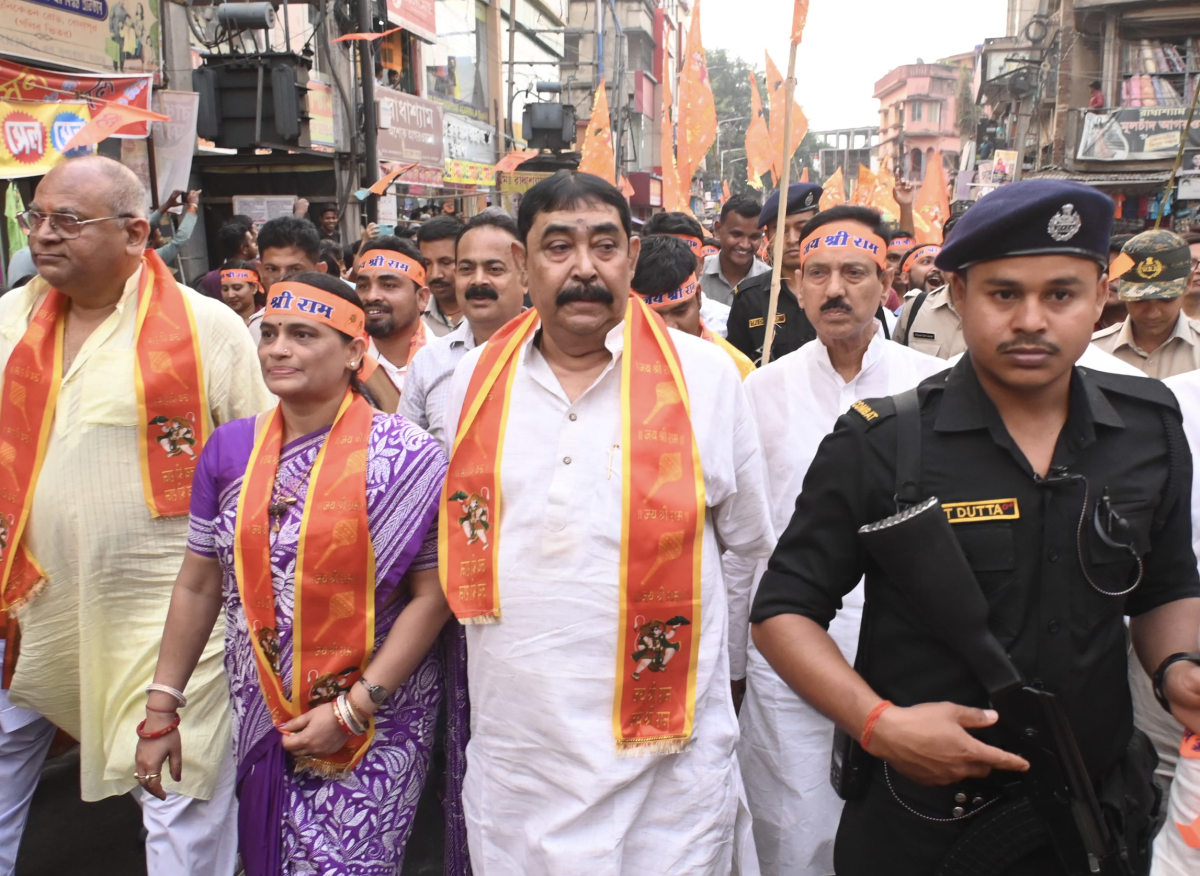
TMC leader Anubrata Mondal in a Ram Navami procession. Photo: By arrangement
TMC’s strategic appropriation of Hindu symbolism, evident in the public assertion of Banerjee’s Brahmin identity, her party’s presence at Ram Navami rallies, the administration’s tacit tolerance of armed processions, and her impending inauguration of the state-funded Jagannath Temple in Digha, signifies a deliberate realignment. The Sangh’s ideological pressure has deeply seeped into TMC’s political machinery. It is not just adjusting to a Hindutva-dominated discourse, it is actively attempting to own and reengineer it.
Whether Banerjee’s aggressive courtship of Hindu voters stems from the BJP’s unrelenting Bangladesh-centric rhetoric or mere electoral pragmatism is secondary. What matters is the undeniable reality it exposes. The Sangh Parivar has successfully transplanted its national strategy of marginalising minority concerns.
The 2026 Assembly election now appears destined to hinge not on governance but on competing claims to Hindu identity, a stark departure from 2021, when secular voters united behind her to thwart BJP. This normalisation of religious identity politics marks a success for the Sangh Parivar as Hindutva’s ideological grip tightens regardless of the election’s outcome.
This article went live on April eighth, two thousand twenty five, at seven minutes past eight in the evening.The Wire is now on WhatsApp. Follow our channel for sharp analysis and opinions on the latest developments.


