

Malegaon Blast Trial: 1,087 Hearings, Inexplicable Orders and Victims Who Refused to Relent


Mumbai: “This was not just a trial against the seven individuals accused of participating and executing a terror attack but also a case where families of those killed and the victims who suffered serious injuries were put to trial too,” says advocate Shahid Nadeem, as he looks back at the Malegaon 2008 blast trial, which is scheduled to finally come to an end today, July 31, nearly 17 years after the incident.
The special National Investigation Agency (NIA) judge A.K. Lahoti will pronounce judgment in the case that involved high profile accused persons, including Bharatiya Janata Party leader and former Member of Parliament (MP) Pragya Singh Thakur, serving army Lieutenant Colonel Prasad Purohit, and retired army officers among others. The accused, according to the agency, were a part of Abhinav Bharat organisation. They allegedly appointed Purohit to carry out terror operations across the country with the aim to eventually make India into a “Hindu nation”.
The trial began in 2018 and in all, 323 witnesses were examined. According to the final tally given by the special public prosecutor Avinash Rasal, 39 of them turned hostile in court.
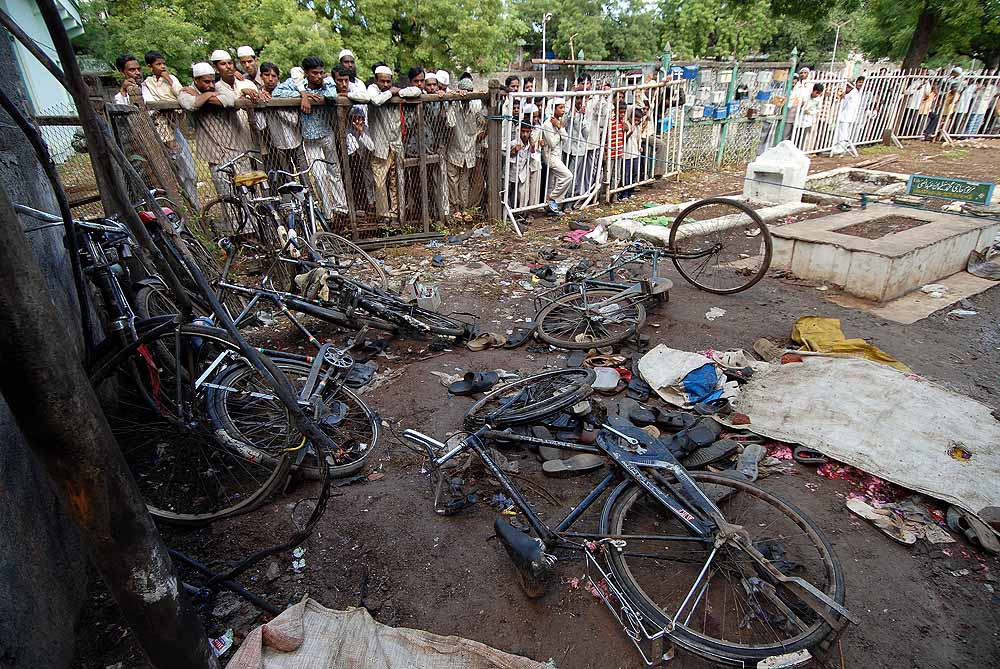
The scene of the Malegaon bomb blast. Photo: PTI.
It is usual for victims' medical certificates to be submitted so that they are not physically required to appear in court. This case is perhaps the only one in which injured victims were made to travel long distances from their hometown of Malegaon to Mumbai, where the NIA court is located, for their testimonies.
“Only because one of the accused persons [Sudhakar Dhar Dwivedi] challenged the very incident – he called it a “cylinder blast” – did the victims have to travel so many times, just to disprove his theory,” Nadeem says.
In 2008, Ramzan, a holy month for Muslims, coincided with Navaratri, an important festival for Hindus. A bomb went off at the Bhikku Chowk in Malegaon, a satellite power loom town, nearly 100 km northeast of Nashik in Maharashtra. The Anti-Terrorist Squad had claimed that the improvised explosive device or IED had been planted on an LML Freedom motorcycle specifically during that time to cause communal tension in the already communally sensitive town. In all, six persons were killed and as many as 101 individuals suffered injuries.
The state would sanction a paltry sum of Rs. 250 to cover the travel cost of the injured victims. This money was nowhere enough to cover the nearly 350 kilometres to court and the equal distance home. “The victims come from the lowest strata of the society and couldn’t afford the travel on their own,” Nadeem adds. So, the Jamiat Ulema-i-Hind, a socio-religious organisation which until this point would only provide legal aid to individuals they felt were wrongly implicated in terror cases, also stepped in to take care of witnesses in this case. So it was that Nadeem, originally from Malegaon and with a long association with Jamiat, came to be involved in the case.
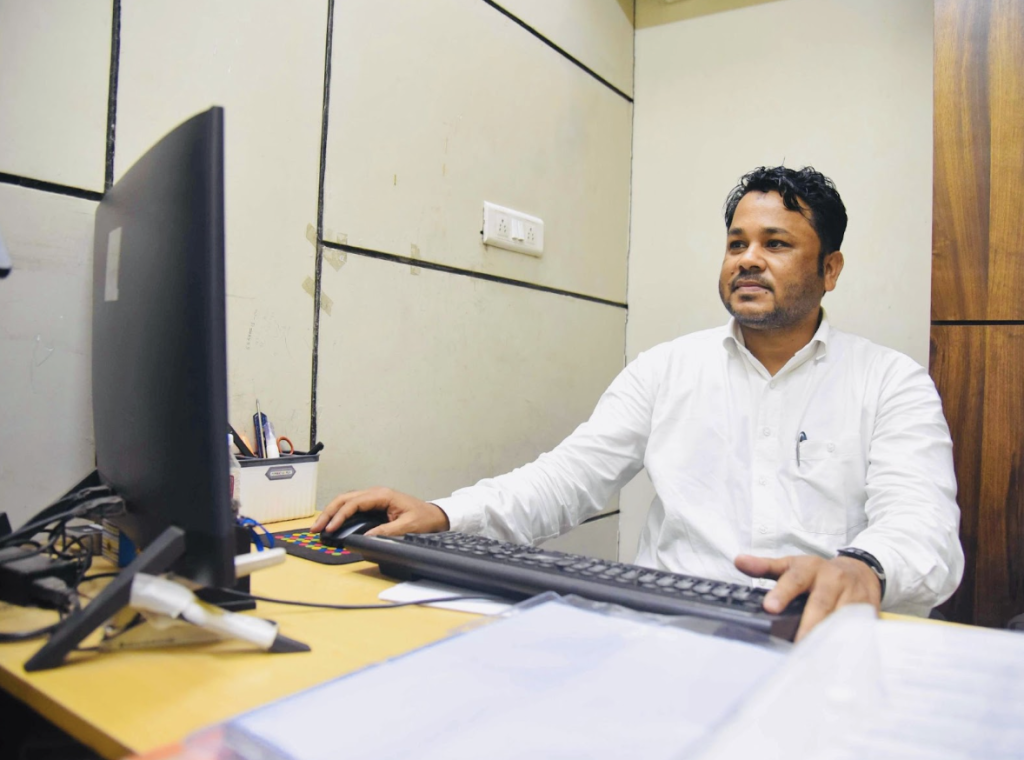
Advocate Shaheed Nadeem, who represented the victims in the case. Photo: By arrangement.
Besides Thakur, Purohit and Dhar Dwivedi, others who faced trial in the case include Ramesh Upadhyay, Ajay Rahirkar, Sudhakar Chaturvedi and Sameer Kulkarni.
The victims participated not just as witnesses but also did their best to keep the trial on track. The protracted terror trial, initially handled by the Maharashtra Anti-Terrorism Squad and later taken over by the National Investigation Agency (NIA), would have been disposed of long ago had the victims’ families not intervened. While the Criminal Procedure Code (CrPC) provides for victims to be an active participant in the trial, this rarely happens in terror cases.
Nisar Ahmed Sayyed Bilal, father of 19-year-old Sayyed Azhar, who was killed in the blast, became an intervenor in the case in 2016, shortly after the NIA filed its supplementary chargesheet, giving a clean chit to the prime accused, Pragya Singh Thakur, a former BJP MP from Indore, along with three others Shyam Sahu, Praveen Takalki and Shivnarayan Kalsangra. Two others, Jagdish Mhatre and Rakesh Dhawde, too were cleared of all the terror charges and only faced trial under the Arms Act before another court.
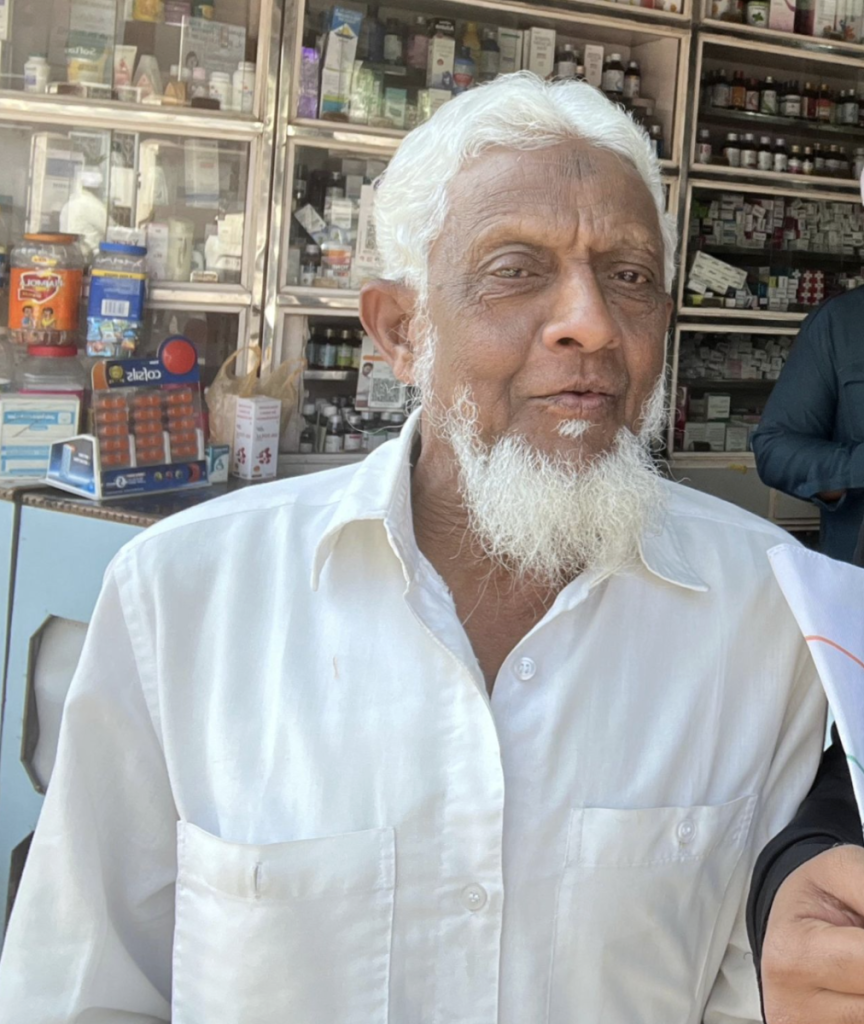
Nisar Ahmed Sayyed Bilal, father of 19-year-old Sayyed Azhar, who was killed in the blast, became an intervenor in the case in 2016. Photo: By arrangement.
Nisar Ahmed, now 75-years- old, can barely speak. His condition has deteriorated rapidly over the past two decades during which he has been waiting for justice. But his health has not deterred him and since he moved his intervention application through his lawyer, Nisar Ahmed has consistently intervened, right from the trial court up to the Supreme Court.
Nisar Ahmed’s first application was to oppose Thakur's discharge from the case. The NIA had virtually given her a clean chit in 2016, claiming “sufficient evidence has not been found” against her among others. The original ATS case was that Thakur had owned the LML motorcycle used for the explosion and she had handed it over to her associate and a wanted accused in the case, Ramchandra Kalsangra.
The NIA’s decision to drop Thakur from the case, eventually led to her release on bail from the Bombay high court. But the opposition by the victim’s family helped in ensuring she was not discharged from the case. The then special court judge S.D. Tekale denied the NIA’s application to discharge Thakur from the case. He was eventually transferred.
While judge Tekale was still around, the charges under the stringent Maharashtra Control of Organised Crime Act (MCOCA) was dropped from the case. With the dropping of the MCOCA sections, the prosecution's claim that Purohit was involved in “raising funds to the tune of Rs 21 lakh” against the rules of the armed forces also weakened. The trial continued only under the sections of the Unlawful Activities (Prevention) Act, Arms Act and other sections under the Indian Penal Code.
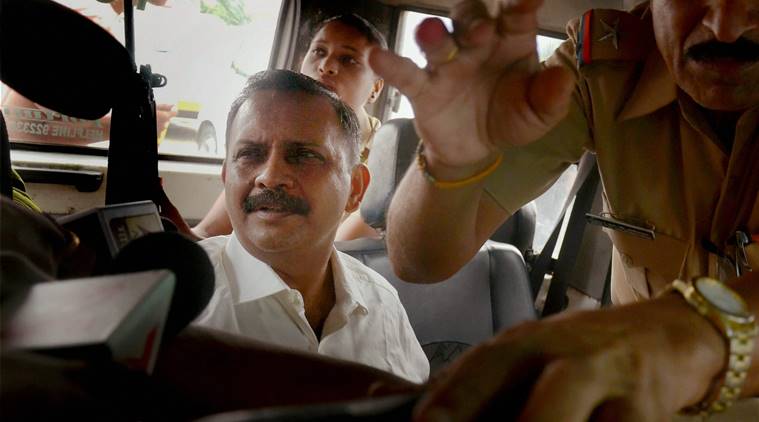
Malegaon blast case accused Lt Colonel Prasad Purohit. Photo: PTI/File.
When the high court granted her bail, Nisar Ahmed moved the Supreme Court against the court’s order. “The NIA didn’t oppose the bail as they already wanted her name dropped from the case. But the victim’s father did,” Nadeem shared.
Similarly, in the case of Purohit too, Nisar Ahmed opposed his bail right up to the Supreme Court, which eventually granted him bail. Purohit’s bail then became a ground for the release of rest of the accused in the case in 2017. After spending nine years in jail, all accused in the case were eventually released.
Purohit, who was serving in Pachmarhi at the time of his arrest in 2008, is alleged to be the founder of Abhinav Bharat, a group floated on February 2, 2007 to propagate a separate ‘Hindu rashtra’.
In 2021, when senior advocate and former attorney general Mukul Rohatgi appeared for Purohit, Nisar Ahmed objected on the grounds that Rohatgi had earlier given his legal opinion on the application of the MCOCA law in the case. “This would create prejudice to the whole proceedings”, Nisar Ahmed’s lawyer had argued. Rohatgi had to eventually drop out of the case.
Also read: Will the NIA 'Supplementary Chargesheet' End the Confusion on the Malegaon Blasts?
The accused persons, like one would do in any case to build their defence, had raised several objections, including the sanctions under the Unlawful Activities (Prevention) Act. One of the accused persons, Sameer Kulkarni, even went up to the Supreme Court seeking a stay on the issue of sanction under the UAPA. The apex court had stayed the trial only for Kulkarni and had directed the trial court to continue with the rest. Here too, Nisar Ahmed had intervened. Kulkarni too faced trial along with other accused, eventually.
When the NIA claimed that as many as 13 witness statements, all recorded under Section 164 of the CrPC before a magistrate, and two statements of the accused recorded under MCOCA were untraceable, Nisar Ahmed was again the first to intervene. The investigating agency had claimed that documents had gone missing in transit as the case dragged on for several years and documents kept being ferried to different courts from Nashik (where the case originally began) up to the Supreme Court. The trial court had allowed the NIA to use photo copies as secondary proof in place of papers that went missing.
The trial, which remained almost dormant for close to 10 years, finally started in 2018. Nisar Ahmed had also moved an application demanding expedition of the case. The accused persons, who have been on bail for over eight years now and live in various parts of the country, have skipped several court hearings. Nadeem says that of the 1,087 court hearings, Thakur appeared only 34 times. “But the NIA never objected to her absence from the court. This too was objected to by the intervenor,” he adds.
In all, five judges have handled this case. Initially, the case came up before Y.D. Shinde, later, S.D. Tekale took over, and once he was transferred, V.S. Padalkar was appointed as the special court judge. Later P.R. Sitre was appointed and finally A.K. Lahoti continued with the trial. The transfers, sometimes routine and sometimes inexplicable, were also opposed by Nisar Ahmed. “I won’t say all of our applications always worked. But we needed them to be moved to just ensure that both the judiciary and the agency knows that the victims are watching closely," Nadeem notes.
This article went live on July thirty-first, two thousand twenty five, at forty-nine minutes past eight in the morning.The Wire is now on WhatsApp. Follow our channel for sharp analysis and opinions on the latest developments.


