

A New Museum in Paris Is All About Money


They say money makes the world go around, and apparently, it also makes for a good museum: The "Cité de l'économie et de la monnaie" "(which translates as city of economy and money) is a new museum which opened this summer in Paris. Called Citéco for short, it's appropriately located in the central building of the Banque de France.
While the setting of the museum could hardly be more dignified – a castle-like villa built by the banker Émile in the late 19th century – its content is playful. Excerpts from Charlie Chaplin's 1915 short film The Bank flicker in the former vault. A work of art by the French artist Christian Champin welcomes the visitors: Djibrila, a cow sculpture made of metal waste, is intended to point out the problem of overproduction around the globe.
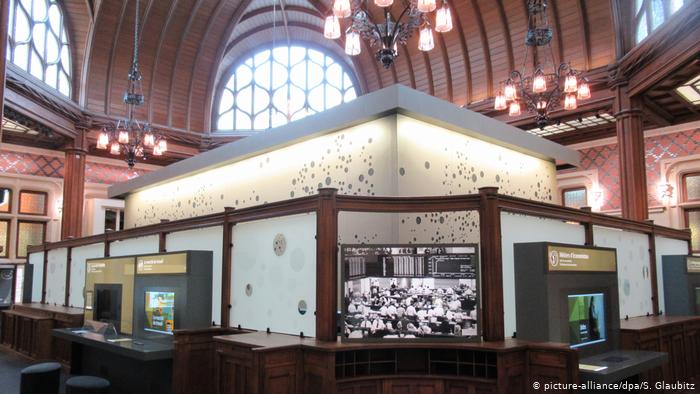
The museum features interactive artworks, including films and video games.
A museum with imagination
While one might imagine a museum about economics to be a bit dull, in fact, the opposite is true. Citéco boasts more than 50 videos and 20 video games, as well as photographs and sculptures in its collection. There's even an eye-catching one-meter-high sculpture made of hundreds of feathers, pearls, shells and coins, which at some point served as a means of payment. The museum aims to prove that a complex economic history can be explained in an original and playful way.
The museum will also host a variety of imaginative and interactive exhibitions. Climate summits will be staged in a reconstructed conference hall, during which visitors can slip into the roles of state representatives and negotiate with one another.
For the majority of people in France, the workings of the global economy are difficult to understand, explained director Philippe Gineste at the museum's opening. He believes that people of all ages and walks of life should and can understand the economy and hopes Citéco will help with this process.
Movies in a former bank vault
The Citéco had support from the "Museo Interactivo de Economía" in Mexico City. It was the world's first multimedia and interactive business museum when it opened 13 years ago. It now attracts around 250,000 visitors annually.
Paris's new museum lies in the chic 17th district in suitably splendid settings. The lead architect was Jules Février who took inspiration from the Loire castles in France for his neo-Renaissance structure. True to its influence, it also has a drawbridge which leads over a small moat.
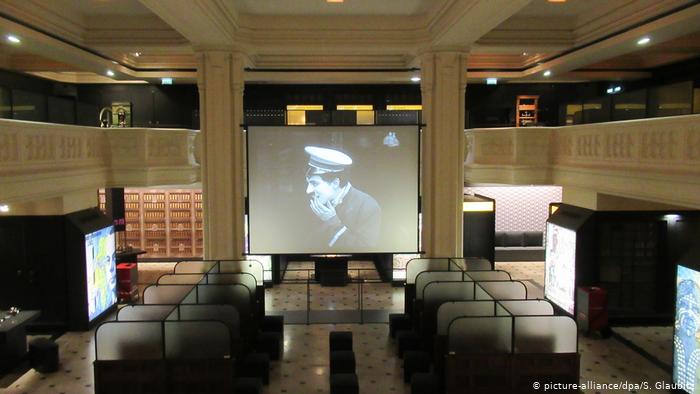
From art to film, there's plenty to discover between the walls of this castle-like former mansion.
Made of marble, brick and glass, with decorated high wooden ceilings and panelled walls, the building is undeniably opulent. In 1919 it was acquired by France's National Bank, the Banque de France. Today it is a historical building.
One of its highlights is the "Salle de coffres," the underground vault which hides around 110 safes, once filled with riches. Today, films are shown in the space, and visitors can even design their own banknotes.
Yet, the new museum itself has come under financial speculation. Its conversion reportedly cost around €50 million ($55.5 million). But behind the scenes, there is speculation that the actual costs were twice as high. The project was financed by France's National Bank, which is now a member of the European System of Central Banks. And what exactly is the European System of Central Banks? A visit to Citéco provides the answer.
This article was published on DW. Read the original here.
This article went live on August twenty-second, two thousand nineteen, at zero minutes past seven in the morning.The Wire is now on WhatsApp. Follow our channel for sharp analysis and opinions on the latest developments.


