



This is a Sapan News syndicated feature.
Obituary: The Pakistani Peace Activist Who Carried My Grandfather's Ashes Across Wagah
Karamat Ali (19 August 1945 – 20 June 2024) had this ability to make possible what was impossible – with gentleness, humour and compassion, and a smile that will be greatly missed.
Karamat Ali. Photo: K.B. Abro; Sapan News.
Advertisement
A personal tribute to Karamat Ali (19 August 1945 – 20 June 2024)
Karamat Ali was many things but for me he was always the person who returned my grandfather Kuldip Nayar to the home he was born in. The relationship between him and my grandfather defies labels but it has a bond that is deep and unbreakable, stronger than many relationships with names.
§
There are many words for friendship. Arabic has twelve. You can choose from friendships of different shades – the intense saqeeb, a true friend; sameer, someone who you like to have a conversation with; or the casual zameel, an acquaintance.
English has just the one – a bland friend. The short dost (friend) in Hindustani encompasses in its tiny frame a sort of bro-code for the intense relationship that Hindi film songs refer to, between Maana Dey’s ‘Yaari hai Imaan’ (My friend is my faith) to Sholay’s anthem ‘Yeh Dosti Hum Nahi’ (This friendship we will never abandon).
Advertisement
‘Dost’
So I struggle to find a word to describe the relationship between Karamat Ali, labour leader, peace activist, revolutionary, lover of music, and my grandfather Kuldip Nayar, journalist, peace-activist and fellow dreamer. And by extension, my relationship with Karamat Sahib.
Advertisement
This relationship without a name has a bond that is deep and unbreakable, stronger than many relationships with names.
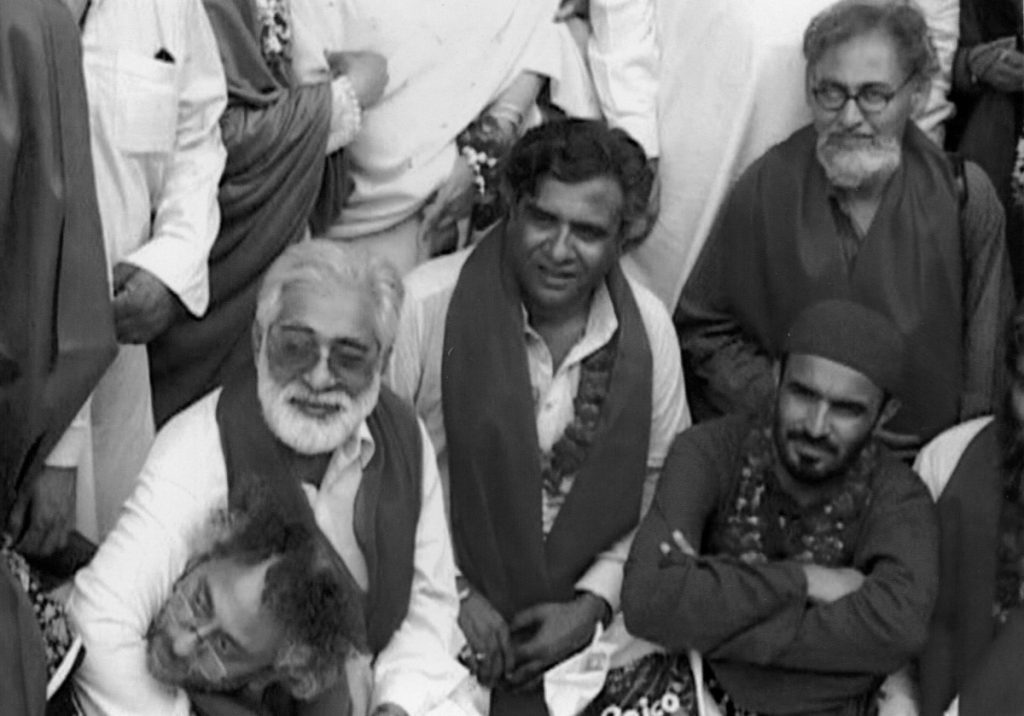
Karamat Ali holds friend M. Tahseen in headlock, surrounded by other comrades. Photo: Sapan News.
Advertisement
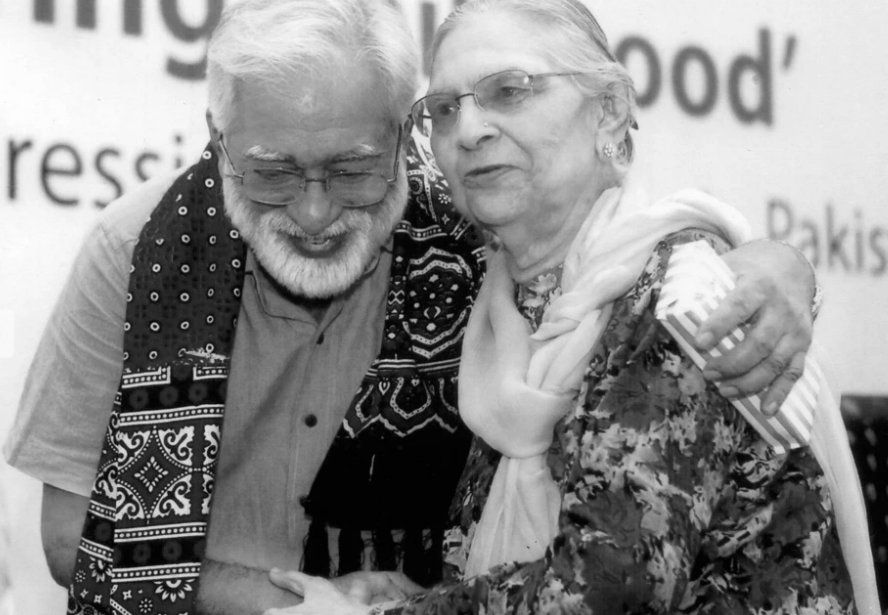
Karamat Ali and Anita Ghulam Ali. Photo: Sapan News.
Advertisement
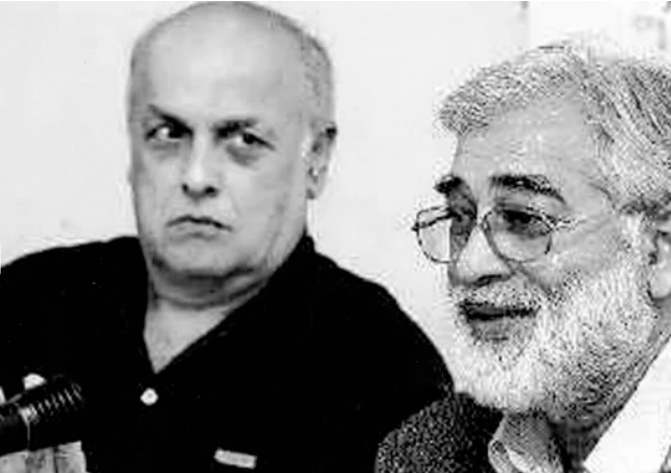
Mahesh Bhatt and Karamat Ali. Photo: Sapan News.
Karamat Ali was many things but for me he was always the person who returned my grandfather to the home he was born in.
“He put my hand on my shoulder and told me that like Nirmala Didi, he too, wanted his ashes to be immersed on both sides,’’ said Karamat Sahib when I met him in Delhi in 2018. He was referring to Nirmala Deshpande, a Gandhian who spent her life advocating for peace. Karamat Sahib had scattered her ashes on the Indus too.
This was a few weeks after my grandfather had missed his annual visit to the Wagah border to light candles on the anniversary of Pakistan and India’s independence from the British in 1947. He had instead passed away in a hospital.
“So, I will take him back,’’ Karamat told me.
It was just that simple. In 2008, Karamat Sahib had come to India and taken a part of what remained of Nirmala Didi with him back to Pakistan. There, he led a delegation that immersed the ashes of Nirmala Deshpande, Gandhian and peace activist, in the Indus near the Sadhu Bela temple at Sukkur in Sindh.
But by 2018 things were different. A great frost had settled in the relationship between the two countries from 2015 with no thaw. There were no visas for Pakistanis. Even letters even with the right stamp didn’t reach. Finding a way to send a tiny portion of my grandfather’s ashes across to Pakistan seemed like an impossibility.
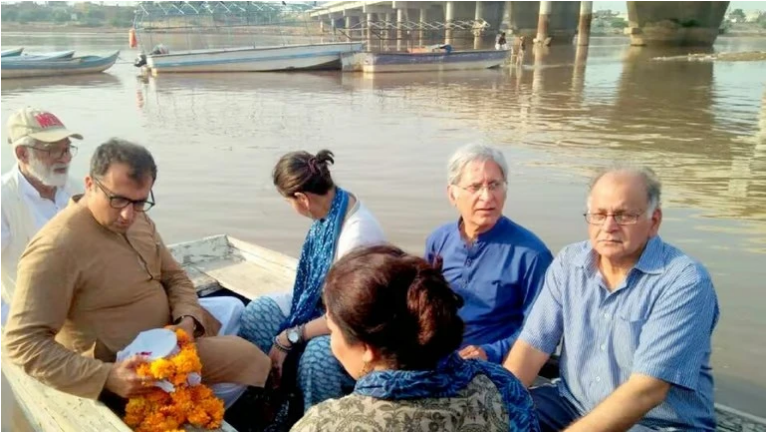
Karamat (left) as Kuldip Nayar's ashes are immersed in the Ravi, 2018. Photo: Sapan News.
Without knowing that my grandfather had expressed this wish, I had taken upon myself this wild task to avoid dealing with his passing.
Karamat Sahib had appeared, almost by magic on rare reprieve, as if this had been the purpose of his travel instead of attending a conference on fishermen.
We asked if he wanted us to drop the ashes to him in the morning – most people would not want to spend the night with ashes in their room. Karamat Sahib said he could use the company. He kept the urn with my grandfather’s ashes in his room for a night till he crossed back to Pakistan. I often think that they must have had a lot to catch up on.
My grandfather’s journey across Wagah is a story I have heard Karamat Sahib narrate many times. As I write, I can hear his raspy voice recount it to me, as he did when I joined him for the immersion of Kuldip Nayar’s ashes.
At the Wagah border crossing, he placed the urn on the desk of the immigration officer. When the officer asked him what was in the container and if he had permission, he replied: “Yeh Kuldip Nayar Sahib hain. Aapne watan waapis laut rahe hain.” (This is Mr Kuldip Nayar. He is returning home). He doesn’t need a visa.’’
With that, he walked past the counter to the other side.
A dream
Karamat Sahib had this ability to make possible what was impossible – with gentleness, humour and compassion, and a smile that will be greatly missed.
He started young. Born in Multan in 1945, he was only 17 when he cut his teeth in student politics. It was 1962 and General Ayub Khan’s government had banned student unions. Students from Karachi including Mairaj Muhammed Khan and Syed Ali Mukhtar Rizvi, were expelled and turned to Multan for refuge.
Karamat Sahib led the students in a huge procession to the commissioner of Multan’s office and organised a sit-in there. The commissioner listened and allowed the expelled students to stay in Multan, giving Karamat Sahib his first taste of a win.
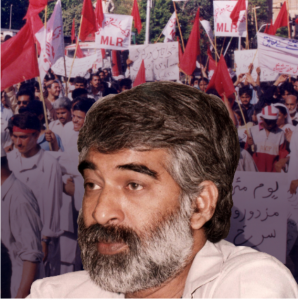
Karamat Ali, the labour leader. Collage by K.B. Abro; Sapan News.
Twenty years later, he founded the Pakistan Institute of Labour Education and Research (Piler).
“Back in those days, Piler was a dream for him, which he carried around in his briefcase,” said economist Kaiser Bengali at a meeting organised by the Arts Council of Pakistan in memory of Karamat Sahib this week.
“When he was getting the funding to establish Piler, the people from the organisation who had brought the cheques said that they had an issue with the communist leaders he idolised, and instead of agreeing with them in order to take the money from them, he simply asked them to take their money back. He was honest and unwilling to part with his beliefs and principles,” said Bengali.
The Wire is now on WhatsApp. Follow our channel for sharp analysis and opinions on the latest developments.
Advertisement


