
Marathi Bhasha Bhavan: Strengthening of Culture Needs Intellectual Planning, Not Cement and Concrete
Vidyadhar Date


Real journalism holds power accountable
Since 2015, The Wire has done just that.
But we can continue only with your support.
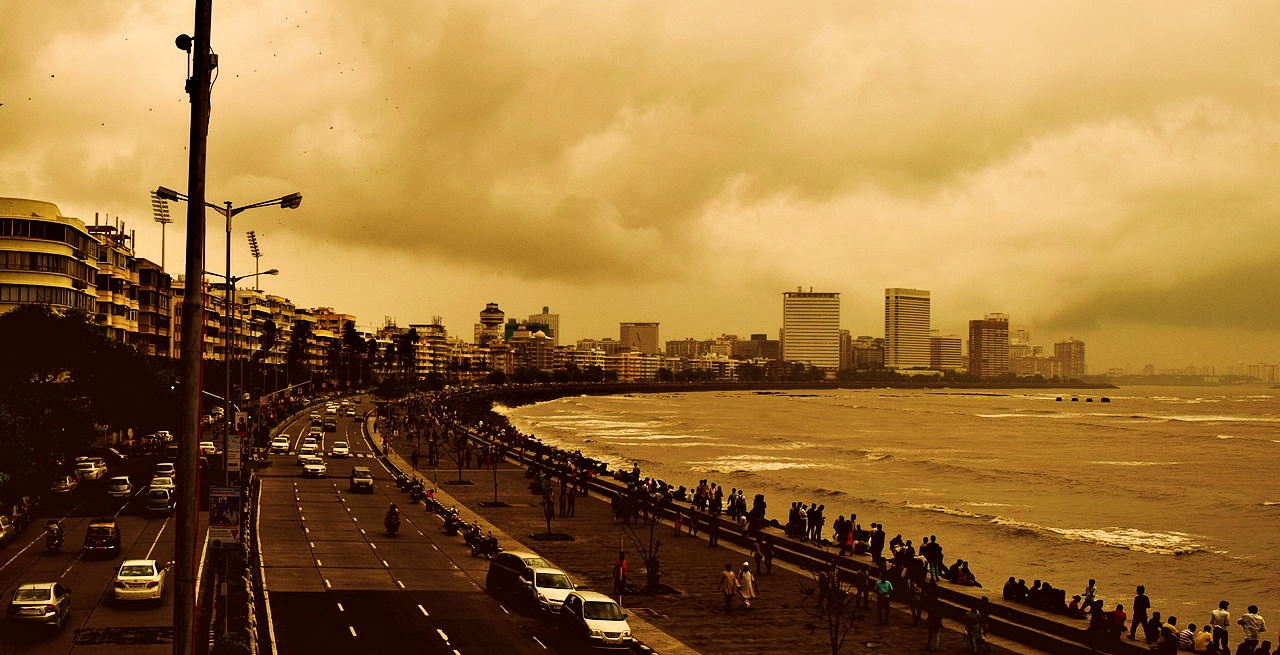
The Maharashtra government's decision to allocate Rs 260 crore for constructing a Marathi Bhasha Bhavan at Marine Drive in Mumbai appears commendable on the surface, but it is fundamentally politically motivated. Strengthening the Marathi culture needs social and intellectual planning, not cement and concrete.
In this regard, the Kerala model sets a positive example. The Kerala Sastra Sahitya Parishad is known for translating some of the world's best knowledge inputs into Malayalam within a short span of 15 days from their publication.
However, in Maharashtra, the situation is different.
The Central library and Mantralaya library books have been dumped into godowns for years. Since many writers are unaware of this, how can we expect a protest against such neglect? Instead of addressing the core issues, the government seems to be silencing criticism by organising conferences and award ceremonies for writers.
The intellectual tradition of Maharashtra is being undermined. Merely constructing buildings does not address the underlying challenges.
For instance, last month, the Jagatik Marathi Parishad held the World Marathi Conference at the CIDCO exhibition centre. It's a huge facility, which is now mainly used for marriage ceremonies and sari exhibitions.
The conferences are primarily organised as showpieces, with poor results. Last month's attendance was notably low. The same situation was observed at the conference held in the dome at the National Sports Club of India in Worli. This is municipal space which is allocated to a private club, depriving common people of access to a public space.
For politicians, even a library building is real estate, a source of profit. Therefore, construction of the Central Library building has been mired for years in alleged financial irregularities.
On one hand, the intelligentsia remains silent on this issue, and as a consequence, people are being denied free access to books in this library.
Additionally, a new building is needed to maintain the archives, which are kept in the 19th-century Elphinstone college building in Mumbai. This seems to be a more urgent task than constructing the Bhasha Bhavan building.
When I visited the college building, I saw that the archives are fine with their valuable records, dating back to the East India Company and the Shivaji era. However, the space is inadequate, and reaching there is messy. Old chairs, tables, and other furniture are dumped in the passage and adjoining areas. The visit was truly depressing!
This is in contrast to the finely preserved archives by the Rajasthan government in Bikaner. I visited there last year during a conference on archives.
The Bikaner archives also have a well-designed gallery with a special emphasis on Maratha history and Shivaji’s escape from Agra, with assistance from the Rajputs during Aurangzeb’s rule.
Separately, a plot of land has been earmarked for the Maharashtra archives at the Bandra Kurla Complex, next to the posh gymkhana of the Mumbai Cricket Association. However, no work seems to have been planned yet. The plot has been taken over by Mumbai metro railway. Notably, all major cities have new or improved buildings dedicated for preserving the archives.
If the government was serious about promoting Marathi culture, it could have easily created a Bhasha Bhavan in a six-storey building it built last year behind Ravindra Natya Mandir in Prabhadevi, Mumbai, or elsewhere. Instead, most of the space, barring for the Maharashtra Board for Literature and Culture, is allotted for commercial enterprises, which is strange by any standards.
The new building at Marine Drive may look aesthetically fine, with P.K. Das as the architect, but language promotion needs inputs to transform it into a hub of modern knowledge and thought. The Maharashtra government seems to have no imagination, no blueprint on how to use the space in the prime area. It may be used as a good place to relax for politicians and bureaucrats as it is halfway between Mantralaya and Malabar Hill, the areas of political power.
A strong foundation for the promotion of Marathi culture and knowledge was established in the newly formed Maharashtra state in 1960 by the then chief minister Y.B. Chavan. He had been deeply influenced by modern thought under the guidance of Laxmanshastri Joshi, a scholar who followed the teachings of M.N. Roy, a revolutionary and philosopher.
Chavan initiated the launch of the Vishwakosh multi-volume Marathi encyclopedia and the Maharashtra Board for Literature and Culture, which published several important scholarly books at low prices. Some of the best work was carried out in modest premises in the holy, picturesque, riverside town of Wai in Satara district. So one does not need posh spaces for such endeavours.
Vidyadhar Date is a senior journalist, a cultural critic and the author of a book on the importance of public transport.
This article went live on February seventh, two thousand twenty four, at zero minutes past six in the evening.The Wire is now on WhatsApp. Follow our channel for sharp analysis and opinions on the latest developments.