

In Photos: The Venice of Greater Noida


“Dad, if we are in Venice, how far is Paris from here?” – while climbing up the stairs of a leaning tower, an eight-year-old was inquisitive. The father looked puzzled by the nature of the enquiry, but was quick to react: “Not too far, beta”.
This is not the Venice of Italy, it is the Venice of Greater Noida – a site of consumption in the suburbian extension of the capital city. It is an example of our new-found craze for themed sites of consumption.

To enter Venice is to be consumed by stark colours. One navigates on blue water that is hypnagogic. Photo: Sreedeep
Our malls, restaurants, amusement parks and puja-pandals increasingly assemble fragments of cultural icons from other spaces. ‘Local’ adopts indigenous versions of the ‘global’, purely for mass consumption.
Miniatures of popular global landmarks from one part of the world affect the consumer experience of another space located far away. Through various mediations – mostly visual and architectural – we consume de-territorialised spaces. We flirt with images and things, and images of things.

The leaning tower, the central lobby and the eating joints next to the water create a multiplicity of spectacles. Photo: Sreedeep

Venice has a set-like gimmickry – the leaning tower of Pisa is interactive, enabling spectators to climb up. Photo: Sreedeep
Like the impossibility of the existence of a ‘smart city’ in the middle of an ‘urban village’ in Delhi, Venice is quite elusive. Replication of popular icons of Venice is rampant in the Grand Venice Mall The replica is kitsch – full of bright colours and wacky design motifs. Architectural fragments recreate montages of Venetian-fantasy.
Also read: How the Triumph of Capitalism Shaped the Millennial Soul
A gothic-like façade welcomes you. Venice is an architectural masking. As you enter, you view a leaning tower and multiple Gondolas that float on stagnant water. You can book a ride online in advance. And as you ride past the branded showrooms, you hear the helmsman singing in Italian.
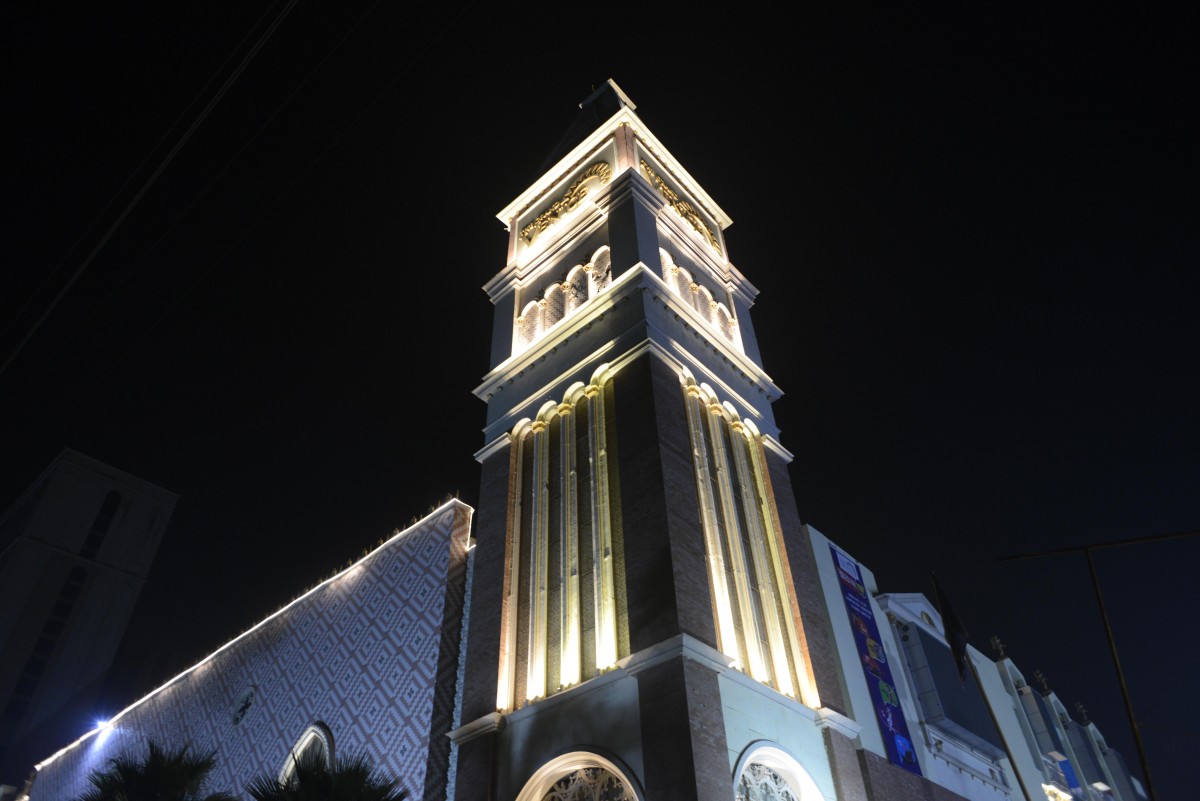
The face attempts resemblance to gothic style – though half of it lies incomplete. Photo: Sreedeep
Everything about Venice is despatialised and fragmented. It is everything but a specific destination. It is postmodernism's imaginary excess that dislocates the real to reproduce some of its select surfaces elsewhere.
As a visual stimulus, a project like the Grand Venice Mall appropriates and miniaturises the idea of a metropolis. The project is essentially based on remediations that capitalise on popular architectural perceptions.

Thousands of people from smaller towns of Dadri, Bulandshahr and Aligarh enter the make-belief of Venice everyday. Photo: Sreedeep
However, the Grand Venice Mall is no Disneyland or even its closest or poorest cousin. It is neither a hyper-real nor a simulated surface. The concrete architecture is an impoverished clone. The idea of the mall is a low-cost urban experience that is devoid of any claims of authenticity.
Just like other commodities on display, the theme of Venice is a consumable idea. Along with shopping and strolling, you can consume a bit of foreignness, however in a familiar setting without a visa. It is also a spectacle that provides another backdrop for endless selfies.
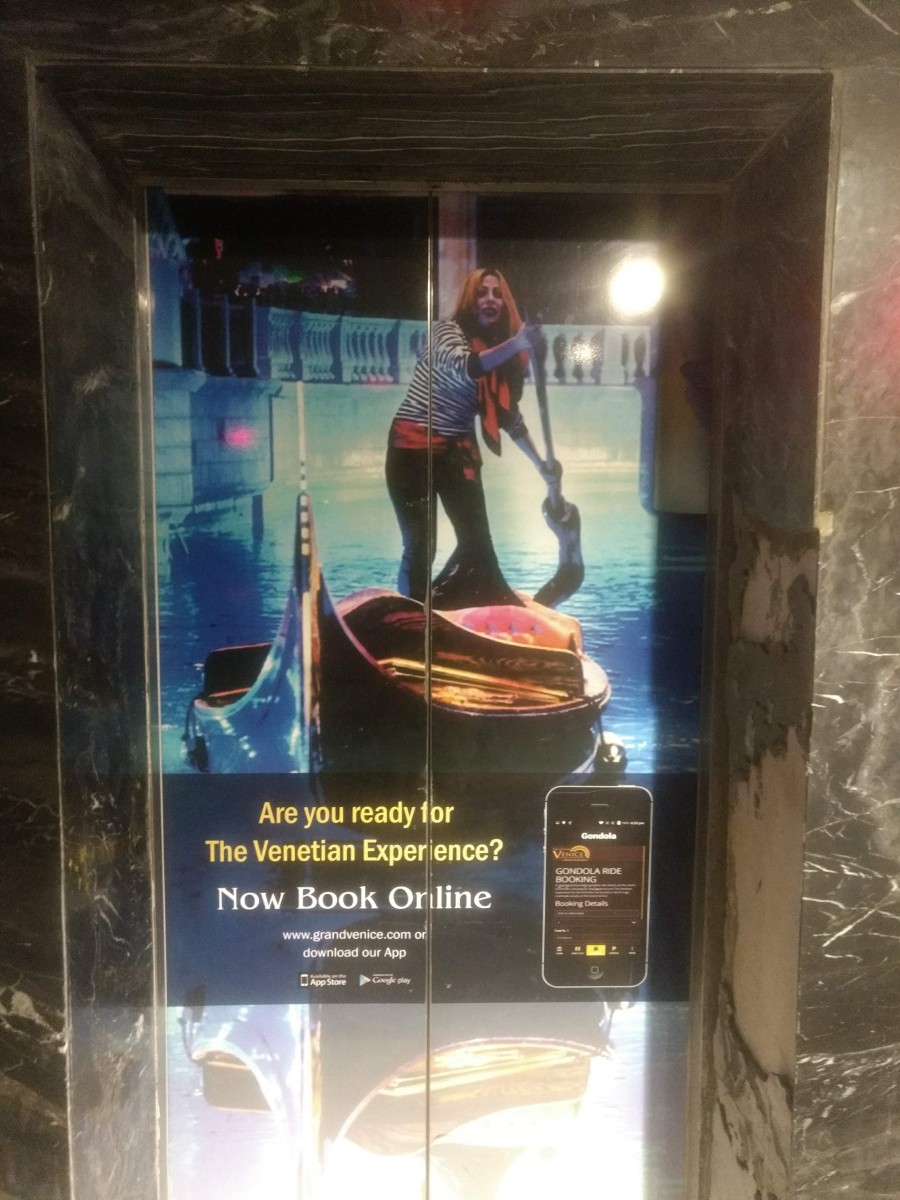
The Venetian experience is just an app away – or so they want you to believe. Photo: Sreedeep
This Venice is no Baudrillardian imagination either; rather it is a small-town fantasy. There is a severe dearth of organically grown public places in our suburbia. In such a context, a mall-like Venice becomes a pseudo-public place – a privately-owned public space – a site of controlled recreation.
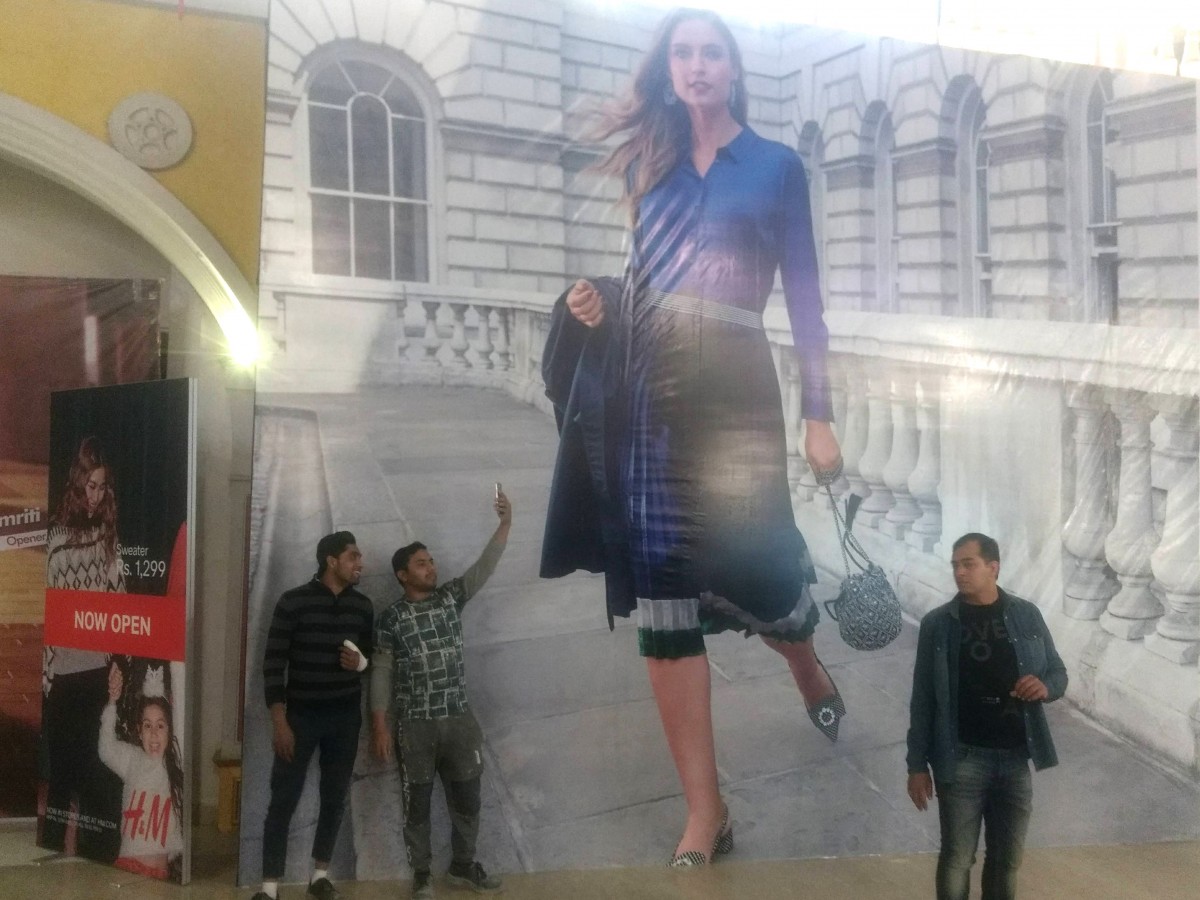
The architectural gothic blends with similar imageries in ads. Both provide larger-than-life selfie backdrops. Photo: Sreedeep
Such spaces engage citizens as consumers. It lures us to consume the idea of Venice, or any other theme, along with consuming other commodities. More than half of Venice is unoccupied or incomplete, but that does not matter. The space and its design is the primary commodity here, which invites consumption without any burden of shopping.
Sreedeep is a sociologist with Shiv Nadar University.
The Wire is now on WhatsApp. Follow our channel for sharp analysis and opinions on the latest developments.


