

Prakash Raj on Fraternity: Let One Man Be 'Vishwaguru', the Rest of Us Should Be 'Vishwamanavas'


Bangalore: 'Why is fraternity under challenge, why are we discussing the F word,' actor Prakash Raj was asked at the start of The Wire Dialogues here on Sunday. "Because of the one person who has called himself the F word – ‘fakir’," said Raj without batting an eyelid. That one person was never named the entire evening, though the actor brought him up again at the end when he said "we should let one man be 'vishwaguru' [world leader] but the rest of us should strive to become vishwamanavas'," using the word the great Kannada poet Kuvempu introduced to denote a citizen of the world.
Raj was speaking to The Wire's editor Seema Chishti at a ticketed event at the St John's Medical College Auditorium as part of the news website's public outreach and fund-raising drive.
The evening also featured the singer-educator Shabnam Virmani explaining and performing works from Kabir – the medieval Indian poet-saint whose work was deeply imbued with the spirit of fraternity.
In response to questions from Chishti and the audience, Prakash Raj spoke about the meaning of fraternity, why it was under strain in India today, the all-pervading sense of fear that seems to have gripped so many and the effect of this fear on India's film industry. he also spoke about the work he is doing, especially through the medium of theatre to strengthen fraternity, and how he was inspired by the fearlessness and broad-mindedness of the young today.
§
Explaining the theme of the evening, Siddharth Varadarajan, a founding editor of The Wire, said the word 'fraternity' figures prominently in the preamble of the Constitution of India alongside justice, liberty and equality "but it is a word we often forget or ignore even though its spirit is so central to who we are as a people. Fraternity is that magical element that assures each and every one of us of our dignity as individuals – and, in doing so, ensures our unity as a people and nation."
He quoted Dr B.R. Ambedkar's words to the Constituent Assembly in 1949 – "Fraternity means a sense of common brotherhood of all Indians-of Indians being one people. It is the principle which gives unity and solidarity to social life" – and said what this means is that "if you attack the dignity of an individual – whether on the pretext of their ethnicity or language, religion or caste, sexuality or food habits or beliefs – then you attack the very foundations of India."
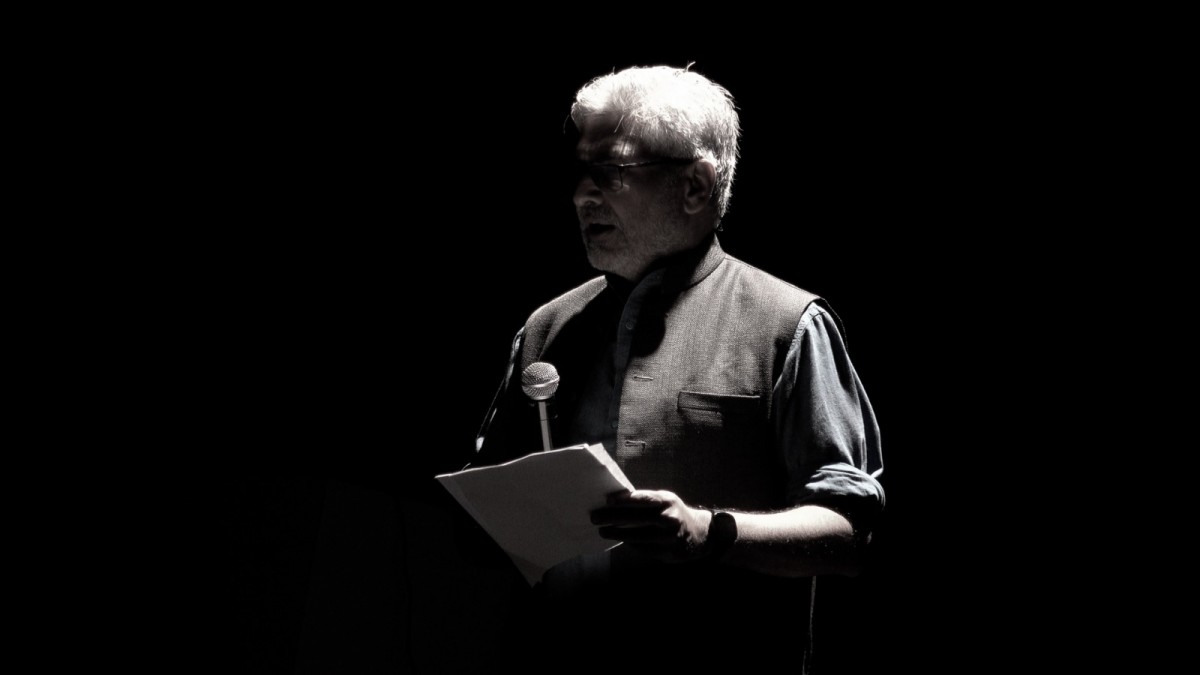
Siddharth Varadarajan at The Wire Dialogues. Photo: Devi Dutt
"Think about this," said Varadarajan, "when you reflect upon what is happening in Manipur or Haryana or Kashmir today. Think about this when you read about train passengers being shot dead because of the beard they had or the clothes they wore. Think about this the next time you see those leaders whose names were invoked to justify this crime but who did not feel they needed to condemn what happened. Think about this when you look at laws which have introduced religion as a criterion for being able to live in this country for the first time in our 3,000 year history. Think about this when killers and rapists are set free because of their political affiliation. Think about this when women and men who have spent their entire lives fighting for the rights of the most disadvantaged Indians spend years in jail awaiting trial for imaginary crimes. Think about this the next time you see TV channels fostering hatred. And then remember that they cannot be allowed to define what India is – or to determine how Indians should live and relate to each other."
§
Speaking to Chishti on stage, Prakash Raj referred to the situation in Manipur, where more than 150 persons have been killed, women raped and thousands displaced, as well as in Haryana. He said fraternity means to care and to love but that "we as a society have lost this and we the country and citizens have to understand this reality." The fact is, he said, "somebody’s pain does not become our pain anymore.'
He gave the example of France where there was widespread public revulsion over the police shooting of a 17-year-old boy, Nael. "In France because a boy is shot dead, a country rises, because there is Fraternity. But not in India". Reaching into the epics, Raj sought to illustrate the essence of fraternity: "You cut your finger; you feel the pain. Eklavya cuts his finger; we all feel the pain. That is fraternity.”
Eklavya was a 'low caste' warrior and archer of great accomplishment whose caste Hindu teacher insisted he cut off his right thumb as payment for the lessons he had taught.
Chishti asked the actor about how the film industry was being affected by what was happening in the country – 'We have gone from Amar Akbar Antony to Kerala Story'-like hate films which were undermining fraternity in India. Raj said that the situation was made worse by the fact that it was becoming harder for others to make films that do not toe a particular line. "We have reached a situation where filmmakers are worried their films won’t be made or shown," he said.
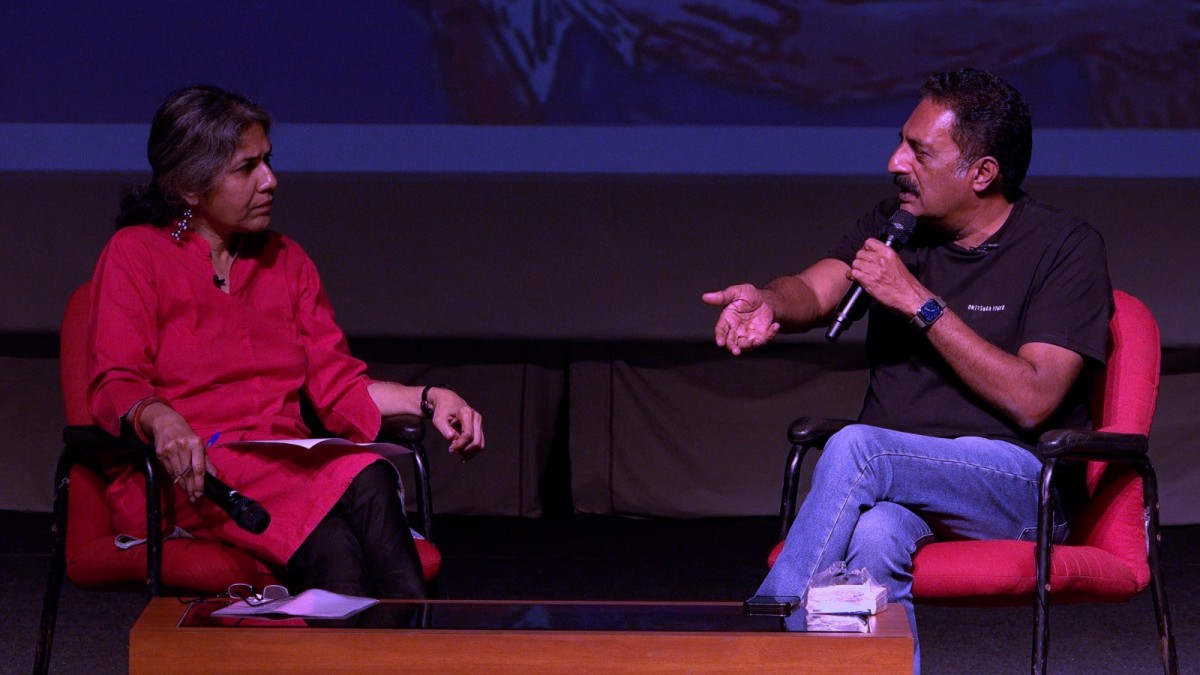
Seema Chishti and Prakash Raj at The Wire Dialogues. Photo: Devi Dutt
This was part of a wider culture of fear across the country. “Fear has become a national disease today," he said. "[People] whisper," when they are being critical. "I know I take risks when I speak, and with my theatre project – Nirdigantha – but I can’t let people down.” Earlier this year, Raj announced plans for Nirdigantha – or 'endless horizons' – a theatre venture he will incubate in Mysore which will produce 20 plays and take them on tour in the next two years.
Raj blamed politicians for fostering divisions and inequality. “If you dig a mosque, you will find a temple. If you dig a temple, you will find a Buddhist structure. How long are you going to keep digging?”, he asked. "Today more than religion and caste it is money power that is driving politics," he said, but this was the public's money and we normally forget that. "Politicians come once in five years and go. We are permanent. Politics is us. It is our money. He flies, eats mushrooms, acts like a stationmaster. But it is our money." He called the rulers rakshasas, or demons, and said, "When these rakshasas are desperate, there is no telling what they will do."
Reminded by Chishti of what he had said in an interview last year – that we are partying on a sinking ship... the economy, prosperity etc is all sinking – Raj said that this was indeed the situation today. "I want to ask those who speak of making India the Number One Economy: Where is Fraternity in your economy? Why is the one percent so far ahead of the 99%?". This was why the ship was sinking, he said. The person promising to make India number one will be sure to get away but the rest of us will go down, he said.
When Seema Chishti asked him what gives him hope, the actor said young people did. "Youngsters do. Their energy. Their sense of dignity... I have seen young people at Seed Festivals in Karnataka." He said young people like Mohammed Zubair (a founder of AltNews), the jailed activist Umar Khalid and the stand-up comic Kunal Kamra gave him hope. Above all, he said, people had to believe in their own strength.
§
Shabnam Virmani, of the Kabir Project – which attempts to take a comprehensive look at Kabir’s thoughts and poetry – kick-started the conversation on fraternity, through music and verse.
As she sang folk songs of Kabir, she struck the perfect note as a prelude to the discussion with Prakash Raj which followed. Virmani, whose work on Kabir is arguably the most multi-faceted in recent times, combining scholarship, art and performance, pointed to the poet-saint's unique way of questioning identity and moving to get people to introspect. Kabir, she said, did not do slogans or skim on the surface, but pushed people to realise the vacuity of making so much of one’s social identity.
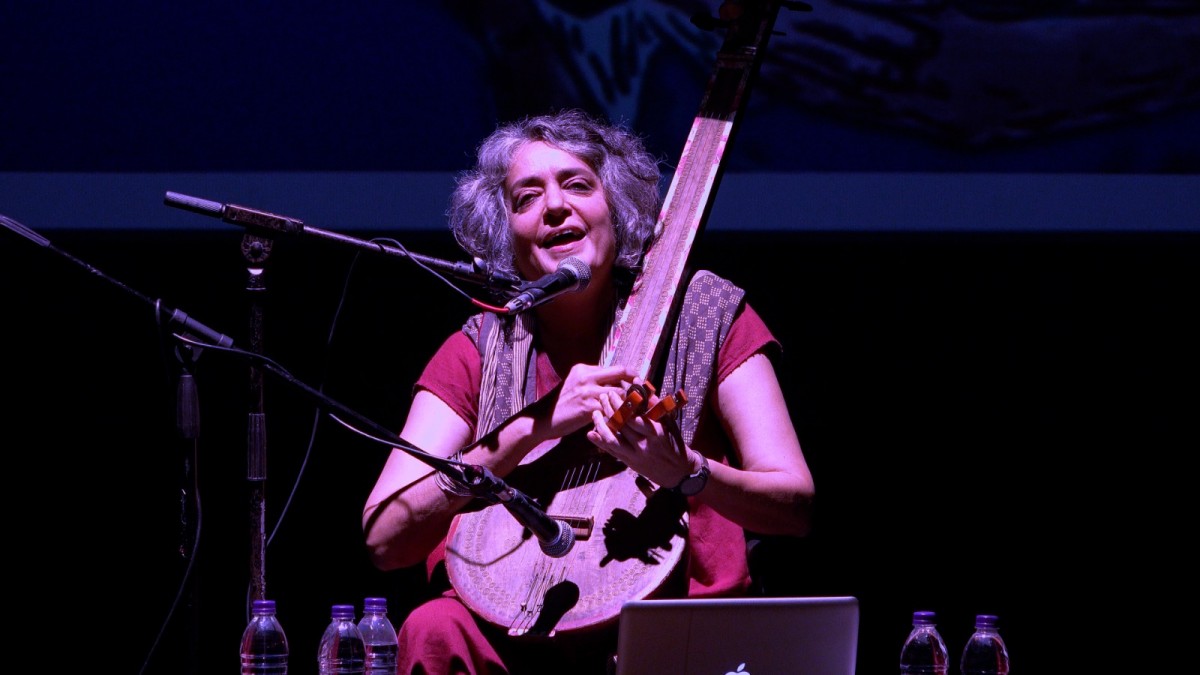
Shabnam Virmani at The Wire Dialogues. Photo: Devi Dutt
Virmani connected Kabir’s invocation of death, a constant theme in his dohas, to draw attention to life being ephemeral and therefore realise the “impermanence of identity”. She sang with a tambura, combining music with explanations of the poems and setting them in today’s context, where we have allowed what divides us to be taken more seriously than what binds us.
She picked a powerful verse to emphasise Kabir’s explanation of how all men were created as equals and did the same things, same bodily functions, how then is one Brahmin and one Shudra.
”एक बूँद ,एकै मल मुतर,
एक चाम ,एक गुदा ।
एक जोती से सब उतपना,
कौन बामन कौन शूद ”
Virmani said she was happy to be supporting The Wire in its endeavour with The Wire Dialogues to get the conversation going on the real things that matter. She thanked The Wire for bringing the focus on fraternity and applauded its “gutsy journalism".
§
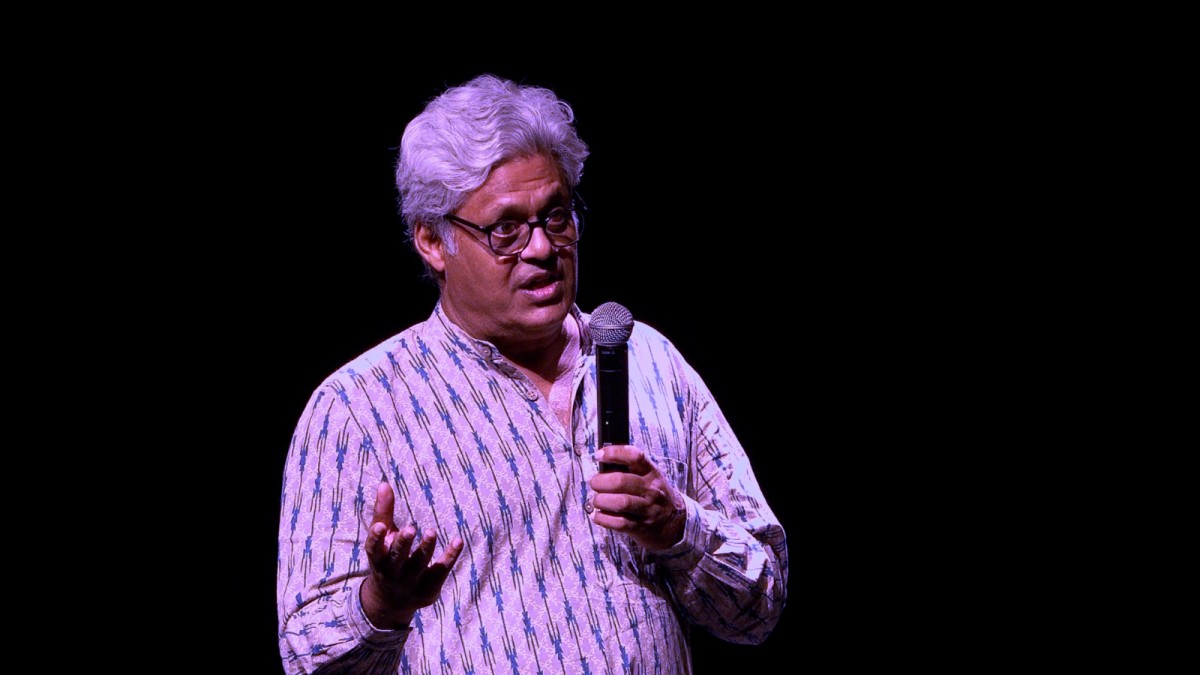
M.K. Venu at The Wire Dialogues. Photo: Devi Dutt
The evening ended with M.K. Venu, founding editor of The Wire, explaining how Bangalore had supported The Wire when it was founded in 2015. “When Siddharth Varadarajan, me and our colleague Sidharth Bhatia who is in Bombay, set out with Rs 4.5 lakhs, it was Bangalore, and the Independent and Public Spirited Media Foundation based here, that supported us, and many others, such as AltNews, for instance, to stand up and enable us do our work.” He said The Wire Dialogues would travel to more cities, eg Hyderabad and Chennai next to discuss fraternity and other pressing and important matters.
This article went live on August seventh, two thousand twenty three, at forty-five minutes past eleven in the morning.The Wire is now on WhatsApp. Follow our channel for sharp analysis and opinions on the latest developments.


