

Rare Indian Recordings From 1900s Made Available by British Library


The British Library has made available over 1500 rare Indian recordings dating from 1900 – 1940 on its website.
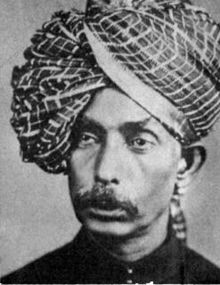
Abdul Karim Khan of the Kirana gharana. Credit: Wikipedia
Now, we can listen to the first recordings made by artists like Abdul Karim Khan, Bai Sundarabai, and Omkarnath Thakur. "Khan Saheb" of the Kirana gharana trained singers who went on to become legendary in their own right, like Sawai Gandharva and Roshanara Begum.
In this recording, he sings the thumri still famous today, "jamuna ke teer." His student, Roshanara Begum, sings the hori "khelut nandkumar."
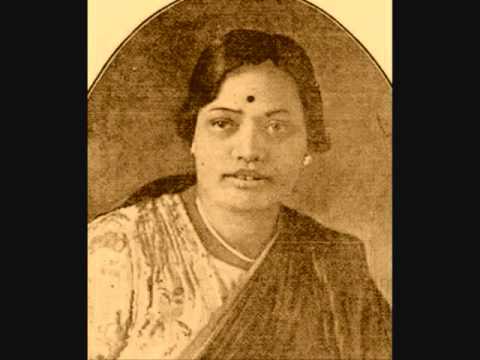
Bai Sunderabai of Poona. Credit: Google
In a particularly evocative rendition, Bai Sunderabai (1885 - 1955) sculpts the words of a thumri – “Akeli mat jaiyyo, Radha, Jamuna ke tir…” Despite the heavy crackle overlaying it, her voice rings out with power and delicacy, as though Sunderabai is still alive, and performing before you, at a mehfil where you are in the audience.
The recordings are a part of the Odeon Collection, a series that has been digitised by Mumbai record collector Suresh Chandvankar with funding from the British Library. They are also available at other institutions including the Sangeet Natak Akademy, the National Film Archive and the American Institute of Indian Studies.
In 1901, the Gramophone Company set up its first branch outside the UK, in Calcutta. Sunderabai and the others mentioned above were among those artists who responded enthusiastically to the opportunity to have their music reach hundreds of ordinary listeners. Much later, HMV awarded Sunderabai for having the highest number of 78 rpm record sales in her time.
Odeon label shellac discs were issued in India in two phases: 1912 – 1916, 1932 – 1938. In the first phase, engineers traveled from Calcutta to Benaras, Lucknow, Cawnpore, Delhi, Amritsar, Lahore, Bombay and back to Calcutta, recording a total of 700 titles. These were shipped to Berlin for processing and manufacture and then shipped back to India. In the second phase, Odeon produced over 2000 titles. With the outbreak of World War II and the imposition of the embargo on German goods, however, it had to stop production and shut down its business in India. It left behind hundreds of titles, of which about 600 are estimated to survive in private hands – “endangered” and in urgent need of preservation.
Apart from the most popular recording artists of the time, the collection also features speeches, folk songs and skits by less well-known artists and amateurs. It is an invaluable resource for students and scholars of music, musical culture and history. It comprises what music collectors would call “ephemera,” or media not intended to last, offering snatches of everyday life and the popular musical culture of that past time.
Much of what has been captured is not in performance today. But what is also remarkable is how many elements of style and genre – such as found in Sundarabai’s thumri – and how many songs survive and linger, in unexpected places, carried on un-self-consciously by "small" practitioners, unsupported by official systems and largely unrecognised.
Note: This article has been edited to correct an erroneous reference to Kesarbai Kerkar as one of Abdul Karim Khan's students.
This article went live on May tenth, two thousand sixteen, at zero minutes past ten in the morning.The Wire is now on WhatsApp. Follow our channel for sharp analysis and opinions on the latest developments.


