

The Family Man S03: The Audacious Mischief of the Earlier Parts is Missing


In episode four of the third season of The Family Man – Srikant Tiwari (Manoj Bajpayee) gets nostalgic. He asks JK (Sharib Hashmi) if he remembers Kareem – a dissident Kashmiri student who was killed in the first season because of Srikant’s misplaced suspicion. I might be reading too much into it, but it almost felt like creators Raj Nidimoru, Krishna D.K. and Suman Kumar were getting wistful about a time during the first season when there was endless possibility.
Kareem’s death is one of the most potent critiques of Islamophobia in India post 2014, especially since it showcases a ‘patriot’ in a subversive light. To get the saviour-of-the-nation character to kill a law-abiding citizen (and then orchestrate a cover-up to save face) – I can imagine writers’ rooms being a significantly more fertile, brave and less jaded place in 2018. Then came the FIRs – causing the throats of all OTT platforms to dry around the same time.
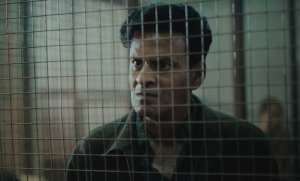
A still from The Family Man.
Nearly all political commentary has evaporated from shows since (save for under-the-radar exceptions like Maharani S04) – unless they're focusing on Emergency of the 1970s or decidedly Congress governments of the yore. In the aforementioned scene in season three, Srikant, on the run with his family and JK from the law enforcement, says something to the effect about how he can estimate the betrayal Kareem and his loved ones felt. Under various pretexts, Srikant and his family have been pronounced ‘anti-nationals’. This spelling out of the subtext in a scene is the farthest thing one would expect from a Raj & DK show – and yet, here we are. Given their success on streaming, it’s a miracle the duo have preserved their affection for the underdog.
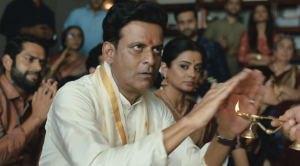
A still from The Family Man.
But The Family Man feels more factory-made now. Even though it’s still immensely watchable – I couldn’t help but imagine Raj & DK (and their writers’ rooms by extension) waltzing around in straitjackets around their mind throughout the making of season three. There’s still lip-service to Gaza and mentions of murky arms deals involving the PMO and a shadowy organisation called The Collective – but the light seems to have left the eyes of Raj & DK’s most popular enterprise. There’s no hint of the mischief that one would normally associate with one of their projects. The audacious, imperfect big swings have made way for muscular, mundane competence.
In season three, Srikant has been summoned to oversee a peace treaty between the Indian government and rebel groups of the North East in Kohima (Nagaland) — eerily similar to the premise used by Paatal Lok S02. Surprisingly, Raj & DK – Hindi cinema’s ultimate contrarians – begin the show with a visual of folk music and a tribal dance. In the same scene, an influential Naga leader talks about how India finally has a Prime Minister focusing on peace and development in the North East. If this doesn’t come across as the cheeky comment it was possibly meant to be, it’s because even the makers seem tentative. Trying to please the Bharatiya Janata Party supporters who might take the statement at face value, while the rest see the humour in it, the scene lands nowhere.

A still from The Family Man.
A lot of information is fed to the viewers in the first episode. A billionaire, Dwaraknath (the perennially fresh-faced Jugal Hansraj seeming completely at home in a reclusive mansion, presumably in the countryside) is brokering an arms deal between The Collective and the Indian government. When the peace accords threaten to delay the arms deal by a whole year, Dwaraknath employs Meera (a sturdy Nimrat Kaur, picking up from where she left her Homeland stint) to instigate chaos. A freelance drug-dealer/hitman, Rukma (Jaideep Ahlawat, bringing his usual dryness of a cardboard) kills the influential Naga leader at the centre of the consolidation effort to bring all rebel groups under one roof to sign the peace accords. Ahlawat, who was in the same region as the bulky Hathiram Chaudhary in Paatal Lok S02, looks almost unrecognisably lithe as Rukma – a sharp, rooted soldier of fortune in his own right. His outright selfishness and self-preservation, triggered by the many horrors he’s seen in life, reminded me of Leonardo DiCaprio’s turn in Blood Diamond (2006).
Even Bollywood screenwriters are bored of blaming everything on Pakistan or Bangladesh or China – so now they’ve started to invent cartels (even in War 2) comprising billionaires from the world who wish to take control of entire nations. They seem to have their eyes on India, just like how aliens tend to always pick the US in Hollywood films.
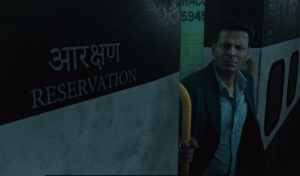
A still from The Family Man.
However, it’s thanks to Raj & DK and Sumar Kumar’s keenness to usually go for the path less obvious that they manage to bring a hint of a nuance to the proceedings. The cast is excellent all around – I can imagine Bajpayee playing Srikant Tiwari in his sleep. My patience is starting to wear a little thin around Sharib Hashmi’s JK, whose comical sidekick routine in the new season seems to be designed to be consumed on reels. Ahlawat and Kaur are excellent for their parts – thorough professionals, but also able to bring along a flavour of specificity. Their characters are run-of-the-mill tropes, but it’s the actors that lend a distinctiveness.
Vipin Sharma and a couple of ancillary actors are serviceable for their part – with Seema Biswas as PM Basu being the only false note. It’s through Basu’s characterisation that we get to see the writing team’s severely constrained telling. They can’t seem to make up their minds whether she’s an honest politician or an opportunist. Whether she’s only concerned about her dipping ratings or if her heart genuinely aches for the members of the armed forces taken hostage. Whether she’s hot-headed, volatile, makes decisions based on her own gut, or with the help of the committee in the PMO. Even after seven dense episodes, where she appears very prominently, I never got a sense of who PM Basu is. It feels like the remains of a character left after Amazon Prime’s legal department combed through the character.

A still from The Family Man.
The Family Man S03 is still engaging and robust, but one can also see its effort to be the same punchy show it used to be. There are scenes where characters talk about The Collective like – ‘jinki pohoch bohot upar tak hai’ (who are very well connected), and ‘jinke log chaaro taraf phaile huye hai’ (whose people surround us). Three years ago, I would’ve expected a funny rejoinder to these staple lines in a spy thriller. But maybe Raj & DK are stretched thin to have the same kind of meticulous caution their earlier projects had.
Also, despite their best efforts, the gaze towards Nagaland and its locals remains that of an outsider. There are pressing challenges here, for a commercial Hindi web series, the characters have to converse in stilted Hindi even among themselves, so long stretches aren’t subtitled. Not one Naga character is afforded as much nuance as the ‘mainlanders’. The Nagas are either idealistic revolutionaries, violent rebels, scared farmers or supportive lovers. I understand this is a spy thriller, but the way the camera alternates between admiring Nagaland’s scenic beauty and showing it as a land brimming with relentless conflict left me slightly disappointed.
Having said all this, the third season also has some of the staple Raj & DK flourishes. Like when an army black-op scene – which has only become more glorious in the aftermath of Uri - The Surgical Strikes (2019) – turns into an ambush. A scene slyly references Hindi imposition, another one mentions the dollar rate (Rs 85), and the season ends on a grim cliffhanger. We know everything will eventually be alright – because the duo are too big (and the show is too loved) for a bold, off-kilter climax. The war of courageous political commentary might have been lost, but at least shows like these are a periodic reminder of what we’ve lost in the last five years.
*The Family Man S03 is streaming on Amazon Prime Video.
This article went live on November twenty-third, two thousand twenty five, at twenty-six minutes past three in the afternoon.The Wire is now on WhatsApp. Follow our channel for sharp analysis and opinions on the latest developments.


