

The Price of Perfection: K-Culture Versus the Culture of Korea


It begins with a song. Perhaps it is a track by BTS, Blackpink, Red Velvet, or G-IDLE blaring through headphones, or the defining legacy of icons like Girls’ Generation, BigBang, and 2NE1. The rise of Hallyu – the Korean 'wave' – stems from a discerning blend of strategy, creativity, and emotional resonance. The global takeover is complete when a personal connection appeals across borders, transcending language and geography.
This resonance is keenly felt across India, from metropolitan centres to the political sphere.
During his Bharat Jodo Yatra, Rahul Gandhi was visibly amused, and possibly endeared, to find young female students in Kerala proudly introducing themselves as the “BTS ARMY.” It is not just the band's synchronised performances that have resonated globally and in India, their coinage and repetition of the phrase “Love yourself, speak yourself" – from the time of their 2018 speech at the UN General Assembly for a UNICEF campaign – has found numerous takers.
Korea fascinates the world because it blends modernity with tradition, spectacle with sincerity, and discipline with warmth. Yet beneath this surface, a complex tension is unveiled. K-culture is a meticulously engineered global export, aggressively peddling one core concept: perfection. Flawless aesthetics, choreographic hyper precision, and narratives that play it socially safe. Yet, it is this mandated perfection that constitutes its most profound ethical handicap, demanding a continuous, aggressive act of social and political erasure to sustain a profitable fantasy.

Fans of K-pop band BTS wait to enter for the annual 2025 BTS Festa celebrating the BTS' debut anniversary in Goyang, South Korea, Friday, June 13, 2025. Photo: AP/PTI.
The universal chord: An aspiration for frictionless escape
K-culture touches a universal chord precisely because it offers an aspirational, frictionless escape from the chaotic realities of life. We are consuming a fantasy where human messiness has been systematically removed. This appeal is keenly felt in India because our cultures share a similar, devastating crucible.
Korea’s relentless, zero-sum academic scramble for the elite 'SKY' universities – Seoul National, Korea, Yonsei – is structurally mirrored in the feverish pursuit of IIT and medical entrance exams in India. The stakes are impossibly high in both countries. For every available seat across India's premier engineering institutions, the applicant-to-seat ratio in the JEE Main is approximately 11 to 22:1 depending on stage. Similarly, only about 5% of students secure a seat in a government medical college via NEET, according to the National Testing Agency. The total scale of the competition is immense, with 1.23 million applicants for JEE and 24 lakh applicants for NEET in 2024 alone.
Growing up in Calcutta, I witnessed batchmates obsessively tracking JEE and NEET updates, attending extra coaching sessions after school, and navigating a system where failure felt catastrophic. The Korean hagwon system – private, late-night academies supplementing school education – is a mirrored reflection of our own intense tuition centres and the high-stakes push for engineering and medical colleges. Both cultures emphasise structure and achievement, creating a shared anxiety that is hard to escape.
In India, this pressure manifests in horrifying statistics: 13,044 deaths by suicide were recorded among students in 2022 by the National Crime Records Bureau (NCRB) in their Accidental Deaths and Suicides in India (ADSI) Report, which averages out to one every 40 minutes. This is a tragic mirror we share with South Korea. The OECD reports that South Korea's suicide rate stands at 21.2 per 100,000, ranking among the highest globally.
The core of the pressure is the closed system, defined by two factors: the monocultural ideal (danilminjok), and the collectivist and Confucian ethos. This creates a very narrow, universally accepted definition of success. Deviation is not just a personal choice, it is a social breach that brings shame, (su chi), not just to the individual, but to their entire group.
Crucially, in India, we are structurally and culturally attuned to diversity. Our lives are an ongoing negotiation between languages, religions, and customs. We possess the cultural concept of “jugaad,” a flexible, improvisational ingenuity that allows for workarounds, non-linear success, and a certain elasticity in the definition of the right path. This cultural safety valve that we have is what the rigid Korean system often crushes – and yet we still deeply relate to the pressure.
The shared element is this: when a society’s only path to perceived success is narrow, hyper-competition for those few elite slots becomes a national mental health crisis.
Reality beyond the gloss
My time in Seoul revealed a striking chasm between the glossy dream factory and the lived experiences of ordinary people. The cultural product we consume is sterile; the life I saw was exhausting.
Also read: Another Seoul: What I Saw, Heard, and Learnt in South Korea
The most visceral experience I carried home was the relentless cadence of palli-palli (hurry-hurry). This is not just efficiency; it is an economic engine fuelled by systemic burnout. For a month, I felt perpetually late, whether catching the subway, waiting in a coffee line, or simply observing pedestrians. The constant, ambient pressure translates directly into the national psyche. The local aphorism, “In Seoul, the clock does not tick; it races,” captures the legacy of the Miracle on the Han River.
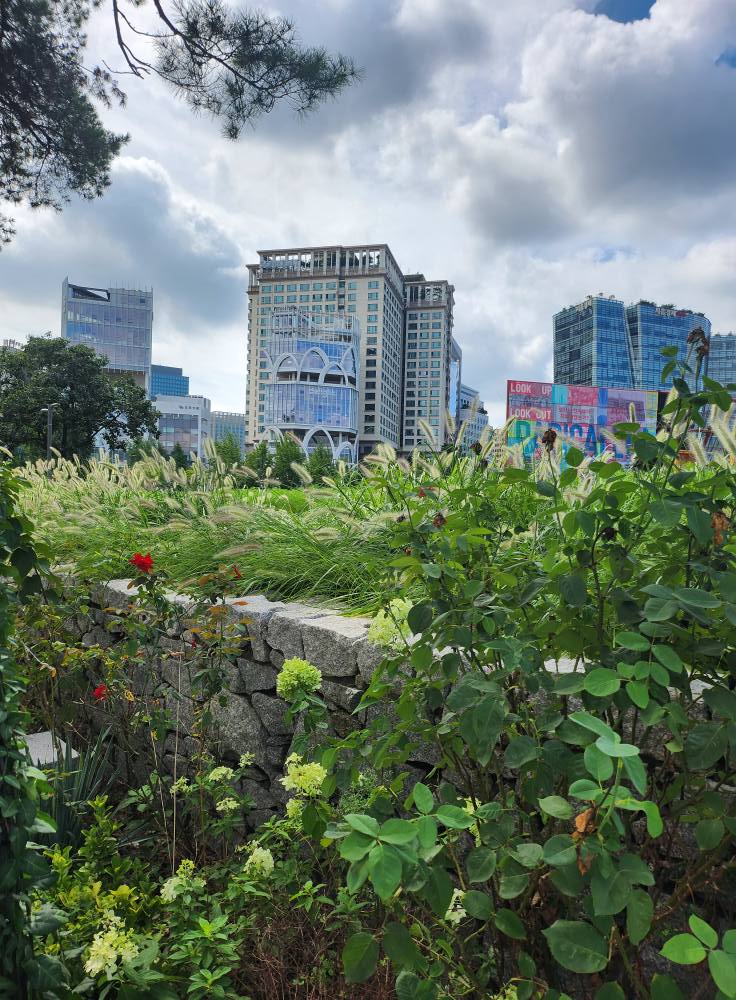
Seoul. Photo: Reeti Roy.
This economic apotheosis came at a psychological cost, resulting in South Koreans logging an average of approximately 1,874 working hours per year. While this figure has recently fallen, it remains far longer than the OECD average of 1,752 hours, ensuring exhaustion is a foundational layer of the national experience.
This constant pressure to perform coexists with subtle social conditioning. Walking through the affluent district of Gangnam, the birthplace of extreme luxury as well as K-culture’s aesthetic, I observed aesthetic procedures openly marketed as indispensable tools for social advancement, not mere personal preference. Billboard after billboard did not just advertise beauty, they advertised opportunity. Achieving a certain look thus becomes a mandatory social investment, a marker of class and social standing as critical as a university degree or that coveted position at the workplace. It is a quiet tragedy to watch a whole society collectively invest in a uniform, perfect look out of social necessity rather than personal desire.
The disconnect is palpable: the K-culture export preaches “love yourself,” but the streets of Seoul often demonstrate a silent mandate to engineer yourself to fit the perfect mould. The portentous promise of Hallyu is global adoration; the grim reality is a domestic culture where palli-palli ensures you never have time to simply be yourself.
Selective silence and authentic dissent
The K-pop industry’s pursuit of global market access, often linked to the economic interests of its controlling chaebol-like structure, demands a moral vacuum from most public figures. This pressure incentivises silence on controversial or politically charged issues, such as the genocide in Gaza, to maintain a flawless, marketable image.
Yet this silence contrasts sharply with the vibrant political conscience of the ordinary citizen. Citizens have held large-scale rallies in central Seoul since late 2023 to protest global injustices, particularly the Palestinian crisis. This contrasts with the entertainment industry’s silence. Football star Son Heungmin and solo artiste EaJ (a former member of the K-pop band Day6) are rare exceptions in the highly controlled K-culture landscape for publicly speaking out on humanitarian and political issues, defying the pervasive culture of celebrity silence. Exo’s Suho and 2NE1’s Sandara Park also demonstrated their commitment to this cause by participating in the Green Heart Bazaar, directing proceeds toward the UNICEF Gaza Emergency Relief Campaign for essential supplies like nutrition and drinking water for children.
“Ceasefire is the beginning, Towards Palestinian liberation.. We're all Palestine”
🇰🇷HUGE CROWD IN SEOUL IN SOLIDARITY WITH PALESTINE pic.twitter.com/ykQdYymzjh
— The Resonance (@Partisan_12) October 19, 2025
Sanitised spectacle is revealed by the controversy surrounding the W Korea magazine's recent breast cancer awareness campaign. What should have been a serious charity event turned into a celebrity extravagant party, rightly condemned for tone-deafness after a celebrity performed a sexually explicit song in front of patients and survivors, highlighting the industry's prioritisation of a glossy, risk-free image over genuine advocacy.
Authentic dissent thrives elsewhere. Civic activism often appropriates pop culture for its own ends. At the 2024 impeachment protest for former president Yoon Sukyeol, demonstrators played G-Dragon’s Crooked, a defiant anthem of rebellion and frustration, showing how pop music, when divorced from industry control, becomes a voice for democratic rage. Domestically, tension is amplified by gendered political dynamics. The 2022 presidential election was profoundly shaped by the rising anti-feminist rhetoric, the idaenam phenomenon, among young men in their 20s. Men in their 20s supported the conservative candidate, Yoon Sukyeol, by roughly 58.7%, while women in the same age group backed liberal candidates, with 58% supporting Lee Jaemyung. This profound inverse gender gap proves that Korea's societal reality is contentious, complex, and far removed from K-culture’s harmonious façade.
The true depth of the Korean Wave is revealed in narratives that embrace the chaos the K-pop machine seeks to erase. The cinematic masterpieces of Bong Joonho (Parasite and Okja) and the unsettling thrillers of Park Chanwook (Oldboy and Decision to Leave) are acclaimed precisely because they expose brutal class divisions and psychological strain in a hyper-competitive society. Critically acclaimed diaspora and immigrant stories like Minari and Past Lives, and high-budget global shows like Pachinko, further diversify the cultural map, offering a profound connection to human experience.
Ultimately, the messy, resilient culture of Korea, with its Han, exhausting pace, defiant anthems, and vibrant civic activism, is infinitely compelling. That is the true narrative we must seek to understand.
Reeti Roy is a writer and cultural commentator whose work explores the intersections of art, history, and social justice. Her upcoming memoir delves into her journey through Korea, weaving personal narrative with broader cultural insights.
This article went live on October twenty-seventh, two thousand twenty five, at twenty-three minutes past two in the afternoon.The Wire is now on WhatsApp. Follow our channel for sharp analysis and opinions on the latest developments.


