

Wimbledon Blues? Revisit the Top Ten Men’s Rivalries in the ‘Open’ Era


The final of the 134th Wimbledon men's singles would've been held on Sunday evening, had COVID-19 not intervened and scrapped the event for the first time since World War II. We can't bring you the news of Wimbledon champions this year but we can certainly dive back into memory lane and serve you a list of top ten list of men's rivalries in the Open era.
1968 was a year of tumultuous change across the world. The US was convulsed by the assassination of Martin Luther King Jr, the bodybags of its fallen soldiers in the Vietnam War, the Civil Rights Movements (which has an eerie resonance even today) and the Cold War with the USSR. The astronauts of NASA’s Apollo 8 mission became the first humans ever to see the ‘far side of the moon’, travelling further than any other human in the history of mankind. Dr Christian Barnard performed the first successful ‘open heart’ surgery. And that year had its own very novel flu which assumed pandemic proportions – the H3N2 influenza virus subtype, originating from Hong Kong (not very far from Wuhan, though not half as widespread and devastating as the Wuhan one).
Tennis too was witnessing its most significant event. It went ‘open’ in 1968. Ergo, it ‘opened’ tennis tournaments for professional tennis players to compete in. Prior to 1968, if a tennis player accepted any prize money for winning a tournament or money/equipment from a sponsor, he was thrown out and barred from participating in tennis tournaments, including the four annual grand slam tournaments (Wimbledon, US, French and Australian opens).
In 1968 this restriction was done away, which revolutionised the sport. Tennis academies proliferated and tennis sponsorships mushroomed and scouts started identifying and nursing young talents, taking care of all expenses, leaving the precocious kid to focus on nurturing his talent. Unlike the amateurs of the pre-Open era, players were serious products of a professional sport, elevating the skills and contests to a hitherto unseen level. Tennis was no longer a summer game, to be played by amateurs, on a languid afternoon in the English countryside.
At a time when we should have been watching the men’s singles final on Sunday at the 134th All England Lawn Tennis Championship aka Wimbledon but for the coronavirus, this piece attempts to bring out ten of the most intriguing men’s rivalries in the ‘Open era’, which have made tennis one of the most popular sports globally.
After all, what is tennis without its gladiatorial contests between rival players across the net? This is not to say that there haven’t been some eye-watering rivalries on the distaff side in the Open era, but it would a grave travesty to those spectacular ladies rivalries to club them with the men’s rivalries that this piece deals with. The epic rivalries like Evert-Navratilova, Graf-Seles, Venus-Serena, are the stuff of legends and eminently worthy of a separate dedicated piece.
10. Ivan Lendl v Boris Becker [Head-to-Head (H2H): 11-10 Lendl]
Ivan Lendl migrated to the US from a Cold War era, iron curtain clad Czechoslovakia, a direct by-product of the professionalism that had enveloped tennis in the Open era. The American public however never warmed up to him. At various times, he was branded a "commie" and his heavy Eastern European accent drew unkind comparisons with the villainous fictional Soviet boxer Ivan Drago (played by Dolph Lundgren) from Sylvester Stallone's blockbuster Rocky IV (1985).
If this wasn’t bad enough, he had the toughest career (1978 to 1994) seen in the Open Era, sandwiched between certified greats of the sports. When he broke into the world scene, he had to contend with Bjorn Borg, John McEnroe and Jimmy Connors at their prime. By the mid-1980s dawned, he had seen off their formidable challenges and was looking for a relatively quiet period of domination, when a blonde 17-year-old with a monstrous never-before-seen serve erupted on the tennis world. “Boom Boom” Becker’s bombastic serve and volley style was an antithesis to the baseline hugging attritional style of Lendl.
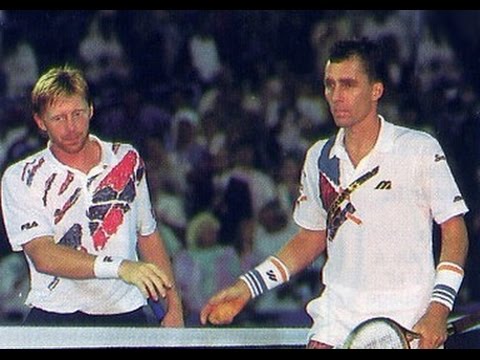
Boris Becker and Ivan Lendl. Photo: Videograb
Best Match: The 1989 Wimbledon semi-finals.
In the early part of his career, Lendl was famously dismissive of Wimbledon saying that grass is for cows. However, towards the latter part of his career, winning Wimbledon became an obsession. More often than not, it was Becker who was the insurmountable hurdle to Wimbledon glory for Lendl. Lendl had an excellent chance in the 1989 semifinal, where he lead Becker two sets to one, only to lose in five sets. Their rivalry proved as to how stats can be misleading. Despite leading on their H2H, Becker won almost their important matches, beating Lendl in three Slam Finals in three different years (1986 Wimbledon, ’89 US Open and 1991 Australian Open). However, fate is seldom bereft of irony. Lendl did indeed win Wimbledon. Not as a player but as a Coach when Andy Murray beat Djokovic in the 2013 Wimbledon Final.
9. Ivan Lendl v John McEnroe (H2H: 21-15 Lendl)
This was the defining rivalry of the mid-1980s and had McEnroe’s form and commitment not dipped after a spectacular 1984, we would have many more memorable matches between the duo. When the Gods decided to create a human to play tennis, they created John McEnroe. His tennis was like natural, effortless painting on a canvas, unlike Lendl’s which seemed like an industrial product of precision.

1984 French Open Final between Ivan Lendl and John McEnroe. Photo: YouTube
Best Match: 1984 French Open Final.
McEnroe blew a two set to love lead to lose the match in 5 sets. He would never play a French Open Final ever again. For Lendl, this was the first of his three wins on Parisian clay. To get a measure of the astounding season McEnroe had in 1984, he had an incredible and still un-matched 84-2 Win-Loss ATP record that year. Apart from this loss to Lendl, he lost to India’s Vijay Amritraj in the Cincinnati Masters. Amritraj, true to his exasperating track record, after scalping a legend in red-hot form, promptly lost the next match – to another Indian – Ramesh Krishnan!
Also read: 'Borg McEnroe' Fails to Be an Intimate Sports Drama About the Clash of Two Tennis Icons
8. John McEnroe v Jimmy Connors (H2H: 20-14 McEnroe)
Two highly combustible, irascible, voluble, left-handed Americans slugging it out over a rivalry that commenced towards the end of the 1970s and right into the start of the 1990s. The crowd hated both of them at the start of their careers. But gradually the fans warmed up to the two Americans, who had a loyal fan base for the rest of their careers. The two of them combined to ensure Bjorn Borg woud never win a US Open title in his career.
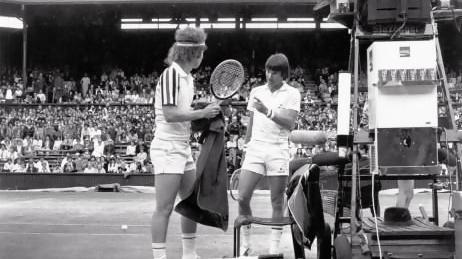
John McEnroe and Jimmy Connors. Photo: Videograb
Best Match: 1982 Wimbledon Final.
Who would have thought that McEnroe could lose in the Wimbledon final, a year after beating the peerless Borg. That is precisely what Jimmy Connors did, a testament to his indomitable pugnacity. Connors stunned McEnroe in 5 keenly fought sets. Despite not seeming to have McEnroe’s obvious natural talents, Connors was an indefatigable super over-achiever. Thirty years after his retirement, Connors still holds the record for the most number of titles won (109) most matches played (1,557) and most matches won (1,274) in the Open Era.
Connors once famously sledged Lendl as “faggot” during one of their riveting matches. Lendl didn’t forget this insult. Went on to beat him for 17 successive times from 1984 to 1992, which is an Open Era record for the most consecutive losses suffered by one world No.1 at the hands of another one. It is for this lop-sided nature, that the Lendl-Connors’ rivalry fails to make the cut in this list.
7. Novak Djokovic v Andy Murray (H2H: 25-11 Djokovic)
When two players, born a week apart from each other in May 1987, have played seven Grand Slam finals between them, spread across all four slams, then the rivalry merits a rightful place in this list. Though this rivalry did get over-shadowed by the rivalries at No.1 to 3 in this list, Djokovic-Murray was every bit as intense and in any other era would be the marquee rivalry.
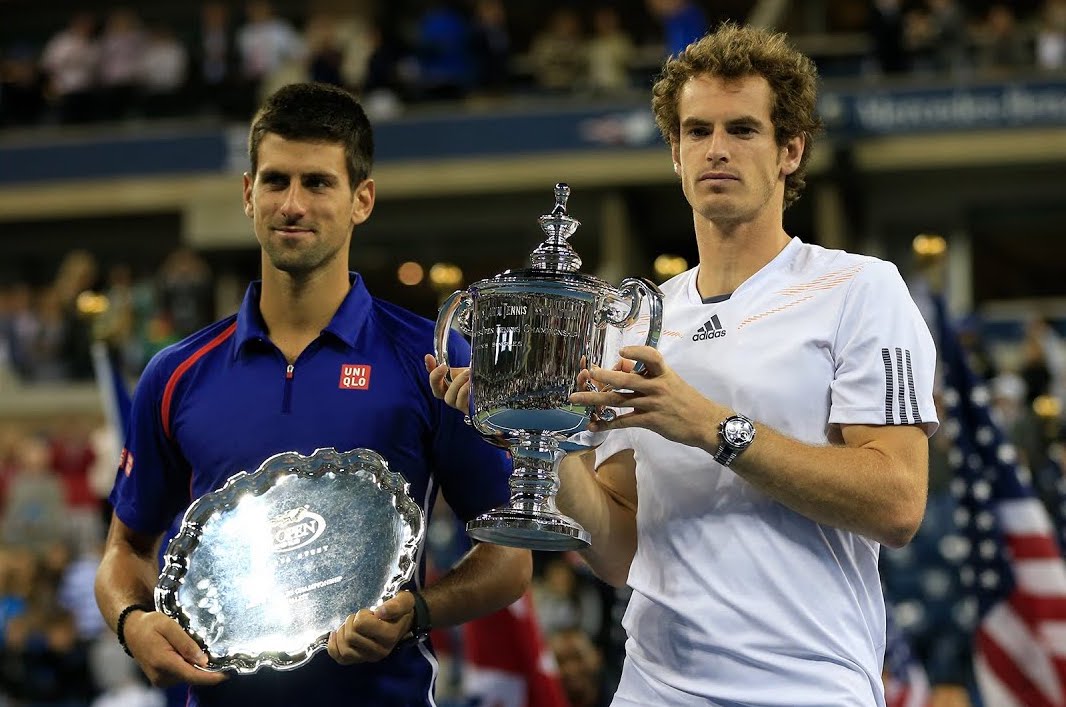
2012 US Open Final between Novak Djokovic and Andy Murray. Photo: YouTube
Best Match: 2012 US Open Final.
Murray became the first Brit since Fred Perry in 1936, to win a Grand Slam. Murray lead two sets to love before Djokovic clawed back from to make it two sets all, but unlike Lendl in the 1984 French Open, Djokovic could not deliver the knockout punch in the 5th set.
Also read: The Feminist Breakthrough That Was, and Is, Women's Tennis
6. Boris Becker v Stefan Edberg (H2H: 25-10 Becker)
From 1988 to 1990, this duo, contested three straight Wimbledon finals. The only contemporary who could match the German Becker on the grass courts of SW19 (till a certain lanky American called Pete Sampras came calling!) was the Swede Stefan Edberg. Unlike Becker, Edberg was a pure touch artiste, and just like his future pupil, Roger Federer, could not hit a single ugly shot even if he tried. Becker, despite having an overwhelmingly favourable H2H against Edberg, lost two of three Wimbledon finals to the cool Swede. Becker won his third (and last) Wimbledon title in 1989 against Edberg at the age of 22 and inexplicably never won it again, losing three more finals, against Edberg (1990) Michael Stich (1991) and Pete Sampras (1995).
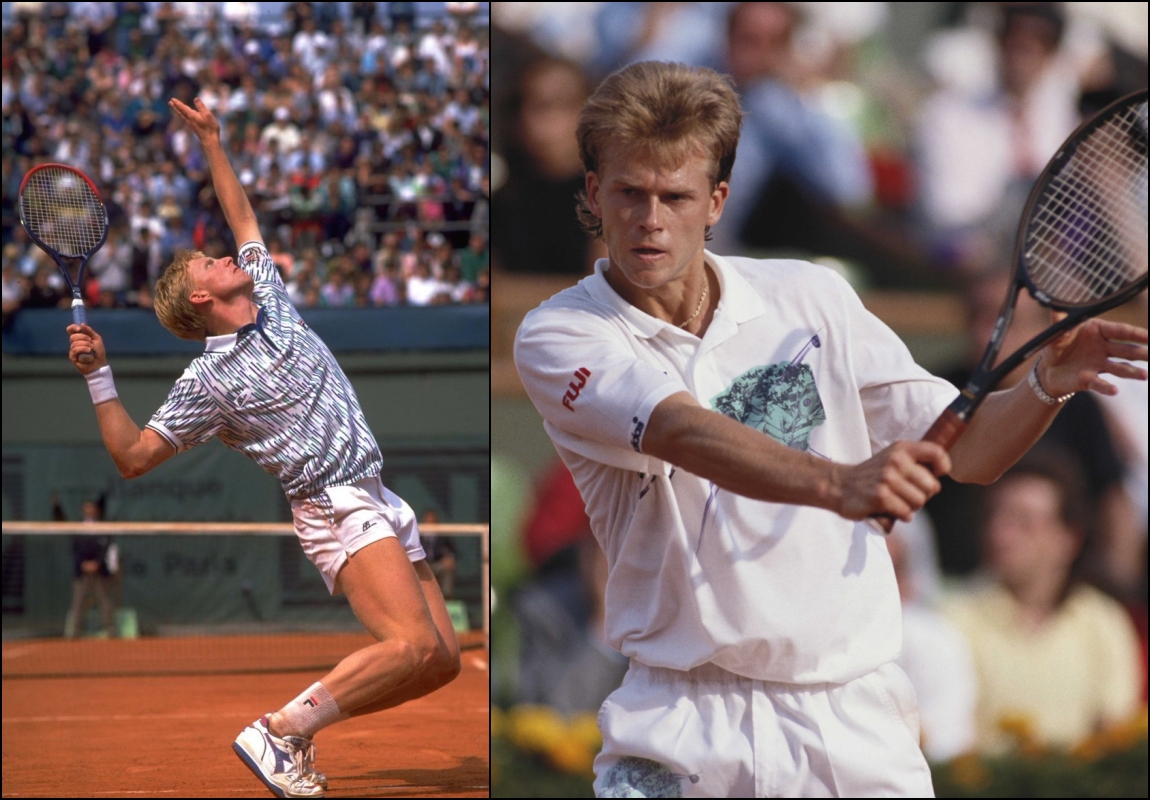
Boris Becker (L) and Stefan Edberg (R). Photos: Twitter
Best Match: 1990 Wimbledon Final.
The duo had split the previous two Wimbledon Finals. After his crushing straight sets win last year, Becker was the odds on favourite but the elegant Swede, survived a barrage of booming serves from the Der Bomber to win their most memorable match in 5 sets. Edberg won the first two sets and seemed on course to administer a straight sets drubbing that he himself had received at Becker’s hands in the previous year’s final. But Becker won the next two sets and was an early break up in the 5th set and in contention to be the first man since one ‘French Musketeer’ Henry Cochet beat the other musketeer and defending champion – Jean Borotra - in 5 sets in the 1927 Wimbledon Men’s Final, after losing the first two sets. Cochet’s 90 years plus record still awaits its emulator. But Becker missed out on more than this unique tennis record. July 8 1990 could have been etched in the sporting annals of West Germany. Their Football team beat Diego Maradona led Argentina 1-0 in the FIFA Men’s World Cup Final held on the same day and only if Becker had held on to his break in the 5th set, that day would have been simply unforgettable for that sports crazy nation.
Also read: As Tennis's Ageing Wonders Triumphed, the Australian Open Became Ageless
5. Pete Sampras v Andre Agassi (H2H: 20-14 Sampras)
The most riveting rivalry of the 1990s. It was better than McEnroe v Connors but not the best rivalry ever primarily due to Agassi’s inability to control what was inside (and at times, over) his head. Probably the only player in the history of tennis, to lose a Grand Slam Final (1990 French Open) to unheralded Andrez Gomes of Ecuador, because Agassi was more worried that his stapled up blonde toupee would fall off on to the court, while playing the Final!
While Sampras had a Lendl-esque focus all through his career since becoming the youngest ever US Open men's champion in 1990 (beat Agassi in straight sets), Agassi had his career frequently derailed by his inner demons (a domineering father, pressure of being a style icon, premature balding, affairs with older singers and actresses (Barbara Streisand ; Brooke Shields), drugs, divorce and major injuries. Come to think of it, it is remarkable that Agassi managed to achieve what he ultimately did, despite all what he has had endure. It would have surely broken a lesser man. Agassi finally won the French Open in 1999 and completed a rare Career Golden Slam. But more importantly, Steffi Graf too won the Ladies Singles Title that year (her last of the 22 Slams). Love blossomed between the last French Open champions of the millennium. The Las Vegan gambler was hugely benefitted by the German’s calm and stability.
The singular greatest trait about Sampras, which supports his claims to be the GOAT, was that he always found an invisible extra gear against his greatest rivals in the biggest matches and especially against his greatest nemesis – Andre Agassi. The flamboyant baseliner from Las Vegas baseliner, with blonde shoulder length hair, denim shorts, neon t-shirts, twinkling trinkets, a baseball cap and ‘devil-may-care-‘ attitude, was unlike any other tennis player ever, at least sartorially. Sampras was the polar opposite. No frills, in attire and in his game. Just used to hang his tongue out and rip those magical serves and athletic volleys. The Open Era may have seen more glamorous, heavier serves but none as effective as Sampras. Greater the adversity, more potent the Sampras serve.
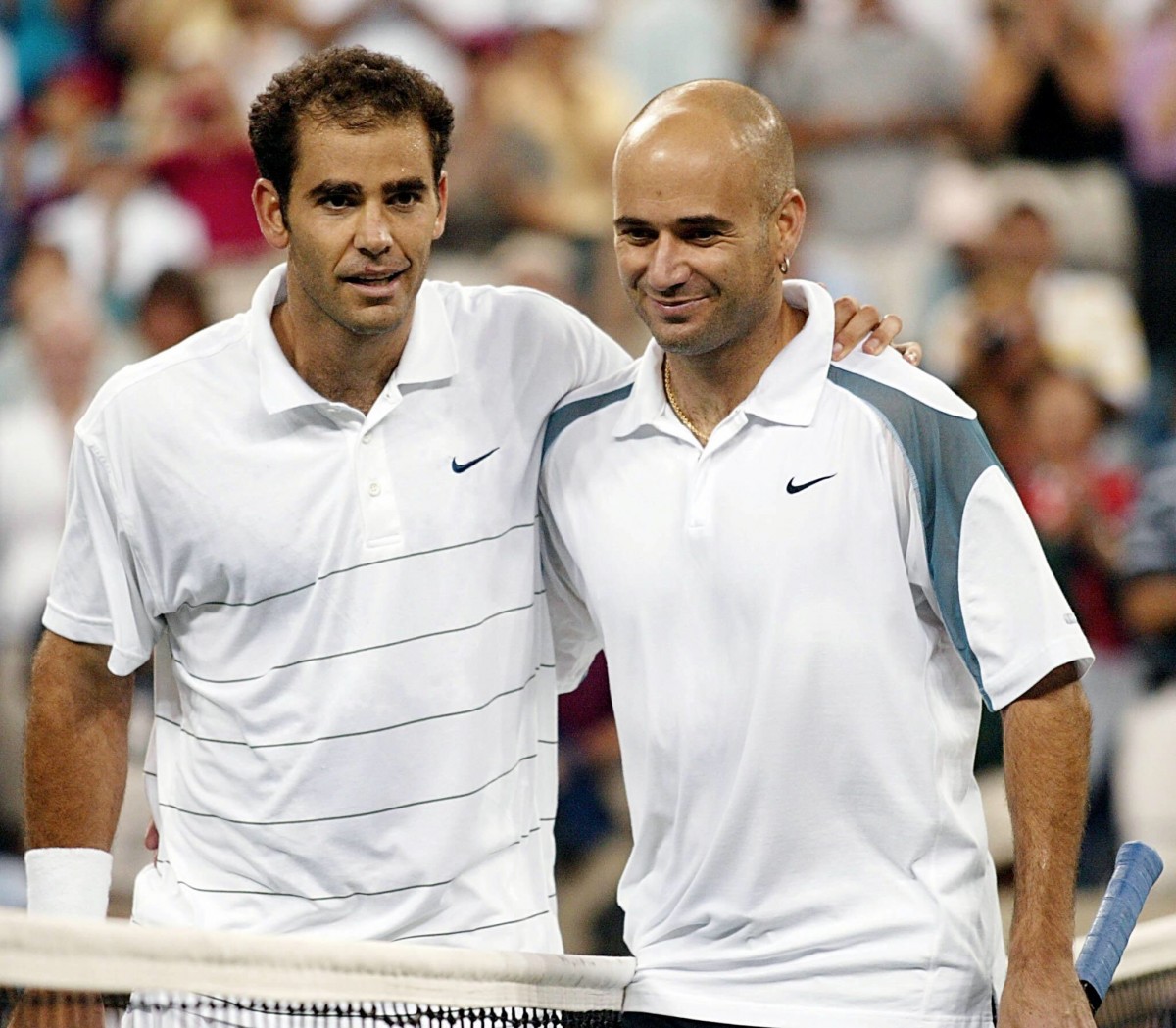
Pete Sampras(L) and Andre Agassi (R). Photo: usopen/Twitter
Best Match: 2001 US open quarterfinal.
Sampras won this match in 4 sets, all tie-breaks, with neither player being able to break the serve of the other. If not at their peak, both the players were very near it. One could sense that this rivalry spanning three decades was about to end and the nostalgia made this match even more memorable.
Also read: As Rafael Nadal Faces Life After Tennis, His Pain Catches Up
4. Bjorn Borg v John McEnroe (H2H: 7-7)
It was said of Bjorn Borg, that even in the middle of an important match, his blood pressure was equivalent to that of a man sitting in the park, reading an agreeable novel. The Swede was a fantastic all court player and one of the greatest ever to hold a tennis racquet. A carefully cultivated careless stubble and a bandana over his long locks – Borg is the only player in the Open Era to win 6 French Opens (played on super slow Clay courts) and 5 Wimbledons (played on super-fast grass courts). However ‘Ice’ met ‘Fire’. The late 1970s and 1980s promised what could have been the greatest rivalry in tennis had Borg not walked away from the game at the age of 26.

1980 Wimbledon Final between Bjorn Borg and John McEnroe. Photo: YouTube
Best Match: - 1980 Wimbledon Final.
John McEnroe – the brash New Yorker was ready to take over the mantle of the King of Grass from the Swede. The final match lasted 5 sets. The 4th set tie-break, won by McEnroe (18-16), itself went on for 20 minutes and considered by many as the greatest tie break ever. However McEnroe would go on to lose the final set 8-6 and the Championship to Borg, who won his 5th straight Wimbledon Final. Borg failed to make it 6-in-a-row as he would lose the next years’ Men’s Final to McEnroe in 4 sets. Their rivalry had everything the sport of tennis could ask for. Decades later another graceful right-handed player would win his 5th straight Wimbledon Final only to be a denied a record-breaking 6th one by another left-handed genius!
3. Novak Djokovic v Roger Federer (H2H: 27-23 Djokovic)
In any other era, the rivalry at Serial Nos. 3 and 2 in this list, would have stood out as the greatest rivalry of all time. This only indicates how we have been spoilt for choices in Federer-Nadal-Djokovic era. Recent Tennis history stands irrevocably altered by a very mundane event.
In January 2010, a Serbian doctor was surfing through the television channels when his wife suggested that they watch the Australian Open Men’s Quarter Final match between fellow countryman Novak Djokovic and Frenchman Jo Wilfred Tsonga. The doctor was reluctant as he didn’t like tennis but fortunately for Novak Djokovic, the doctor heeded his wife’s advice and watched a physically worn out Djokovic blow a two sets to one lead, to lose in 5 against Tsonga.
Also read: Djokovic’s Comments on Women's Tennis Reek of Male Privilege in Sport
The doctor was able to correctly diagnose the cause of the physical travails that Novak suffered towards the later stages of grueling matches. Novak was extremely gluten intolerant ie. his digestive system was extremely hostile to wheat, bread, pasta and even tomatoes, extremely ironical since Novak’s parents owned a Pizza Restaurant, where these food items are a staple! Novak is a perfect example of the momentous transformation a change of diet/right diet could bring. He has become one of the world’s best athlete and the only tennis player who can consistently physically out-slug Rafa Nadal.
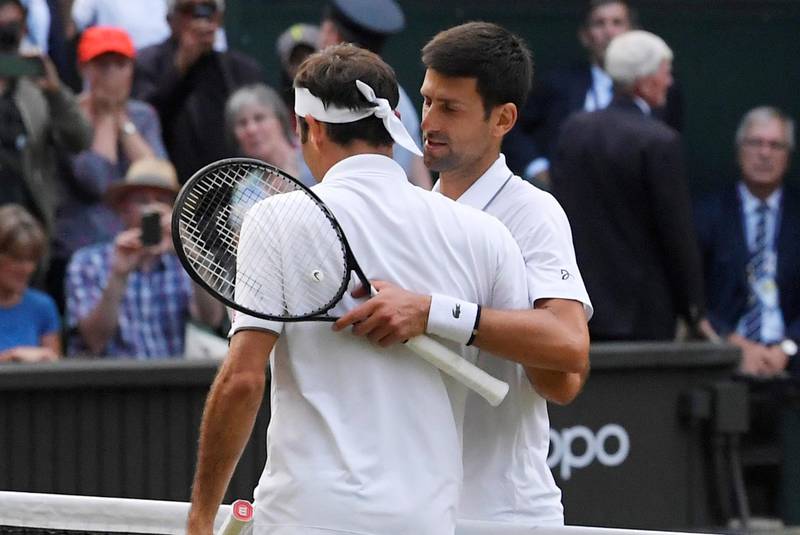
Serbia’s Novak Djokovic and Switzerland’s Roger Federer embrace at the net after their historic five-set final at Wimbledon on Sunday, July 14, 2019. Photo: Toby Melville / Reuters
Best Match: 2019 Wimbledon Final.
If there is one Grand Slam that is famously resistant to change, then it is the Wimbledon. For almost fifty years, they followed the best of 12 points system to decide the tie-break for the first four sets and no tie breaks for the 5th set. A few abnormally long matches in the recent past, made them rethink and introduced a new rule – tie break if the scores are tied at 12-12 in the fifth set. No Wimbledon final in the open era witnessed a 12-12 and I remember speculating as to how many years/decades would we wait to see this. Turns out, not very long. In its very first year of introduction, the scores in the 5th set of the Men’s final were level at 12-12 and Federer lost the tie-break at 12-12, in what could possibly be his last Wimbledon Final, to Novak Djokovic in 5 sets in nearly 5 hours.
2. Novak Djokovic v Rafa Nadal (H2H: 29-26 Djokovic)
But for the sentimentality for Federer v Nadal matches, this rivalry would have taken the top spot. No two players, and that too world No.1s have played as often as these two in the open era (55 times). The fact that there is hardly much of a difference in their head-to-head records after all these matches and all these years, only makes this rivalry exhilarating and enchanting. Their rivalry is famous for its eye-watering, back-breaking riveting rallies. Just watching them can leave the spectators exhausted. Sheer physicality, athleticism, fighting spirit, refusal to loose, this rivalry has all the ingredients that a tennis fan can want.
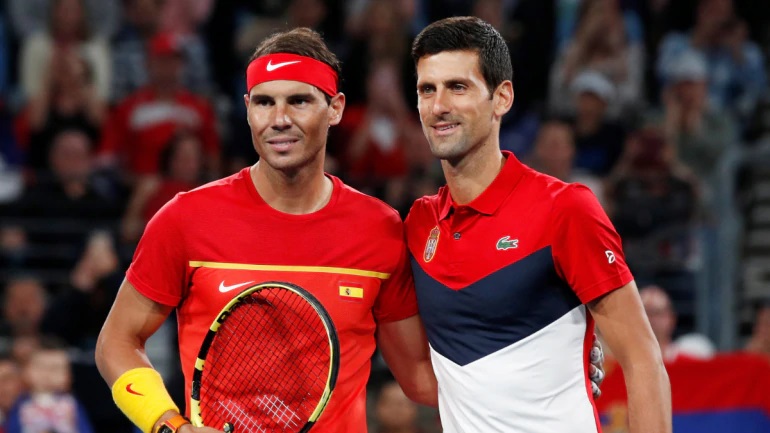
Rada Nadal and Novak Djokovic. Photo: Reuters
Best Match: 2012 Australian Open Final.
At nearly six hours, this is the longest men’s final at a grand slam. This match had so many excruciating rallies, that my joints ached merely at watching that match. Novak won this in nearly six hours and both players could barely even stand at the post match presentation ceremony. This match was an inflection point in Novak’s career. From here on he truly believed that he can beat Nadal and Federer even when they are playing at their best. This match propelled Novak to the No.1 slot and he still seems to be in with a realistic shot to overtake Federer as the highest slam winner (20) and the longest reign as No.1. Another example of Novak’ dedication to diet: he craved for chocolate after winning this grueling match and when he given a chocolate bar, he took just one small piece and let it melt in his mouth, savouring its taste. (This is the level of effort needed to beat Federer and Nadal)
Also read: Bad News for Maria Sharapova is Worse News for Tennis
1. Roger Federer v Rafa Nadal (H2H: 24-16 Nadal)
The Messi v Ronaldo equivalent of Tennis. This rivalry has its own acronym to define it – “FEDAL”. Never have two players of the same generation, captured the imagination of the Tennis world as these two. Diametrically opposite styles and they have had the tennis world divided in two camps, each rooting for the other. When Federer commenced his unchallenged supremacy from 2004-2008 everyone thought he would end with at least 30 at least and he would have exceeded it had not it been for Nadal and the Djokovic.
Nadal’s fans point to the impressive H2H that he has against Federer to argue that it is Nadal and not Federer who is the goat. Personally I don’t subscribe to it simply because Federer has played, and lost several matches on Rafa’s favorite surface clay, (14-2:Rafa), whereas they haven’t played as many times on Grass (3-1:Federer) or Fast Indoor Courts (5-1:Federer).
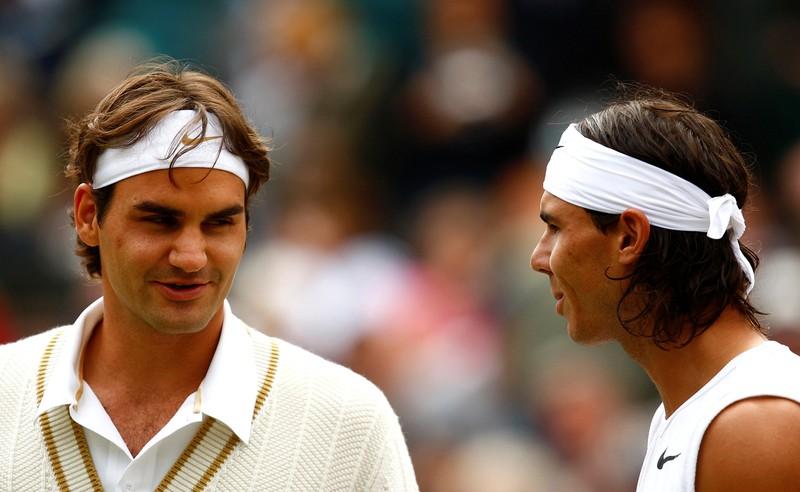
Switzerland's Roger Federer and Spain's Rafael Nadal at the Men's Singles Final Mandatory in 2008. Photo: Reuters
Best Match: 2008 Wimbledon final.
Nadal managed to accomplish the unthinkable. Beat Federer, in his prime, at SW19. Nadal did come perilously close the previous year losing in 5 sets but no one actually believed that the clay court genius would topple Federer on grass in the Wimbledon Final. He precisely did that, beating Federer in 5 memorable sets, in a 5 hour match, winning the last set 9-7.
With Federer, Nadal, Djokovic and Murray still active on the ATP Tour, I wouldn’t bet against any changes on this List in the near future. Any change, would be a mouth-watering prospect for the Tennis fans across the world.
Sunil Fernandes is an advocate on record in the Supreme Court. He tweets at @hisunil.
This article went live on July thirteenth, two thousand twenty, at thirty minutes past six in the evening.The Wire is now on WhatsApp. Follow our channel for sharp analysis and opinions on the latest developments.


