

Modi’s Challenge T: Taliban and Trump


Two high profile events, which have much to do with India's foreign policy and diplomacy, have taken place recently. They call for some reflection.
The first is the sudden bonhomie between the Modi government and the Taliban. Till their visit to India, the Taliban were viewed as pariahs, not only by India but also by the world at large. So much so, that even a UN waiver had to be obtained to make the visit possible.
The second is about the way US President Donald Trump has once again embarrassed the Modi government by publicly pronouncing that his 'good friend Modi' had told him that India, 'a great nation', would not to buy any Russian oil. It may take some time, but it would soon happen, Trump clarified.
Taliban’s misogyny
Whatever be India’s strategic compulsions to invite the Taliban, the fact remains that the latter are a retrograde force. The way they trample women’s rights in Afghanistan is loathsome. A specimen of that was on display even on the Indian soil when in their first press meet in Delhi the Taliban leaders did not allow any woman journalist to be present.
What is even more ridiculous is that the Indian government allowed it to happen. It was only when the woman journalists raised a ruckus that the Taliban had to budge. In their second press conference held in the premises of the ‘disputed’ Afghan Embassy not only female journalists were allowed they were even seated in the front rows.
Here a comparison between Afghanistan and Pakistan may be relevant. In India it virtually amounts to blasphemy to say anything positive about Pakistan. But it must be underlined that hundreds of thousands of Afghan women who had taken shelter in Pakistan as refugees enjoyed much more liberty than their counterparts in Taliban-ruled Afghanistan.
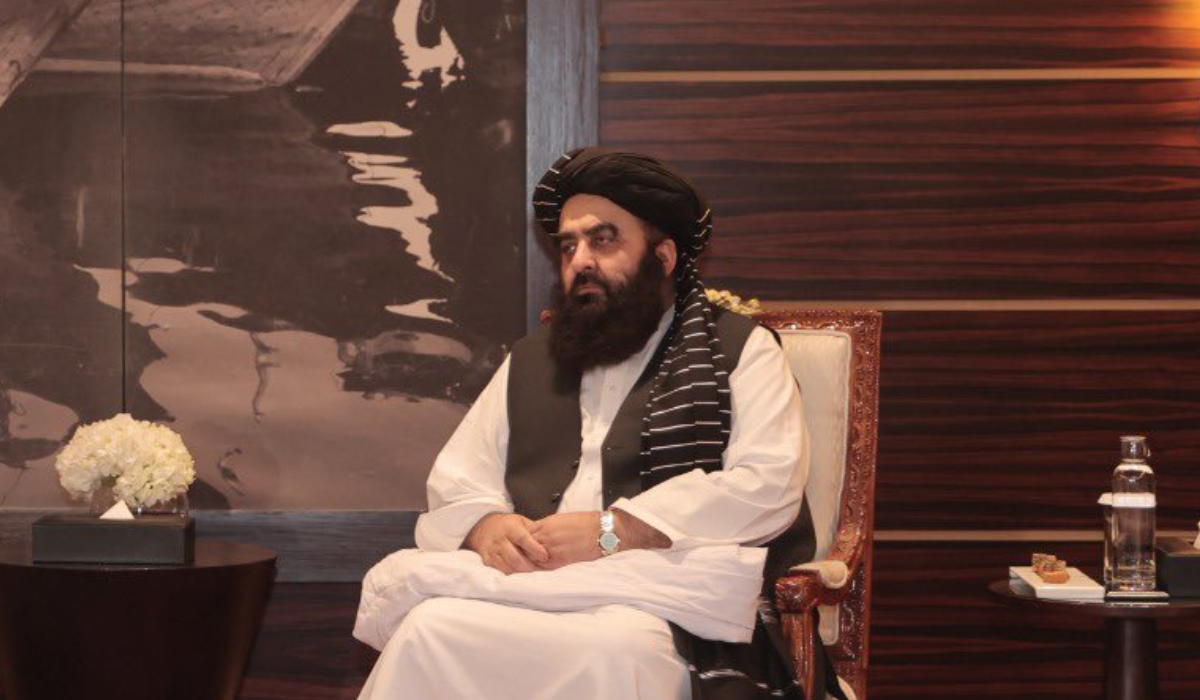
Taliban foreign minister Amir Khan Muttaqi. Photo: X/@meaindia.
The Rahil Azizi case of 2023 was one such story. Rahil Azizi, like many others like her, had entered Pakistan in 2021 to escape the oppressive rule of Taliban. Under the provisions of the 1946 Foreigners Act she faced deportation by November 1, 2023. But her lawyers forcefully fought her case which ultimately reached the Islamabad high court.
In a path breaking judgment the Islamabad high court ruled, inter alia: ‘The law is not meant to act as a trap.... That Pakistan does not have its own legal framework for refugees does not mean that anyone seeking refuge out of fear for his/her life or liberty must do so at the cost of being imprisoned.’ It showed how it was possible for Pakistan to have a generous and humane interpretation of the Foreigners Act of 1946.
It may be highlighted that though none of the South Asian nations (barring Afghanistan, though it effectively means little) has signed the 1951 Refugee Convention or the 1967 Refugee Protocol, but when it boils down to actually dealing with refugees their records are by and large commendable.
Dealing with Trump
Trump has all along been arguing that India’s massive purchase of oil from Russia fuels the latter’s war machine in Ukraine. In the process Trump reduces India into a belligerent nation in the war.
India argues that the Russian oil is not only cost effective, it is well within its sovereign rights to choose its trade partners. India is logically correct, but who cares for logic in international relations. The IR gospel reads: ‘jiski laathi uski bhainsh,’ meaning, whoever wields the stick, takes the buffalo home. The connotation is: Power only matters in international relations.
Narendra Modi, who is otherwise quite extravagant with his words, has maintained a sphinx like silence over all the Trumpian claims. When the latter boasted that it was he who had put an end to the four-day war between India and Pakistan (Operation Sindoor) Modi was conspicuously silent. It encouraged Trump to repeat his boast on umpteen occasions.
I, however, endorse Modi's restraint. As the leader of the nation he knows that the buck stops at his office and in this particular case silence is the ideal diplomacy. It should not escape our notice that Trump has emerged as the most powerful man on earth. He has not only won a convincing majority by winning both the popular votes and the Electoral College votes, through his tariff strategy he has displayed his nuisance value to the whole world.
Dealing with such a mercurial leader is not easy. Imagine that to placate his domestic constituency Modi adventurously calls Trump a liar. Can we imagine its consequences! Will not that make Trump wreak havoc in South Asian politics as the proverbial bull in the China shop? Already his bonhomie with Pakistan’s military and political leadership has unnerved the Indian government.
Let it as well be underlined that India has a huge stake in a steady India-America relationship, which critically includes that massively successful 'one percent'. Authored by three eminent Indian-American scholars, Sanjoy Chakravorty, Devesh Kapur and Nirvikar Singh, their book, The Other One Percent: Indians in America, has shown through hard statistics how much the community has progressed over the decades. Barring the Jews, they are the most successful ethnic minority in the United States.
Against this background Trump can afford to embarrass Modi, but not vice versa. As Shashi Tharoor had theorised long ago in his Ph.D. dissertation turned into book, Reasons of State (1982), that the leadership is often compelled to make compromises keeping the national interest in mind.
Postscript: In the midst of the blitzkrieg unleashed by journalists and social media anchors to report on the visit by the Taliban leaders one small dispatch of Vijaita Singh published in The Hindu may have escaped our attention. It talked about an interesting dimension of the Afghan story. During the Taliban leaders’ India visit a group of Afghan Hindus and Sikhs, who have been granted the special privilege to fast-track their Indian citizenship applications, met with the Taliban leaders and requested them to facilitate their return to Afghanistan. It only showed how difficult is to fathom the intricacies of the South Asian reality.
Partha S. Ghosh is a retired professor, JNU.
The Wire is now on WhatsApp. Follow our channel for sharp analysis and opinions on the latest developments.


