

The Logic and Compassion Behind the Rajasthan Government's Many Schemes


Over the last couple of years, the Ashok Gehlot-led government in Rajasthan has passed a slew of progressive welfare policies. With the assembly elections in the state due later this month, the opposition has accused the state government of using welfare policies merely as a means to remain in power. On the other hand, some economists, particularly those working with the NDA government at the Union government, have raised questions about the need and importance of such policies. However, such concerns appear to be misplaced.

Illustration: Pariplab Chakraborty
In July, the Rajasthan government passed the Minimum Guaranteed Income Act (MGIA), which guarantees all families in rural and urban areas 125 days of work in a year. The act combines Mahatma Gandhi National Rural Employment Guarantee Act (a central government Act) with a State Act, the Indira Gandhi Urban Employment Scheme (IGUES), launched last year. While MGNREGA targets rural households, IGUES is for urban residents. With the IGUES, Rajasthan became only the sixth state in the country to have an urban employment guarantee scheme.
However, what differentiates Rajasthan is that the scheme is a legal guarantee in Rajasthan, unlike other states. Economists, for long, have been urging the central government for the same as ecological degradation, mediocre infrastructure, relatively thinner social safety net, high unemployment rates, and poor quality low wage jobs in urban areas make it a necessity.
MGIA also guarantees a pension of Rs 1,000 to the elderly, disabled, widows, and divorced women, which will be increased by 15% every year. This amount is double the previous pension amount of Rs 500 and covers almost 1 crore beneficiaries, i.e., nearly one in every eight people in the state. This increase takes the state share of pension expenditure in Rajasthan to 97%, with the central government contributing Rs 367 crores for its measly Rs 200 national pension – an amount that hasn’t increased since 2006 despite repeated advice by economists and other experts.
Elsewhere, the Rajasthan government launched the Chief Minister Folk Artist Promotion Scheme on 11th August, which guarantees 100 days of employment at government events to all folk artists in the state and a one-time transfer of Rs 5,000 to buy music equipment. This initiative will work wonders in preserving or even reviving the shrinking world of Rajasthani folk art and uplifting historically neglected nomadic tribes like Kalbeliyas, Langas, and Manganiyars, which form the bulk of the folk artists in the state.
As per estimates based on NSSO surveys by Brookings India, nearly 7% of the country’s population is pushed into poverty every year due to unbearable healthcare costs. The Infant Mortality Rate in Rajasthan, according to the latest Sample Registration System data, is 32 per thousand live births, whereas the Maternal Mortality Rate stands at 113 per 100,000 live births – both significantly higher than the national average. Alarmingly, anaemia also witnessed a rise in Rajasthan between the 4th (2015-16) and the 5th (2019-20) rounds of the National Family Health Survey. For children up to five years of age, anaemia rose from 60.3% to 71.5%.
Moreover, according to NITI Aayog’s latest health index, which is a composite score of overall health performance based on 24 indicators, Rajasthan ranked 16th among 19 large states. In this light, Rajasthan’s Right to Health Care Act, passed in March this year, which guarantees free emergency treatment to everyone, is historic. However, it must be noted that the bill's final version was diluted by weakening grievance redressal mechanisms and eliminating civil society participation in the oversight committee due to incessant lobbying by primarily private doctor bodies. Over 90% of private hospitals in the state will now not be under the bill's ambit, leaving only 47 private hospitals across the state eligible for the Act. Additionally, the government also increased its universal insurance coverage under Chiranjeevi Scheme from Rs 10 lakhs to Rs 25 lakhs. Since the scheme’s inception in 2021, over 1.35 crore families have enrolled, and more than 15 lakh people have already availed of its benefits.
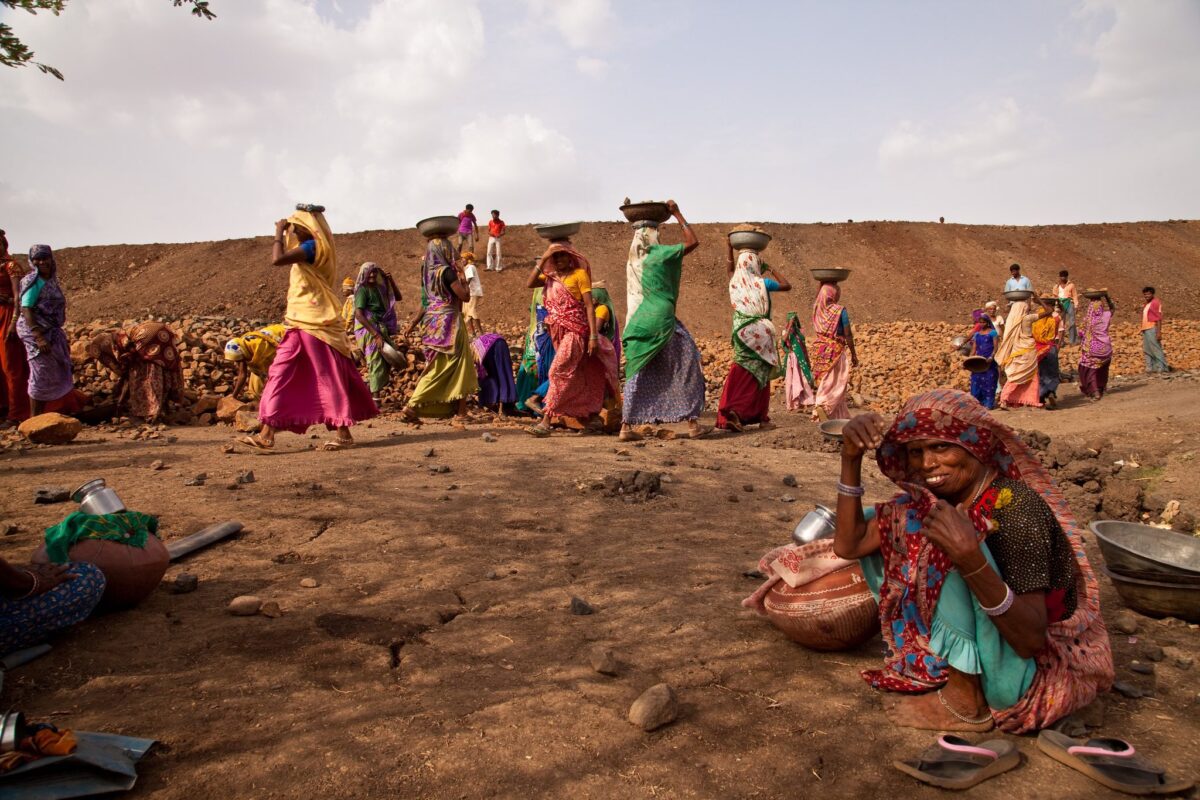
Women building a pond as part of MGNREGA work. Representational image. Photo: UN Women/Gaganjit Singh
Earlier this year, the Gehlot government also passed the Indira Gandhi gas subsidy scheme, which provides LPG cylinders to over 76 Lakh poorest households at a flat rate of Rs 500, resulting in a subsidy of Rs 450 at current prices. To understand the scheme’s importance, consider this: in 2021-22, out of about 9.6 crore Pradhan Mantri Ujjawala Yojana (PMUY) beneficiaries, 10% took no refill, 11% took only one while 57% took 4 or fewer refills according to government data whereas non-PMUY consumers refilled their cylinders 7 times on average in the year. The reason behind this is the skyrocketing price of LPG, which went from Rs 574 in August 2019 to Rs 949 in March’22 in Delhi. Furthermore, prices of necessities such as pulses, oils, sugar, and spices have also increased rapidly in the past few years. Hence, the Annapurna scheme, launched earlier this year, which provides one kg of dal, sugar, salt, edible oil, and spices for free to families covered by the National Food Security Act (NFSA), was a major relief. The inclusion of oils and pulses in PDS entitlements had been a long-standing demand of food security activists and economists alike to help meet the nutritional needs of the people.
Furthermore, in 2020, the Gehlot government launched Indira Rasois to ensure that no person has to sleep hungry. Indira rasois are community kitchens that provide a warm, nutritious meal at just ₹8 per thali. To date, 1000 urban kitchens have served more than 15 crore meals, according to the government, with 1000 additional kitchens in rural areas opening soon in the state. With the gas subsidy, Indira Rasois, and the Annapurna scheme, Rajasthan has perhaps taken the boldest steps in the country to reduce hunger and provide relief from inflation.
On July 24, Rajasthan became the first state in the country to pass a social security act for its over 3 lakh gig workers. The Act will establish a welfare board for gig workers where registered gig workers will have the opportunity to be heard for grievances and participate in decision-making in addition to being eligible for general and specific social security schemes. Over the past few years, issues such as long working hours, meagre pay, lack of insurance and social security have led to strikes by thousands of workers from all major platforms. While the bill is a welcome first step, it should be noted that it leaves much to be desired. Most notably, the act does not address the informal nature of gig work - perhaps the root of most gig workers’ grievances. Moreover, the act does not define what it means by social security, thus leaving details of actual benefits and implementation shrouded in ambiguity.
Over the last two years, Rajasthan has enacted an impressive set of progressive policies for which it deserves credit. However, it is essential to note that the actual success lies in the implementation of these schemes, which remains to be seen. While the intent is laudable, it wouldn’t amount to much if the implementation is lacklustre. The Gehlot administration, elsewhere, has also been accused of using welfare only as a means to remain in power in the upcoming Assembly elections in the state. Regardless of Gehlot’s political intentions, it should be noted that responding to public demand and needs is supposed to be a fundamental tenet of any democratic society. Thus, if anything, pressurising governments to respond to people’s needs should be seen as a successful example of democracy in action.
The state government has also attracted criticism for doling out so-called freebies or revdi, as Prime Minister Modi calls it. However, in a country where over 70 crore people depend on PDS rations to survive, calling welfare schemes ‘freebies’ or ‘revdi’ displays a surprising lack of touch with the socio-economic reality of the masses. Critics of welfare schemes often point out the assumed unsustainable nature of social security expenditure. While it is true that certain fiscal constraints bind governments, critics often weaponise these constraints only to advocate for cuts in social spending. In Rajasthan’s case, however, the fiscal deficit has fallen faster than the average of other states since 2020-21. It fell by 2.2% of GSDP between 2020-21 and 2023-24 in Rajasthan, whereas it fell by less than 1% of GSDP for other states on average. Moreover, the state's tax revenue is estimated to increase from 6.6% of GSDP in 2022-23 to 7.2% of GSDP this year. The state seems to be doing well both in terms of expected tax revenue and fiscal deficit.
Many economists believe that a demand-side push through welfare policies that increase the disposable income of low-income households is a proven method of reviving demand in the economy. Simply put, welfare expenditure allows families to save more money which could then, in turn, be used to demand other goods and services, thus increasing aggregate demand in the economy. Therefore, critics' concerns appear to be founded less in facts and more in prejudice towards welfare. Opposing ‘freebies’ while giving out corporate subsidies worth lakhs of crores is not only bad policymaking but also obstructs people from exercising their right to live with human dignity, as enshrined in Article 21 of the Indian Constitution.
Mohit Verma, is Senior Research Associate at Good Business Lab, Bengaluru. Japneet Singh is Research Associate at Development Solutions, Delhi.
This article went live on November twenty-first, two thousand twenty three, at zero minutes past three in the afternoon.The Wire is now on WhatsApp. Follow our channel for sharp analysis and opinions on the latest developments.


