

Interview | What the Kerala Model Says on How to Fund Government Schools


The Cockroach Janata Party’s call for nationwide attention on government schools is reason to focus on unsuccessful and successful model. Strides were taken by the Kerala government's aggressive education policy mission, especially in the last 10 years, set off by the last Left Democratic Front government. Kerala tops the literacy rate in the country. The state has seen the participation of private corporations in its education overhaul, in a move led by Communist Party of India (Marxist) MLA A. Pradeepkumar, who represents Kozhikode North. Pradeepkumar actively got corporate social responsibility (CSR) funds from private players to invest in government schools as early as two decades ago. How has that system turned out and how is it evolving?
Excerpts from a conversation are as follows.
The concept of CSR for government schools was started by you when you were elected as an MLA for the first time. Is that right?
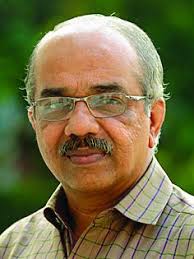
A. Pradeepkumar. Photo: CC BY-SA 2.5 in/Wikipedia.
The name of the project is PRISM – promoting regional schools to international standards through multiple interventions – and through multiple resources where we will collect and accumulate intellectual, technical and financial resources from society itself. Of course, a good part of funds comes form the government, as an MLA’s fund is government fund too. Also, the MLA can mobilise funds from various government departments, like from the PWD, for school construction, to the education ministry itself.
It was in 2006, the CPI(M) government was just voted to power, V.S. Achuthanandan was chief minister, Issac Thomas was the finance minister and M.A. Baby was the education minister. I was elected MLA from Kozihikode North, and it was my pet project to improve the public education system. So, in 2008, I developed this project, submitted the proposal to the government, and M.A. Baby approved it almost immediately.
What were the features of the PRISM project?
This is where various departments come to play. After I got the education minister’s approval for this model project, I approached the finance minister for funds. He said he could not sanction the entire amount as it was for only one MLA. Also, the government does not give money directly to the MLA and funds are allocated for the development of schools through LSGD or the local self-government department, which has the gram panchayats, municipalities and corporations under it. The practice was to approach the local bodies and they would give funds of Rs 25 to Rs 50 lakhs or some such, but I needed crores. The FM then told me to submit the proposal to the State Planning Board and if it is approved as an innovative project, then he would release sufficient money for that one project, for one MLA. Professor Prabhat Patnaik was the vice-chairman. He gave his approval and we took up the first school, a 120-year-old girls government school in Nadakkavu.
And CSR contribution from the private sector was integral to PRISM?
Yes, the inclusion of public sector companies and private companies was crucial for the integrated development of government schools. The proposal was drawn up with the help of IIM Kozhikode, we got the IGAP – Integrated Governance and Policy Project – to do a report to convince potential partners to take it seriously.
The pilot Nadakkavu school project needed Rs 22 crores as it had to be rebuilt from its dilapidated condition – the money was approved by the finance minister and work began in 2010, but a year later in the state elections, our govt lost and the Congress-led UDF govt came to power. I was elected MLA but the new govt was not ready to proceed with the project – it did not disturb it but it was not ready to release any more funds. It was then that the Faizal and Shabana Foundation came forward to give me Rs 15 crores to finish the school project.
Other CSR funds came in the form of computers from Infosys chairman Kris Gopalkrishnan. I also approached then ISRO chairman, Madhavan Nair, who gave us four science labs. The Kerala Science and Technology museum gave us a telescope. So many public and private institutions and departments came forward to give us support because they were all invested in this project.
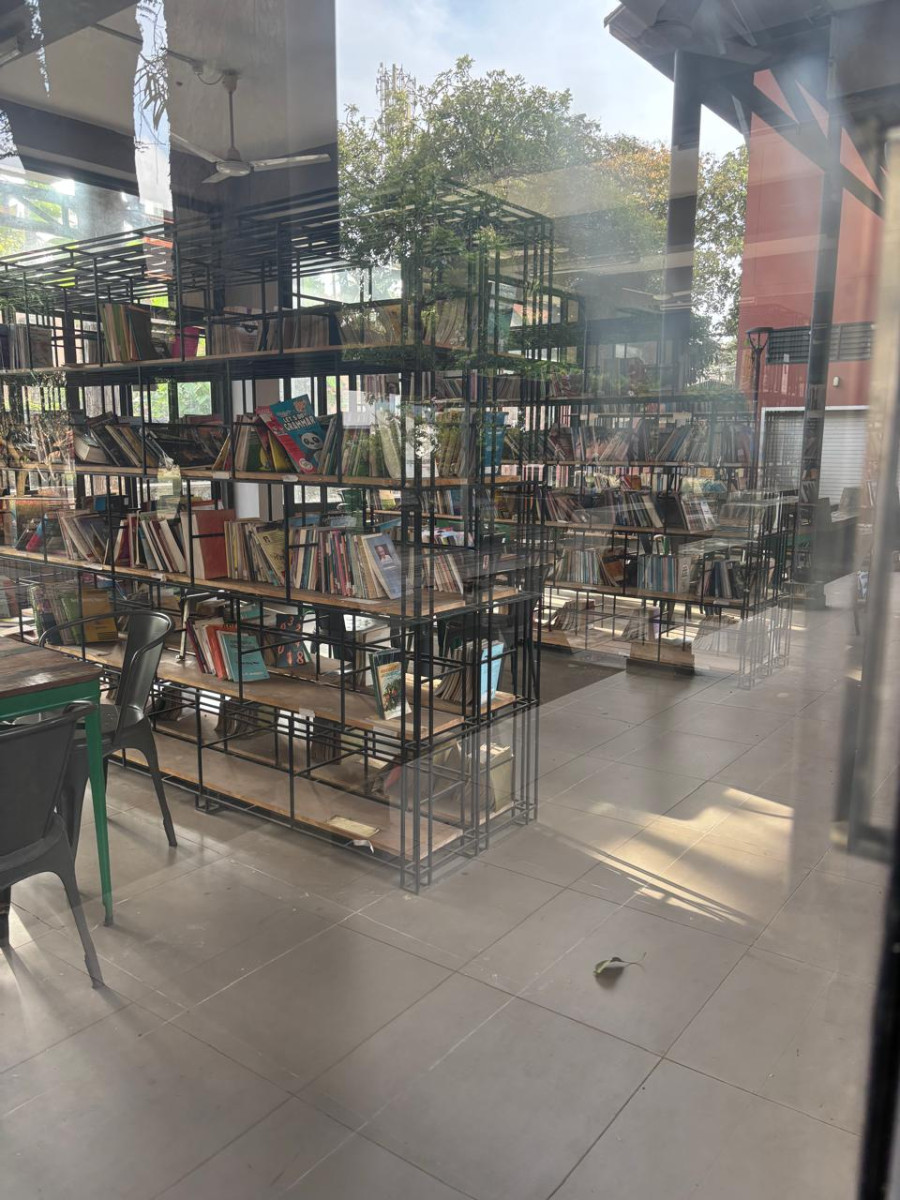
The Karaparamba Government Higher Secondary School. Photo: Vrinda Gopinath.
When did the rest of the schools take off?
The second school in Parambara was being worked on at the same time which was on the verge of closure because there were only 98 students left, all in the tribal hostel, but whose presence kept it going or it would have shut down even earlier. The tribal children came from neighbouring Wayanad. None of the local children went to the school because the school was in a poor condition.
The rebuilding was largely funded by the government – the cost was RS 12 crore, but the money was already sanctioned by the previous LDF government and the UDF did not stop it – however, we got the famous publishing house DC Books to set up the library, provide the books, and maintain it. Beverages Corporation provided the dining hall and all its furniture, and such like. In 2017, the LDF came back to power, and its 10 years in government, we set up 10 schools under PRISM.
Dozens more schools set up in the 140 constituencies in the state, by taking various aspects of our model, as all this was part of the LDF’s massive public education initiative to convert its classrooms into hi-tech modern learning centres. Pinaryi Vijayan converted the AKG Memorial School in our model in his constituency. The school in Kottayam was redone by former MP Suresh Kurup.
What were the partnerships that got the initiative going?
It was a public-private participation rather than a partnership, and it encompassed many factors, from the design of the school to teacher training. The idea was not just to get financial help, but to design an intellectual and creative atmosphere conducive to all-round personality growth of students, from public and private institutions to eminent personalities. So, there was the School of Mathematics that gave problem-solving skills and academic support for school curricula. State library councils set up libraries and learning centres. The Sports Council helped develop sports infrastructure and promote talent in the field. Private players like the Iluzia Labs, specialising in immersive educational technologies helped introduce virtual learning for students too.
Importantly, it was the significant inputs first by the Architecture Department of NIT – National Institutes of Tech – and later by the Indian Institute of Architects (IIA) that has designed award-winning structures for learning and all round development. These include green spaces for art, sports and theatre, optimising maximum natural ventilation for classrooms, libraries that have light streaming from giant glass windows and astroturfed indoor sports grounds. The government school in Karaparamba, designed by the Design Consortium, as part of the IIA Calicut Centre’s CSR project for PRISM, set up Keralam’s first green school campus with an eco-conscious learning environment.
Would you say there is still room for improvement?
Yes, certainly in the teachers’ training department as government schools teachers are routinely transferred in three years, and while we have teacher training programmes annually in the schools during vacation, we have to start all over again when the new teacher arrives. The training is to introduce teachers to teach the curricula in a more innovative and interesting way by using all the modern tech and ideas of learning tools. Unfortunately they are not equipped with the new methodology. They are intelligent, our curriculum is good, but our pedagogy is a failure.
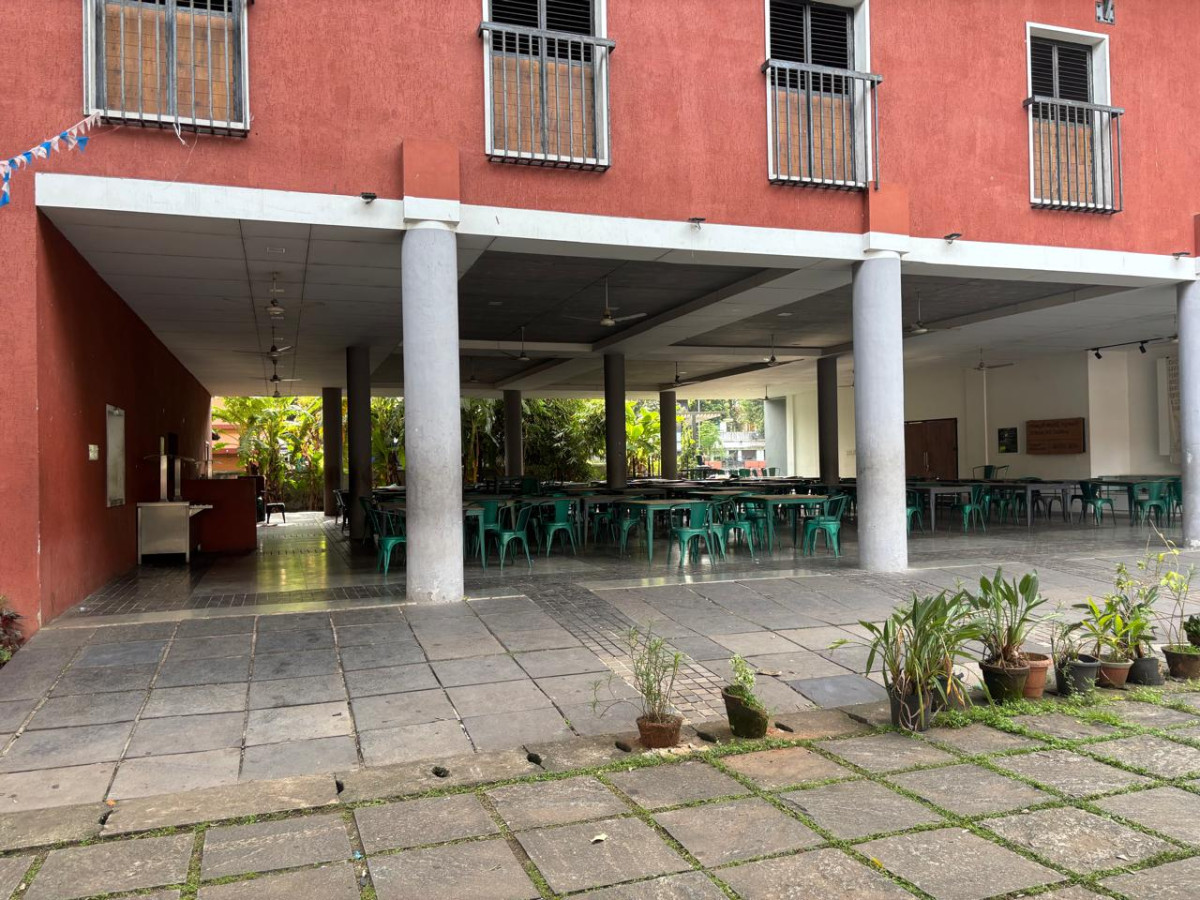
The Karaparamba Government Higher Secondary School. Photo: Vrinda Gopinath.
There were media reports that there was pressure to shut some schools down?
It was well known the UDF government had proposed to shut over 1,000 government schools which were uneconomical — that is, if a school has less than 25 students in class. We resisted this. Take, for instance, the primary school in Maraparamba was shut down by the UDF government on the recommendations of the school administration. It was an aided school, not a fully government one. However, we launched a massive agitation to keep the school open. We collected funds and set up a temporary shed. The matter was taken to court by the school administration, the court decreed the school to shut because the UDF government did not support the agitation. However, after the public protest, the collector intervened and the school functioned until the LDF came to power and the government purchased the school for Rs 6 crore, and a proper school was built. The school administration was perhaps looking to sell the real estate for a much bigger price. The education ministry was with the IUML.
It must be anathema to the RSS-BJP in the state that the IUML has always demanded and got the education ministry in the UDF cabinet. Perhaps the only Muslims to head the education ministry twice in the country ever since the Modi government came to power?
It’s seen that whenever the UDF comes to power, they promote the commercialisation of education. They neglect the public education system. The IUML is also known to have an interest to promote commerce in education. Many of their leaders and activists are partners in many private schools and they work to ensure government schools are shut down. This is true of the UDF too that they have tried to demolish the public education system as private schools are a lucrative business, and this is the story so far.
However, the UDF government has just taken over the government in the last three months and it has to face up to the last 10 years of the LDF government’s aggressive policy of the public education mission. The people have seen the benefits of free education with excellent quality, so we have to wait and watch how the Congress-led UDF government looks at public education today, more so since its leaders like Rahul Gandhi are in the forefront of the new revolution to make good public education accessible to all.
This article went live on September ninth, two thousand twenty six, at fifty minutes past eleven in the morning.The Wire is now on WhatsApp. Follow our channel for sharp analysis and opinions on the latest developments.


