

Salaries Delayed for Months, Teachers in J&K Struggle to Make Ends Meet


Srinagar: Zafar Iqbal, 35, is a government school teacher. He lives in Sailsui, a postcard-perfect village tucked in the mountains of Kalakote area in the frontier district of Rajori, over 100 km from Jammu city.
The only bread winner, Iqbal has to take care of his seven-member family – his wife, two kids, mother and three brothers who are still in school. They live in a single-storey house. In 2010, Iqbal raised a loan of Rs 2.5 lakh from a bank to construct the house that is as ‘yet incomplete’. Nearly eight years have passed, and he still owes the bank Rs 70,000.
The school where Iqbal teaches is located 13 km from his home. “I walk 26 km on foot from home to school and back everyday,” he said over the phone from Jammu, where he is attending to his ailing mother at a hospital. Rajori district is so sparsely populated that a single village can stretch over a length of 30 km or more.
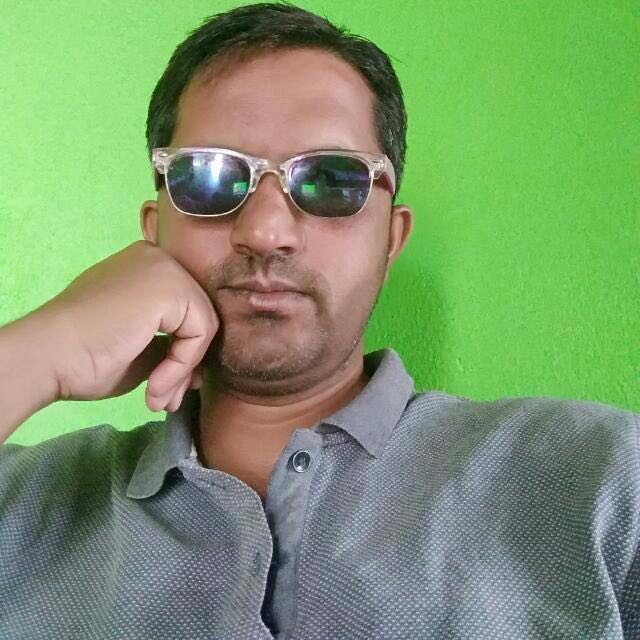
Zafar Iqbal. Credit: Facebook
Iqbal was appointed a teacher under the Rehbar-e-Taleem (ReT) scheme in November 2004 by the state government. In the initial five years of his service, as per the rules of the scheme, he was paid a “menial” sum of Rs 1,500 per month as salary.
“Those were tough years financially,” Iqbal said. When he was regularised in 2008, he started receiving a salary equivalent to non-ReT teachers. However, his financial problems did not end completely – while his salary was higher, it was regularly delayed.
Iqbal is one among the 33,000 teachers in Jammu and Kashmir who are working in the education department as teachers under the ReT scheme, started in the year 2000. A state government order dated April 28, 2000, which outlines the objectives of the scheme, translates Rehbar-e-Taleem as ‘teaching guides’. The scheme aimed at making up the staff deficiency in primary and middle schools. A person recruited as a teaching guide under the scheme was drawn from the community in which the school was located. Under this scheme, he or she would be paid Rs 1,500 per month for the first two years and Rs 2,000 per month (Rs 3,000 from 2010 onwards) for the next three years. After five years, the teacher would be regularised and paid a salary equal to that of a normal government teacher.
The private sector in Jammu and Kashmir is small and unorganised. Unemployment is on the rise and competition for a limited number of jobs in the preferred public sector is huge. The ReT scheme, initiated across the state, became one of the biggest sources of employment. “Even if in the initial five years I got Rs 1,500-2,000, the job gave me a sense of security and hope,” said Tariq Ahmad, 42, who has been teaching at a middle school in his village in Baramulla district since 20001. Ahmad now draws a salary of Rs 28,000 per month. “Some of my classmates from college are still working in private schools and get salaries much less than what I get,” Ahmad said.
In 2002, the Central government started the Sarva Sikhsha Abhiyan (SSA) aimed at the universalisation of primary school education. As in other states, primary schools started mushrooming in villages and towns across J&K. Many primary schools were upgraded to the middle school level under the SSA scheme, and the head teachers required for them were brought from non-SSA schools.
The recruitment of teachers for SSA schools followed the norms of the ReT scheme. A state cabinet decision about the implementation of the SSA scheme, passed in November 2002, says, “the engagement of incumbents against these posts shall be made on the basis of norms and terms and conditions as adopted for [the] ‘Rehbari Taleem Scheme’.” However, 90% of the funds would come from the Ministry of Human Resource Development of the Central government. In addition, 90% of the salary of teachers, including head teachers engaged to teach in an SSA school, would also come from the Central exchequer.
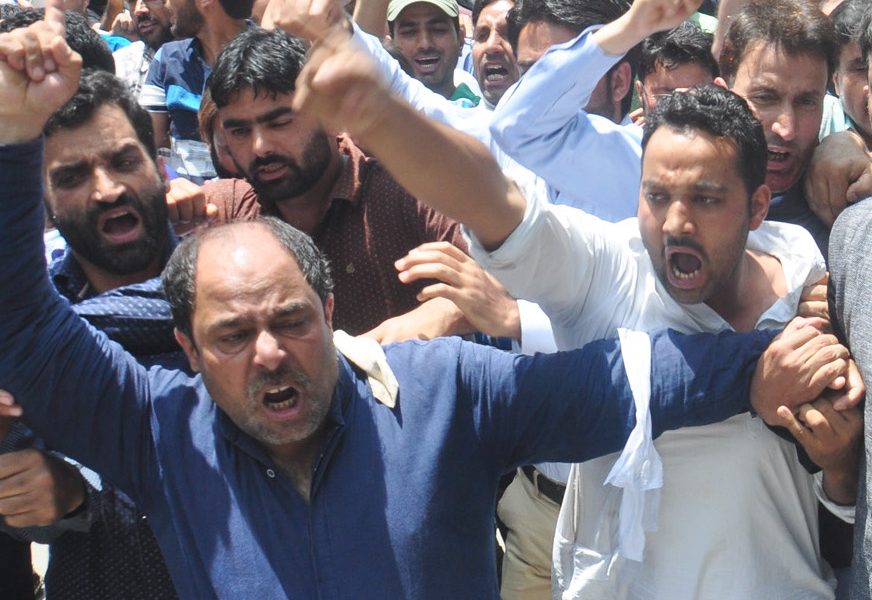
Participants at the July 17 protest. Credit: Mehraj Bhat
“The Central government is lackadaisical in releasing funds to the state for SSA schools. Thus, our salaries remain withheld for long periods, which can sometimes go up to eight months,” said Farooq Ahmad Tantray, chairman of the Jammu and Kashmir ReT teachers’ forum. He added, “The promotions and arrears for ReT teachers in non-SSA state-funded and SSA schools follow similar rules set by the state government. The pay scale is the same, but we only get the benefits of the Sixth Pay Commission.”
In March, the J&K state government implemented the Seventh Pay Commission, giving a pay hike to state government employees. The pay commission was not extended to teachers working in SSA schools. However, according to Tantray, “The teachers who are posted in non-SSA schools, including those recruited under the ReT scheme, get the benefits of the new pay commission.” For the head teachers in SSA schools, the move is ‘brazenly unjust’. Mohammad Shafi from Kupwara, for instance, has been promoted as a lecturer, and he is expected to join a higher secondary school next month. He has already submitted his last pay certificate (LPC), which shows the salary drawn according to the earlier pay commission. “Now, in the higher secondary school, my salary would come from the state exchequer but I will not get the benefits of the Seventh Pay Commission because the treasury will follow my LPC,” Shafi said.
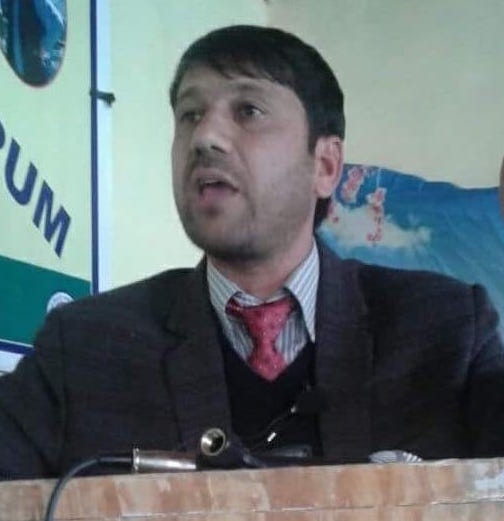
Farooq Ahmad Tantray. Credit: Facebook
These teachers are now up in arms, and are seeking “financial security”. They have two primary demands: first, they want their salaries to be drawn from the state exchequer; second, they want the benefits of the Seventh Pay Commission, as given to government employees in other departments.
“We are employees of the state government and there is a proper cabinet order that says so,” Tantray said. He showed this reporter a copy of an undated official document which states “the teacher recruitment will be as per state government’s norms”.
The Jammu and Kashmir ReT teachers’ forum has met government officials several times and former chief minister Mehbooba Mufti once in June. “The state government tells us that the ReT scheme was a mistake by the previous regimes and that we are the liability of the Centre,” Tantray said. “But the 2002 state cabinet decision clearly says that we are employees engaged by the state government.”
Over the last couple of years, the teachers have, on and off, staged multiple protest demonstrations in Srinagar, Jammu and other major towns. They have formed groups on social media, where they network and organise protests. The biggest protest rally was organised on the eve of Eid-ul-Fitr on June 17 in Srinagar, when, nearly 30,000 ReT teachers assembled at Pratap Park in Lal Chowk, Srinagar’s busiest commercial hub. “When everyone was with their family enjoying the festival of Eid, we were far from our homes, protesting,” said Asif Ali, 27, a teacher who had come from Poshpora village of Kupwara district, 100 km to the north of Srinagar city. “Holding protests is not something we enjoy doing, but we are forced to come out on the streets,” Ali said. “We cannot afford to stay silent, or we will be denied even what we get.”
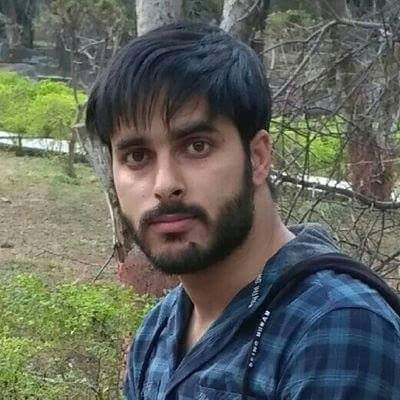
Asif Ali. Credit: Facebook
Last year, Ali bought a car with a loan. He is also the guarantor of a loan his elder brother raised in 2016 to start a tailoring workshop in his village. The workshop is now shut due to the lack of work. “I haven’t been able to meet the monthly deadlines (to repay the loans) due to the delay in salaries,” Ali said. His brother, who has a postgraduate degree in the Kashmiri language, has not found a job yet. Ali’s father, also a teacher, has to take care of the rest of the family, including two sons who are in college. “Their expenses are borne by my father and I fulfil the daily needs of the family.”
The ‘honour’ of teachers in society is at stake, Tantray said. “The teachers have un-cleared loans that they raised for marriages or constructing houses or financing vehicles. It is humiliating to have the bank people at your doorstep every day.”
“I swear by god, before Eid I would avoid taking the route on which the village ration shop from which I bought things on credit is located. I didn’t want to face him (the shop owner) and be humiliated as I hadn’t been able to clear the debt for months.” On Eid, the government released a part of their salaries that had been withheld for three months. Iqbal spent a chunk of the salary to clear a part of his debt and on Eid festivities. “Now, I have borrowed Rs 9,000 from a friend to take my mother to Jammu for treatment.”
Many of the teachers regret their decision to join the ReT scheme. They feel that they would have had a better future in other fields. “Family pressure and shrinking government job opportunities compelled us to take up this job,” said 28-year-old Hakeem Mushtaq, who has been posted in Devipora village in the Mattan area of Anantnag since 2009.
Mushtaq dropped out of an MA degree course in mathematics from Kashmir University to join a school when it upgraded to the middle school level and required a mathematics teacher. His parents insisted that he apply for the post. “They told me not to miss the government employment opportunity.” His father, who was a government employee, had retired in 2004 and the family needed the money.
“I had planned to do a PhD in mathematics. I was the only student with a mathematics degree in my area and my prospects of becoming a lecturer or a professor were bright. Joining the ReT has ruined my career,” he said.
Mushtaq is a father of two. His mother suffers from dementia since 2010. “The expenses on her treatment and medicines cost around Rs 15,000 per month,” said Mushatq. “She has to be taken to Srinagar twice in a month for a check up at the psychiatric hospital.” During the periods of salary drought, his father’s pension is used for her treatment. “We are left at god’s mercy for our daily needs,” Mushtaq lamented.
Students suffering too
The crisis has taken a toll on the education of the children enrolled in these schools. “Classes get cancelled whenever we are out to protest,” Iqbal said. “Even in the classroom, I remain disturbed and can’t teach properly, as I am always thinking of how to avoid facing the people who I have borrowed money from.”
This year, the schools have remained shut for many days due to the violence in the state. Whenever there is a law and order problem in some area, the administration calls for a suspension of class work. To add to that, the teachers’ protests have meant more off-days for SSA schools. “We feel bad for the children of the SSA schools, who come from the poorest of the poor, but we feel bad for our own kids as well,” Tantray said. “And it is the government that is responsible for the crisis. We should be free from administrative hassles; our job is to teach inside classrooms.”
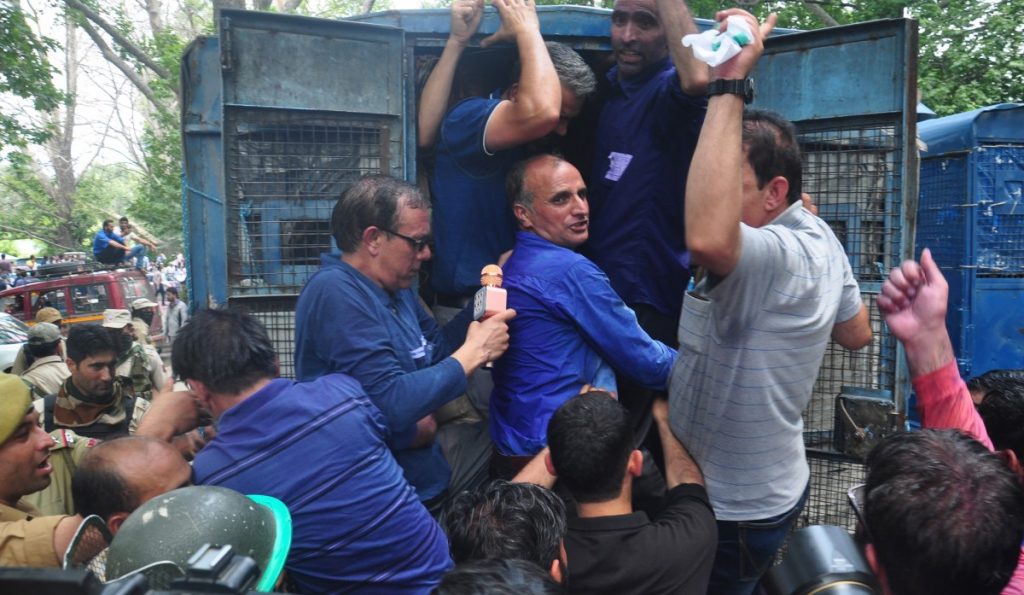
Police used water cannons to thwart the teachers' march on 17 July. Credit: Mehraj Bhat
On the Eid day protests, the teachers had given a one-month ultimatum to the government to address their grievances. Exactly a month later, on July 17, nearly 10,000 protesting teachers assembled in the Sher-e-Kashmir Park in central Srinagar to march towards the governor’s house, located by Dal Lake. The police thwarted the march using water cannons.
The executive council of the forum met on July 22 to formulate a protest calendar. The teachers are preparing to hold candlelight marches and hunger strikes to mount pressure on the government to get their demands addressed. “The class work will remain suspended only on strike days,” Tantray said, “because it doesn’t make us feel happy to see poor students suffer.”
Zafar Aafaq is a freelance journalist based in Srinagar.
This article went live on July twenty-fourth, two thousand eighteen, at zero minutes past seven in the morning.The Wire is now on WhatsApp. Follow our channel for sharp analysis and opinions on the latest developments.


