

Scrapping JNU's Own Entrance Exam is Part of Larger Project of Dismantling Public Education


The Jawaharlal Nehru University Students' Union (JNUSU) is leading a movement for the last 12 days for restoration of JNU Entrance Exam (JNUEE), scrapping of proctorial enquiries against students for peacefully demanding their rights, increasing the merit-cum-means scholarship for students from deprived backgrounds and revocation of hostel eviction order for students in their final year of PhD.
Our sustained struggle is aimed towards preserving the institution's historic legacy, which has long been anchored in its commitment to democratising higher education for marginalised and underprivileged communities. For decades, JNU's autonomous entrance examination system designed with principles of social justice and inclusivity ensured that students from disadvantaged caste, gender and regional backgrounds could compete on a more equitable footing for admission to one of India's most intellectually vibrant universities.
The JNU Entrance Examination (JNUEE) was not merely an evaluative mechanism but an instrument of affirmative action, incorporating deprivation points to offset structural disadvantages, maintaining nominal application fees to ensure accessibility, and permitting responses in multiple Indian languages to accommodate linguistic diversity.
Beyond its formal structure, the examination was embedded within a broader ecosystem of solidarity, where alumni and senior students provided free mentorship and study materials, fostering an informal yet vital support network that leveled the playing field for aspirants from marginalised backgrounds.
As the ongoing hunger strike at JNU enters its 12th day, the protest has transcended the immediate demand for reverting to the university's previous admission system and has instead emerged as a broader resistance against the systematic dismantling of public education under the current political dispensation. The imposition of the CUET and NET/JRF for PhD, with its rigid MCQ format and centralised administration, epitomises the neoliberal homogenisation of higher education, eroding institutional autonomy and disregarding the socioeconomic realities of marginalised students.
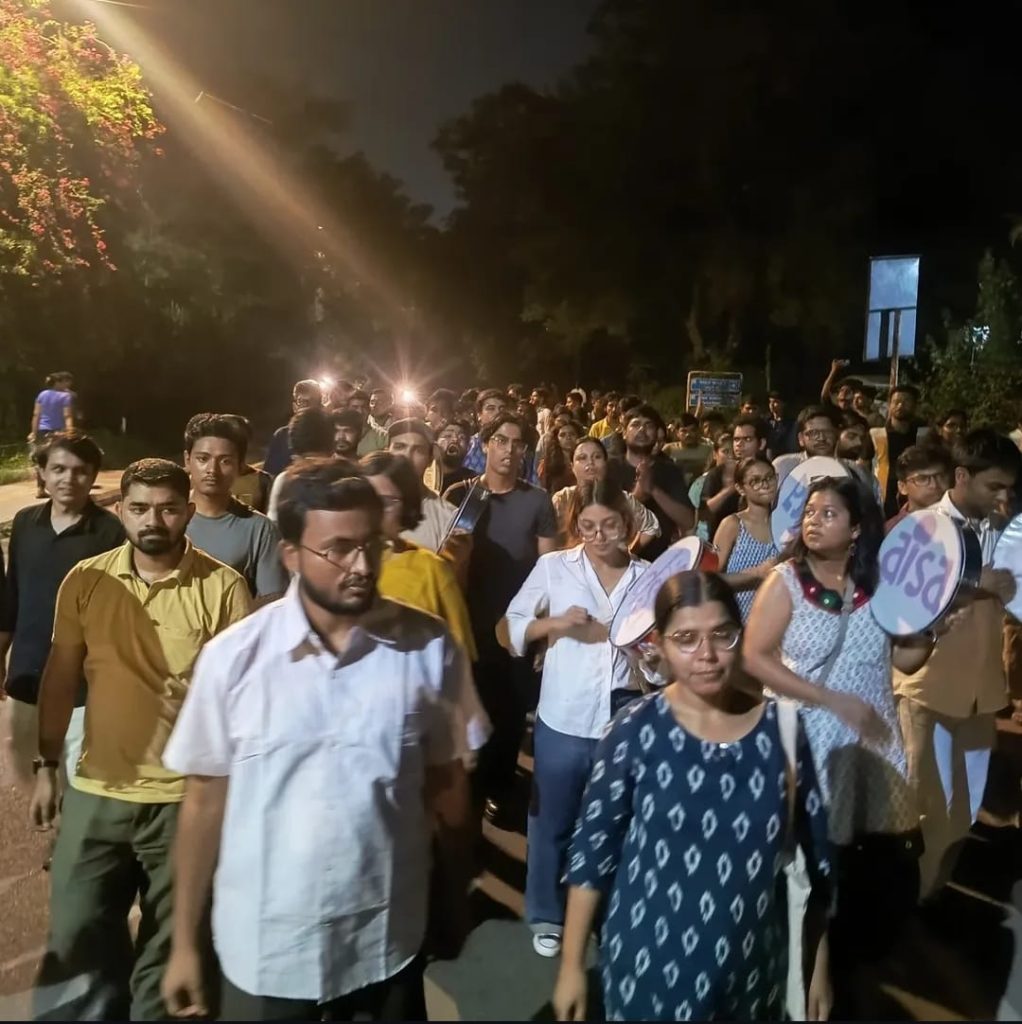
Photo: Special arrangement.
The BJP-RSS regime's aggressive push for standardisation aligns with a larger project of depoliticising campuses, undermining affirmative action, and privileging technocratic efficiency over pedagogical depth. Their vision for higher education prioritises the production of a compliant workforce over critical knowledge creation, reflecting a neoliberal agenda that aligns education with market driven cheap labour demands rather than intellectual empowerment.
This ideological framework systematically undermines universities as sites of critical and deep learning, reducing higher education to an instrument for supplying cheap labour while eroding the conditions necessary for scholarly innovation and social critique.
The protest, therefore, is not merely about preserving JNU's unique admission model but about defending the very idea of a university as a space for critical inquiry, social justice and democratic access – a vision now under siege by the forces of market driven educational reforms and majoritarian exclusion.
Why JNUEE?
The centralisation of admissions through common entrance exams, particularly one based on the MCQ format, poses significant pedagogical and institutional challenges for a university like JNU. A standardised, one-size-fits-all examination fails to account for the nuanced academic requirements of disciplines within the humanities, social sciences and liberal arts, where critical thinking, interpretative skills and analytical depth are paramount.
The MCQ format, by design, prioritises rote memorisation of discrete facts over the ability to engage with complex ideas, construct coherent arguments, or appreciate multiple interpretations of texts and theories. This mechanised approach to evaluation undermines the very essence of higher education, which thrives on intellectual curiosity, reflexivity and the capacity to question dominant paradigms.
Moreover, centralisation strips universities of their autonomy to design admission processes tailored to their unique academic ethos, reducing the diversity of institutional approaches to a homogenised, bureaucratic exercise that privileges efficiency over intellectual rigour.
The erosion of qualitative evaluation methods risks producing a generation of students ill-equipped for the demands of higher education, where independent thought, creativity and hermeneutic engagement are indispensable. By surrendering to the technocratic logic of standardisation, universities risk diluting their critical function and becoming mere degree awarding factories rather than spaces of transformative learning.
Furthermore, the imposition of a centralised MCQ-based exam exacerbates existing inequities in the education system by disproportionately favoring students from coaching centers that train candidates to "crack" tests rather than engage deeply with subject matter. This not only devalues classroom learning but also alienates students from marginalised backgrounds who may lack access to such commercialised test preparation.
The consequences are particularly stark in professional courses like medicine, where Tamil Nadu's opposition to NEET highlights the systemic exclusion of rural, Tamil medium, and socioeconomically marginalised students. Empirical evidence from Justice A.K. Rajan Committee (2021) reveals how NEET's centralised structure has decimated representation from government schools (from 14% to 0.5%) and Tamil medium learners, privileging urban, English medium students with access to coaching. The Tamil Nadu Assembly's unanimous passage of the NEET Exemption Bill represents a direct challenge to this homogenisation.
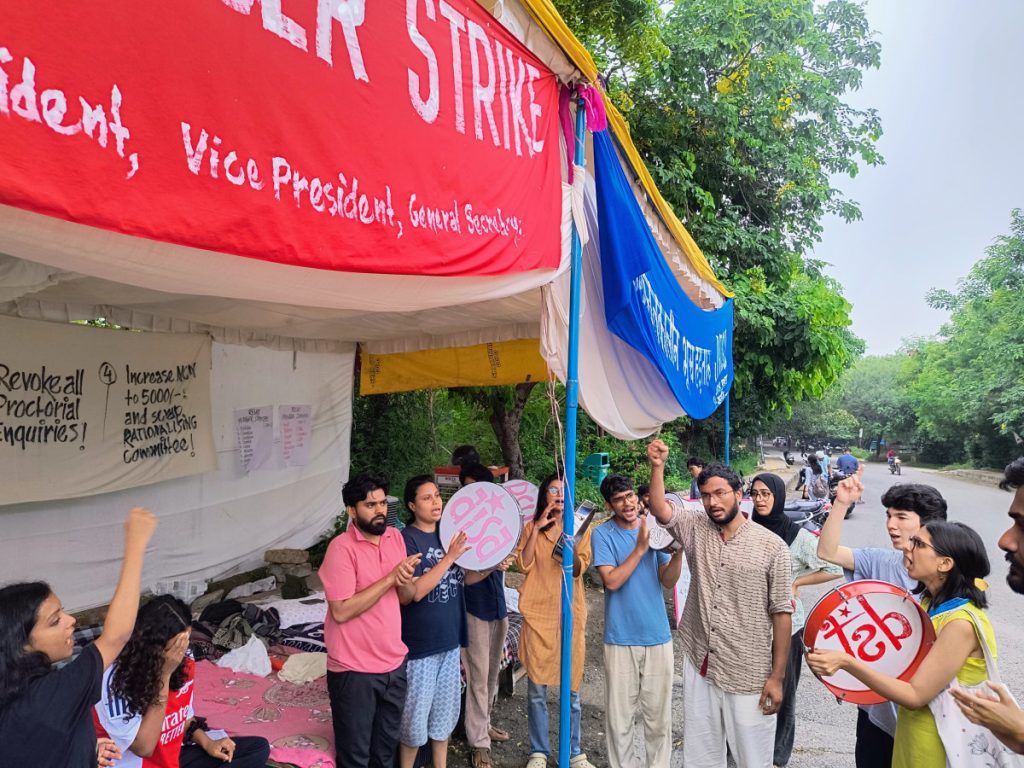
Photo: Special arrangement.
Deprivation points and inclusive education
The JNUEE represents more than just an assessment mechanism, it embodies a radical commitment to inclusive education through its deprivation points system, which operationalises social justice by addressing structural inequalities in access to higher education. The deprivation points system is essential for advancing social justice in higher education as it actively counters structural inequities by providing compensatory support to students from historically marginalised backgrounds. By quantifying disadvantage through empirical indicators such as rurality, female illiteracy rates and lack of basic infrastructure in home districts, JNU's model addresses intersecting barriers of region, gender, and class that conventional reservation policies alone cannot mitigate.
This mechanism upholds the constitutional principle of substantive equality by recognising that equal treatment of unequal conditions perpetuates disadvantage, particularly in an institution like JNU whose founding mandate under the 1966 Act explicitly links national character with representation from backward regions. The restoration of deprivation points for research programs would not merely correct an administrative anomaly but reaffirm the university's democratic commitment to transforming higher education into a vehicle for social mobility rather than a reproducer of privilege.
The (il)logic of fund cuts
The justification for fund cuts is further undermined by its inherent contradictions. While governments demand "world class" standards from public universities, they simultaneously deprive them of the resources needed to achieve such excellence, creating a self-fulfilling prophecy of decline that is then used to justify privatisation.
The neoliberal rationale behind fund cuts to institutions like JNU is fundamentally flawed, as it ignores the indispensable role of public investment in sustaining equitable and quality higher education. Between 2014-15 and 2023-24, JNU's per student expenditure plummeted by 63%, from Rs 37,807 to a meager Rs 13,921 – a decline that starkly contrasts with inflationary pressures and the growing needs of a diverse student body. This drastic reduction reflects not fiscal prudence but a deliberate policy of financial starvation, which forces public universities to operate under artificial scarcity while being held to unrealistic expectations of "excellence."
Such austerity measures are rationalised through market centric dogma, which wrongly presumes that universities must become self-sustaining enterprises. However, this logic disregards the fact that education is a public good – not a commodity – and that underfunding systematically erodes institutional capacity. The consequences are evident: deteriorating infrastructure, shrinking scholarships and diminished academic resources, all of which ultimately disproportionately affect marginalised students who rely on public education as a pathway to social mobility.
In JNU's case, the discarding of deprivation points and the push for centralised exams like CUET align with this financial strangulation, as both moves dilute the university's egalitarian character and make it increasingly inaccessible to disadvantaged students. Data reveals the direct correlation between austerity policies and exclusion: after the 2017 withdrawal of deprivation points for research programs, enrolment from low income families and rural backgrounds plummeted by over 50%. Such outcomes expose the hypocrisy of claims about "merit" and "quality", revealing how fund cuts are less about fiscal responsibility and more about ideological control, silencing dissent by transforming universities into institutional agents to profit seeking corporates for producing obedient cheap labour.
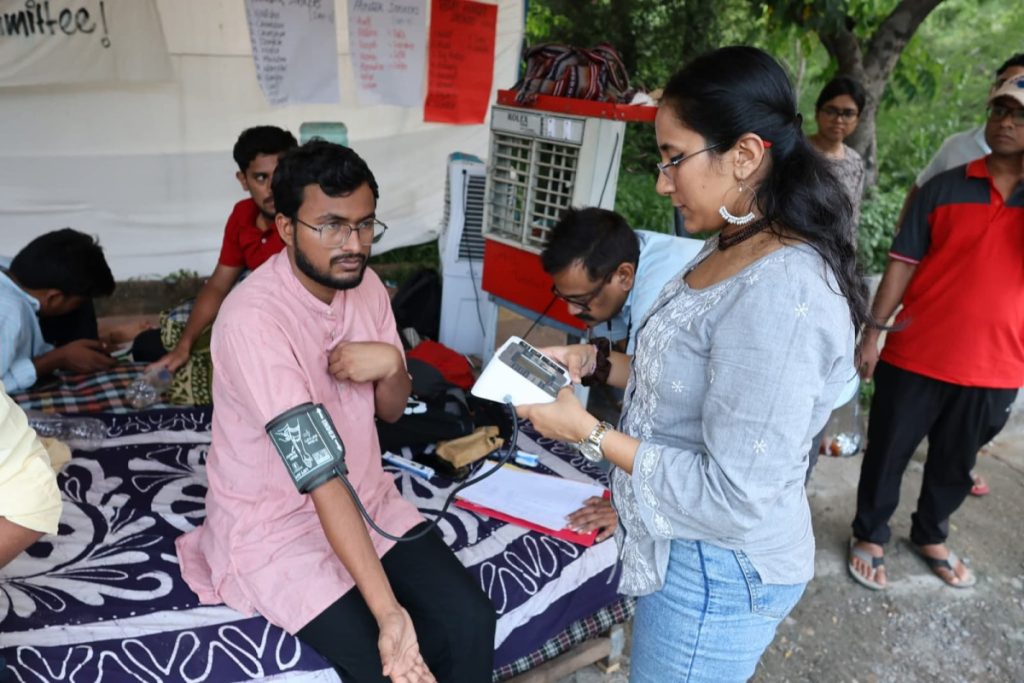
Photo: Special arrangement.
Ultimately, this logic replicates global patterns of neoliberal governance, where the state abdicates its welfare role while retaining authoritarian control over educational content and access, thereby reinforcing existing hierarchies rather than challenging them.
These developments reflect a systemic transformation of India's higher education landscape under the New Education Policy (NEP), 2020, wherein the rhetoric of "autonomy" functions as a neoliberal trope to justify state withdrawal from financial responsibility, compelling public universities to increasingly rely on private capital and corporate partnerships. This strategic defunding represents not mere fiscal austerity but an ideological project to reconfigure higher education as a market driven commodity, precipitating the gradual privatisation of institutions and the exclusion of economically disadvantaged students through rising fees and living costs.
Consequently, students from working class and rural backgrounds bear the brunt of this restructuring.
In defiance of the JNU administration’s persistent negligence and outright dismissal of constitutionally valid demands for equitable admissions, the JNUSU has demonstrated unwavering resolve to compel institutional accountability through its ongoing hunger strike.
Despite enduring Delhi’s oppressive heat and humidity for twelve consecutive days, being deprived of adequate medical care, mobility assistance and even the dignity of being treated as legitimate stakeholders, the protesters’ commitment remains unbroken. The administration’s reprehensible tactics of delegitimisation – including parental intimidation and the withholding of essential healthcare – only brings to the fore its authoritarian disregard for democratic dissent and its infantilisation of conscientised student activists.
Far from deterring the movement, these oppressive measures have further galvanised the collective determination to reinstate JNUEE, not merely as an examination mechanism but as a non-negotiable pillar of social justice in higher education. The struggle, thus, transcends institutional negotiations; it is a battle for the soul of public education itself and one that the JNUSU refuses to concede.
Nitish Kumar is the JNUSU president, who along with three other students, are on an indefinite hunger strike for the last 12 days. Several other students have since joined the indefinite hunger strike.
This article went live on July ninth, two thousand twenty five, at forty-six minutes past six in the evening.The Wire is now on WhatsApp. Follow our channel for sharp analysis and opinions on the latest developments.


