

Interview | ‘India is Just Not Prepared For the Influx of Exotic Pets’: A Conservationist Speaks


Bengaluru: On September 8, authorities rescued five infant orangutans found abandoned in a reserve forest in Balasore, Odisha. While the animals are being tended to and constantly monitored at Nandankanan Zoo in the state, the appearance of the five infants belonging to a ‘critically endangered’ species has raised several questions.
The Wire caught up with Uttara Mendiratta, a conservation researcher who has been working on counter-illegal wildlife hunting and trade in India for around 25 years, to discuss some of these pressing concerns. Here are edited excerpts from the interview:
Delving into the biggest question first: what does the mysterious appearance of five infant orangutans in a reserve forest in Odisha really mean for India?
One thing that it symbolises to me is that India has now become a part of the global conservation crisis. We are not only a source country. We're not only a transit country. We are a market for illegally-traded wildlife.
I think that acknowledgement has come over the years, but it's not there in the public. We don't see ourselves as consumers of wildlife. But that needs to change. And I'm hoping this event [of five orangutans appearing in Odisha] really makes us think about our role in the international conservation crisis.
There are two things that could have happened. One, these animals have come from the wild, in which case their mothers were killed. So that's five individual mothers killed, five babies removed. There would have been other animals that would have been trafficked in a similar way but went undetected. So, you are looking at a population that is drastically declining due to habitat destruction, and now you're adding this pressure to it. This is a really serious conservation allegation for India to deal with. And I think we need to respond as a country to this.
In the second scenario, we assume that they are coming from a captive breeding facility. But there is no legal commercial captive breeding for this species; so even if we say they're coming from captivity, they're coming from an illegal facility. So, we can’t really let ourselves feel okay about this scenario either.
Also read: Explainer: Why Orangutans in Odisha Are Bad News – For India And The World
Even legal facilities, we know, often launder wild animals; of course we're not talking about orangutans, but a whole lot of other species that are commercially bred. There are enough investigations, research papers, to tell us that they [captive breeding facilities] can also be involved in getting wild animals illegally from the wild.
So, we cannot feel good that maybe they came from captivity and therefore we can give ourselves a break and say that this is not a crisis. It is still a crisis.
For the five infant orangutans that reached India, how many do you think would have died?
So, calculating what is called ‘harvest-to-survival ratio’ or ‘loss ratio’ can be very hard for illegal wildlife trade. Studies that have looked at trade in wild-caught birds found that 75-90% of the birds die before they reach the buyer.
We can expect that mortality in primates is also high. We know that the mothers in the case of a lot of the primates, both gibbons and great apes, would be killed. In the case of species such as gorillas and chimpanzees, we know that other troop members will come and defend. They might also be killed or injured. Sometimes the babies also get shot.
And then there is mortality of the infants after they're taken away. They don't always survive. They are stored in unhygienic conditions. They are transported with little care. And even when they come into the pet market, there's mortality there. I've seen pictures of little gibbons holding on to dead gibbons when they're unpacked from suitcases at airports. It's heartbreaking. The trauma is high and the stress is high. So obviously mortality is high. So, at every stage of this trade, there is mortality.
In the pet market, animals are commodities. I mean, we're not treating them very well at all. Legally or illegally, whatever we do, captivity and transport is not easy for these animals.
What kinds of treatment are we talking about? Please give us details.
In the case of these orangutans – hunters would have gone into the forest and shot the mothers. Sometimes the babies also get shot by mistake. They would have to remove the baby from the mother’s body – the baby would still be holding on to the dead mother. Sometimes when the babies are dead or very badly injured, they are just left there. Then they will be put into cages and transported to the next person in the trade-chain who's going to be a middleman, who's going to then add this baby into a ‘consignment’.
They would collect a few of these animals coming from different hunters. They would be caged and fed. These people know how to keep them alive – because they need to keep them alive till the money is transferred.
They will congregate the animals, and then put them into either trucks or ships to transport them further. If they are coming on planes, they would have to be concealed. This is also true if they're going to go through any checkpoints, including along roads. And concealment means that they would be drugged and sometimes tied up so they don't move around. They'll be tightly packed into suitcases and very often they die of suffocation. And this happened in the gibbon case I told you about. So, there were two babies that came out of a suitcase. One of them had died of suffocation, but the other one was still holding on to it because it was a sibling, or a friend or, you know, just somebody it had. And it was the only comfort it had. It was hard for the rescue team to actually separate it from that dead gibbon. We make such a big deal about this monkey in Japan, that’s holding on to a stuffed toy and not letting it go. But we're not seeing these pictures [of animals in illegal wildlife trade]. We are looking away because they're really hard to look at. It is heart wrenching.
And I get it. I mean, that's how human psychology works. We don't want to look at these pictures because they make us feel really bad, and we don't want to feel bad. But we cannot look away anymore. Somehow, we have to force ourselves to look at the pictures of these animals being suffocated, starved, and murdered. There's no end to the cruelty and the death that's happening.
People, especially those who love animals and want to have these animals as pets, really want to look away from this. But they shouldn't be allowed to look away, especially if they're going to be a part of it. And such a big part of it.
Do you think India should send the infant orangutans back once they discover the country of origin?
There's no doubt about this.
I mean, there is no reason for us to keep these animals. And we know that Indonesia is a good place to send them because the chances are that they came from Indonesia. And even if they came from Malaysia, Indonesia has those sub-species as well, and they have the capacity to figure out where to keep them, where to send them, and where to reintroduce them if possible. So, if Indonesia is asking, I think it's a no brainer.
There is no doubt in my mind that these animals should go back and be part of that population that is being re-introduced into the wild. There's no justification at all for India to keep these animals at Nandankanan zoo or any other place.
How worrying is it that we have great apes and gibbons as pets? What are the issues involved in this?
We know that there is a lot of cruelty involved. There's a lot of death involved. And we are a nation that talks about compassion and love for animals. Then how are these two things happening in parallel? There seem to be two Indias here – there seem to be two different moral stands within our society about this. One that wants to keep exotic pets despite the cruelty, and the other that wants wildlife to stay in the wild. And we can also see this in reactions on social media to this event.
There is this more practical aspect of keeping orangutans as pets. They grow big and an aggressive big male is not an easy pet to keep. This is not a joke. You don't just keep orangutans as pets. If you're going to keep them as pets, let's say even legally, you need a veterinarian system. You need the infrastructure for it. So, it is a big deal. What are we doing in terms of the practicality of keeping these pets? Are we really prepared for this?
Think about gibbons – gibbons call loudly even in captivity. We have had so many gibbon seizures. How are people keeping them? Where are they keeping them? Are these gibbons calling and we're not hearing them? Or there's some reason they're not calling.
What about the veterinarians who are treating these animals that have been illegally kept as pets? What is their standing on this? What is their culpability?
We know that with tigers and lions in captivity in many places, they kill them as soon as they grow up because they are not cute anymore – they don't make good Instagram pictures. So those animals are killed, their bones and other body parts are sold to the market.
With these five orangutans found in the forest, there's so much to unpack here. And I hope we can do that now. We can use this opportunity where everybody is asking questions to really not just ask about where these five individuals come from, but why are we in this position in the first place?
You spoke earlier about how India is no longer just a source or a transport point, but actually a sink. We are consumers of exotic wildlife and the illegal pet trade. Are you seeing a spike in numbers, when you compare across years?
So, we started seeing a spike in this trend just after the pandemic. By 2022, we were like, okay, this is really serious.
Earlier we were getting a lot of seizures on the Indo-Myanmar border. Including an orangutan. The first orangutan seizure that I have seen came through that land route and it was sent to Guwahati. And then I think it went to a rescue center. Then we started to see a lot of really rare and expensive animals coming in by air. In 2024, we got another orangutan, which was found in a bathroom in an apartment in Mumbai.
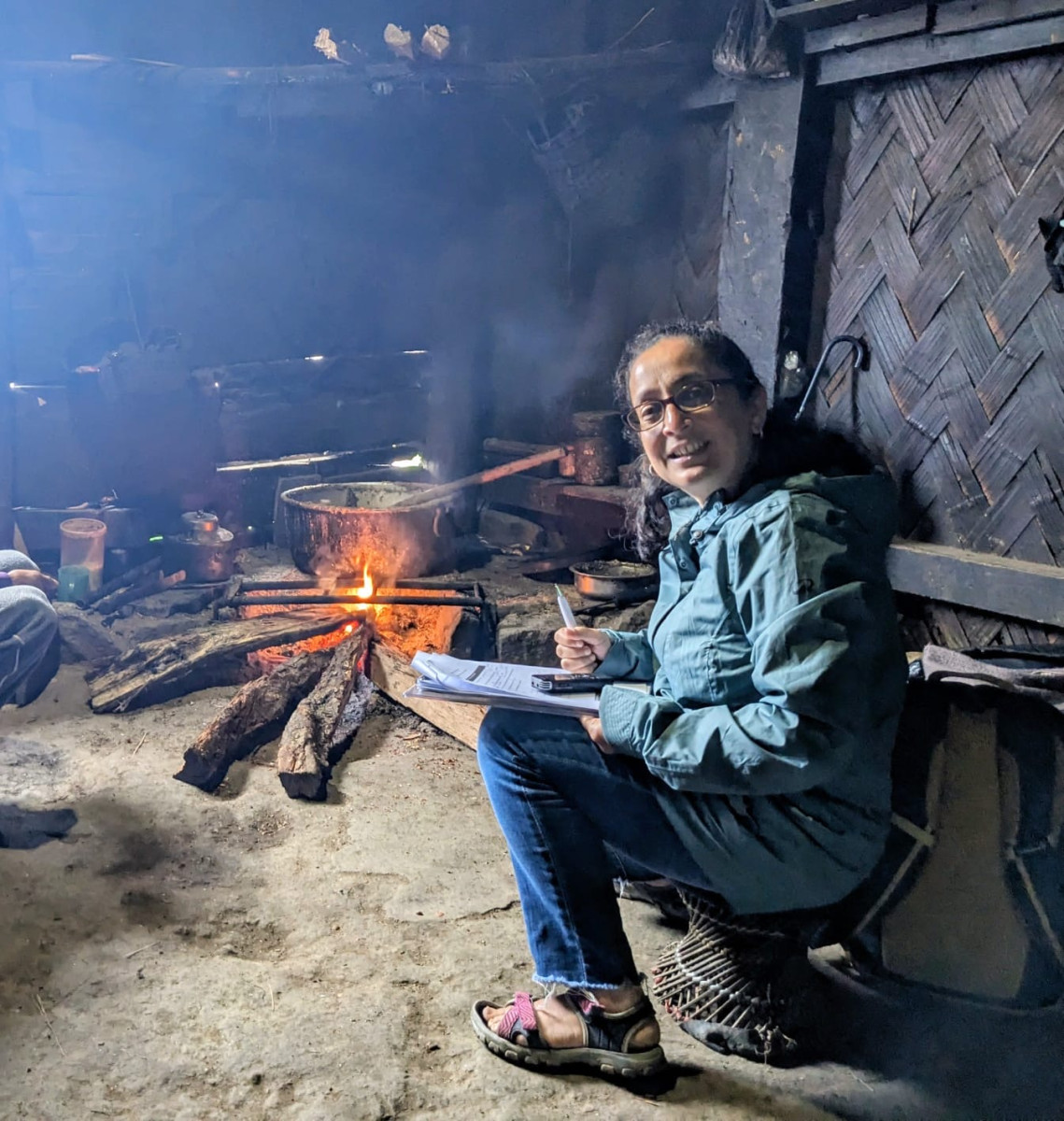
Uttara Mendiratta is a conservation researcher who has been working on counter-illegal wildlife hunting and trade in India for around 25 years. Photo: By arrangement
And this trend has since continued. We have seen a lot of gibbons, even some birds of paradise, hornbills, and maleos [a Critically Endangered ground-dwelling megapode found only in Sulawesi and Indonesia]. We had 25 maleos seized in India or en-route to India in one year. And these are species that were not known to be in international trade. They were just in local trade. This was the first instance. And we are not getting just one or two.
So, all this has happened, I would say, in the last ten years. And it has really peaked. They are not one offs anymore. We're getting a pattern that repeats itself. This is not the normal pet trade that India had witnessed or any other country for that matter, witnesses.
You raised the question of why we are in this place at all. What are the loopholes in our system that are permitting this?
There are seizures every month somewhere or the other. You know, there's hardly a week that goes by where we don't have seizures. And obviously that reflects a massive demand. How did we create this demand?
We have normalised some of this. We have seen our celebrities with wildlife, and have seen big events where animals are on display. It's not okay. I don't think we can look at a picture of somebody with a cute pet and untangle that from the actual sourcing of that animal and the future of that animal. We have become so Instagram-focused that we are not able to see the big picture behind it. Our love for animals is turning into cruelty for animals, without that connection being made.
People say they love animals and therefore they have an exotic pet – but it is actually cruelty towards animals because of the way they are sourced, and the way they're bred. That connection needs to be really, really exposed: of what people – well-meaning people who lovingly bring exotic pets – are actually doing to these animals, both in the wild and in captivity.
And I think our policy safeguards are just not enough. The government has come out with Parivesh one, Parivesh two – but even in the case of the Chennai incident [Tamil actor Vikram posing with his pet gibbon], we can see so many loopholes, there are so many uncertainties. We are not prepared legally.
Twenty-five years ago, when I started my career in counter wildlife trade, if somebody had told me that something like this could happen in India, I would have said, no way. Our laws and our morality will never permit this to happen. And obviously I was wrong because our laws seem to be not working and our morality seems to be broken. And that's a real disappointment because that's not where we started. This is where we have ended up.
For the longest time, there was no enforcement action possible in the case of exotic animals. And for years, from the early 2000s, there was talk about putting CITES Appendix I species into our lists [in the Wildlife Protection Act 1972]. That has happened now with amendments, but we've left so much room for red tape. So much room for laundering because we don't have the manpower, we don't have the capacity or the expertise. We can’t actually do what we're saying we're going to do. We're going to inspect everything. We're going to keep a tab of everything. But we don't even have basic data. I mean, we’re [researchers studying illegal wildlife trade] are trying to ask how many pet shops are there? What licenses have they got? Who is breeding what? We don't even have this data right now. We've asked, we've searched for this data, and it's just not there.
I have come across advertisements for exotic pets where they have a price without papers, and a higher price with papers. So clearly the animal did not come with papers. These papers will have to be somehow generated and that is the added cost.
We are not in a position to deal with the influx that we're getting.
The interview has been edited for structure and clarity.
This article went live on September eighteenth, two thousand twenty six, at nine minutes past five in the evening.The Wire is now on WhatsApp. Follow our channel for sharp analysis and opinions on the latest developments.


