

Jaipur: Without Anganwadi Food Service, Families Struggle To Meet Nutritional Needs


Jaipur: It has been seven months since the hot-cooked meals delivery service to children and pregnant women at anganwadi centres across the country were suspended on March 25, following the imposition of the nationwide lockdown to slow the spread of COVID-19.
While 'temporarily' suspending the services, the Union Ministry of Women and Child Development had asked state governments and union territories to extend the food security allowance to every beneficiary of the anganwadi services.
In Rajasthan, the Ashok Gehlot-led Congress government had announced that the beneficiaries under the National Food Security Act (NFSA) will get free ration for two months starting from March, and non-NFSA beneficiaries will be given food packets.
The Akshay Patra Foundation, entrusted with delivering food services to anganwadis in Jaipur, had offered its services last on March 17, before the lockdown was announced.
Also read: As Jaipur Govt Schools Fail to Engage Students Online, Children Go Out to Work
In March, Akshay Patra told The Wire that its food service to anganwadis was suspended "on government orders", but that they continued to serve food to "about 2,000 other people”. However, these "other people" did not necessarily cover children and pregnant women of the anganwadis.
At several anganwadis in Jaipur, monthly dry ration of seven kilograms each of pulses, rice and flour was distributed during the lockdown, but it has stopped at many places now.
Anganwadi services were initiated by the Union government in 1975 as part of the Integrated Child Development Services (ICDS) scheme, meant to eliminate child hunger and malnutrition. While the hot-cooked meals service was disrupted in March – and the centres slowly limp back to life – the government still does not seem to have any plans to restore the service.
Impact on children's nutrition
The lockdown has resulted in the loss of livelihood for many who worked in the unorganised sector, and mostly, it is people from these families that depend on the anganwadis for nutrition. Without any income, or even a reduced income, the poor households are in dire need of the government's support for the restoration of food services for children under the age of six years.
The Wire has spoken to a few parents in Jaipur whose children are enrolled with anganwadis to understand the challenges faced by them in providing adequate nutrition to their children.
Since the lockdown, Manoj (26) and Mamta (24) in Jaipur's Nindar village have been finding it difficult to pay their monthly house rent of Rs 2,000. Manoj used to work as a tractor driver at a mine in Nindar and made Rs 15,000 per month, while Mamta took care of their two daughters – Shalu (1) and Anjali (4) – who are enrolled at an anganwadi.
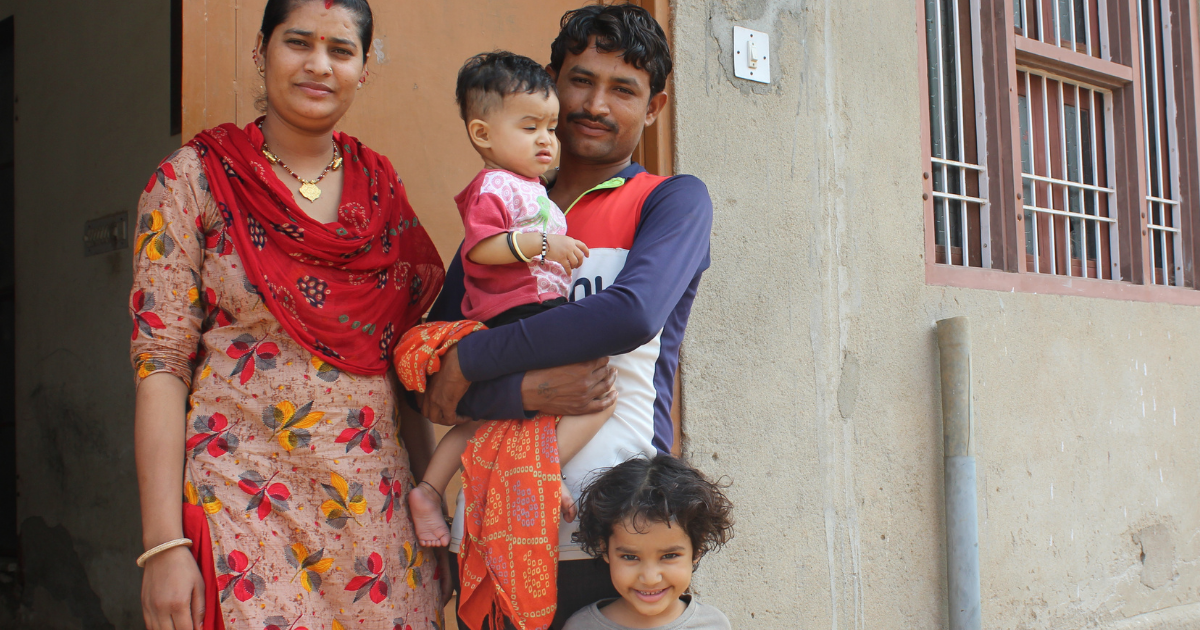
Manoj Singh is struggling to provide for his family with the suspension of food services at anganwadi centres. Photo: Shruti Jain/The Wire
At present, Manoj hardly earns Rs 2,000 per month and is struggling to provide even the basic requirements of his wife and children.
Apart from imparting pre-school education, the anganwadi used to be a source of breakfast and lunch every day for children below six years. In fact, at most of the centres, children used to take the surplus cooked food back to their homes, either to consume later in the day or for their family members.
"There were hardly 20-25 children at the anganwadi and the quantity of the food delivered was also good. So, we used to pack the surplus food in their tiffins," says a local anganwadi worker.
Anjali also brought home cooked-food from the anganwadi centre for her younger sister. However, after the discontinuation of food services, it has become a challenge for the parents to meet the nutritional needs of their children.
"Our financial condition has worsened, even having two meals a day has become a challenge. If we eat a little less, there will be not much impact on our health but the children need at least two meals a day. We request the government to resume the food service for our children," Manoj has told The Wire.
Asha and Vijay Singh are also struggling to provide two meals a day to their children. Their younger son Dipanshu (4) is enrolled at the anganwadi, and elder son Honey (9) and daughter Lakshita (7) go to government schools.
Dipanshu was provided cooked food at the Anganwadi, while Honey and Lakshita used to have mid-day meals at their schools. "When our children used to go to Anganwadi and schools, we were relieved that at least they can have one proper meal in a day," says Asha.
Singh used to work as a construction labourer. There was no dearth of work for him prior to the lockdown. But since March 25, he leaves home early morning to find work, but despite making all efforts, he returns empty-handed.
"Now, he goes out to look for work once in a week because it has become a pointless exercise," adds Asha.
Kamlesh (35) shares a similar story. He has been playing the drums since he was 15. Amid the coronavirus pandemic, weddings have become much smaller affairs due to which drummers, primarily associated with these ceremonies, have lost their livelihoods.
To run the house, Kamlesh’s pregnant wife goes out to work. She has got some temporary cleaning work at a nearby household.
Bhanu (33) also used to play the drums at weddings but has not been able to find work since March. He is totally dependent on the dry ration provided by the Rajasthan government, but he says that the free ration lasts only a week. "The seven kilograms of flour hardly lasts for a week. The pulses do last for a month but one needs to have chapattis too," says Bhanu.
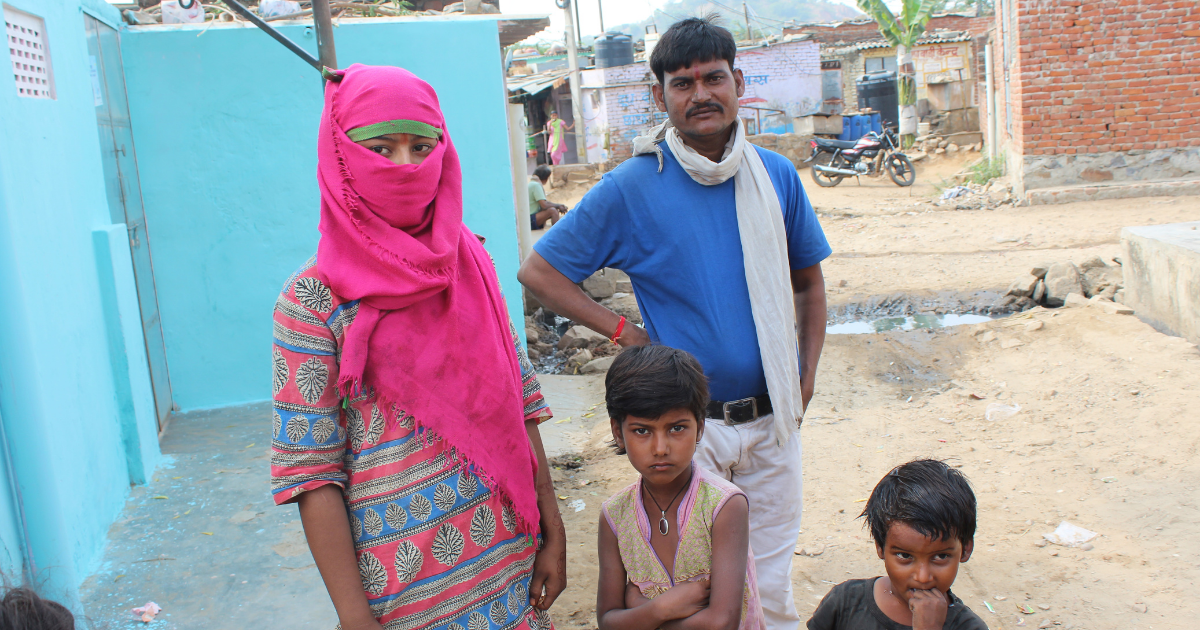
Bhanu and his family struggle to eke out a living with the bare minimum free ration provided by the Rajasthan government. Photo: Shruti Jain/The Wire
He has four children, out of whom two are enrolled at the anganwadi. “The centres have started opening; I see the workers come daily. If that is the case, why can’t the food service be resumed? Parents can go to the anganwadi centre and collect food on behalf of children,” Bhanu adds.
This article went live on October twenty-eighth, two thousand twenty, at zero minutes past five in the evening.The Wire is now on WhatsApp. Follow our channel for sharp analysis and opinions on the latest developments.


