

Students, Activists From Northeast Bring Anti-CAA Protests to Delhi


New Delhi: Braving the cold wave in Delhi, students and civil society members hailing from various Northeastern states congregated at Jantar Mantar on December 21 to protest against the Citizenship (Amendment) Act, 2019 (CAA).
The protesters, who met under the umbrella of the North East India Unites for Justice and Peace (NEIUJP), termed the Act anti-indigenous and criticised the government for attempting to suppress voices highlighting the rights of indigenous people.
"There is no political solution to the problems of the Northeast, we have voted (for the BJP) for our destruction. The truth has to be told to the public, to the common people. Only a free media can do that, they should hear our voices," said Pradyot Debbarma, politician and erstwhile king of Tripura, while addressing the crowd.
Stressing the point that the CAA could lead to demographic change in the region, Debabrma said, “We will not let others hijack our agenda. We are here to speak about our people. You cannot always ask one to take more people.”
Many among the protesters also expressed disapproval at the national media of being apathetic to the region, even though there have been several deaths due to the police crackdown, and mass agitations and curfews in various parts. They felt that even though it was the people of the region that rose against the government first, the national media has either stopped covering their concerns or has subsumed them under the mainstream Indian protests against the CAA.
Also read: A Letter to India from a Student Protesting the Citizenship Amendment Act in Assam
Several speakers, however, expressed their solidarity with the students of Jamia Millia Islamia and Aligarh Muslim University for opposing the Act and highlighted that it would be detrimental to the rights of indigenous people too.
The concerned citizens of the region came together also to express displeasure at the failure of their elected representatives to convey their concerns to New Delhi. NEIUJP members repeatedly appealed to those assembled to unite for justice and promote peace in the region. Apart from encouraging harmony among the eight states of the Northeast, they also sought the withdrawal of the CAA and demanded the immediate release of peasant leader and anti-CAA protester Akhil Gogoi and other agitators who have been arrested under draconian laws. Gogoi has been arrested by the National Investigating Agency (NIA) on charges of being a Maoist, under the Unlawful Activities (Prevention) Act.
NE groups protest at Jantar Mantar. Photo: Special arrangement
Besides, the protesters also opposed a nationwide National Register of Citizens while highlighting that one needed to “understand the context” of Assam and Tripura's demand for it. In October 2018, Debbarma had filed a petition in the Supreme Court seeking an NRC in Tripura, to segregate Indian citizens from those who might have entered the state without documentation from bordering Bangladesh. The native tribal population of the state has been reduced to about 30%, though it was a majority when it joined the Indian Union in 1949.
Among other speakers were professor Bimol Akoijam from Jawaharlal Nehru University, noted historian and retired Jawaharlal Nehru University professor Mridula Mukherjee, Supreme Court lawyer from Meghalaya Daniel Lyndoh, social activist from Manipur Javed Mehedi and queer activist from Assam Rituparna.
A press release issued by the NEIUJP said,
“All the speakers repeatedly stressed upon history to understand the context of this region. Professor Bimol Akoijam from JNU, historicized the construction of nationhood and pointed out that CAA is bound to create an “organic conception of nationhood” which rested on the idea of blood; historically an idea which has been used to legitimize genocide."
Similarly, Mukherjee threw light on the history of migration in Assam to contextualise the state’s real demographic insecurity, while simultaneously appealed for a humane solution to migration. Mehedi, of the Manipur Students’ Association Delhi, drew attention to the Centre's complicated relation with the Northeast, particularly in Manipur, which has witnessed the Armed Forces (Special Powers) Act. He also reminded participants about the two-month-long curfew imposed in the state of Manipur the day before, thus highlighting how the people of these region is often treated as second-class citizens.
Also read: CAA+NRC Is the Greatest Act of Social Poisoning By a Govt in Independent India
"Imagine a country where we are not treated as human beings, where we are abandoned by our family, for being a lesbian, where we have been denied the right to ancestral property. How can you then expect me to produce an ancestral tie? Why is citizenship related to the body, to a religion? We will be the first to be affected in the worst possible way if CAA and NRC are implemented together," Rituparna said addressing the crowd.
"Northeast is more plural than the whole of India is," opined Javed, adding, “there is an urgent for a national refugee policy in India.”
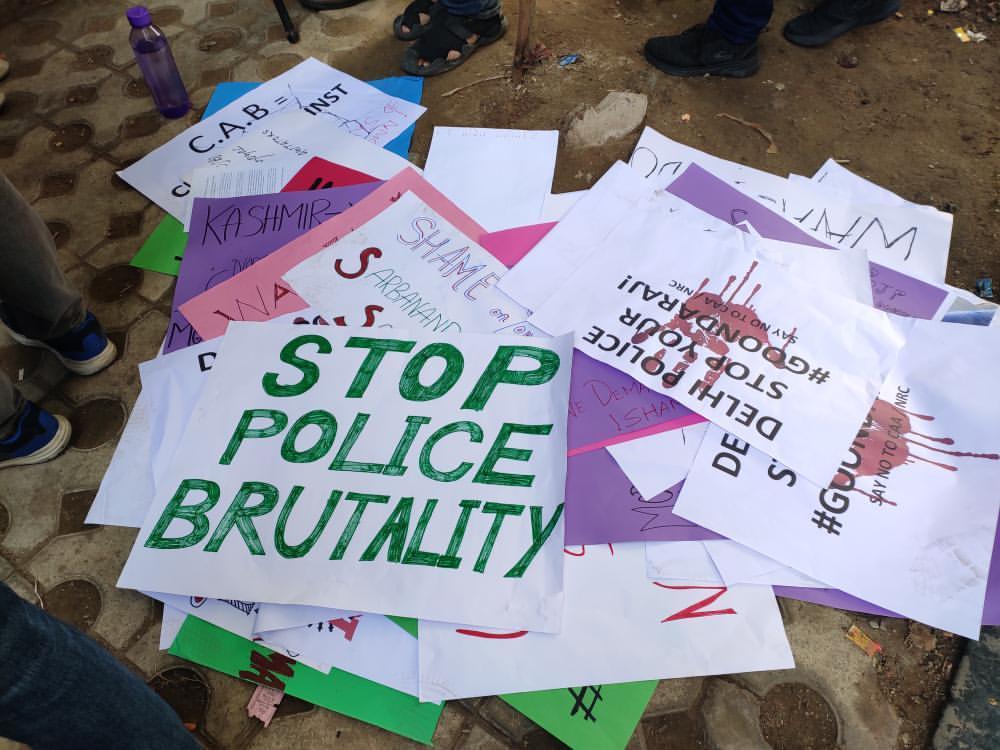
Dominated by youth flaunting ethnic shawls and mufflers, the protesters shouted slogans demanding scrapping of the CAA. The protest ended with the congregation singing "We shall overcome..."
This article went live on December twenty-third, two thousand nineteen, at zero minutes past two in the afternoon.The Wire is now on WhatsApp. Follow our channel for sharp analysis and opinions on the latest developments.


