
People Holding Public Office Should Exercise Self-Restriction: Supreme Court
The Wire Staff


Real journalism holds power accountable
Since 2015, The Wire has done just that.
But we can continue only with your support.
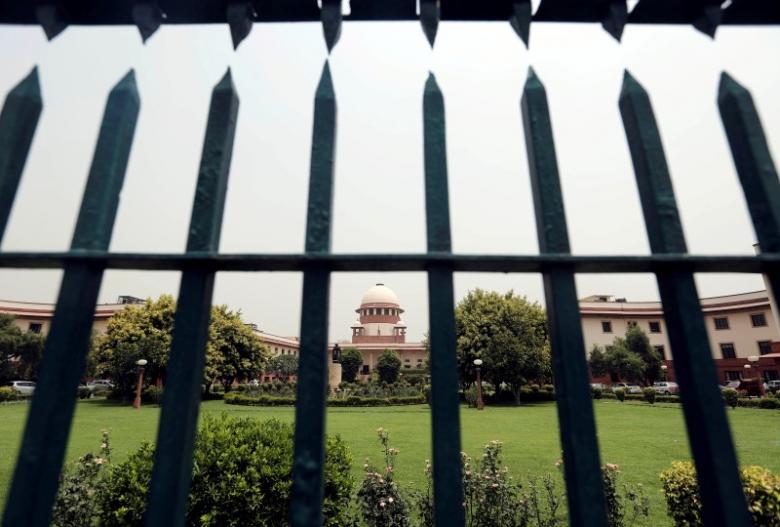
New Delhi: There is an unwritten rule for people holding public office that they "exercise self-restriction and not blabber things" which are "very disparaging or insulting" to other countrymen, the Supreme Court said on Tuesday, November 15.
A five-judge constitution bench headed by Justice S.A. Nazeer made these observations while reserving its verdict on whether greater restrictions can be imposed on a public functionary's right to freedom of speech and expression.
The top court was hearing a case related to a statement made by then Uttar Pradesh minister Azam Khan in 2016 about the Bulandshahr gang-rape case victims.
Khan was also booked for making inflammatory speeches while addressing a public meeting ahead of the 2019 Lok Sabha elections. He was recently convicted for delivering a hate speech and was given a three-year jail term and subsequently was disqualified from the Rampur assembly seat in Uttar Pradesh.
The man whose wife and daughter were allegedly gang-raped in July 2016 on a highway near Bulandshahr had filed a plea seeking a transfer of the case to Delhi. He had also sought a first information report to be lodged against Khan for his controversial statement that the gang rape case was a "political conspiracy".
Khan later tendered an apology for his comment, which was accepted by the court, but it proceeded to consider the larger issue.
A code of conduct for public functionaries?
While hearing the case, the apex court noted that irrespective of what Article 19(2) may say, there is a constitutional culture in the country where there is an inherent limitation or a restriction on what people holding responsible positions say.
Article 19(2) relates to the powers of the state to make laws imposing reasonable restrictions on the exercise of the right to freedom of speech and expression in the interest of sovereignty and integrity of the country, public order, decency, morality etc.
"It is inherent and there is no need for this court to give a code of conduct on that. Any person holding a public office or is public servant, there is an unwritten rule and it is part of constitutional culture that they impose a self-restriction and not blabber things which are very disparaging or insulting to our other countrymen," Justice B.V. Nagarathna, who was part of the five-judge bench, observed orally.
"There is something like a constitutional restriction or limitation inherent in such persons. This must be inculcated in our political society and our civic life," the judge added.
Solicitor general Tushar Mehta said the issue is more of an academic question, of whether a writ can be filed citing Article 21 for action against a particular statement.
Mehta added that this case may not require the court's time and can go before a regular bench.
"[This is because] there are two judgments – Tehseen Poonawala and Amish Devgan – where the hon'ble Supreme Court has laid down detailed guidelines and issued detailed directions as to what is to be done when such hate speeches are made which are abhorrent to the society. So that law is already occupying the field," LiveLaw quoted him as saying.
Responding to Mehta's statement, the bench asked whether, in view of the two judgments, it is unnecessary to go into those issues.
Advocate Kaleeswaram Raj, appearing for the petitioner, submitted the element of public functionary is missing in the two judgments of the apex court.
"The reason for this referral is concern for hate speech by public functionaries. This is an element lacking in other cases addressed by this court," he said.
Responding to his submission, the bench asked, "How can we frame a code of conduct for public functionaries? Would we not be encroaching on the powers under the constitution? We would be encroaching into the powers of the legislature and the executive."
Kaleeswaram said there has been a significant increase in hate speeches by public functionaries and referred to an incident where the president was being mocked by a minister.
Meanwhile, attorney general (AG) R. Venkataramani submitted before the bench that any addition or modification of restrictions to a fundamental right has to come from parliament as a matter of a constitutional principle.
The apex court said the reason why there has been no legislation all this while on the issue is because there has always been a self-imposed restriction by people holding responsible positions.
"The impression now being given is that slowly those restrictions are being relaxed, and as a result, the persons are speaking in such a way that other persons are affected. There is nobody checking it and anybody can get away with anything," the bench told the AG.
A three-judge bench had on October 5, 2017, referred to the constitution bench various issues for adjudication, including whether a public functionary or a minister can claim freedom of speech while expressing views on sensitive matters.
The need for an authoritative pronouncement on the issue arose as there were arguments that a minister cannot take a personal view and that his statements have to be in sync with government policy.
The apex court had earlier said it will consider whether the fundamental right of speech and expression would be governed under reasonable restriction of decency or morality or other preferred fundamental rights would also have an impact on it.
(With inputs from PTI)
This article went live on November fifteenth, two thousand twenty two, at thirty minutes past eight in the evening.The Wire is now on WhatsApp. Follow our channel for sharp analysis and opinions on the latest developments.