

Death in the Himalayas: Poverty, Fear, Stretched Resources Propel India's COVID Crisis


Pauri Garhwal: Pramila Devi's shrouded body lay on a bier, resting on a rock on the banks of muddy Ganges. The 36-year-old mother-of-three died the previous night in a village in Uttarakhand, a day after testing positive for COVID-19.
Devi's death on Sunday is a sign of how poverty, fear and a lack of facilities are adding to COVID-19 fatalities in remote villages, where many shun tests for fear of testing positive and being forced to go to hospital far from home.
India's COVID-19 caseload stands at 27.16 million, with 3,11,388 deaths, federal government data from May 26 show. But some experts estimate numbers are far higher, due in part to low testing rates in India's hinterlands where COVID-19 cases are spreading rapidly.
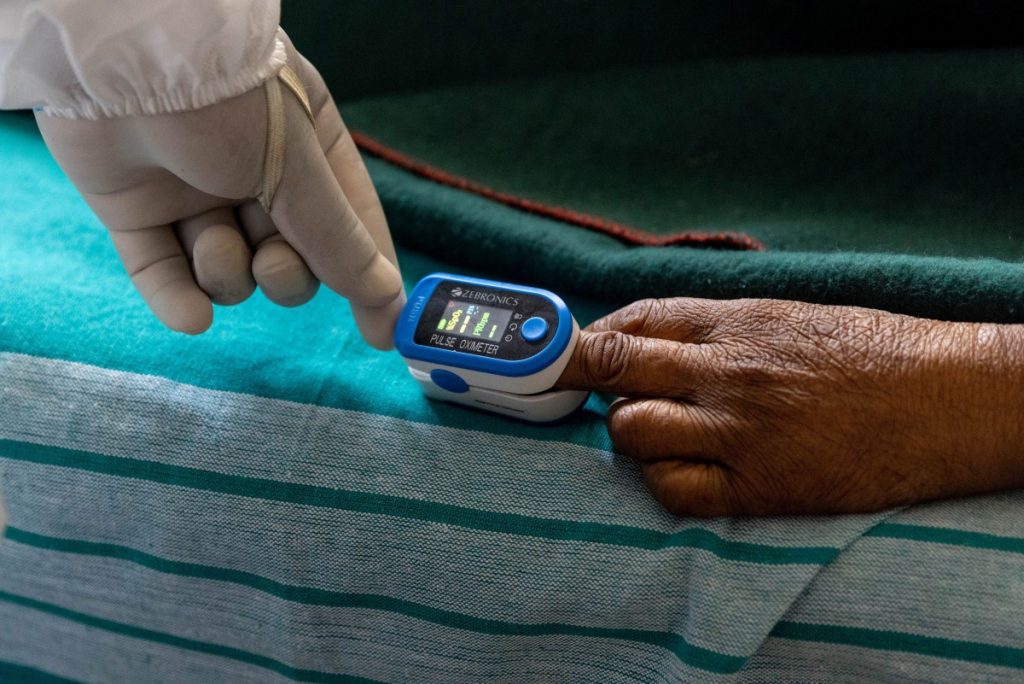
Pramila Devi with an oximeter. Photo: Reuters/Danish Siddiqui
Devi's eldest daughter got married and moved away in late April after the family hosted a ceremony attended by over two dozen people, her husband Suresh Kumar, 43, told Reuters.
Two weeks after that Devi suffered a bout of diarrhoea. But it was not until 10 days later that Kumar, who has no income and depends on handouts, took her to a nearby dispensary that has been turned into a small COVID-19 facility with four beds.
The dispensary is equipped with one oxygen cylinder and one concentrator, said Aishwary Anand, the only doctor there.
Devi tested positive for COVID-19 with very low blood oxygen levels. Anand advised Kumar to take her to a bigger hospital, but costs were a deterrent.
The couple returned home, where their two other children - a 16-year-old boy and 10-year-old girl - were waiting.
The next day, Devi's nephew carried her to a creaky taxi which returned her to the dispensary. Another patient was using the oxygen cylinder and the oxygen concentrator did not work due to a power outage.
"We need power," Anand pleaded with an electricity department employee over the phone, as he paced the dispensary wearing white protection gear.
Eventually power was restored, Devi had access to the concentrator and felt well enough to return home. But feeling sick again, the family called an ambulance to take her back to the clinic, where she was pronounced dead on arrival.
"I'm yet to inform my eldest daughter of her mother's death," a distraught Kumar said, as he crouched on the banks of the Ganges.
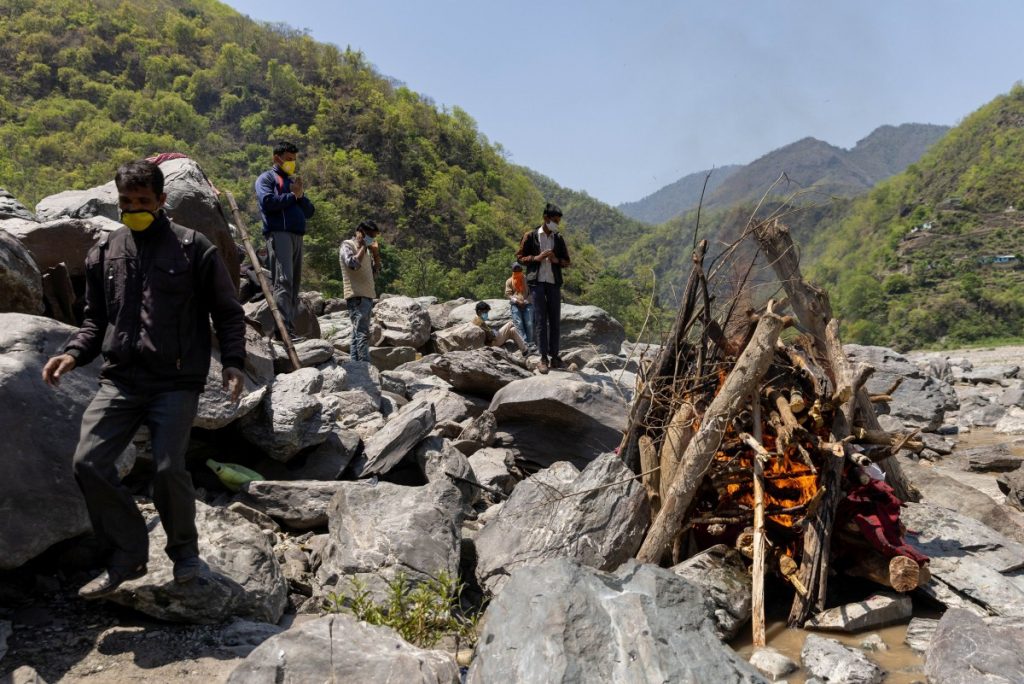
Family members and relatives of Pramila Devi react as she is cremated on the banks of the river Ganges at Pauri Garhwal, Uttarakhand, May 24, 2021. Photo: Reuters/Danish Siddiqui
Fear of testing
Uttarakhand reported 45,568 COVID-19 cases and 6,020 fatalities as of May 25.
Its city of Haridwar recently hosted the weeks-long Kumbh Mela gathering that saw hundreds of thousands of ash-smeared ascetics and devout Hindus jostling to take a dip in the Ganges, which is considered a holy river.
Some experts fear that the event led to a surge in COVID-19 infections both in the crammed city and other parts of India as devotees returned home.
On the eastern edge of Haridwar, Uttarakhand's Pauri Garhwal district - where Devi's family lives - has reported 5,155 COVID-19 cases and 241 deaths. But locals and doctors say many in the district suffering COVID-like symptoms refuse to get tested or test too late.
"We've launched radio and newspaper campaigns to spread awareness about COVID and encourage testing," said Manoj Kumar Sharma, the district's top health official. "But despite our efforts there is some resistance in rural areas to getting tested."
Reuters reporters hiked uphill with medics for over an hour to get to Pitha, a village in the district with no road access.
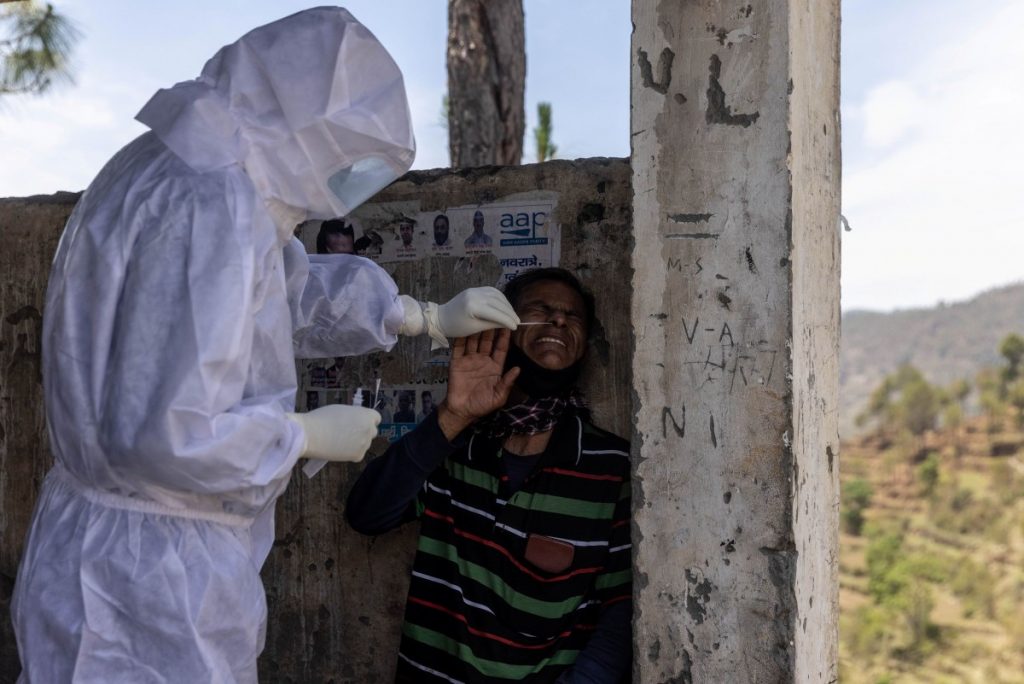
A healthcare worker wearing personal protective equipment (PPE) collects a swab sample from a man to test him for COVID-19 at Tangroli village, Uttarakhand, May 22, 2021. Photo: Reuters/Danish Siddiqui
There, Jai Prakash, 38, pleaded with his neighbours to get tested. Despite his appeals, a dozen of the village's nearly 60 inhabitants did so.
Only nine of around 200 inhabitants in the nearby village of Tangroli - declared a COVID-19 containment zone with more than a dozen positive patients - showed up for testing the same day that a medical team camped outside their village.
"My neighbour did not want to get tested," said Deepak Singh, who works for a company in New Delhi but returned to his village this month. "He asked me if I was willing to take care of his household expenses if he tested positive."
(Reuters)
This article went live on May twenty-seventh, two thousand twenty one, at thirty-five minutes past one in the afternoon.The Wire is now on WhatsApp. Follow our channel for sharp analysis and opinions on the latest developments.


