

Scientists Find How Using Satnav Switches Off Parts of Brain


The researchers said constant use of satnav would probably have longer-term limiting effects, making users less able to learn and navigate a city's street network unaided.

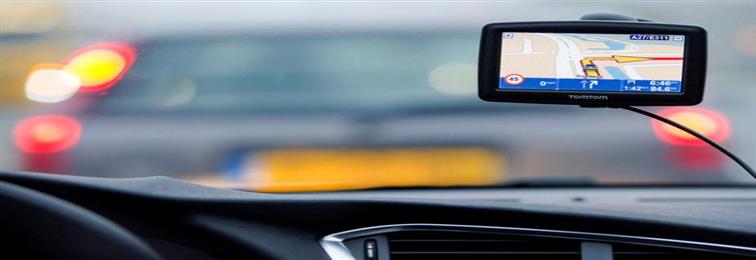
A TomTom navigation device is seen in this photo illustration taken in Amsterdam, Netherlands, February 28, 2012. Credit: Reuters
London: If you have long feared that using a "satnav" navigation system to get to your destination is making you worse at finding the way alone, research now suggests you may be right.
Scientists studying what satnavs do to the brain have found that people using them effectively switch off parts of the brain that would otherwise be utilised to simulate different routes and boost navigational skills.
Publishing the findings in the journal Nature Communications on Tuesday, the researchers said that when volunteers in an experiment navigated manually, their hippocampus and prefrontal cortex brain regions had spikes of activity. But these were not seen when the volunteers simply followed satnav instructions.
"When we have technology telling us which way to go ... these parts of the brain simply don't respond to the street network," said Hugo Spiers of University College London's (UCL) Department of Experimental Psychology.
"In that sense our brain has switched off its interest in the streets around us."
The researchers said constant use of satnavs would probably have longer-term limiting effects, making users less able to learn and navigate a city's street network unaided.
"Understanding how the environment affects our brain is important," said Amir-Homayoun Javadi, who worked on the UCL study before moving to the University of Kent. "Satnavs clearly have their uses and their limitations."
As an extension of the research, the scientists also analysed the street networks of major cities around the world to visualise how easy they may be to navigate.
London, with its complex network of small streets, appears to be particularly taxing on the hippocampus, they said.
By contrast, far less mental effort may be needed to navigate Manhattan in New York, where a grid layout means that at most junctions the choice is only between straight, left or right.
(Reuters)
This article went live on March twenty-sixth, two thousand seventeen, at zero minutes past ten in the morning.The Wire is now on WhatsApp. Follow our channel for sharp analysis and opinions on the latest developments.


