

Bhupesh Gupta, the Stormy Petrel Narendra Modi Should Read up on Now


This article is part of a series by The Wire titled ‘The Early Parliamentarians’, exploring the lives and work of post-independence MPs who have largely been forgotten. The series looks at the institutions they helped create, the enduring ideas they left behind and the contributions they made to nation building.
If Narendra Modi is feeling let down by his advisers who evidently did not warn him sufficiently of the pitfalls in going out of his way to befriend Donald Trump, perhaps the Indian Prime Minister should add a late communist to his must-read list.
For, it was Bhupesh Gupta, one of the leading luminaries of the communist movement in India, who had told Parliament decades ago in the past century: “The US imperialism knows very well that unless India is browbeaten, curbed, menaced and threatened, it would not be possible for them to have their domineering say in this region, South Asia. Therefore, they made us a special target and that is why they are supplying once again arms to Pakistan.”
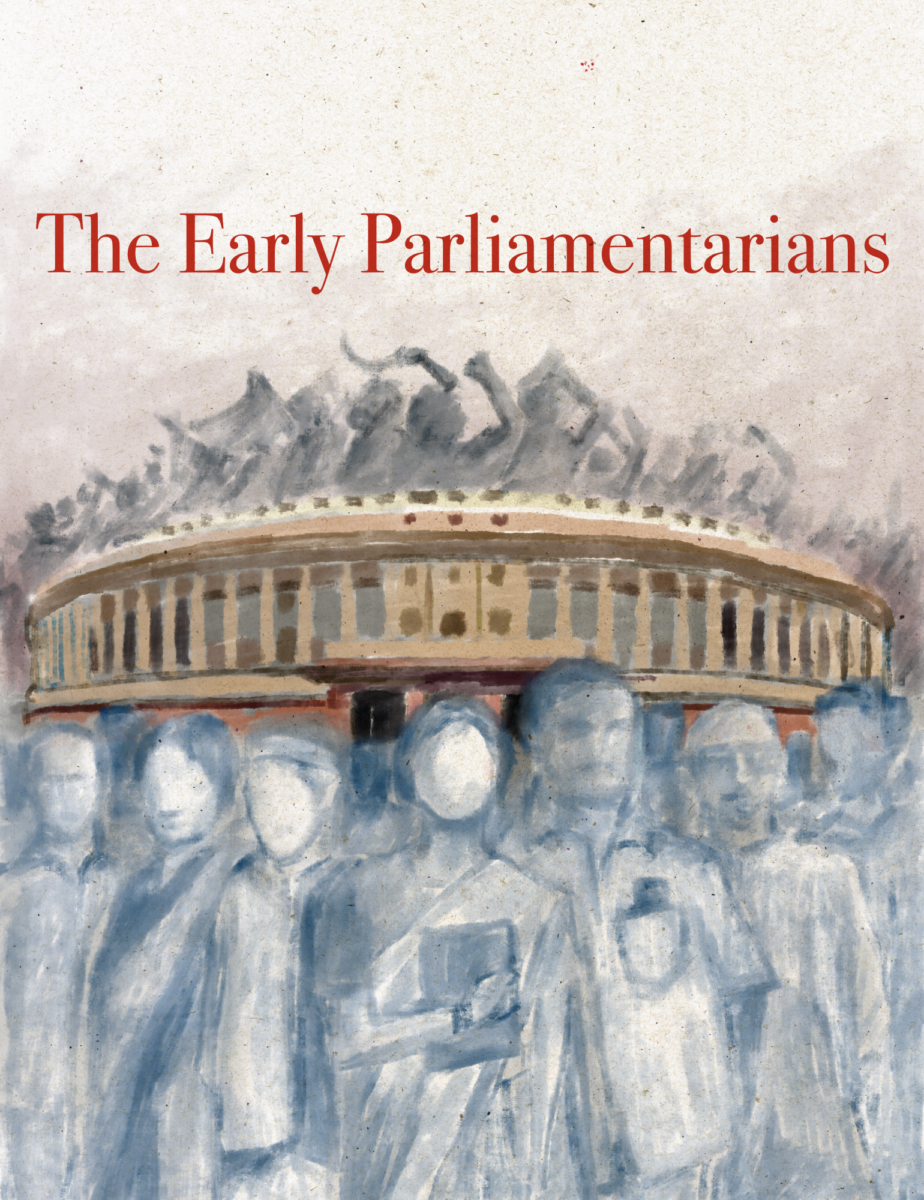
Illustration: Pariplab Chakraborty.
Gupta was a veteran freedom fighter, an able MP, a gifted orator and the longest serving parliamentarian in the Rajya Sabha, clocking for more than 29 years at a stretch in the Upper House. He was looked upon as an institution rather than an individual, overshadowing stalwarts such as S.A. Dange, A.K. Gopalan, Hiren Mukherjee and Indrajit Gupta.
Born on October 20, 1914, at Itna in Mymensingh district (now in Bangladesh), Gupta studied at Scottish Church College of the University of Calcutta. Dedicated to the cause of freedom, Gupta joined a revolutionary group called Anushilan. Taking an active part in the Civil Disobedience Movement, Gupta was arrested several times in 1930, 1931 and 1933 and was kept in detention till 1937. He passed his IA and BA examinations of Calcutta University from a Berhampore detention camp with distinction. Later, he went to England to study law.
Gupta did his barrister-at-law from University College London and was called to the Bar from the Middle Temple, London. In England, he counted among his close friends Feroze Gandhi and Indira Gandhi.
Communist
After completing his studies in England, “Bhupeshda”, as friends and fellow-workers called him, returned to India in 1941 and devoted himself to work related to the Communist Party of India (CPI). In 1948, he went underground in Calcutta when the party was banned. He was arrested in 1951 and detained till April 1952. Gupta was elected to the West Bengal Provincial Committee in 1947 and appointed chairman of the editorial board of the party’s Bengali daily, Swadhinata, in 1951.
Gupta was elected to the Central Committee of the CPI in 1953. At the time of his death in 1981, he was a member of the central executive committee and secretary of the National Council of the CPI. During the split in the Communist Party in 1964, Gupta tried his best to seek a way to save the communist movement in India from splintering but failed.
He was widely known outside the country, especially in the international communist movement. He attended all international conferences of the communist movement, being a member of the CPI delegation at the 1957, 1960 and 1969 meetings of the world communist movement. He was a part of the CPI delegation that visited the then Peking under the leadership of the then party general secretary, Ajoy Ghosh, in 1959 and met Mao Tse-tung there.
Parliamentarian
Gupta had been acknowledged as an irrepressible and indefatigable parliamentarian. He was a dogged champion of the cause of the working people – and articulating their complaints, hopes and aspirations in Parliament was his mission. Respected even by his political adversaries, he earned a niche of his own in India’s parliamentary democracy.
In Parliament, Gupta brought national attention to several controversies, including those linked to Haridas Mundhra, the stock market operator linked to the first financial scandal in Independent India, and M.O. Mathai, who was forced to exit as Prime Minister Nehru’s special assistant after Gupta highlighted revelations made in an article written by renowned journalist Nikhil Chakravarty.

Illustration: Pariplab Chakraborty
Tenacity was Gupta’s hallmark and incisiveness his nature. He rarely missed an opportunity to intervene, never allowing anything to pass muster without challenge and never faltering in anything that needed to be vigorously defended.
On 22 April, 1954, when Nehru told the Rajya Sabha that “it has been the policy of the government for the last six years not to allow any foreign troops to pass through or fly over India”, it was Gupta who brought to the notice of the House a newspaper report saying that on 24 April, 1954, an American Globemaster carrying French troops to Indochina landed at Dum Dum Airport and then left after refuelling. He quoted another report which said 27 April, 1954, a Skymaster belonging to the French Air Force landed at Dum Dum and left. He also stated on record that the Government of India had not contradicted the report. (It is suspected that the aircraft were involved in the French War in Vietnam or the First Indochina War.)
On foreign policy, the President’s address, the Finance Bill and the Appropriation Bill, he used to make excellent speeches laced with solid arguments, telling points, good humour and biting sarcasm. If there was any member in any party who was ever ready with his arguments, facts and documentary evidence, it was Gupta.
Gupta’s speeches in the Rajya Sabha were a testimony to not only his oratorical skills but also his biting repartee. When K.C. Pant made some remarks in the lighter vein over complaints of deteriorating law and order in Delhi, Gupta retorted that he appreciated jokes but “not at the cost of my throat; not at the cost of the little property that I have. I like humour but not humour at the mercy of burglars”.
Pant said: “I am very glad that he has concern for property.”
Gupta responded: “Yes, of course, I have. I have a typewriter – the highest property that I have.”
More than once, Gupta’s status as a bachelor was a source of mirth in the House. During a debate on salary, allowances and pension of MPs, Kumari Saroj Khaparde demanded “companion passes” for rail travel for single members like Gupta and herself.
But Gupta said: “I am almost inclined to sympathise with you but I have no companion.”
It was left to Bhai Mahavir to have the last word: “Both the Hon'ble Members can solve each other’s problem.”
Gupta was in his element when it came to national security. Taking part in the Rajya Sabha discussions on the Defence of India Bill at the time of the Chinese aggression in 1962, Gupta emphatically said: “I declare on the floor of the House that I do not know of any Communist or a trade-unionist of that sort who is opposed to the defence of the country or who is in sympathy with the aggression that has taken place. If anybody were of that sort and went against not only our resolution but the patriotic position of the country which is in no conflict with our ideology, he would be putting himself outside the pale of what we call the Communist party and the movement.”
As a member of Parliament in 1953-54, he fought against the orthodox sections who were opposing proposed reforms in the Hindu laws of marriage and inheritance. Gupta played an important role in getting these laws passed and in building public opinion in their favour.
In 1975, when the International Women's Year began, he made an impassioned speech in Parliament urging the government to take measures in the year to improve the social status and living conditions of the vast majority of women and not confine the celebrations to holding meetings and seminars.
Gupta said: “Emancipation of women is not a sectarian problem of emancipation of a section of the people. It is essentially a problem of emancipation of womankind from degradation, from bondage, from suffering, from injustices and hardships that destroy the very foundation ultimately of our social life.”
Hardly anyone dared to cross swords with him. On 22 June 1977, when the Rajya Sabha celebrated its 100th session and 25th anniversary, Gupta was felicitated. Gratefully acknowledging the felicitations offered by the House, he said the Rajya Sabha should always be a “vibrant and living institution” to mirror the aspirations of the people.
Gupta said: “It has been my privilege and honour to have belonged to this House for a quarter of a century. But it is not for me to say what role I have played, from the standpoint of which I have worked in this House. However, I have tried, to the best of my ability, to serve my country, our great people, to uphold its cherished culture, our noble inheritance from an undying, ancient civilisation. It is not an individual who shines in this House. We have shone in this House collectively.”
Friend and foe alike admired Gupta’s rare qualities as a parliamentarian. He was rightly referred to as “the stormy petrel” of the Rajya Sabha. The quality which made him such a parliamentarian, which enabled him to become almost an institution, was his total dedication to the cause of communism, to the cause of the interests of the working masses and to the cause of the oppressed and the downtrodden in the country.
His personal equation with Feroze Gandhi and Indira Gandhi, which traced its roots to their student days in England, was well known. When Indira declared the Emergency, she visited Gupta in a private Fiat car at his 5 Feroze Shah Road residence late in the evening to seek his support. The CPI had supported Indira Gandhi and the Congress during the Emergency.
Gupta was an outstanding journalist and a prolific writer. He was editor of New Age, a weekly magazine of the CPI, from 1954 to 1957, and then again from January 1966 till his death. He wrote his last article on the results of the Central Committee plenum of the Communist Party of China from his hospital bed in Moscow.
Gupta died in Moscow on 6 August, 1981. The then Prime Minister, Indira Gandhi, said: “With the death of Comrade Bhupesh Gupta, the nation loses one of its most dedicated and eloquent sons. Even those who differed from him politically had high respect for him. Parliament will not be the same without him.”
His best friend and veteran journalist Nikhil Chakravarty paid a glorious tribute: “For me, Bhupesh Gupta was one whom I have known from the early beginnings of my active political involvement in the late thirties. In the small group of young militant Indians in Britain more than forty years ago, groping for a revolutionary path to the country’s freedom, Bhupesh was perhaps the only one who could really claim to have had the baptism of fire.”
Qurban Ali is a trilingual journalist who has covered some of modern India’s major political, social and economic developments. He has a keen interest in India’s freedom struggle and is now documenting the history of the socialist movement in the country.
This article went live on September twenty-fourth, two thousand twenty five, at thirty-nine minutes past four in the afternoon.The Wire is now on WhatsApp. Follow our channel for sharp analysis and opinions on the latest developments.


