

Feroze Gandhi, the Crusader Who Blazed a Trail and Rose Above a Family Name


This article is part of a series by The Wire titled ‘The Early Parliamentarians’, exploring the lives and work of post-independence MPs who have largely been forgotten. The series looks at the institutions they helped create, the enduring ideas they left behind and the contributions they made to nation building.
Should someone draft a calling card for Feroze Gandhi in contemporary India, they would be spoilt for choice.
*Son-in-law to Jawaharlal Nehru
*Husband to Indira Gandhi
*Father to Rajiv Gandhi and Sanjay Gandhi
*Grandfather to Rahul Gandhi, Priyanka Gandhi-Vadra and Varun Gandhi
*Journalist who crusaded in Parliament against corruption
*MP who facilitated media coverage of parliamentary proceedings
But who was Feroze Jehangir Ghandy (later Gandhi) really? A Congress worker, a young freedom fighter, a parliamentarian or just another Gandhi?
Feroze – a two-time MP from Rae Bareli that was later represented by his wife Indira, daughter-in-law Sonia and now his grandson Rahul – was a fighter, who never shied away from taking on his own party’s government when his father-in-law Nehru was the prime minister.
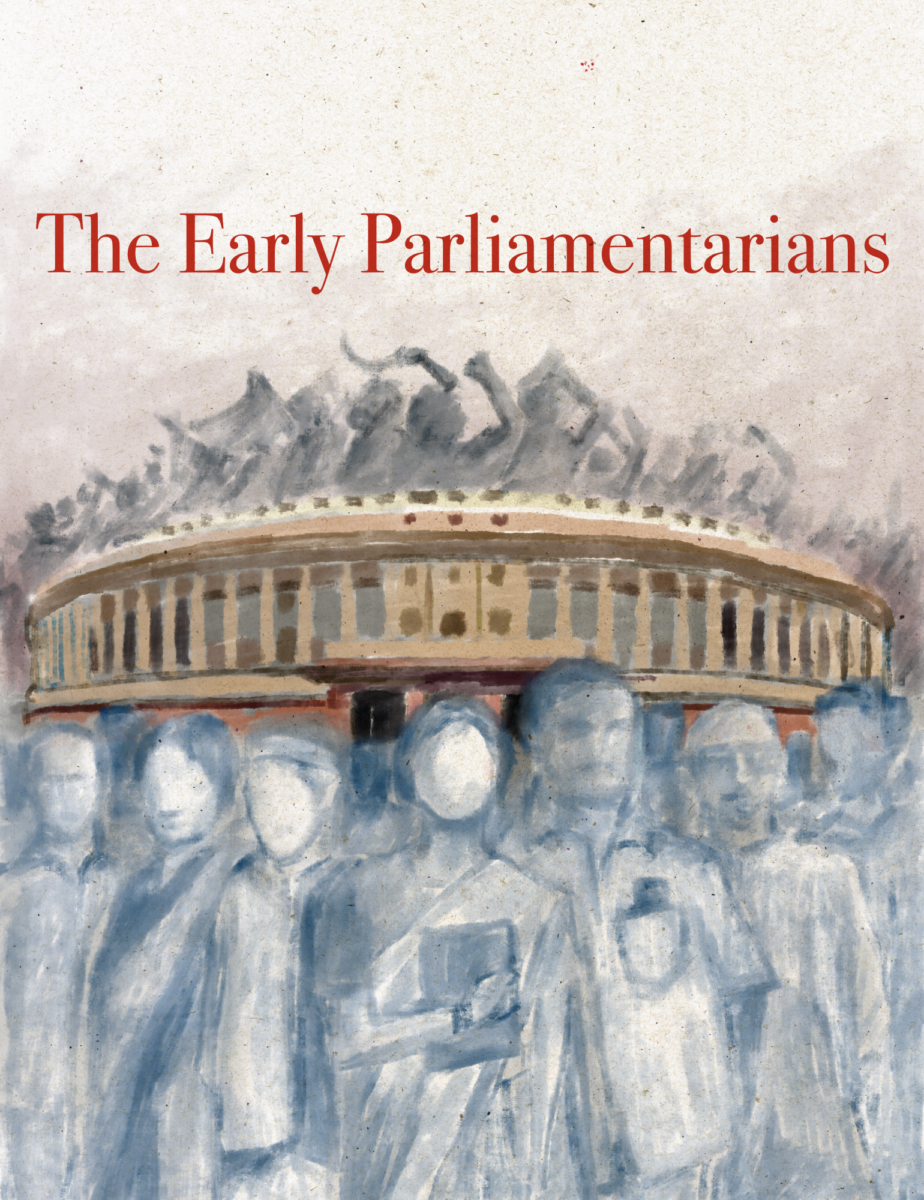
Illustration: Pariplab Chakraborty.
For years, Nehru was not quite sure about the handsome, happy-go-lucky son-in-law who had courted, and against much opposition, married his daughter Indira. However, after some time, Nehru changed his views about Feroze.
In 1935, Nehru had written to his sister Vijaya Lakshmi Pandit about Feroze: “…We have grown fond of the boy because he is a brave lad and has the makings of a man in him. He has our good wishes in every way and we hope that he will train himself and educate himself in accordance with his own wishes and those of his family for any work that he chooses. It is not for us to interfere…” Seven years later, on March 26, 1942, Indira married Feroze.
During the freedom struggle, Feroze adopted the surname “Gandhi” as a tribute to Mahatma Gandhi, altering it from “Ghandy”. He was a member of the Indian National Congress and was elected to the Constituent Assembly from the United Provinces through a Congress ticket. A member of the provisional parliament between 1950 and 1952, Feroze was elected to the first and second Lok Sabha. He was the managing director and publisher of the National Herald and the Navjivan newspapers.
Feroze was born on September 12, 1912, to a Parsi family at the Tehmulji Nariman Hospital in the Fort district of Bombay. His parents, Jehangir Faredoon Ghandy and Ratimai (née Commissariat), lived in Nauroji Natakwala Bhawan in Khetwadi Mohalla in Bombay. Jehangir was a marine engineer working for Killick Nixon Company and was later promoted as a warrant engineer.
In the early 1920s, after the death of his father, Feroze and his mother moved to Allahabad to live with his unmarried maternal aunt, Shirin Commissariat, a surgeon at the city’s Lady Dufferin Hospital. Feroze attended the Vidya Mandir High School, and then the British-staffed Ewing Christian College, Allahabad.
In 1930, Feroze met Kamala Nehru and Indira among the women demonstrators picketing outside Ewing Christian College. Kamala fainted because of heatstroke, and it was Feroze who looked after her. The next day, he abandoned his studies to join the Indian independence movement.
Feroze and future Prime Minister Lal Bahadur Shastri were imprisoned together in 1930 for their participation in the Indian freedom struggle and were lodged in the Faizabad Jail. After his release, he was imprisoned twice again in 1932 and 1933 while working with Jawaharlal Nehru on the agrarian no-rent campaign in Uttar Pradesh. He became closely involved with the Nehru family, spending significant time at Anand Bhawan, the Nehru residence and a hub for political activity.

Illustration: Pariplab Chakraborty
Feroze first proposed to Indira in 1933, but she and her mother rejected it as she was still sixteen. He grew close to the Nehru family, especially to Indira's mother Kamala Nehru, accompanying her to the TB sanatorium at Bhowali, Nainital in 1934, helping arrange her trip to Europe when her condition worsened in April 1935 and visiting her at the sanatorium at Badenweiler and finally at Lausanne, where he was at her bedside when she died on February 28, 1936.
In 1935, Feroze obtained his bachelor’s degree from the London School of Economics. As a student in England between 1935 and 1941, he actively participated in anti-fascism and pro-freedom struggle movements organised by Indian students.
On returning to India, Feroze was arrested and imprisoned for a year in 1942 in Allahabad for his involvement in the Quit India Movement. Indira and Feroze, who had grown closer, married at Anand Bhavan on March 26, 1942.
Less than six months after their marriage, the couple were arrested and jailed in August 1942 during the Quit India Movement. Feroze was imprisoned for a year in Allahabad's Naini Central Prison. The following five years were of domestic life and the couple had two sons, Rajiv and Sanjay, born in 1944 and 1946, respectively.
After independence, Feroze and Indira settled down in Lucknow with their two young children, and Feroze became managing director of the National Herald, a newspaper founded by Jawaharlal Nehru.
After becoming a member of Parliament (1952-1960), Feroze emerged as a force in his own right, criticising the government of his father-in-law and beginning a fight against corruption. In the years after independence, many Indian business houses had become close to political leaders, and some of such ties resulted in financial irregularities.
In an exposé by Feroze in December 1955, he alleged Ram Kishan Dalmia, a prominent industrialist, as chairman of a bank and an insurance company used these companies to fund his takeover of Bennett, Coleman and Co. and started laundering money from publicly held companies for personal benefit.
The following year, Feroze introduced a private member’s bill to protect the freedom of the press. He believed that Indians had the right to know about Parliament’s day-to-day functioning. This bill led to the Parliamentary Proceedings (Protection of Publication) Act, 1956, which allowed the media to report parliamentary proceedings.
Addressing Parliament on the bill brought by him, Feroze said: “For the success of our parliamentary form of government and democracy and so that the will of the people shall prevail, it is necessary that our people should know what transpires in this House. This is not your House or my House, it is the House of the people. It is on their behalf that we speak or function in this chamber. These people have a right to know what their chosen representatives say and do. Anything that stands in the way must be removed.” This was one of the rare occasions in Parliament when a private member’s bill was passed by all and became a law.
In 1957, Feroze was re-elected to the Lok Sabha, again from Rae Bareli. He blew the lid off India’s first financial scam, known as the Haridas Mundhra scandal, involving the government-controlled Life Insurance Corporation of India and demanded an internal inquiry by a House committee.
The revelation eventually led to the resignation of the then finance minister, T.T. Krishnamachari, dealing a big blow to Prime Minister Nehru. Finance secretary H.M. Patel was dismissed from service and Mundhra, like Dalmia earlier, was jailed.
Feroze continued challenging the government on a number of issues, and was well-respected on both sides of the aisle in Parliament . He also initiated a number of nationalisation drives, starting with LIC. At one point, he suggested that TATA Engineering and Locomotive Company (Telco) be nationalised since it was charging nearly double the price of a Japanese railway engine.
The Rae Bareli Lok Sabha constituency seat was held by Indira Gandhi from 1967 to 1977, Sonia Gandhi from 2004 to 2024. Currently, Feroze’s grandson Rahul Gandhi is representing the seat in the Lok Sabha.
Feroze suffered a heart attack in 1958. He died on September 8, 1960, at Delhi’s Willingdon Hospital (now RML), after suffering a second heart attack. He was cremated in Delhi and his ashes interred at the Parsi cemetery in Allahabad.
The then Lok Sabha Speaker, M.A. Ayyangar, paid a moving tribute on the same day in the House:
“I have to inform the House of the sad demise of Shri Feroze Gandhi who passed away at New Delhi at 8:15 am this morning at the early age of 48. Shri Feroze Gandhi, as the House is aware, was a sitting Member of the House. He was a leading journalist, a forceful speaker and was found to be full of promise. Day by day, his capacity to address the House was increasing. He was never flurried and the House began gradually to bestow confidence in whatever he said. It heard every word of what he said with care and attention and he was making very useful contributions. He was growing indeed into a first class parliamentarian. We deeply mourn the loss of one who promised to be a great personality in the future. He was a patriot and a nationalist. I am sure the House will join me in conveying our condolences to the members of the bereaved family.”
Prime Minister Nehru fondly remembered Feroze, acknowledging his dedication to public service, highlighting his role as a “tireless champion” of the underprivileged and a man of “outstanding ability”. Nehru emphasised Feroze's commitment to his principles and his impactful work in Parliament.
Among the many tributes, the one by Asoka Mehta, at the time the chairman of the opposition Praja Socialist Party, represented the sentiment of many MPs. “Death robs Parliament,” he observed, “of an outstanding member, and a tireless champion of the underprivileged. His sympathies were as catholic as his interests were wide. Our public life is not rich in dedicated men; that a man of Mr Gandhi’s attainments should have been plucked away in the prime of life aggravates our impoverishment.”
Among other landmarks, a school of higher education that Feroze helped found was named after him in Rae Bareli, NTPC renamed its Unchahar Thermal Power Station in Uttar Pradesh as Feroze Gandhi Unchahar Thermal Power Plant and a road was named after him in New Delhi.
Qurban Ali is a trilingual journalist who has covered some of modern India’s major political, social and economic developments. He has a keen interest in India’s freedom struggle and is now documenting the history of the socialist movement in the country.
This article went live on October twentieth, two thousand twenty five, at zero minutes past eleven in the morning.The Wire is now on WhatsApp. Follow our channel for sharp analysis and opinions on the latest developments.


