

Hiren Mukherjee: Ceaseless Challenger, Driven by Passion Welded to Ideology


This article is part of a series by The Wire titled ‘The Early Parliamentarians’, exploring the lives and work of post-independence MPs who have largely been forgotten. The series looks at the institutions they helped create, the enduring ideas they left behind and the contributions they made to nation building.
“I have been writing for a ceaseless stretch. My sight is now impaired. I am tired. I feel totally defeated — the way in which I should have been writing, the language, the intensity is no longer there... (but) today’s danger has to be challenged. Revolution brooks no defeat.”
Hiren Mukherjee wrote this when he was 95, on May 8, 2002, in the wake of the Gujarat carnage – a lesson for those despairing in their peaceful fight against the politics of hate in contemporary India.
A month earlier, in a letter to the president dated April 21, 2002, Mukherjee had written: “Horrendous recent happenings in Gujarat have stunned numberless people wondering how man could do such things to man. In public life since 1936, I feel broken, shattered, desolate, not knowing where to turn.”
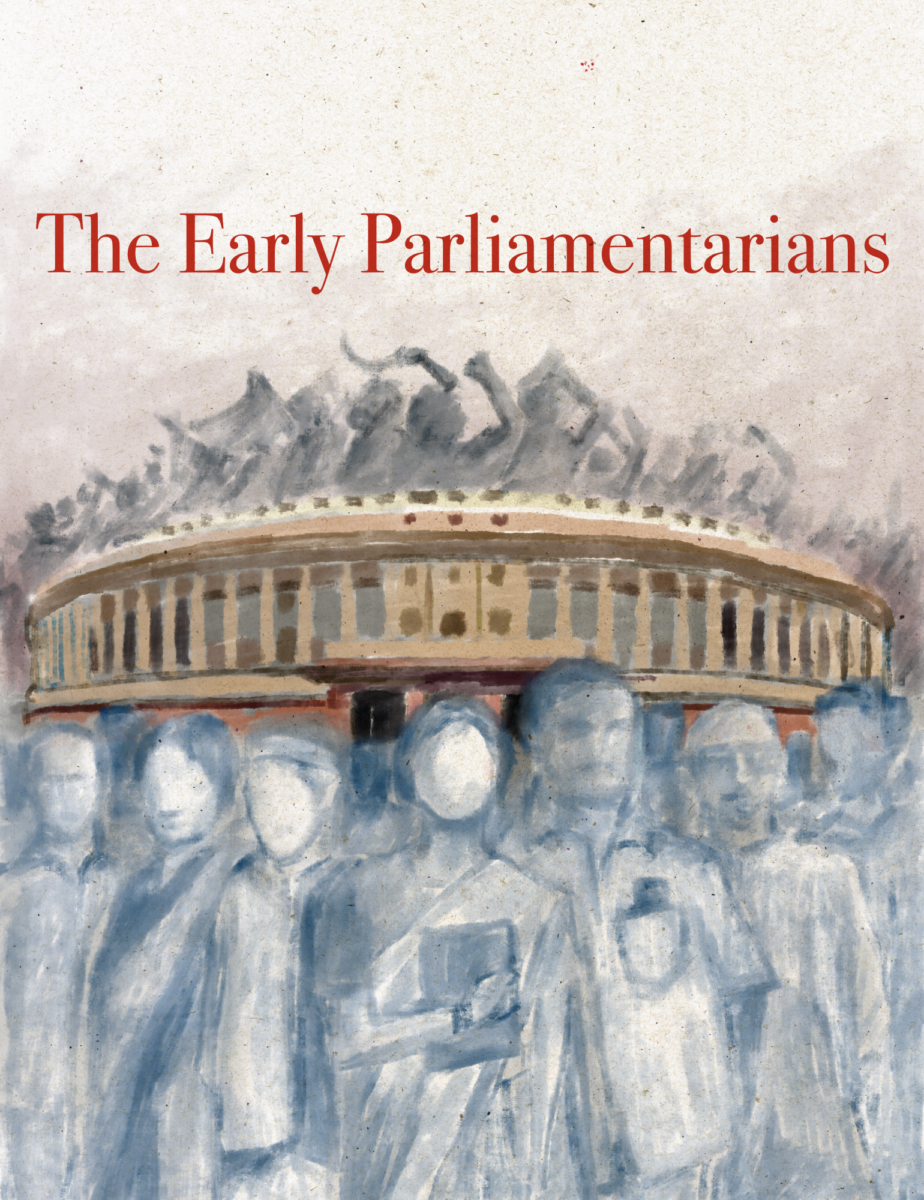
Illustration: Pariplab Chakraborty.
He continued: “I cannot write to Atal (Bihari Vajpayee), for whom I have had much affection, because as Prime Minister, he has chosen to condone and explain away cruelties that almost out-Hitler Hitler.”
It was not for nothing that when Mukherjee participated in a debate, Prime Minister Jawaharlal Nehru would step out of his South Block office and head to Parliament House.
Hirendranath Mukherjee, better known as Hiren Mukherjee, was a veteran communist leader, a brilliant parliamentarian, a gifted orator and a prolific writer. What particularly drew Nehru’s admiration — shared by many others — was the splendour of Mukherjee’s vocabulary and his complete command over how he deployed it.
Mukherjee’s accent was impeccably Oxonian. But that was the least of the factors that cast a spell on the listeners. Mukherjee’s passion, welded to his ideology, made the critical difference. He was determined to prove that being passionate does not harm but rather enhances the cause. Even those who did not subscribe to his beliefs respected the integrity of this most passionate public figure.
Mukherjee was among the distinguished galaxy of parliamentarians elected to the First Lok Sabha. Serving from the First to the Fifth Lok Sabha (1952–1977), Mukherjee symbolised the golden era of Indian parliamentary politics. He served as deputy leader of the Communist Party in Parliament (1952–64), and later as leader of the CPI in Parliament from 1964 to 1967.
He excelled in the Lok Sabha with his enlightening speeches. Those who worked alongside him in politics acknowledged that his eloquence and debating skills were unparalleled. He proved to be one of the most gifted parliamentarians in India.
Born and raised during the British rule in India, Mukherjee chose the path of a freedom fighter. He was considered one of the country’s foremost intellectuals even in those early years. His legacy epitomises the sagacious contributions made by Indian parliamentarians in nurturing and upholding the parliamentary system and constitutionalism. He contributed substantially to building a vigilant and effective opposition in Parliament.
Mukherjee’s oratorical skills were not confined to English. His Bengali diction was equally rich, and his command of Urdu was impressive. On at least one occasion in the Lok Sabha — either in response to a colleague or at the request of another — he delivered a full, 25-minute-long speech in Sanskrit, with flawless grammar and perfect intonation. It remains one of the most memorable moments in Lok Sabha history.

Illustration: Pariplab Chakraborty
One of the first-generation Communist leaders in the country, Mukherjee was born on November 23, 1907, in Calcutta. He studied at Taltala High School, earning his BA and MA degrees in history from Presidency College, Calcutta, then affiliated with the University of Calcutta.
A brilliant student, he won the Duff, Gwalior and Burdwan scholarships, as well as numerous medals and prizes during his academic career.
In 1929, he went to London on a state scholarship, studying at St Catherine’s College, Oxford, and Lincoln’s Inn. He obtained a BLitt in 1932 and passed the Bar-at-Law examination in 1934. On his return to India the same year, he joined the Andhra University at Waltair as a lecturer at the instance of Sarvepalli Radhakrishnan. In 1936, Mukherjee became the head of the history department at Ripon College (now Surendranath College) in Calcutta and later joined Calcutta University as a lecturer in history and political philosophy.
Mukherjee began his career as an educator, eventually serving as senior lecturer in history and politics, Andhra University; lecturer in history and political philosophy, Calcutta University; and the head of the department of history, Surendranath College.
He joined the Communist Party of India (CPI) in 1936 when it was still banned. He was a member of the All India Congress Committee (AICC) from 1938 to 1939 and served on the executive committee of the Bengal Provincial Congress Committee. He was joint secretary of the Bengal Committee and later a member of the CPI Provincial Committee (1947–51) and the CPI National Council (1958–68).
He was one of the founders of the Progressive Writers' Union in 1936, Friends of the Soviet Union in 1941 and the Indo-China Friendship Society in 1948. He served as president of the Indian People's Theatre Association (IPTA) in 1940. Deeply involved in the trade union movement, Mukherjee led unions of postal, insurance and bank employees. He was president of the Bengal Motion Picture Employees’ Union from its inception in 1946.
He was associated with several leading journals. A prolific writer, Mukherjee had a distinctive and inimitable style in both Bengali and English. Some of his published works include An Introduction to Socialism, Great October, Under Marxist Banner, Marx, ABC of Marxism, India and Marxism, India and the Future, Credo: Some Socialist Affirmations, Portrait of Parliament, India and Parliament, India's Struggle for Freedom, A History of India and The Gentle Colossus: A Study of Jawaharlal Nehru.
In the Portrait of Parliament, Mukherjee wrote: “The Left, however, for all its faults and factions and errors, is no minor factor in India. There is no reason for it to fear it has reconciled to being a poor relation of the rich ‘vested interests’ parties now dominant in the national scene….”
On the need for Left unity, he wrote: “Historically speaking, there is no bar — rather, there is every warrant — for the two Communist parties, along with other Left and socialism-oriented forces including the 'ultras'... to come closer and form the real alternative for our people to accept…. In the mid-thirties, Bernard Shaw concluded his Fabian lectures thus: ‘I am impatient for the revolution. I shall be jolly happy if the revolution happens tomorrow. But being an average coward, I want you to make the revolution in as gentlemanly a manner as possible’.”
Mukherjee wrote studies on Rabindranath Tagore, Mahatma Gandhi, Jawaharlal Nehru, Subhas Chandra Bose and Swami Vivekananda. His notable Bengali works include the memoir, Tari Hote Teer (From the Boat to the Shore), and a two-volume collection of selected articles. He received the Muzaffar Ahmed Smriti Puraskar in 2001 for his book Yuger Jantnana-o-Pratyayer Sankat.
Despite the profundity of his style and content, Mukherjee often introduced a charming light-heartedness and exuberance. His vocabulary ranged from the classical to the colloquial, and his references were wide, eclectic and scholarly. He was also an active letter-writer, responding personally and in his own handwriting until his last days.
Less known, perhaps, was his remarkable command of Sanskrit. When occasion demanded, he quoted extensively and aptly from it in speeches and writings — his phenomenal memory aiding him unfailingly.
A scholar of great character and extraordinary intellect, Mukherjee was awarded honorary doctorates by the Andhra University, Calcutta University, North Bengal University and the Rabindra Bharati University. He was also the recipient of the Padma Bhushan (1990) and the Padma Vibhushan (1991), the Soviet Land Nehru Prize (1978) and the Vidyasagar Literary Prize (1991).
Mukherjee breathed his last on July 30, 2004, at SSKM Hospital in Kolkata. He was 97.
Qurban Ali is a trilingual journalist who has covered some of modern India’s major political, social and economic developments. He has a keen interest in India’s freedom struggle and is now documenting the history of the socialist movement in the country.
This article went live on October twenty-second, two thousand twenty five, at thirty-nine minutes past nine in the morning.The Wire is now on WhatsApp. Follow our channel for sharp analysis and opinions on the latest developments.


