

Podcast: Pingali Venkayya Didn't Design Tiranga With Charkha; Gandhi Had Rejected His Proposals


As the country waves flags and celebrates the 75th anniversary of India’s independence, it is also time to take stock. What did India’s founders and citizens dream of, how has India fared, what have been our challenges and successes?
The Wire’s reporters and contributors bring stories of the period, of the traumas but also the hopes of Indians, as seen in personal accounts, in culture, in the economy and in the sciences. How did the modern state of India come about, what does the flag represent? How did literature and cinema tackle the trauma of Partition?
Follow us for the next few days to get a rounded view of India@75.
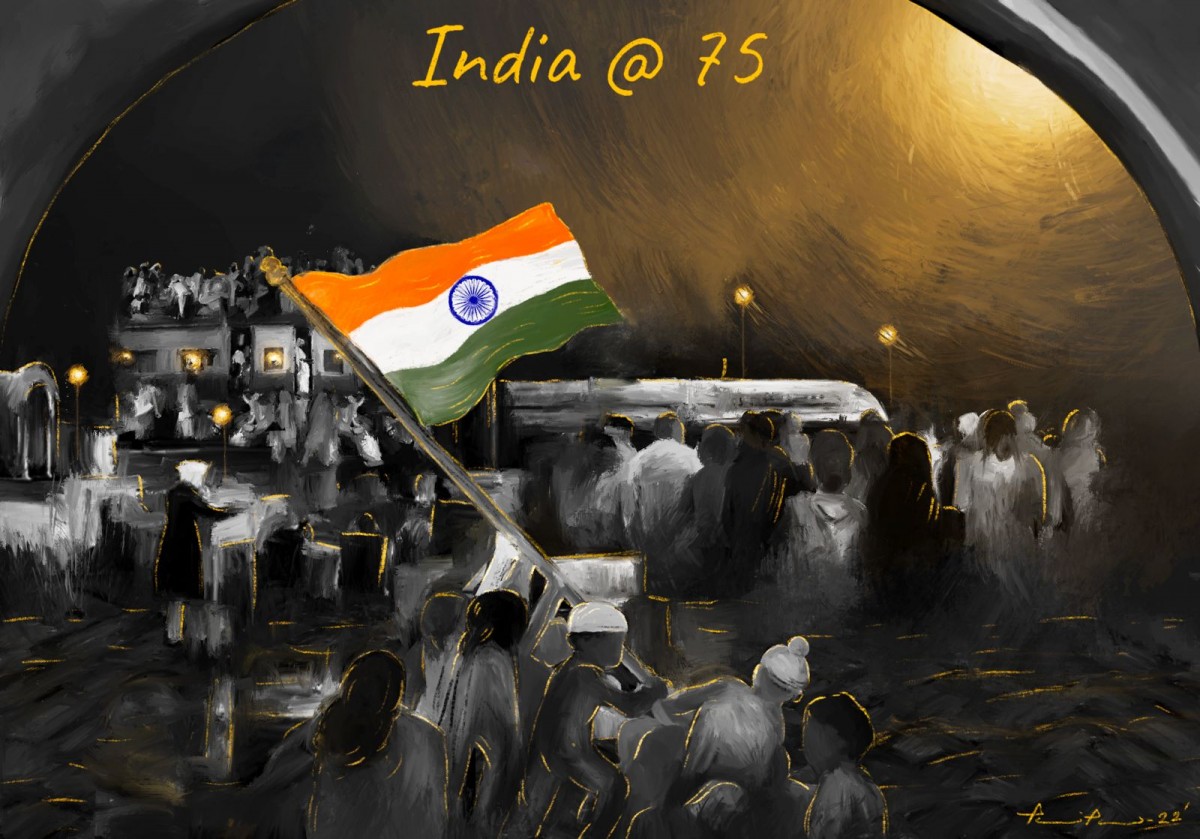
Illustration: Pariplab Chakraborty
The Indian flag — the tricolour, also called the tiranga, evokes many emotions among Indians everywhere in the world. But it was not always so. It took many decades before it was fully realised and officially accepted as the national flag.
Through that period, and after that too, “the flag remained a site of contestations”, says Dr Arundhati Virmani, scholar and author of the book A National flag for India: Rituals, Nationalism and the Politics of Sentiment. “There was a lot of discussion about the colours and their meanings,” she says in a podcast discussion with Sidharth Bhatia. In 1931, the Congress held a nationwide debate of its members and here too differing views were presented, she says.
She also points out that it was not Pingali Venkayya who added the charkha to the flag. When it was finally suggested, Gandhi accepted the idea wholeheartedly.
Virmani traces the history of the tricolour, from its early origins when it had a charkha in the middle, to the final result, with the Asoka chakra, when it was introduced in the Constituent Assembly in July 1947 and accepted.
The Wire is now on WhatsApp. Follow our channel for sharp analysis and opinions on the latest developments.


