

As a Rogue State Is Given Free Rein, Courts Need Not Protect the Rule of Law


In September the Indian Express reported that India's two Election Commissioners, Sukhbir Singh Sandhu and Vivek Joshi, had recorded objections at least 14 times in 10 months to decisions taken by the Chief Election Commissioner, Gyanesh Kumar. Those decisions concerned the Special Intensive Revision of the electoral rolls, the exercise that settles who may vote in a country of nearly a billion registered voters. The law leaves little room for doubt. Section 18 of the 2023 statute governing the Commission requires its decisions to be unanimous where possible and taken by majority where not. If the reporting holds, a constitutional body of three has been run by one.
The court that scolds and then steps aside
Petitions reached the court within days. It agreed to hear them, asked the Commission to respond, and on October 6 said it would examine how the orders were issued. It also refused any interim restraint on Kumar. Chief Justice Surya Kant observed that the claim of unilateral action had not yet been tested. That is true, and it is also the point. The revision goes on while the testing waits.
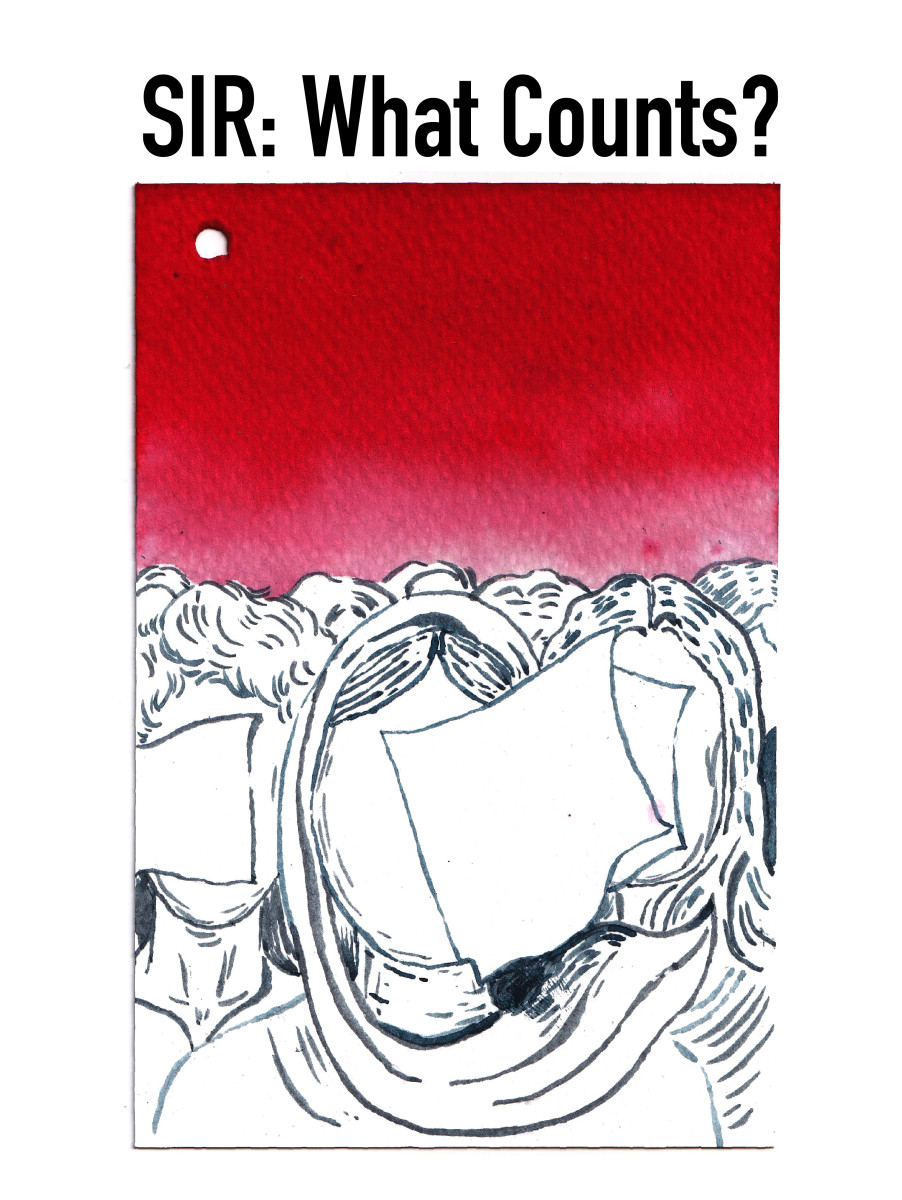
 This is where the duplicity lies. The same court remarked in September that notices sent to more than 3.3 million voters in Delhi looked machine-generated and issued without application of mind. It said from the bench that it had never approved the modified voter declaration the Commission publicly claimed it had upheld. The Commission has stood by its claim. Yet when counsel pleaded that voters with some 18,000 pending appeals in West Bengal would be shut out of a second election, the court declined to hear the matter sooner, and the Chief Justice of India, Surya Kant, was reported as saying that these were only by-elections. The bench offers sharp words for the gallery and no remedy for the voter.
None of this is new. In our study of the court between 2014 and 2025, covering the tenure of every CJI of the Modi years, we found that its preferred instrument is delay. The challenge to anonymous electoral bonds was filed in 2017. The court struck the scheme down in 2024, after it had financed seven years of elections. Petitions against the revocation of Jammu and Kashmir's autonomy waited four years, and by then the change was a settled fact that the judges duly endorsed.
A court that speaks the language of rights after the damage is done lends legality to what it declined to stop.
On the Election Commission, the court's responsibility is more direct. In March 2023 a Constitution Bench held that commissioners should be chosen by a panel that included the Chief Justice of India until parliament legislated. Parliament legislated within months and replaced the Chief Justice with a cabinet minister, handing the government a majority on the panel that picks the referee. The court declined to stay that law in 2024. Kumar became Chief Election Commissioner under it in 2025. On September 23 this year a two-judge bench split on whether the challenge should even go to a larger bench.
The validity of the referee's appointment therefore remains undecided while the referee redraws the rolls.
Why does a court with formal control over its own appointments behave this way? Our research points to quieter pressures than the court-packing seen in Hungary or the frontal assault attempted in Israel. The executive sits on judicial appointments it dislikes and clears those it likes. Transfers and post-retirement offices shape incentives. And a share of the bench shares the government's majoritarian outlook. India's judiciary was not captured by statute. It has deferred of its own accord, which makes the deference harder to name and harder to reverse.
 The cost is now visible. Israeli judges under attack found citizens in the streets on their behalf. In India the crowds outside the Election Commission this month were not defending the court. Many were deriding it. A court that the government does not fear and the public no longer trusts has no constituency left.
There is still a way back, and it requires orders instead of observations. The court should send the challenge to the 2023 law to a Constitution Bench and decide it before the state elections due early next year. It should call for the Commission's original records on every contested decision. It should protect voters whose appeals are pending instead of telling them the election is a small one.
Judicial legitimacy is borrowed from citizens who believe a court will act when it matters. India's Supreme Court has been drawing on that credit for a decade. The electoral roll is where the account runs out.
Vigilantism redux
The rule of law is not undermined only at the top, because of the Supreme Court’s complacency, it is also badly affected by the poor state of what is known as “law and order”. In this formula, there is the word “law”, but the CJI has nevertheless declared on October 12 that it is not the domain of the court. Certainly, this is primarily the domain of the police, but how could the court ignore the misconduct of this institution in charge of law and order on October 10?
On that day, the freedom to protest was not respected as law enforcement officers, arrested a considerable number of student leaders and journalists.
While this practice was not unprecedented, on October 10, something new happened: non-state actors who had previously served as “junior partners” to the police took centre stage. Who were these young men, recognisable by their orange scarves? They were primarily members of vigilante groups created within the Sangh Parivar to enforce strict cultural policing on the streets. The best-known organisation here is the Bajrang Dal, which was founded in 1984 at the start of the Ayodhya mobilisation and which targeted all “deviants” – particularly artists such as M.F. Hussain – who did not adhere to Hindu orthodoxy as it defined it. The Bajrang Dal also took it upon itself to combat interfaith and inter-caste marriages, in Gujarat under Narendra Modi in particular in the 2000s.
Over the following decade, after Modi became prime minister, other specialised organisations emerged to, for example, protect cows – such as the famous Gau Raksha Dal, whose primary target was, of course, Muslim farmers suspected of taking cattle to the slaughterhouse. Members of both the BD and the GRD have long been trained in the use of firearms and bladed weapons – such as the trishul – or cricket bats. Equipped in this way, they patrol the roads in the name of cow protection.
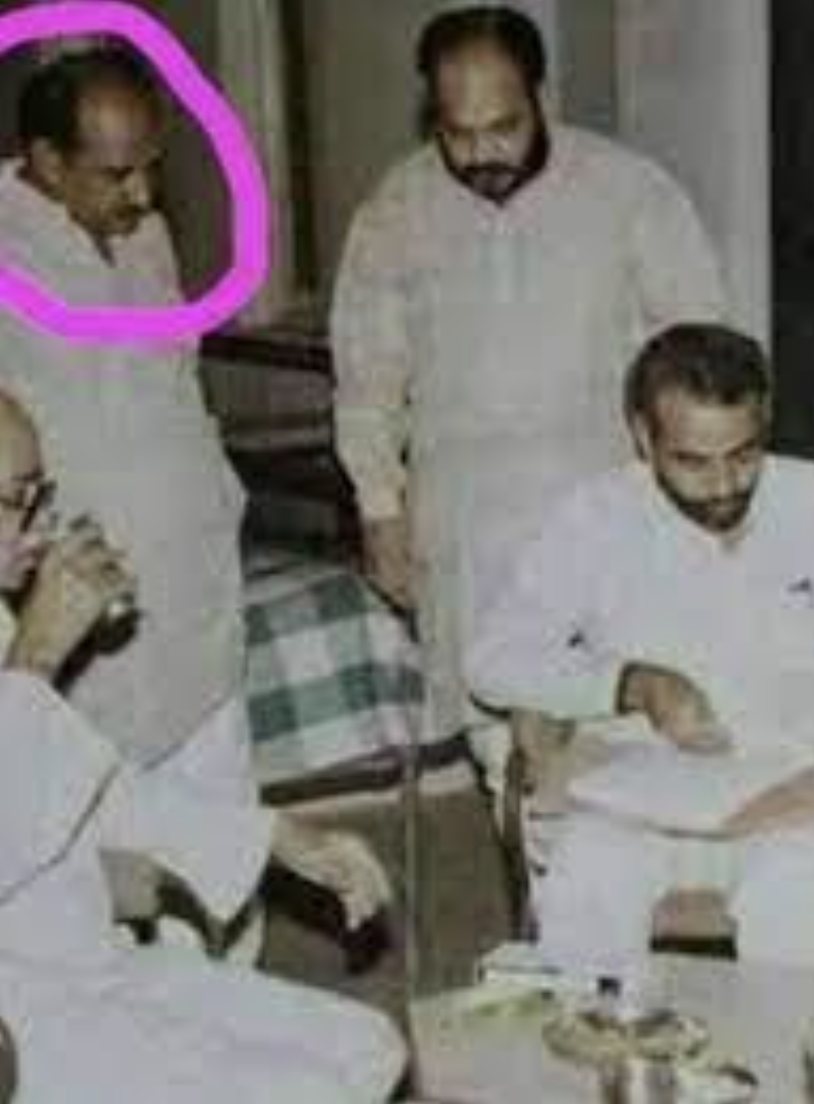
Babu Bajrangi, Narendra Modi, Amit Shah and L.K. Advani. Photo courtesy: Christophe Jaffrelot.
These groups have maintained a close relationship with the BJP from the outset. This party used these henchmen in many ways to carry out its dirty work. They were seen in action during the Gujarat pogrom, where seasoned leaders such as Babu Bajrangi – an activist close to Narendra Modi and other senior BJP leaders (see attached photo) – showed their true colours, committing the most despicable murders and boasting about them afterward. More recently, politicians behind the 2020 riots in Delhi, such as Kapil Mishra, have also relied on these henchmen.
On October 10, something new happened: these men, who claimed that they derived their legitimacy from the nobility of their cause – the defence of Hindu traditions – shifted their target from Muslims to the young people demonstrating in the streets, most of whom were Hindu. This strategy was no secret: these thugs had made their intentions clear on social media, with their faces uncovered. They announced that they were heading to Delhi; they showed the weapons they were going to use; and they threatened certain young leaders by name – starting with the one they called 'DickPe' and Saurav Das (see posts below).
As a sign of their Hindu nationalist roots, they did not hesitate to write on social media that the spirit driving them was none other than that of December 6, 1992 – “the 1992 vibes.” And the figure they claimed to follow was none other than the “Butcher of Gujarat,” Narendra Modi, whom they called on to become a dictator.
On October 10, these thugs in power roughened up the young protesters without even bothering to conceal their faces: the police – just as during the Gujarat pogrom, the Delhi riots, and so many lynchings – let them operate freely. The Delhi police report to Home minister Amit Shah, just as the Gujarat police did in the 2000s. While the victims have changed – since they are no longer Muslims – the logic remains the same: to exert absolute control on society. Beyond the traditional relationship between political leaders and the police, we can indeed see at work the close ties these same politicians maintain with their “muscle power” in order to create a state deeper that the official bureaucracy.

This link allows the Sangh Parivar to penetrate deeper into Indian society, finding allies who may appear legitimate because they embody the Hindu people. This is not only highly practical but also typical of the RSS’s approach, which views the state merely as an artificial superstructure and, in contrast, swears by the society it seeks to conquer and convert. Not using the police also serves to exonerate the state by denying that it engages in excessive violence.
Is the judiciary so subservient to political power that it does not even dare to punish muscle men in saffron, at the risk – if they escalate – of giving rise to an atmosphere of civil war? In 1975-76, Sanjay Gandhi had created a Nehru Brigade within the Youth Congress, entrusting its leadership to a man named Arjun Das, whom the Shah Commission described as a “professional goonda.” At that time, the constitution had been set aside. Today, the rule of law is supposed to prevail, and the judiciary is therefore potentially in a position to prevent India from sliding into a form of de-institutionalisation that would ultimately lead to the creation of a de facto rogue state.
Christophe Jaffrelot is Senior Research Fellow at CERI-Sciences Po/CNRS, Paris, Professor of Indian Politics and Sociology at King’s College London, Non resident Scholar at the Carnegie Endowment for International Peace and Chair of the British Association for South Asian Studies.
Prannv Dhawan is a lawyer.
This article went live on October thirteenth, two thousand twenty six, at forty minutes past four in the afternoon.The Wire is now on WhatsApp. Follow our channel for sharp analysis and opinions on the latest developments.


