

Project Syahi: With Sustainable 'Seed Pens', DU Students Lead the Way


Last year, a group of students at Delhi University's Kirori Mal College came together and decided to make minimum-plastic pens with the help of a community of women in Tilak Nagar.
The students, members of Enactus, an international organisation that aims to solve everyday problems with unique and sustainable ideas, decided to launch the project when they found out that over 1.65 crore pens are discarded every month, adding to the mammoth plastic waste accumulated from various other sources.
The project, the students said, is also aimed at empowering women to learn entrepreneurial skills to eventually start their own businesses – so that they are no longer dependent on the male members of their families.
Thus, began the journey of Project Syahi.
Eco-friendly
"Over the last 70 years, some 8.3 billion tonnes of plastic has been produced. Right from its extraction, it becomes an indispensable part of our lives. It's around us, in everything we use," said a member of the project.
The plan was to use upcycled paper, minimal plastic and to fix a seed at the end – all to make sure that the pens don't harm the environment any further. Students say that the project is their effort to "incorporate small part of sustainable development into their daily routines."
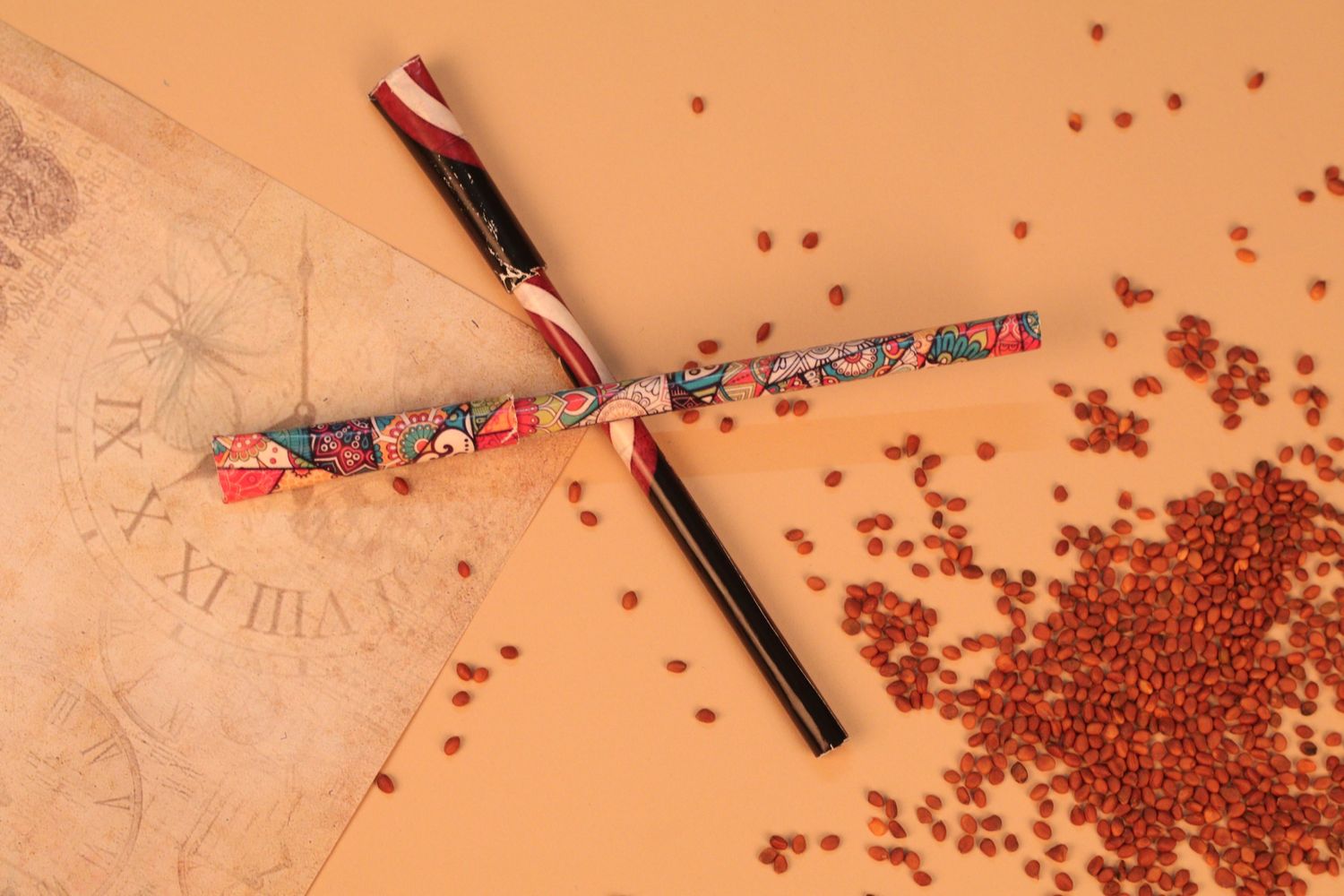
The team collects upcycled paper from different printing agencies and stationaries, which generally have a bulk of wasted papers and sends them out to the women in Tilak Nagar. Refills, Fevicol bottles, sapling seeds and other essential materials are bought in bulk from markets in and around Delhi's North Campus.
"Instead of throwing paper out on which things are printed wrongly, or other papers which are of no use to them [local vendors], they give those to us for free. We get the seeds from wholesale seed markets near North Campus," said Sehaj Singh, a member of the project.
Source of livelihood
According to the students, the best part about the project are their women collaborators from Tilak Nagar who have found a new source of livelihood. However, the team doesn't claim to be liberators or saviours in any way, they say that they are merely facilitators who help the women work at their own pace.
"They are not our employees. They are our partners in the project. We make sure that they work independently after we teach them the basics of making the pens," said Singh.
Since there is a nationwide lockdown owing to the outbreak of coronavirus and students can't send out raw materials, the women in Tilak Nagar are making the pens using old stock.

Members of project syahi making pens at Tilak Nagar, Delhi. Photo by special arrangement.
"Their salaries are in place so that they don't have any financial problems. And their work is being continued with appropriate social distancing measures," added Singh.
So far, the team has sold the pens at multiple sites and have also started taking orders from local stationary shops.
"Initially, we started by selling pens at college festivals, offices, hostels and other places besides reaching out to our friends. Later, we starting taking orders from local shops. A couple of months ago, I contacted a stationery shop owner near my house. He really liked the pens and placed a bulk order. My other friends are doing the same," Singh said.
The project has made the group realise that student-led initiatives have the potential to the contribute to ecological development and socio-economic progress in many ways.
"Every small step counts," the members say.
All photos provided by the Enactus members.
This article went live on April twentieth, two thousand twenty, at zero minutes past twelve at night.The Wire is now on WhatsApp. Follow our channel for sharp analysis and opinions on the latest developments.


