

'The Scenes of Destruction Are Beyond Words': Momen Faiz on Bearing Witness in Gaza


The ongoing genocide in Gaza is a severe humanitarian crisis marked by widespread famine, destruction, loss of life and unchecked violations of international law. In the series ‘Gaza Stories: Voices Under Siege‘, The Wire brings you interviews and reports that showcase voices from medical professionals, lawyers, journalists, artists and survivors to reveal the on-ground realities. Gaza Stories aims to amplify censored narratives and establish a deeper understanding of the situation.
“Gaza Journalists are waiting for your arrival.”
This appeal comes from Momen Faiz, a courageous photojournalist from Gaza. Addressed to journalists worldwide, to champions of truth and justice, and to people of conscience everywhere, he recently shared it on social media.
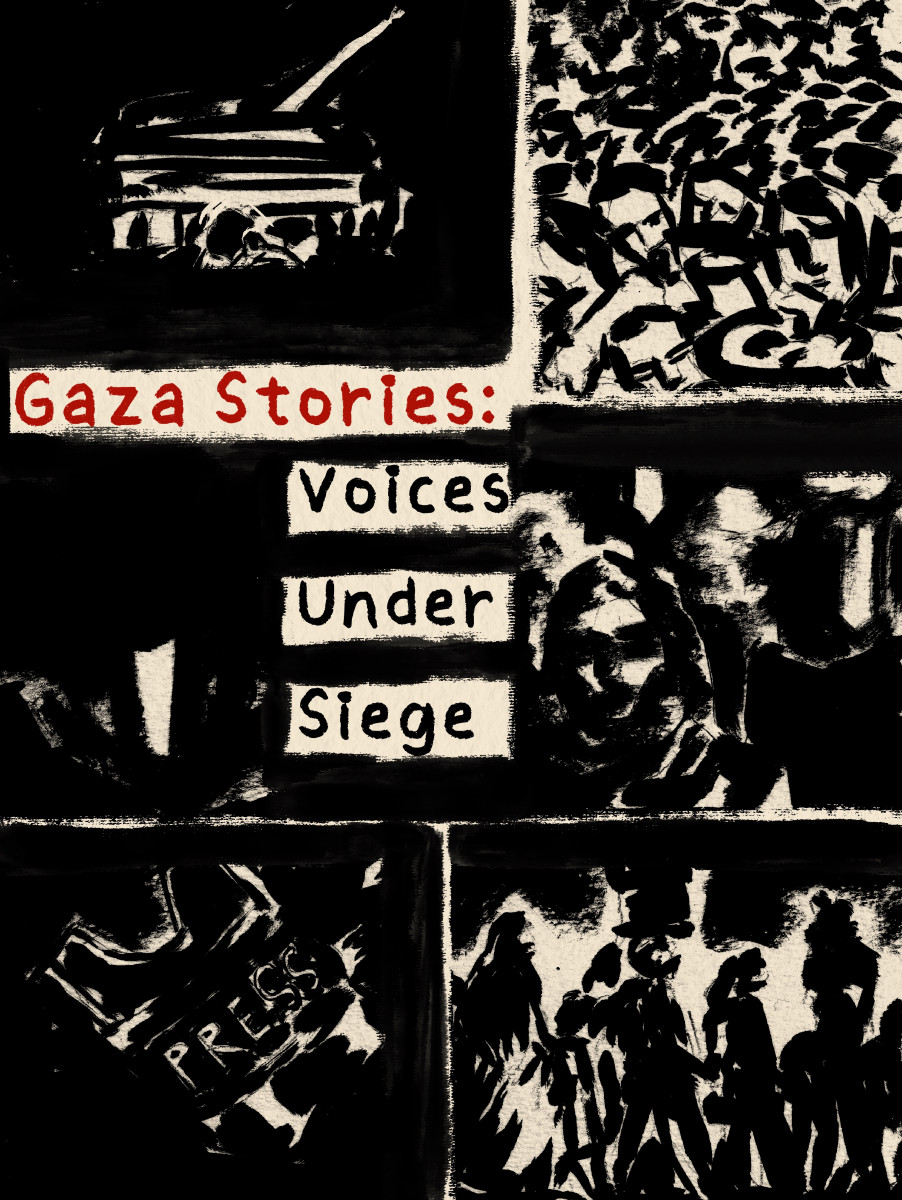
Illustration: Pariplab Chakraborty
Faiz, a photojournalist from Gaza City, is among the few still reporting from northern Gaza – one of the areas hardest hit by Israeli ground and air strikes. With two decades of experience, he has not only witnessed the devastation first hand but has also documented the daily lives, struggles and resilience of besieged Gazans through his lens.
In December 2008, when Gaza was under a complete blockade, Faiz chose to reveal the truth to the world through his camera. While reporting on the Karni border with a friend, an Israeli army grenade exploded near him. The blast cost Faiz both of his legs, while his friend lost his life. Despite this devastating loss, Faiz’s resolve did not falter.
Even today, from his wheelchair, he continues to document the destruction of his homeland, the suffering of its people, the ruins of buildings, and the harsh realities of war. His photographs have been published by major news agencies and broadcasters worldwide. More recently, he has turned to video, sharing powerful stories from Gaza on social media; particularly Instagram, where he has more than 98,000 followers. Through his images and videos, Faiz continues to bear witness to the resistance, devastation and human cost of life in Gaza.
I first met Faiz in October 2018 at the Palestinian International Media Forum 'Tawasul 3' in Istanbul. On that occasion, I had the chance to meet and speak with many journalists from Gaza. Faiz, whose life story is not only moving but profoundly inspiring, left a deep impression on me.
When I came across his recent post on social media, my first question to him was, “Who are you waiting for?” Due to the poor network in Gaza, the only medium to communicate to him was WhatsApp. I had to wait for days for his response but thankfully he did get back to me. His reply was simple: “First, I want journalists from all over the world to come here.” Then I asked, why do you want international journalists to come to Gaza? Faiz explained, “Local journalists have given their lives — and continue to risk their lives — to document this war and bring the truth to light. But we also need international journalists to stand with us, because truth knows no borders. Their reporting can help amplify our voices, expose crimes, and build pressure to stop the war.”

Momen Faiz. Photo: Special arrangement
What stories should the world’s journalists be telling? What issues are still overlooked? What truths about this war remain hidden? In response, Faiz says, “We want journalists to bring forward the testimonies of eyewitnesses accounts of destruction, genocide, hunger, massacres, the suffering of the injured, and the heartbreaking stories of thousands of families completely wiped out. Thousands of martyrs lie buried under the rubble. Millions of wounded people live with permanent disabilities after losing their limbs. Thousands of children have been orphaned, left alone after their entire families were destroyed. We want the world to know about the daily struggles: contaminated water, sewage-filled streets, families living in tents, diseases caused by burning plastic, rising cancer cases among children, and the spoiled food and canned goods that arrive as so-called aid. And yes! What the world has not yet understood is that this ‘occupation’ is not only about land. It is also about controlling Gaza’s marine resources and recently announced oil reserves, while at the same time deliberately reducing the population of 2.5 million people forced to survive in just 370 square kilometres.”
In response to one of my questions, Faiz explained, “A ‘normal day’ for us means being separated from our wives, children, and families, living with our companions on the street, in a tent, or inside a car. Wherever we sit, exhaustion takes over, and we fall asleep without warning, only to be jolted awake by explosions, the wail of ambulances, and the screams of women and children. The scenes of destruction, the martyrs, the wounded… these are beyond words. The experience is so overwhelming it cannot truly be described, because the one who hears about it can never feel what the one who sees it has lived.”
Among the many questions I asked Faiz, one was perhaps the hardest: What was the most painful moment you had to witness, and how did you report it? His answer broke me completely. I realised that to press him further would only reopen wounds too deep to bear.
“The most agonising moment,” he said, “was the attack on Al-Ahli Hospital, where – like so many other families – my own had sought refuge. Eight members of my family were killed there. And in that moment, while trying to take photos and report the story, I found myself moving among more than 300 mutilated bodies and thousands of wounded. Our tears and our blood became one when we finally found our martyred loved ones. It was a pain beyond words.”
Today, Faiz grieves not only the loss of several family members but also friends and fellow journalists. Even his neighbourhood, once his home, no longer exists; it has been erased.
It is important to note that in June 2024, Faiz’s family home was completely destroyed during Israeli military aggression. Reflecting on the loss, he said: “This is not the first time this has happened. In 2014, my house was partially destroyed in a missile attack by the ‘Occupation’. I rebuilt it after that. It was a beautiful home, full of memories. My personal library, which contained all the awards I had received for journalism, was reduced to ashes. When I sifted through the rubble, the only things I could find were fragments of children’s toys.”
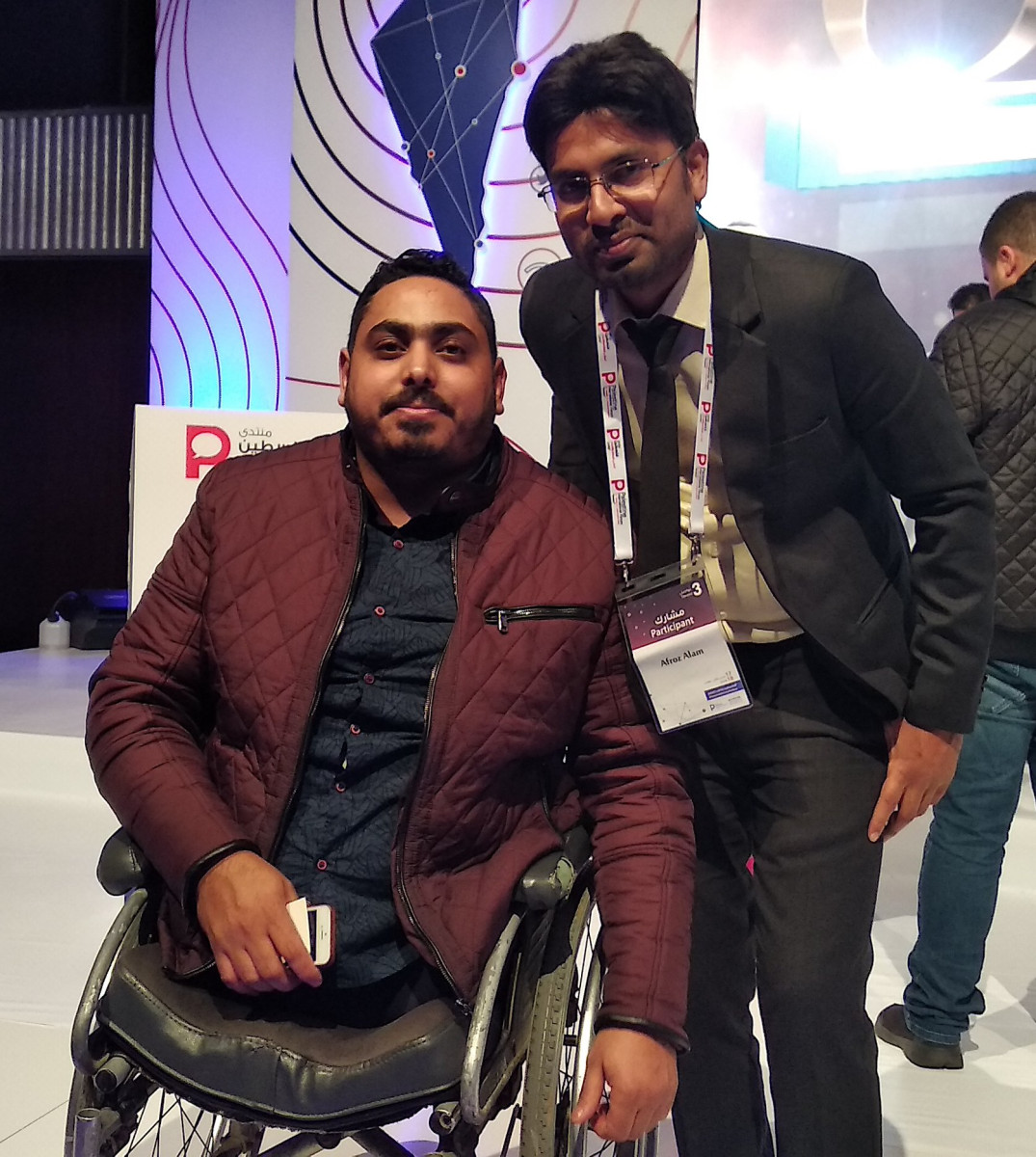
Momen Faiz with the author. Photo: Special arrangement
“What we learned in universities, or from the experiences of former journalists, is just a line compared to our deep and extensive practical experience, because we are faced with internet shutdowns, lack of journalistic equipment, and difficult conditions to convey voice and images to the world,” says Faiz.
“Sometimes I just take pictures with my phone so that I am not considered a journalist... because it does not feel safe. I have received many threats and calls from the Israeli army — they say over and over again, ‘Change your location, stop taking pictures, or you will be targeted... and your family too.’”
In response to one of my questions, Faiz said: “How can there be peace when the ‘occupying power’ continues to seize our land and trample on humanity? Countless families have been killed, and millions of children have been orphaned. How can people forget their wounds and memories, while the world sheds tears for animals but not for a child, a woman, a human being, or even a tree?”
Faiz concludes with a powerful appeal: “I call on international journalists to stand with us in the journalism of humanity. The truth is undeniable, and history will remember both your actions and your failures to support your colleagues. Will you remain silent in the face of the crimes of the ‘Occupation’ and leave us at the mercy of our fate? What is even more painful is imagining what will happen to Gaza’s journalists if global journalist rights organisations stay silent in the face of these atrocities.”
Palestine has become one of the most dangerous places in the world for journalists. According to the International Federation of Journalists, at least 220 journalists and media workers have been killed in Gaza since October 2023. Al Jazeera reports that the number is at least 273, as of August 24, 2025. The Committee to Protect Journalists considers the ongoing conflict in Gaza to be the deadliest war for journalists in modern history.
Afroz Alam Sahil is a journalist and author. He can be contacted at @afrozsahil on X.
This article went live on September eighth, two thousand twenty five, at fifteen minutes past four in the afternoon.The Wire is now on WhatsApp. Follow our channel for sharp analysis and opinions on the latest developments.


