

Why the Rise of the Netizen is a Reason to be Afraid


When the digitised virtual world finally turns real, languages and thoughts they carry stop buzzing around your heads like troublesome gnats. Thanks to smartphones, India’s young are no longer citizens but ‘netizens’. They no longer ask you for reading lists, only a ‘short list’ of ‘good’ Bhasha fiction/ interesting and informative podcasts/ or interviews available online.
True, our prime time TV news bulletins or panel discussions were never more glitteringly showcased but obviously they are no longer deemed cool. Even last year’s avidly watched digital news platforms and podcasts seem boring to the eternally media surfing group of our artistically inclined young. Their thoughts and intellectual resources are focused on how to hog the information in the shortest format.
Whether the subject is the Gaza peace accord or the student demonstrations in Leh, the audiences want 100% smooth delivery that brings pleasure. No one wants the mixed package of reality that brings more pain, less pleasure. The viewers are no longer seekers of truth, hell bent to go beyond the information for teasing out only the pleasurable bits .
So popular news programmes or fiction are turning into neat little bento boxes served 24x7 with lightly seasoned, attractively arranged sushi rolls big enough to be nibbled without a mess.
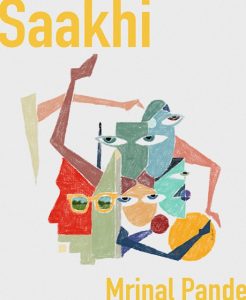
Illustration: Pariplab Chakraborty
This is making it increasingly hard for serious professionals to hold the attention of the new audiences as they roll out meticulously recorded stories that disturb, that expect them to sit back and think and hopefully react with more than an image. Once their smart phone pacifiers are out of their faces, the young consumers need the writer to find their focus and hand it to them.
Intellectually hip content today is everything and nothing. That is where its genius lies. Engaging content creators are pawns in a constant contest for propaganda. Yet they are nothing we all know what propaganda is , no ? Take our multilingual roots for example. So vital we tell the audiences, for tracing the inter-linkages between art forms and the incessant give and take between regional artists. But we do not figure out how our libraries, the publishers, the editors have all sensed the new audiences’ needs better than us. They craftily began categorising all artists and assigning them to pigeon holes marked by their gender, caste, regional language, their political predilections and popularity in the virtual world.
All we writers are expected I realise now, is to be refined link providers. Just as Oppenheimer first described a nuclear bomb as ‘just a bang’ later confessed to feeling like Krishna, “I am become Death”. He was right on both counts.
Creative writing or good reporting can today be everything and nothing. So do not faint when you hear of Premchand as a dhoti-kurta type writer who amazingly rode two boats of Hindi/Urdu. Also hallelujah! There are fair to mediocre translations available in English.
Likewise Harivansh Rai Bachchan is now 90% Amitabh Bachchan’s father who wrote several film lyrics for his son’s films which are not his best work incidentally and only 10% a sound and popular poet of his age. Separated by centuries, regional dialects and religion, medieval poets like Khusro, Jayasi, Rahim, Kabir, Tulsidas or the eight poets (Ashtchhap) from Vaishnava tradition are even easier to label for the lovers of mediated literary cuisine. Overall they are sold as medieval saint poets who wrote in mixed dialects and symbolise a syncretic India. All available (piecemeal atleast) in English translations.
Closer to our era, great and wildly dissimilar writers like Vinod Kumar Shukla. Geetanjali Shree, Amrita Pritam, Krishan Chander, U.R. Ananthmurthy and Mahsweta Debi to name a few, are now served in lit Fests and online book stores as small town Bhasha writers, ‘discovered’ by organisers of fests and the fests attracting literary agents and good English translators.
“The peak that stays in view wherever we go/For them is rising ground” – Philip Larkin.
The poverty, the ephemeral nature of life and love, the inexorable time that reduces all great kings to nothing, these were real to most great artists. The poverty and squalor most of them lived with had its horrors, but it also bound them as people to their societies and saved them from the narrow vision and narcissistic solipsism they display in their writings and public performances where literature is a tamasha and classical music a display of pyrotechnics of sur and taan.
Late in her life my writer mother, irritated no end by some of her foolishly gushing admirers, told me, this trend of making writers into demi-gods first began in our time with cinema. Hindi films began making a hash of works by good Hindi/Urdu writers and poets like Sahir Ludhianvi, Jaan Nisar Akhtar, Prem Chand, Narayanan, and Amritlal Nagar. People thought this is life as the writers saw it, not as some Punjabi or rich Gujarati film producers’ version that subverted the writers’ original work.
Also read: Interview | ‘Who Benefits From the Narrative That the World Is Full of Terrible People?’
She was right. Today the OTT serials and Hindi copy cat versions of popular Hollywood fantasies have further miniaturised families and shrank language because the stars no longer read or speak any Indian language.
The screen writers, the musicians , the stand up comedians, serving the audiences this laziness has spawned seem to have slowly forgotten how only living your real life fully and speaking in various tongues that resonate in common spaces in India will lend you the insights to approach music or literature as a Rasika.
By Diwali in 2025 the sheer pressure of India’s neo-capitalism and philosophy it feeds upon, have given a soft landing to our mostly monolingual young into a world teeming with languages they know nothing of. And while they are glued to their screens slogans and high philosophy are grabbed by babas and/or influencers. As real turns marginal, ghostly, insubstantial, and Gen Z gets more and more coolly dissociated from real life, it is time to be very afraid.
Mrinal Pande is a writer and veteran journalist.
Saakhi is a Sunday column from Mrinal Pande, in which she writes of what she sees and also participates in. That has been her burden to bear ever since she embarked on a life as a journalist, writer, editor, author and as chairperson of Prasar Bharti. Her journey of being a witness-participant continues.
This article went live on October nineteenth, two thousand twenty five, at seven minutes past twelve at noon.The Wire is now on WhatsApp. Follow our channel for sharp analysis and opinions on the latest developments.


