
Chile's Election a Close Contest Between Left and Right
Reuters


Real journalism holds power accountable
Since 2015, The Wire has done just that.
But we can continue only with your support.
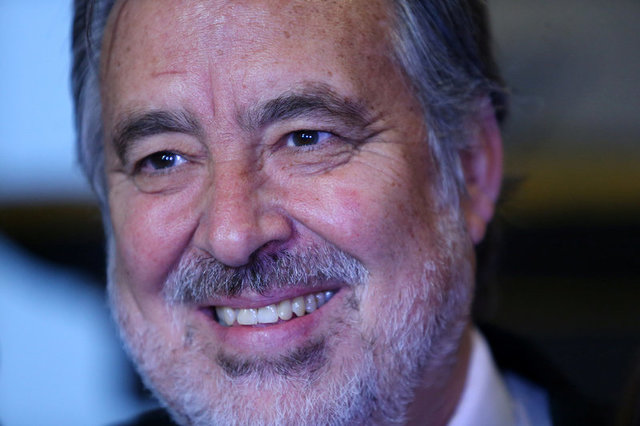
Leftist presidential candidate Alejandro Guillier poses for the media before meeting with members of the Socialist Party in Santiago, Chile April 11, 2017. Credit: Reuters/Ivan Alvarado
Santiago: A leftist senator running for president in Chile's November election is tied in a head-to-head match-up with the right's front-runner, even as his support has slipped in recent months, a poll released on Thursday showed.
The survey by pollster MORI shows Alejandro Guillier, a leftist former television journalist, winning 33% of the vote in a potential runoff, with conservative ex-President Sebastian Pinera taking 32%. The remainder of participants did not respond, did not know who they would vote for, or said they would not cast a ballot.
Chile is set to hold the first round of its presidential election on November 19. If no candidate wins more the 50%, the top two will face off in a head-to-head match-up scheduled for December 17.
The one-percentage-point difference between the two candidates is within the poll's three percentage point margin of error and represents a slight slip for Guillier who had been winning head-to-head by five percentage points in December.
Still, it shows Chile's presidential election will likely be competitive, even as the Chilean stock market is beginning to price in a conservative win as Pinera enjoys the support of a unified right and a healthy first-round lead.
A victory for Guillier would likely mean a deepening of the social-democratic reforms initiated by outgoing leftist President Michelle Bachelet, while a Pinera presidency would mean a more free-market approach to governance.
In the first round, the poll showed Pinera taking 26% and Guillier taking 14%. That represents an improvement for Pinera, who was leading Guillier by just four percentage points in the December poll. Pinera also strengthened or established a lead in related questions, such as who respondents believe will be the next president, regardless of their personal preference.
A number of relatively minor hopefuls, such as the hard-left Beatriz Sanchez and populist conservative Manuel Jose Ossandon, have support in the mid-single-digits, according to the poll.
MORI surveyed 1,200 people face-to-face from March 28 to April 10.
This article went live on April twenty-first, two thousand seventeen, at thirty-three minutes past two in the afternoon.The Wire is now on WhatsApp. Follow our channel for sharp analysis and opinions on the latest developments.