
ISIS Wants Alliance With Al-Qaeda, Says Iraqi Vice President
Reuters


Real journalism holds power accountable
Since 2015, The Wire has done just that.
But we can continue only with your support.
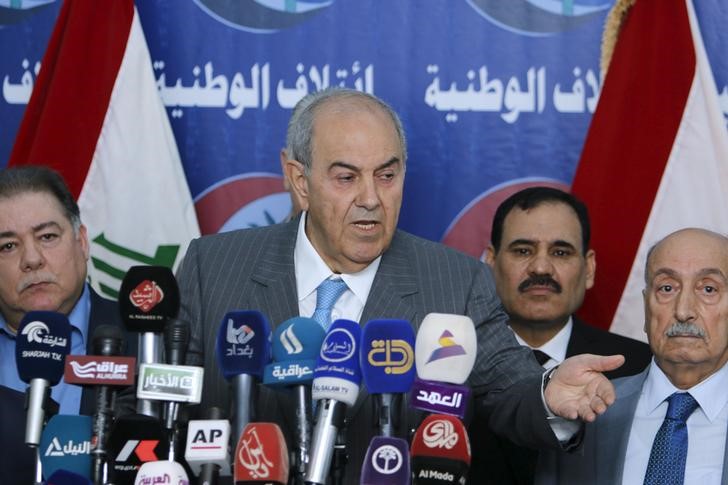
Iraq's Vice President Ayad Allawi speaks to reporters during a news conference in Baghdad March 20, 2016. Credit: Reuters/Khalid Al Mousily/Files
Baghdad: ISIS is talking to al-Qaeda about a possible alliance as Iraqi troops close in on ISIS fighters in Mosul, Iraqi vice president Ayad Allawi said in an interview on Monday.
Allawi said he got the information on Monday from Iraqi and regional contacts knowledgeable about Iraq.
"The discussion has started now," Allawi said. "There are discussions and dialogue between messengers representing Baghdadi and representing Zawahiri," referring to ISIS leader Abu Bakr al Baghdadi and Ayman al Zawahiri, the head of al Qaeda.
ISIS split from al Qaeda in 2014 and the two groups have since waged an acrimonious battle for recruits, funding and the mantle of global jihad. Zawahiri has publicly criticised ISIS for its brutal methods, which have included beheadings, drownings and immolation.
It is unclear how exactly the two group may work together, Allawi said.
ISIS blazed across large swathes of northern Iraq in 2014, leaving the Iraqi central government reeling. Baghdadi declared a caliphate over the territory the group controlled from the al-Nuri mosque in Mosul the same year, which also became a point of contention with al-Qaeda.
Last October, Iraqi security forces and Shi'ite volunteer fighters, commonly referred to as the Popular Mobilisation Units (PMUs) teamed up with an international coalition, including the US, to drive ISIS from out of Mosul and the areas surrounding the city.
The group has been pushed out of the half of Mosul that lies east of the Tigris River, but Iraqi soldiers and their allies are now bogged down in tough fighting in the narrow streets of the Old City of Mosul, west of the river, according to Iraqi security officials.
ISIS has used suicide bombers, snipers and armed drones to defend the territory under their control. The group has also repeatedly targeted civilians or used them as human shields during the fighting, according to Iraqi and US security officials.
The militant group has lost ground in Mosul but still controls the towns of Qaim, Hawija and Tal Afar in Iraq as well as Raqqa, their de facto capital in Syria.
Even if ISIS loses its territory in Iraq, Allawi said, it will not simply go away.
"I can't see ISIS disappearing into thin air," Allawi said, referring to the group by a commonly used acronym. "They will remain covertly in sleeping cells, spreading their venom all over the world."
This article went live on April eighteenth, two thousand seventeen, at fifty-one minutes past twelve at noon.The Wire is now on WhatsApp. Follow our channel for sharp analysis and opinions on the latest developments.