

Philippine Panel Dismisses Complaint Against Duterte


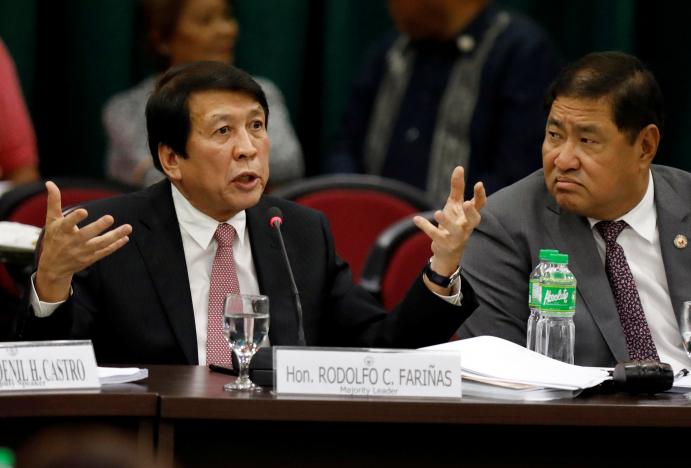
Congressmen Rodolfo Farinas and Reynaldo Umali preside over the panel hearing the impeachment complaint against President Duterte in the House of Congress. May 15 2017. Credit: Eric De Castro/Reuters
Manila: A Congressional panel of Philippine lawmakers on Monday found an impeachment complaint against President Rodrigo Duterte lacked substance and should go no further, a widely expected outcome underlining the maverick leader's steadfast legislative support.
Committee members unanimously voted to shoot down the complaint by Gary Alejano, a member of a minority block, and will recommend its dismissal by the 292-seat Congress, where Duterte enjoys a supermajority.
Alejano accused Duterte of high crimes and betrayal of public trust by concealing assets, supporting summary executions of thousands of Filipinos in his war on drugs, and having a "defeatist" approach towards Beijing's assertiveness in the South China Sea.
The panel's decision to declare the complaint insufficient in substance came a few hours into proceedings that focused heavily on Alejano's admission that he had not personally witnessed the drugs-related killings that he was accusing Duterte of sponsoring.
Alejano was furious that the panel was unwilling to hear what he said was extensive evidence from witnesses and survivors of drugs-related violence that would prove "the government is killing them."
He said the committee made a decision based purely on Duterte's popularity and would be responsible for a dictatorship taking shape.
"I assure you if we allow the president that kind of power in violation of the constitution ... If we allow it further, it will be a dictatorship," he told reporters.
"We are sending the message to the president, 'yes, you continue, we will allow you.'"
Presidential legal counsel Salvador Panelol the junking of the complaint was expected because it was built on falsehoods and intended to "besmirch the reputation" of Duterte.
Popular president
The early rejection of the complaint demonstrates the challenges faced by opponents in using democratic mechanisms to take on Duterte, who enjoys a public approval rating of 82 percent, and a massive social media support base.
Alejano was aware his bid was a long shot but had aimed to embolden the public to speak up over the war on drugs and over Duterte's failure to pressure China to abide by an international arbitration ruling last year that declared some of Beijing's activities in the South China Sea illegal.
Numerous committee members said Alejano's complaint was deeply flawed. Harry Roque said "at best it's a misrepresentation, at worst it's a falsity."
Deputy house speaker Fredenil Castro said Alejano was using "hearsay" to try to oust a president with a huge electoral mandate.
"You cannot make a joke of this proceeding," said Castro.
Some political commentators say Alejano's impeachment effort had an ulterior motive: to strengthen a complaint filed by a lawyer last month with the International Criminal Court (ICC) accusing Duterte of crimes against humanity.
Among the ICC's jurisdictional requirements is that domestic legal avenues to try an individual are first exhausted.
Alejano said he might now convince his allies to put their weight behind the ICC case, because there were no Philippine institutions able to hold Duterte to account.
"Where will we go, where do we file our complaint?" he said. "We have nowhere to go to."
(Reuters)
This article went live on May fifteenth, two thousand seventeen, at nineteen minutes past three in the afternoon.The Wire is now on WhatsApp. Follow our channel for sharp analysis and opinions on the latest developments.


