

Modi's Patna Roadshow May Have Kept Nitish Out, But at Home, CM's Legacy Endures


Harnaut/Barh (Bihar): Speculation has been rife over whether the 2025 Bihar assembly elections will be the swansong of chief minister Nitish Kumar, bringing an end to his 20-year-tenure at the helm of the state government. Not only is Nitish’s Janata Dal (United) and the Bharatiya Janata Party (BJP) contesting an equal number of 101 seats in the 243 assembly for the first time, the saffron party has stopped short of naming him as the National Democratic Alliance (NDA)’s chief ministerial face.
Prime Minister Narendra Modi who held a joint road show with Nitish just last year ahead of the 2024 Lok Sabha elections, took to Patna’s streets on Sunday (November 2) flanked by JD(U) leader and union minister Lallan Singh. The optics of a roadshow in Patna by the prime minister without Nitish were driven home only two days after the NDA released its manifesto in Patna in Nitish’s presence, at a press conference that lasted 26 seconds, in which the chief minister remained silent. This has only added to the questions around the future of the four term chief minister, who has changed alliances multiple times but remained indispensable to Bihar’s politics over the last two decades, despite the rise of the saffron party in the centre and its dominance in the Hindi belt.
“Nitish Kumar was the chief minister, is the chief minister and will be the chief minister and there is no doubt about it,” said professor Sudhir Singh, a JD(U) member in Nalanda’s Harnaut who has been associated with Nitish since the 1980s.
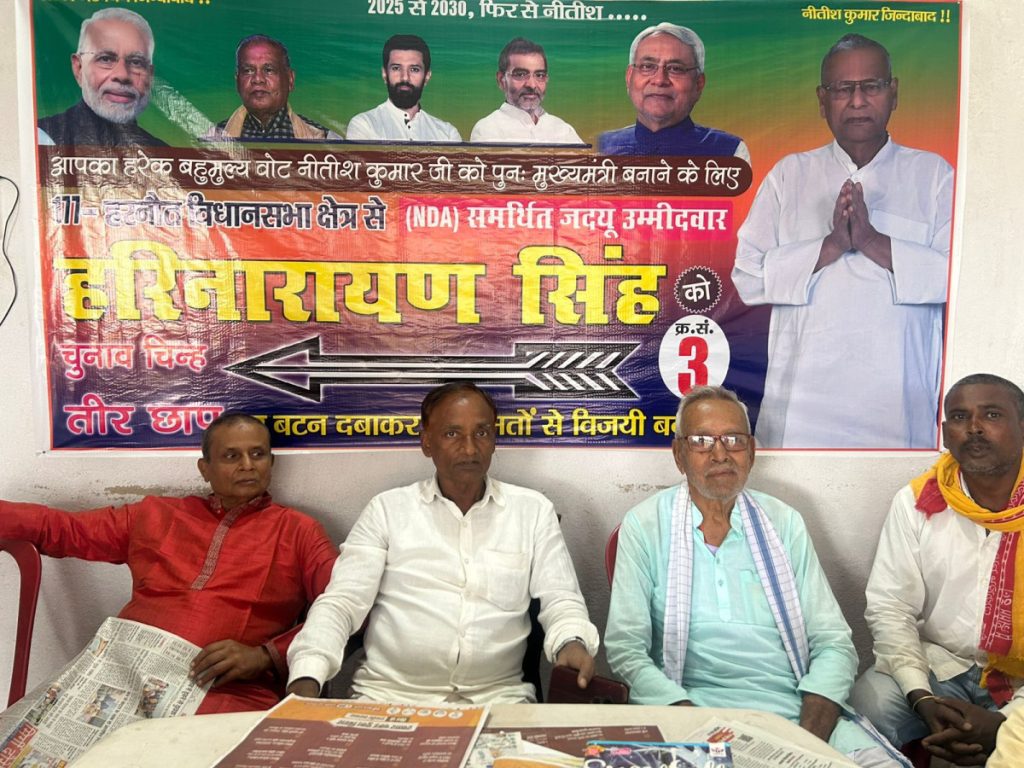
Professor Sudhir Singh (second from left) at the JD(U) office in Harnaut. Photo: Sravasti Dasgupta/The Wire.
“These are only rumours that he won’t be made chief minister. Look at Amit Shah, after saying that MLAs will elect the chief minister after the election, he too has now said that the chief minister’s seat is not vacant in Bihar. Whether it is about ticket distribution or providing leadership to the alliance, he remains as decisive, and as sharp as before. He is still addressing seven rallies a day, travelling by road. He is both mentally and physically fit.”
Harnaut has borne witness to Nitish’s rise in politics, from being associated with the Jay Prakash Narayan movement in the late 1970’s to winning his first assembly election in 1985 from the constituency after two consecutive defeats. In 1989 he won the Lok Sabha election from neighbouring Barh, and later floated his own party, the Samata Party. The Samata Party faced a setback in the 1995 Bihar assembly elections, winning only seven seats as Rashtriya Janata Dal (RJD) chief and Nitish’s former colleague from the JP movement retained power. After a stint in the Union government as railway minister, Nitish continued a campaign against Lalu’s “jungle raj” (lawlessness) in Bihar and became chief minister in 2005. Since then, while he has switched alliances, shuffling between the RJD-Congress and the BJP, he has remained chief minister for two decades.
While there are now concerns about Nitish’s health, in his home ground of Nalanda, his legacy, untainted by corruption, weighs heavy on the electorate despite the many questions surrounding his future following this election.
“We don’t look right or left, just straight vote for teer [the arrow symbol of the JD(U)],” said Dinesh Kumar in Nalanda.
Kumar is a member of the Chandravanshi community, a part of the extremely backward classes (EBC) that comprises about 36% of Bihar’s population according to the state government’s 2022 caste survey. The EBC which includes groups comprising Kahar, Kushwaha, Teli, Nonia, Dhanuk among other castes form Nitish’s core supporters, who he separated from the Yadavs and provided targeted welfare schemes, as well as reservations in local government bodies.
“One of my sons has got a job in Bihar Public Service Commission, while the other is a police constable. How has this been made possible? It is because he [Nitish] has worked for us. And not just us, every caste, every community stands with Nitish,” said Kumar.
While Kumar is known as “sushasan babu” – "Mr Good Governance" – having garnered goodwill in the state by bringing in infrastructural development including roads, bridges, electricity, he has also carved out strong support from the state’s women who he has looked to empower by providing reservations in jobs and education.
Despite this, Bihar remains the poorest state in the country according to NITI Aayog’s 2023 Multi Dimensional Poverty Index, based on NFHS-5 (2019-21) data, which showed that 33% of Bihar’s population is poor.
The Hindu has reported that as of 2019-2021, only 61% of Bihar’s female population had ever attended school. The state has also recorded higher infant mortality at 46.8 (this rate is the number of infant deaths per 1,000 live births) against the national average. The report said that Bihar was the worst performing state in 2023-24 in terms of per capita net State domestic product (at current prices), while in terms of employment and manufacturing too the state fared poorly. In 2023–24, manufacturing accounted for only about 6% of total employment in Bihar, while the services sector contributed around 25%, the report said.
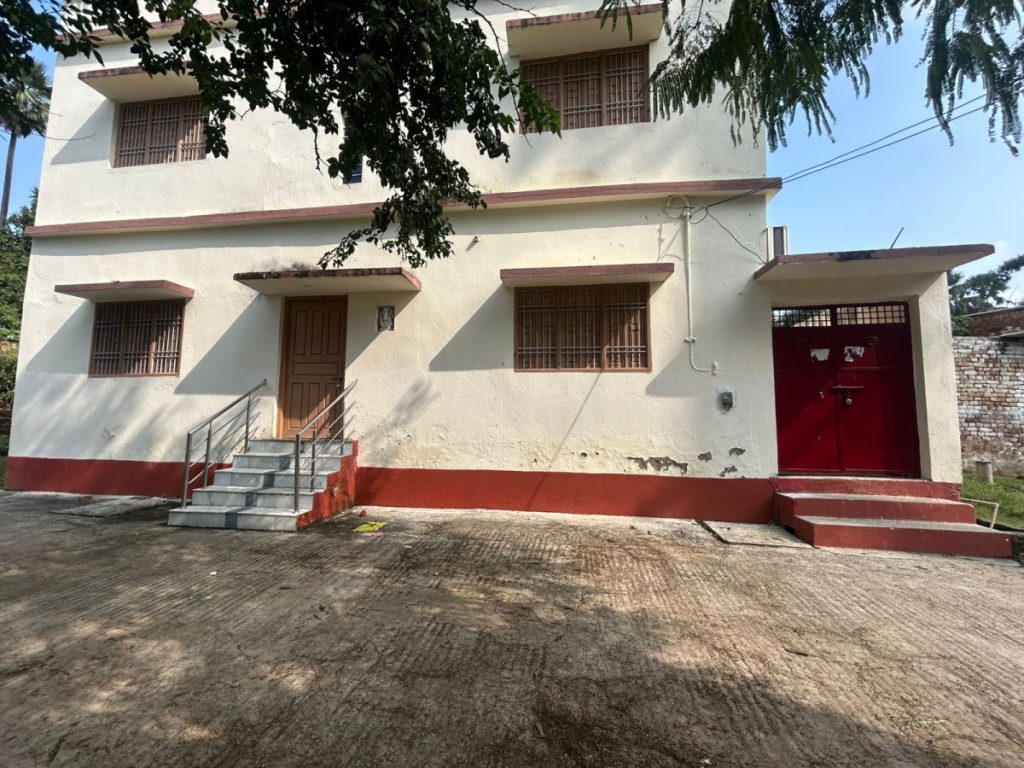
Nitish Kumar's house in Kalyan Bigha. Photo: Sravasti Dasgupta/The Wire.
These figures mean little to the electorate in Harnaut, who credit Nitish for bringing development and do not begrudge him for switching alliances. Sitting near Nitish’s house in Kalyan Bigha village, a group of villagers pointed to his indispensability in the NDA despite concerns around his health, and questions around the BJP’s attempts to downplay his role.
“They are scared of Nitish Kumar, because no one in Bihar has the kind of support he has. They can say what they want but eventually they will have to make him the chief minister. Whether it is school, colleges, roads, everything has happened because of him. Yes there is poverty, there aren’t any industries and factories and the youth are moving away but it will take time to take Bihar forward,” said Anjani Kumar.

Anjani Kumar (centre) along with other villagers in Nitish Kumar's ancestral village Kalyan Bigha. Photo: Sravasti Dasgupta/The Wire.
Kumar belongs to the Kurmi community, which is Nitish’s own caste group. While Kurmis have a dominant presence in Harnaut, equally present are Yadavs and Bhumihars who are fighting for political hegemony. That Bihar’s politics is intrinsically linked to caste is also made clear here.
“Jatiya samikaran se hi Bihar mein vote hota hai [caste equations decide votes in Bihar],” said Chatto Singh in the same village.
“We are Kurmi so we will always vote for him. But you never know when which caste will take away their support from him and vote for someone else. But by and large he enjoys wide support.”
In the 2020 assembly election, the BJP-JD(U) formed a formidable alliance on paper with the former's traditional support from largely ‘upper’-caste communities, and Nitish's support from EBC groups. But Nitish's support among the EBC and Dalit groups was eroded by Chirag Paswan's Lok Janshakti Party (Ram Vilas) which contested independently and fielded candidates to take on the JD(U). While this resulted in the JD(U) low tally of 43 seats, against the BJP's 74, Nitish scripted a comeback in the 2024 Lok Sabha elections winning 12 of the 40 seats, as many as the BJP. The JD(U) also became a key partner for the NDA government's survival at the centre after the BJP itself was reduced to a tally of 240. While in this election, Paswan's LJP(RV) is also part of the NDA, questions about Paswan’s role after the elections have also led to unease among JD(U) supporters.
“If they sideline Nitish Kumar they know very well that they themselves cannot survive in the centre. Kendra mein bhi toh unka phans jayega. (The central government is dependent on Nitish Kumar’s support),” said Naveen Kumar, also a member of the Kurmi caste.
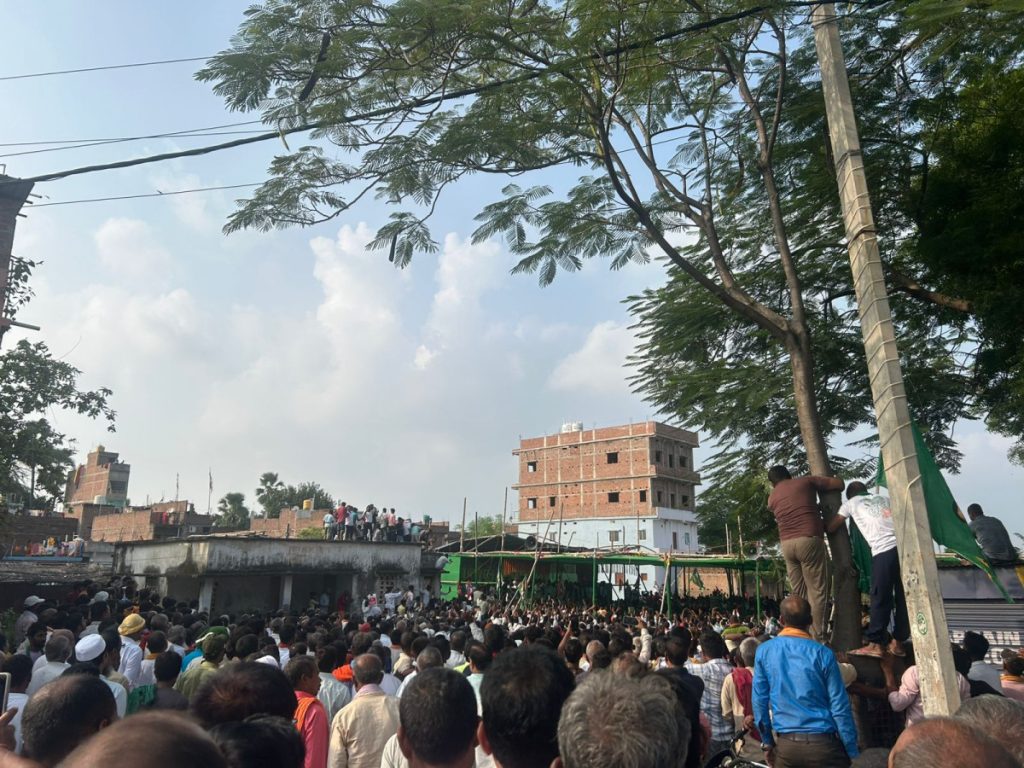
Villagers at Tejashwi Yadav's Barh rally. Photo: Sravasti Dasgupta/The Wire.
In neighbouring Barh located in the outskirts of Patna district, from where Nitish has been a Lok Sabha MP, RJD leader and the chief minister’s former deputy, Tejashwi Yadav has drawn large crowds for a public rally. Scores of young men, wearing the RJD’s green gamcha, are running to catch a glimpse of the young RJD leader who has promised a government job to every family in Bihar if voted to power. Tejashwi in his poll campaign has sought to highlight how Nitish is being made a puppet by the BJP to win the election.
“Agar Mukhiya hi ache nahi hai, toh kaise chalayenge (when the chief is not fine, how will the government function),” said Rajesh Kumar, a resident of Barh’s Belchhi village which has a large Kurmi population.
Kumar has come with a group of young men who say that they are enthused by Tejashwi’s promise of jobs, and point to 2022 when he handed out 5 lakh government jobs. Tejashwi’s address in Barh lasts barely five minutes, but crowds have gathered till the road outside with some even climbing on top of trees to catch a glimpse of the RJD leader.
While Harnaut has remained with the JD(U) for decades, in Barh, the BJP has won two consecutive elections in 2015 and 2020.
“The RJD’s support is only among Muslims and Yadavs. While caste preferences matter, BJP is the only party that has support across caste groups. It does not matter if Nitish Kumar is made chief minister or not. After the elections, they (BJP and JDU) will decide who will be the chief minister,” said Vijendra Kumar, who runs a shop selling prayer ware in Barh.
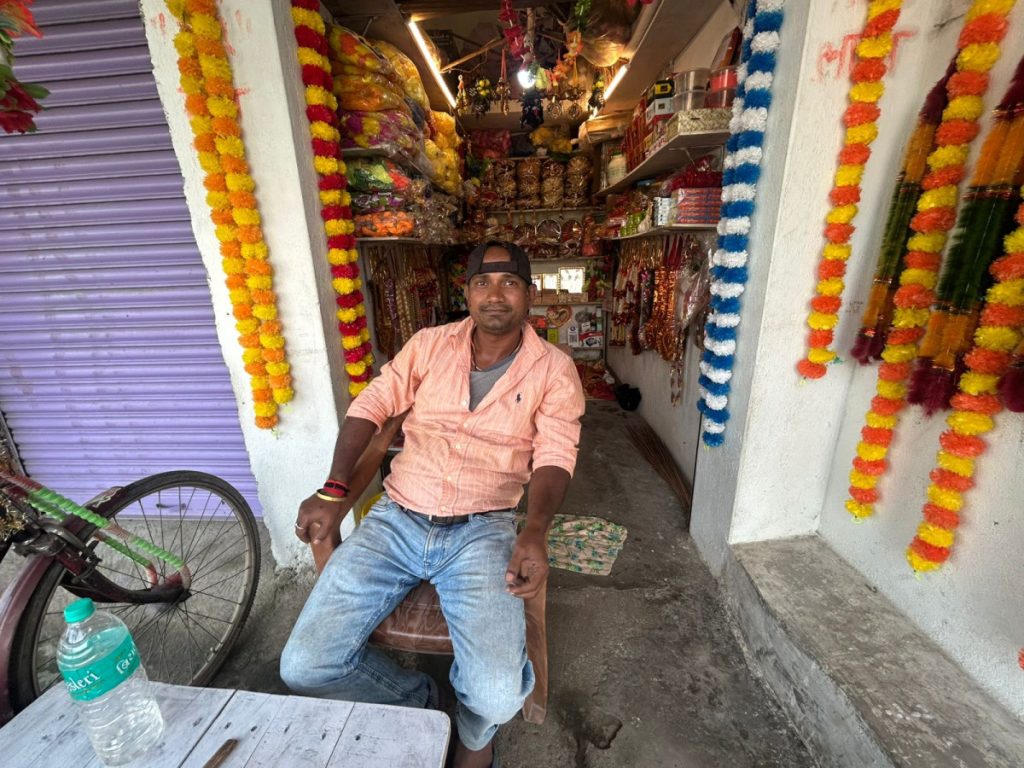
Vijendra Kumar in Barh. Photo: Sravasti Dasgupta/The Wire.
Back in Harnaut, two women are working on the field. While the two refused to disclose their name, they said that Nitish Kumar’s goodwill will see him through.
“In so many years, whether it is Nitish or anyone else, we have not received anything. But he is from our village, so we continue to vote for him. Gaon ka aadmi hai, gaon mein hi rehna hai [we are villagers and want to remain in villages],” one of them said.
Note: This report has been updated to correct the percentage of people in Bihar who are poor according to the NITI Aayog.
This article went live on November third, two thousand twenty five, at forty-seven minutes past ten in the morning.The Wire is now on WhatsApp. Follow our channel for sharp analysis and opinions on the latest developments.


