

How BJP Influenced Nitish Kumar’s Sudden Transfer of Power to 'RCP'


Patna: In a surprise move on Sunday, Nitish Kumar, chief minister of Bihar, relinquished his position as the national president of the Janata Dal (United) (JDU) in favour of Ram Chandra Prasad Singh, erecting a ‘wall’ between the JD(U) and its ally, the BJP, with Singh as its gatekeeper.
Nitish had been elected the JD(U)’s national president in 2019 for a three-year term to be concluded in 2022, but he instead stepped down and proposed RCP (as Singh is widely known) to assume the position. The move was unanimously approved by the party’s executive members at their meeting at Nitish’s residence.
Now, the BJP’s leadership will have to negotiate with RCP for access to Nitish, akin to Nitish's access to Prime Minister Narendra Modi and Union minister for home affairs Amit Shah through J.P. Nadda, the BJP’s national president.
Arunachal fallout?
Except for Modi and Shah, no one knows the terms on which Nitish suddenly dumped the Mahagathbandhan (the coalition of anti-BJP parties) two years after it came to power in Bihar in 2015 and allied with the BJP instead. But between 2017 and 2019, Nitish had direct access to the prime minister and union home minister. However, just ahead of the 2020 assembly elections, the BJP began talking to Nitish via Nadda and Bhupendra Yadav, the BJP’s general secretary and the person-in-charge of Bihar.
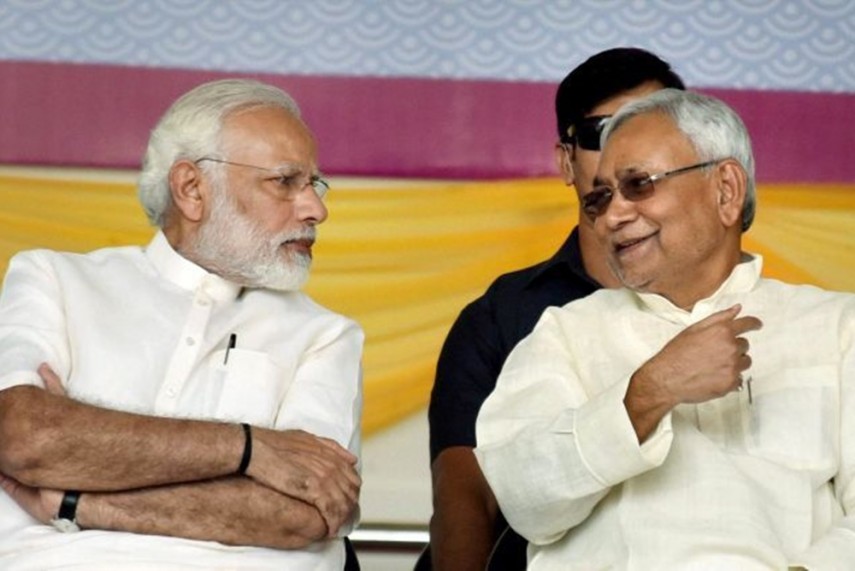
File photo of Narendra Modi and Nitish Kumar. Photo: PTI
According to the grapevine, Nitish was "viciously" anguished by this lack of "trust" on the part of the BJP leadership. So when six MLAs in Arunachal Pradesh quit the JD(U) and joined the BJP this month, Nitish restructured the party. The JD(U)’s executive members then formally adopted a resolution condemning the BJP for splitting the JD(U) in Arunachal Pradesh.
"The JD(U)’s split in Arunachal Pradesh amounts to a grave violation of the spirit of coalition dharma," said K.C. Tyagi, party's secretary general and spokesperson.
The party’s executive members also attacked the BJP’s ‘love jihad’ campaign, which has sharpened the divide between Hindus and Muslims. BJP-ruled states including Uttar Pradesh, Madhya Pradesh and Haryana have already begun arresting men from the minority community for marrying Hindu girls.
"Framing youths in the name of ‘love jihad’ is illegal. It has aggravated the atmosphere of hate in different parts of India. The constitution and the laws guarantee that consenting male and female adults can choose their partners as they wish, irrespective of their religious or caste identities. The JD(U) doesn’t approve of the so-called ‘love jihad’," said Tyagi, quoting the JD(U)’s official resolution on the matter.
The background
The restructuring of the JDU and its resolutions against the BJP is rooted in the belief of the JD(U) that the BJP’s leadership "clandestinely" propped up Lok Janashakti Party (LJP) chief, Chirag Paswan, to rebel against the JD(U) and contest elections against it.
More than 15 hardcore RSS-BJP functionaries contested against JD(U) nominees on the LJP’s tickets, leaving the JD(U) to win only 43 seats in the 2020 assembly elections. The JD(U) has made it clear its poor show is due to the LJP’s rebellion.
Also read: We're Witnessing the Irrevocable Loss of 'Brand' Nitish Kumar
After Nitish became Bihar’s chief minister again, the BJP, with 74 MLAs against the JDU’s 43, has been brazenly showing that it represents the 'big brother' in the JD(U)-BJP alliance. It has not taken any action against the LJP for its rebellion. It has insisted on making Vijay Kumar Sinha the speaker of the state assembly and foisted two deputy chief ministers, Tarkishore Prasad and Renu Devi, on Nitish without consulting him. Some BJP legislators have openly asked Nitish to give BJP the home portfolio, which has traditionally been with the chief minister.
The expansion of the council of ministers is still pending and Nitish has blamed the BJP for the delay. Sources say that the BJP is insisting on "lucrative" portfolios and Nitish is in no mood to "succumb".
Who is RCP?
Born in 1958, RCP was an Uttar Pradesh cadre IAS officer, who served as district magistrate in various districts of UP. Though RCP shares his Kurmi caste and native place of Nalanda with Nitish, his first brush with politics was through UP’s socialist leader Beni Prasad Verma. RCP worked as Verma’s private secretary when the latter was a Union minster in the 1990s. Verma apparently introduced RCP to Nitish and Nitish worked with RCP when he became railway minister in the Attal Bihari Vajpayee government.
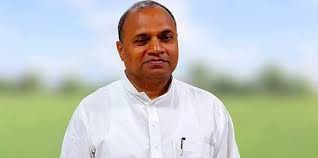
Ram Chandra Prasad Singh. Photo: Facebook.
In 2005, RCP went to Bihar on deputation and became principal secretary to Nitish when the latter became the chief minister. RCP had taken voluntary retirement in 2010 and became a JD(U) member of parliament in the Rajya Sabha. Nitish renewed RCP’s term to the Rajya Sabha in 2016. Before he became the JD(U)’s national president, RCP had been the party’s general secretary (organisation). Though he is known for his "knowledge" on politics, RCP has, by and large, operated as a "faceless" party worker.
Also read: The End of the Road for Nitish Kumar
Such a leader suits Nitish’s style of functioning, who does not like his party presidents to have minds of their own. In 2003, Nitish had even replaced the towering George Fernandes with Sharad Yadav when the former showed a "proclivity" to differ with Nitish.
Similarly, Nitish became JD(U) president replacing Sharad Yadav before severing ties with Mahagathbandhan and going back to the BJP in 2017. A low-profile operator, RCP is Nitish’s loyal protégée.
Possible consequences
While it is premature to predict the long-term consequences of the "sourness" in the JD(U)-BJP relationship, the fact, however, remains that it is now out in the open. Now, the BJP’s Nadda and Bhupendra Yadav will have to talk to Nitish via RCP, particularly on political and policy issues.
Tyagi, speaking on behalf of his party, said: "The JD(U) has resolved to contest the assembly elections in Bengal. The party’s national president has been authorised to find out whom the party should strike alliance with (sic)."
Now it seems, the JDU has opened itself to options beyond the NDA in states beyond Bihar.
Nalin Verma is a senior journalist and author of Gopalganj to Raisina - My Political Journey, an autobiography of Lalu Prasad Yadav. He has also authored The Greatest Folk Tales of Bihar.
This article went live on December twenty-eighth, two thousand twenty, at twenty-three minutes past seven in the evening.The Wire is now on WhatsApp. Follow our channel for sharp analysis and opinions on the latest developments.


