

Interview | Democracy Has Served India Well But Also Has Constraints: Chinese Scholar


Beijing: 2025 has been a critical year for India-China relations. It marked the 75th anniversary of bilateral diplomatic ties when a shifting global order is creating a host of uncertainties. This flux appears to be helping a thaw in bilateral ties, which had been in deep freeze since military clashes in the Galwan Valley. This is an extensive interview with one of China’s most prominent young scholars of Sino-Indian relations, Mao Keji. He recently returned to Beijing after a stint as a fellow at Harvard University, based in the South Asian Studies in China programme and hosted by the Harvard-Yenching Institute. This interview was conducted by Pallavi Aiyar a few months earlier, but is being presented now as it remains very topical.
What is the current situation regarding India studies in China? When I first lived in China between 2002-2009, there was very little emphasis within academic institutions and think tanks on the study of India – particularly as a strategic player. Is India studies a growing field in China?
The emphasis on Indian studies has indeed significantly increased. Currently, there are more researchers, a broader range of research topics and a higher quality of scholarship. Although many aspects still leave room for improvement, overall, Indian studies are flourishing. Several key factors provide context for this development.
First, China has been developing rapidly. I hold a theory that “small countries focus solely on major powers because their destinies are largely determined by those powers; major powers, on the other hand, pay attention to small countries because their interests span the globe.” For an extended period after initiating the Reform and Opening up, China prioritised meeting domestic development challenges and even deliberately portrayed itself as a smaller nation than it actually was, paying attention primarily to developed countries such as the United States, Europe and Japan rather than Asia, Africa or Latin America. The first decade of the 21st century exemplified this trend.
However, as China’s economy continued to expand, other regions have garnered greater attention. From China’s perspective, India – as a neighbour, major power and emerging economy – has naturally received increased scholarly attention, becoming one of the main beneficiaries of this policy shift. Many universities have established Hindi language programs and courses in the second decade of the 21st century and numerous think tanks have started focusing more seriously on India.
Second, India has also been rising. Although India had entered a high-growth trajectory after its 1991 reforms, its visibility in China remained limited for some time, rarely entering public attention. A significant turning point occurred around 2014-2015 during the “digital economy boom”, coinciding with the Belt and Road Initiative, though the two were driven by entirely different motivations.
At this point, many Chinese internet startups discovered India’s market potential with favorable Sino-Indian relations, flocking to invest and establish ventures. India swiftly became the preferred destination for outbound Chinese digital entrepreneurs, with many investors genuinely seeing India as “the next China”. This brought unprecedented attention to India within China’s business circles.
Notably, this wave of entrepreneurship significantly impacted other sectors, providing ample employment opportunities for students of South Asian languages and generating new India-related business for think tanks and consulting firms. Unfortunately, the Modi government’s 2020 crackdown on Chinese apps abruptly ended what had been the most dynamic area of Sino-Indian interaction.
Third, the increasingly complex and intensive Sino-Indian interactions. Objectively, frictions and conflicts between China and India sometimes stimulate deeper scholarly engagement with India in China. Border confrontations in 2017 and 2020 notably elevated demand for India-related analysis among media outlets, think tanks and government institutions. This demand substantially caused a major growth of Indian studies in China, drawing in talents previously uninvolved in such research.
During this period, Indian studies notably prioritised strategic [affairs] with macro perspectives, often focusing on grand issues such as the Indo-Pacific strategy and Quad framework, thus emphasising external relations over research into India’s domestic affairs.
What is the main lens through which India is studied in China?
This is a critical question deserving detailed exploration. Presently, those engaged in India studies in China generally fall into three distinct categories, each connected yet clearly differentiated in their research focus, methodologies and organisational setups.
First, there is the group specialising in Indian language and cultural studies. This group represents China’s oldest and most established tradition in India-related scholarship, dating back to distinguished scholars such as Ji Xianlin (季羡林).
Today, researchers in this group mainly delve into Indian languages, culture, history, philosophy, mythology and religion, building upon the foundation of classical Oriental studies. Their importance lies in their continuous scholarly tradition dating back even before the founding of modern China, training generations of scholars who contribute significantly to policy-making, media, diplomacy and international relations.
Second, there is the policy-oriented research group focused on India. This group also boasts a long history, with roots tracing back to renowned scholar and social activist Chen Hansheng (陈翰笙), who systematically surveyed India economy, society and international relations as early as the 1930s and 1940s. Today, this group’s research spans fields such as foreign policies, economics and domestic politics.

China’s centrally planned economy allowed it to heavily invest in infrastructure. Photo: Pixabay.
However, given the interdisciplinary nature and heterogeneity of the involved institutions, along with much research remaining confidential, this area historically lacked clear scholarly continuity. Following China’s economic reforms, segments concerning Indian economics and domestic politics gradually downplayed their focus on India, while international relations scholars better maintained their Indian focus.
Consequently, in the first decade of the 21st century, major Chinese institutions studied India predominantly through an international relations lens, often overlooking analyses of India’s domestic politics and economics. Although this situation has recently begun improving, significant room for advancement remains.
Lastly, there is a grassroot, independently driven group engaged in India studies. Fundamentally, anyone proficient in English can embark on India-related research and India’s rapid development has greatly increased the demand for such insights. Coupled with structural imbalances within formal academic India studies – marked by low entry barriers, high demand and limited supply – this environment has attracted numerous amateur enthusiasts.
Although these individuals operate outside formal academic circles, widespread internet and social media usage has enabled some of these independent researchers to produce insightful work, particularly on topics like military affairs, geostrategy, tourism and history, effectively addressing gaps left by mainstream scholarship.
However, this surge of interest in India has also attracted extreme nationalists, chauvinists and conspiracy theorists, who exploit stereotypes and misinformation to gain attention through social media platforms. This phenomenon is not exclusive to China; similar extremist narratives frequently arise in India and Western countries regarding China.
What one single change in policy on the Indian government’s side do you think can make a significant difference to Sino-Indian bilateral relations? And the same question for the Chinese government.
This is indeed a particularly insightful question. I find it extremely meaningful, prompting many profound reflections.
From the Indian government’s perspective, one significant policy shift that the Modi administration could pursue is easing visa restrictions for Chinese citizens traveling to India. According to recently published data, as of March 17, 2025, the Chinese embassy in India had already issued 50,000 visas to Indian citizens this year.
I do not know how many visas India has issued to Chinese citizens this year, but the number is undoubtedly far fewer. Many friends around me have been eager to travel to India for study, tourism, conferences or business, yet most haven’t been able to secure an Indian visa since 2020, leading to disruptions in their work and personal lives.
Moreover, I genuinely believe that India’s visa regime towards China significantly undermines its own interests. Not only has it deprived India of otherwise easily obtainable service trade income from sectors like tourism, but more critically, it prevents India – currently in a crucial phase of industrialisation – from capitalising on opportunities for attracting investment and technology transfer, thereby incurring substantial opportunity costs.
Recently, Prime Minister Modi has made positive statements about Sino-Indian relations, injecting fresh hope into bilateral ties. Thus, swiftly relaxing visa restrictions for Chinese citizens would not only benefit both nations with greater benefits going to India, but also warm up the bilateral relationship.
From China’s perspective, initiating the negotiation of a bilateral free-trade agreement (FTA) with India would significantly enhance economic relations between the two. Many might find this proposal unrealistic, given that India didn’t join even the multilateral Regional Comprehensive Economic Partnership (RCEP), let alone a bilateral FTA vis-à-vis China. These concerns are understandable. However, examining recent shifts in the trade relations between the two reveals fundamental changes.
Previously, India’s imports from China consisted primarily of finished manufacturing products [meant] for its domestic market, so India would use high tariffs to protect domestic industries. Recently, however, India has increasingly imported components, parts and intermediate goods from China rather than final products. Simultaneously, India’s exports to Western markets have shifted to finished goods. Consequently, many products India imports from China are now processed and re-exported to overseas markets.
Also read: India’s Economy 16.5 Years Behind China’s: Bernstein Research Report
Under these circumstances, reducing tariffs on Chinese goods would likely increase India’s overall imports of intermediate products with better prices. This would minimally impact India’s domestic companies, while enhancing the global competitiveness of “Made in India” products, even enabling its competitive products to re-enter the Chinese market.
You have said, “If there is any single event in the future that could [fundamentally] alter this [global] order, I believe it would be the rise of India.” Can you explain this further? Why is India’s economic development a geopolitical issue that can recast the international order?
My point here is exactly what it appears to be. Apart from catastrophic events like nuclear war, if there is any single predictable event in the future capable of fundamentally altering the global order, I believe it would be the rise of India. My reasoning is straightforward: India’s sheer size. India is the only country apart from China with a population exceeding one billion and currently, it has surpassed China as the most populous country, a position it will likely maintain for the foreseeable future.
Therefore, as long as India sustains a reasonable rate of economic growth, it’s destined to become one of the top three economies globally. Considering nations like Japan and Germany have populations just a fraction of India’s, India doesn’t require particularly high per capita GDP levels to economically surpass these countries.
However, when discussing the global impact of India’s rise, the crucial issue isn’t whether India’s ascent will influence the global order – because it almost certainly will – but whether India can truly rise, when it will rise and in what manner. We must clearly distinguish between potential and actual power, as potential alone, if not realised, has no practical significance.
India’s rise is a work in progress rather than an accomplished fact. It is not an event with guaranteed certainty. This is precisely why I consistently emphasise industrialisation and modernisation as the fundamentals, since I firmly believe this is only way out for super-large economies like China and India.
I have indeed remarked that while India’s industrialisation and modernisation appear to be mostly economic issues, they are fundamentally geopolitical matters. However, I suggest Indian friends to interpret this statement in the reversed order. For India to realise its geopolitical ambitions, it should, paradoxically, not excessively emphasise geopolitical ambition in the short term but concentrate solely on addressing domestic economic challenges, especially these related to industrialisation and modernisation.
China’s current global status resulted not from the Chinese leadership’s grand design of geopolitics, but from the natural consequence of China significantly enhancing its comprehensive national strength through the great odyssey of industrialisation.
In other words, while pursuing development, China focused predominantly on resolving domestic economic, social and political challenges, while adopting a low profile internationally. This is because, during critical stages of economic take-off, one’s primary diplomacy goal should be to secure an external environment conducive to economic growth, particularly avoiding unnecessary geopolitical disputes.
Having closely followed Indian affairs for last 15 years, my strongest impression is that India excessively prioritises short-term geopolitical gains and losses, lacking sufficient strategic focus and modesty necessary for creating favorable external conditions for economic growth. Ultimately, for super-large economies like India and China, ensuring domestic economic growth, political stability and social harmony inherently secure them a significant place on the global stage – no need to obsessively chase external recognition or titular status.
Do you believe that democracy has served India well or that democracy has held India back?
This is a question I’ve pondered extensively. First, I believe that competitive, multiparty electoral democracy has undoubtedly made immense contributions to India’s nation-building, governmental stability and political development. Compared to many other developing countries, India’s political system has performed remarkably well in terms of continuity, robustness and independence.
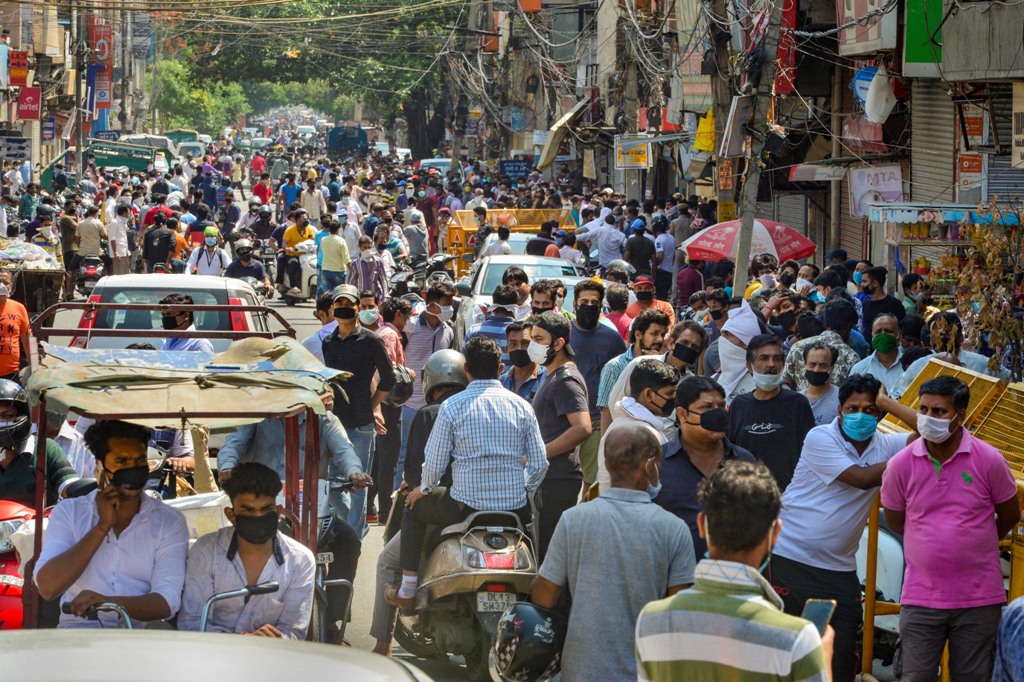
India's population overtook China's in 2023. Photo: PTI.
Furthermore, considering India’s significant wealth disparities, ethnic diversity, caste divisions and religious differences, the system of one-person-one-vote competitive elections has served as a safety valve and a buffer, effectively empowering diverse social groups through voting rights to achieve a widely acceptable consensus. It’s challenging to imagine how intense internal tensions would be if such a system didn’t exist – would India have experienced government collapse or disintegration, or military intervention in politics? From this perspective, if democracy helps India avoid the worst-case scenarios, it has fulfilled its essential function.
However, although democracy can be viewed as India’s foundational pillar, significantly preventing worse outcomes, it has also created substantial constraints. The fundamental reason is straightforward: India adopted universal suffrage democracy while still being economically and socially underdeveloped, thereby legitimising many deeply entrenched pre-modern social structures, which became institutionalised and integrated into India’s governance today.
Idealists like [the first prime minister of India, Jawaharlal] Nehru and the early Congress party envisioned oppressed social groups utilising their numerical advantage through democratic elections to create pressure groups, driving gradual social reform and overcoming entrenched societal issues, thus paving the way for economic prosperity.
Unfortunately, this ideal scenario didn’t materialise. Instead, groups formed around identities such as religion, caste, sub-caste and ethnic affiliations have engaged in “vertical mobilisation” through electoral mechanisms, reinforcing traditional social structures and preserving vested economic interests. This has resulted in an institutionalised system, further hindering social dynamism and reinforcing social rigidity.
Consequently, vested interest groups representing antiquated social structures legitimately hijack democratic processes, obstructing reforms beneficial to the entire society, thus significantly hampering social progress and economic development over the long term. Nevertheless, most people have no better alternative than to tolerate this situation. What type of mistakes are the most challenging to correct? Those that everyone perceives as “correct”. This encapsulates the most profound constraint that democracy imposes on India.
Also read: How Do Entrenched Perceptions, Media, Think Tanks Affect India-China Relations?
What do you believe is India’s greatest weakness? And what is its strength?
In my view – to adopt terms from historical materialism – India’s greatest weakness lies in having an overly advanced superstructure that is mismatched with its backward economic base and social realities. Put in simpler terms, India possesses first world aspirations, values and institutions, but operates with third world economic resources, social conditions and governance capabilities.
This stark contrast between appearances and reality creates a severe disconnect, which I believe underlies most of India’s challenges.
Take India’s employment system as an example. India’s labour laws provide exceptionally comprehensive and progressive protections and benefits for factory workers. However, these seemingly advanced regulations effectively protect only a minority. India’s industrial landscape comprises two distinct segments: a small, modern, formal sector and a much larger informal sector dominated by family-run workshops and individual proprietors, heavily influenced by pre-modern social ties such as caste, sub-caste, religion and regional royalty.
Evidently, India’s sophisticated labour laws apply primarily to the formal sector and rarely affect informal small businesses, as the government lacks the capability, resources and willingness to intervene comprehensively in India’s extremely complex and challenging pre-modern social structures.
Such a system creates significant issues from both the workers’ and employers’ perspectives. Workers in the informal sector, often the most vulnerable and exploited, lack state protection, while employees in the formal sector, enjoying welfare benefits beyond the actual productivity levels, lose competitiveness. For employers, stringent labour regulations discourage expansion and scaling up because businesses prefer remaining small and informal to evade regulatory oversight, maintaining traditional exploitative labour practices. This phenomenon is widespread across Indian society, prompting my observation: 'Pre-modern feudal vested interests, disguised under advanced socialist rhetoric, obstruct pragmatic capitalist growth.'
Relatedly, I see India’s greatest strength as in its social stability, precisely because it can absorb and mitigate various shocks and conflicts. India’s society is sharply divided into modern and pre-modern segments, creating a severe disconnect. Ironically, the pre-modern segment’s persistence of traditional social structures and economic practices helps absorb external shocks and internal contradictions that the modern segment struggles to handle, such as unemployment, inflation and social conflict.
India’s pre-modern segments – dominated by caste, religion and familial structures – are so impoverished, backward and resigned to their circumstances that they readily endure and absorb the spillover hardships generated by the modern sector.
The most striking example was during Modi’s national lockdown amid the 2020 pandemic, which prompted tens of millions of migrant workers to return home overnight. Remarkably, this massive population relocation did not trigger severe consequences. Paired with India’s democratic system, the pre-modern aspects of Indian society form a structure capable of absorbing substantial shocks and contradictions, ensuring stability even under considerable pressures. Given rising global uncertainties and instabilities, India’s pre-modern societal structures unexpectedly provide a protective advantage – an often-overlooked strength.
What role could China play in India’s industrialisation that is not possible at present because of political problems?
Frankly speaking, no country in the world could potentially contribute more significantly to India’s industrialisation than China. This statement is made to reflect reality given the scale, developmental stage gap and industrial-economic structures of both countries. This reality is clearly visible through the bilateral trade between China and India.
Ideally, China should be India’s closest industrialisation partner, supplying India with capital, talent, intermediate products, management know-how and essential components for industrial growth. This scenario is similar to how developed economies supported China’s industrialisation in earlier decades.
As late as October 2019, the joint communiqué released following the second informal summit between the Chinese and Indian leaders in Chennai explicitly mentioned exploring a “manufacturing partnership”(制造业伙伴关系). This now seemingly surprising initiative was personally proposed during the meeting between China’s highest leader and Prime Minister Modi, reflecting significant political determination and policy commitment.
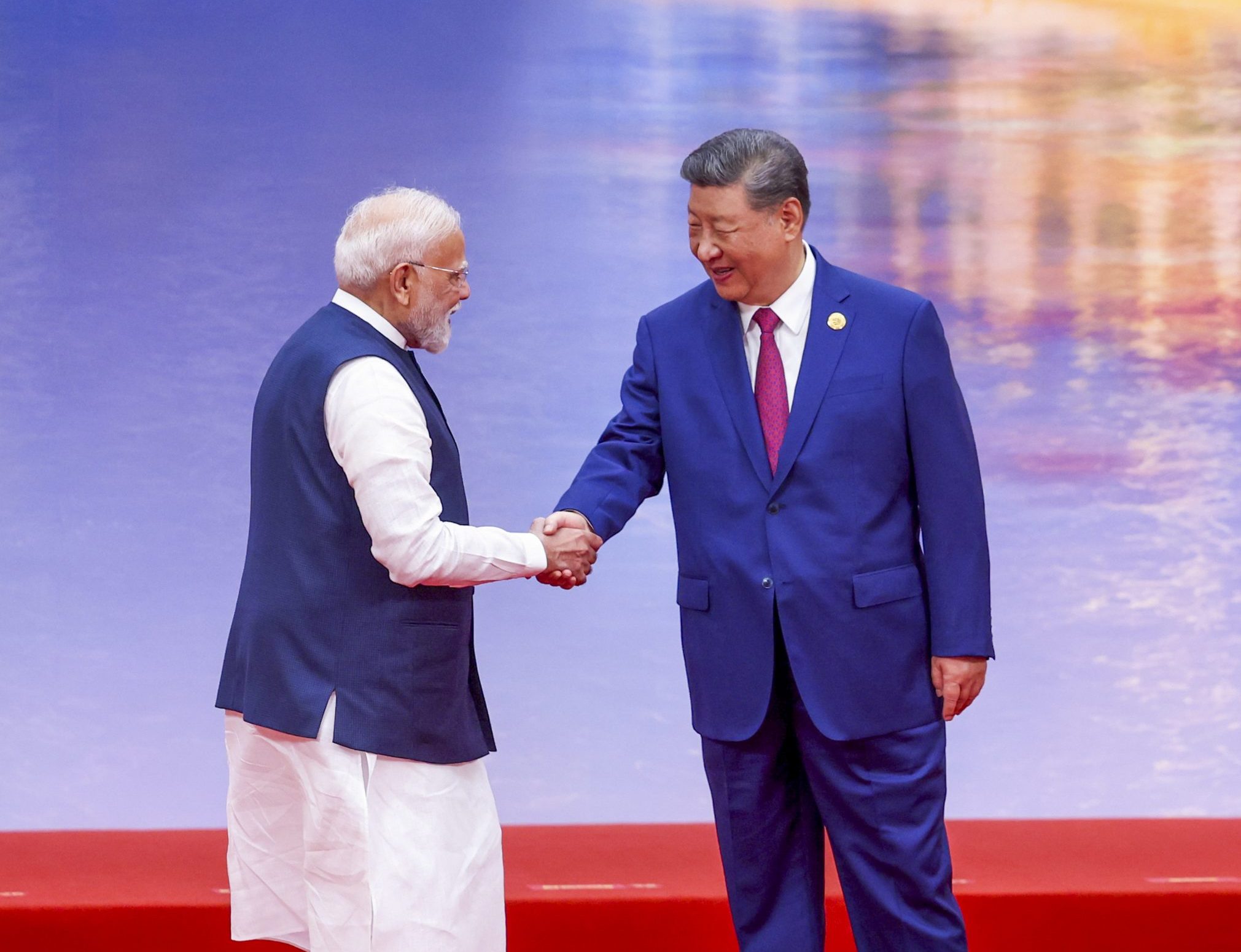
Prime Minister Narendra Modi with Chinese President Xi Jinping at SCO summit, China. Photo: PMO via PTI.
In September 2019, I personally coordinated the Sixth Sino-Indian Strategic Economic Dialogue held in New Delhi, led by He Lifeng, then director of China’s National Development and Reform Commission, accompanied by nearly ten senior departmental officials from the such as high-tech, industry, infrastructure, environmental protection, agriculture, energy, social affairs and policy research. Such high-level and implementation-oriented involvement clearly indicates genuine intent for practical cooperation rather than mere high-sounding rhetoric.
So, why did manufacturing cooperation ultimately fail to progress? The reason is straightforward: India adopted restrictive policy regime against China. Many observers tend to attribute obstacles in Sino-Indian economic cooperation to the broader political climate, like the border disputes, but this is inaccurate. The real issue lies in specific policy choices – India’s decision to link economic matters directly with border issues.
Consequently, since early 2020, India has actively restricted Chinese investments, refused visas to Chinese nationals, banned Chinese apps, seized Chinese companies’ assets and detained Chinese employees, effectively blocking nearly every channel through which China could assist India’s industrialisation. These incidents are well-documented.
At the height of the pandemic, Indian diplomats abroad even publicly encouraged multinational companies to “abandon China and move to India”, openly aligning with American efforts aimed at decoupling from China. Under such circumstances, even if China intended to advance industrial cooperation with India, there were no feasible avenues because all restrictions were imposed unilaterally by India, leaving Chinese businesses powerless.
In my opinion, returning to the business situation of 2019 is now entirely impossible. This impossibility stems both from shifting global geopolitical dynamics and, more significantly, from the Modi government’s linkage policy [mentioned a few paragraphs earlier]. Frankly, the future of industrial cooperation between China and India is no longer something Chinese authorities can actively manage.
A common sentiment among Chinese companies today captures this vividly: “Money made in India stays in India; good luck trying to bring it home.” Such skepticism within Chinese business community has nothing to do directly with border disputes or diplomatic relations; rather, it is purely a result of India’s policies.
Despite a continuing boom in Chinese overseas investment, most businesses deliberately avoid India due to difficulties in establishing ventures, securing visas and ensuring operational compliance, combined with risks in repatriating profits. Businesses naturally prioritise asset and operational safety over geopolitical strategy.
What is the general perception of India amongst average Chinese people today?
Chinese scholars and ordinary citizens typically hold significantly different perceptions of India. The reason for this discrepancy is that scholars base their views on long-term observation and systematic research, resulting in relatively comprehensive and balanced perspectives.
In contrast, ordinary citizens tend to be heavily influenced by online and social media content, which may well foster extreme emotions and one-sided views. As I’ve mentioned previously, this phenomenon is not unique to China – it occurs universally and requires collaborative efforts to mitigate its negative impact.
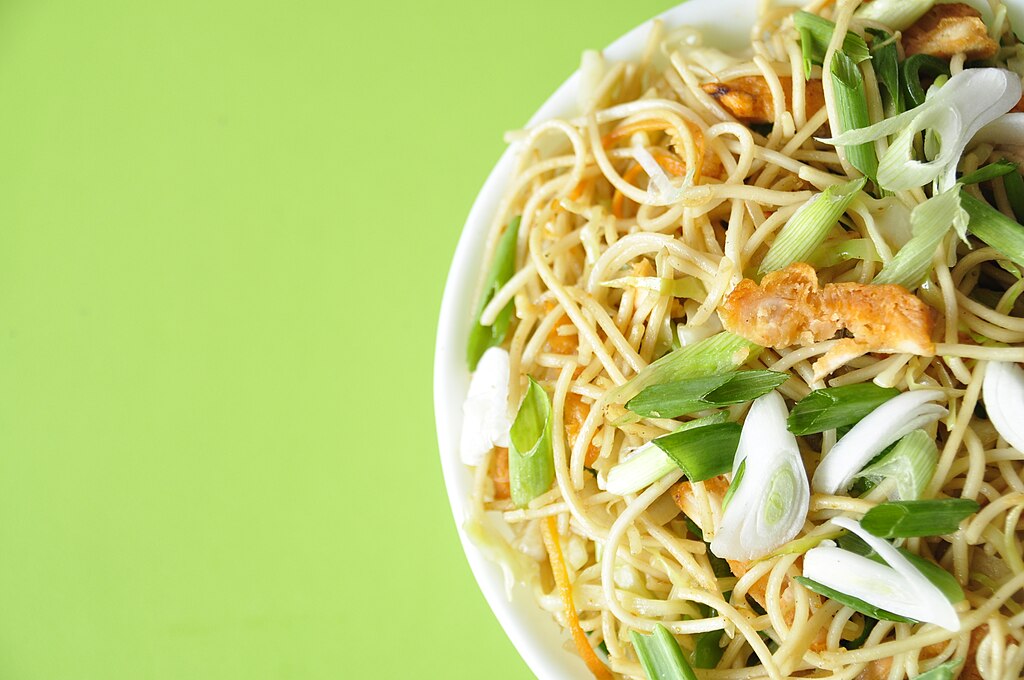
A rich tradition of Chinjabi (Chinese-Punjabi) cuisine exists in North India, comprising dishes invented in India and given a 'Chinese' twist. Photo: Missmansipants, CC BY-SA 4.0, via Wikimedia Commons.
I established and operate the South Asia Research Brief, which boasts approximately one million subscribers and has become one of China’s most influential online platforms for South Asian, especially Indian, affairs. Our primary mission is presenting Chinese internet users with a more comprehensive and authentic understanding of India, rather than perpetuating sensationalist stories or biases.
What is the most prevalent impression of India among Chinese citizens today? I have observed that many Chinese internet users perceive Indians as prone to exaggeration and lacking sincerity. For instance, when our platform recently brought up an article about India’s Vision 2047, most comments for it expressed deep-seated skepticism, accusing the Modi government of boasting and setting unattainable goals. One particularly memorable comment cited Modi’s ambitious 2019 pledge to build a $5 trillion economy within five years, noting, “It’s already 2025 and India’s GDP stands at only $3.8 trillion. If this earlier goal wasn’t met, how can we trust India’s aspirations for 2047?”
In fact, this perception is extremely common among the Chinese public, mainly because Chinese culture places high importance on fulfilling promises. As a result, Chinese people typically understate their objectives at the outset to manage expectations effectively. Conversely, in Indian culture – whether in politics, diplomacy or daily life – people often express aspirations beyond their capabilities to capture attention and emphasise significance, but frequently struggle to deliver. Thus, for the same issue, Chinese individuals instinctively lower expectations, while Indians tend to elevate them, creating substantial perceptual gaps.
Consequently, Chinese individuals often view Indians as overly boastful and failing to live up to their claims, discounting Indian promises accordingly. Conversely, Indians might perceive Chinese individuals as deliberately understated or deceptive, suspecting ulterior motives behind seemingly modest proposals. However, the reality is often simpler than either side imagines.
This example illustrates just one aspect of mutual perceptions between China and India. I firmly believe that Chinese public opinion about India isn’t static, rather, it is continually shaped by a multitude of intersecting factors. Thus, as China and India broaden exchanges, particularly strengthening people-to-people interactions, even if significant differences remain, both peoples will better understand the broader context shaping these differences, ultimately fostering more comfortable and constructive coexistence.
[A note from the interviewer: In conducting and presenting this interview, my intention is not to agree with everything that Mao Keji says. Instead, it is to introduce the reader to current Chinese thinking on the India-China relationship. In India, there is a tendency to dismiss all Chinese utterances as propaganda. But I believe we would do well to cultivate some cognitive empathy and attempt to understand where some of this thinking is coming from, instead of automatically ascribing it to mendacity.]
Journalist and writer Pallavi Aiyar brings the Indian perspective to understanding China. With 'Writing on the Great Wall', she places her eye on China's economy, its culture, government and people. Aiyar has spent more than two decades studying China, having lived there from 2002 to 2009, and again from August 2025.
This article went live on November twenty-seventh, two thousand twenty five, at thirty-seven minutes past five in the evening.The Wire is now on WhatsApp. Follow our channel for sharp analysis and opinions on the latest developments.


