

The Persisting Mystery of Student Leader Lafikul Islam Ahmed's Murder


Kokrajhar/New Delhi: Around noon on August 1, despite the scorching heat and oppressive humidity, nearly 3,000 people gathered on the grounds of Bhotgaon High School. In attendance were mostly young people who had come from different parts of the violence prone Bodoland Territorial Area Districts (BTAD) of Assam.
The occasion was a solidarity meet organised by the All Bodoland Minority Students’ Union (ABMSU) on the first anniversary of the murder of its leader, Lafikul Islam Ahmed.
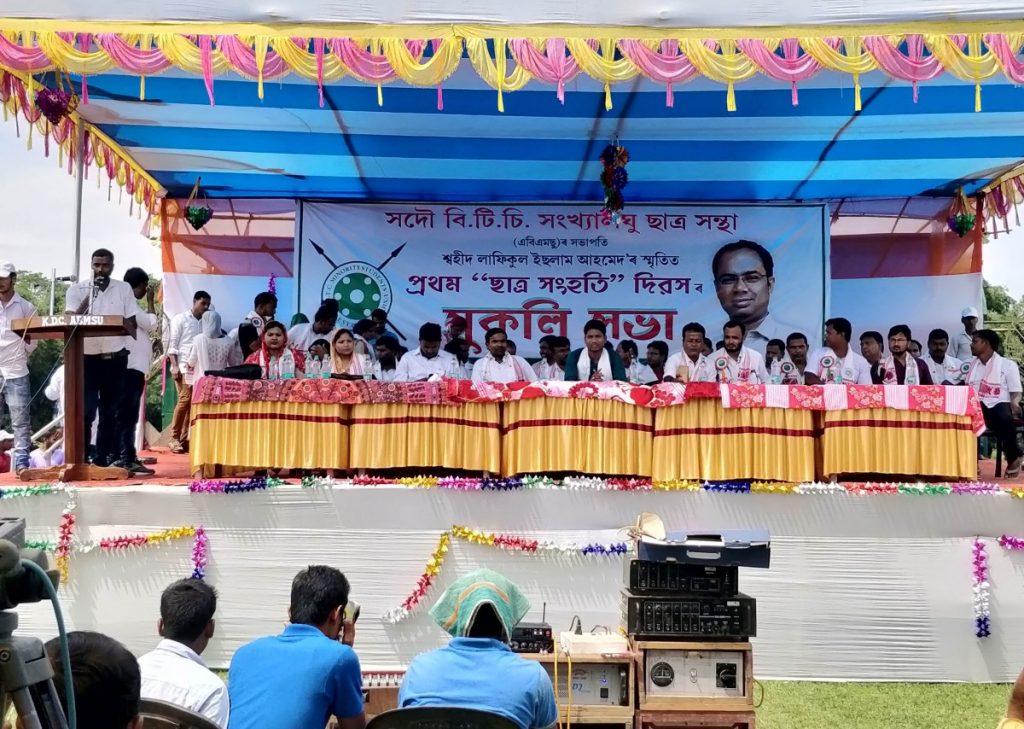
The solidarity meet organised by ABMSU. Credit: Mahtab Alam/The Wire
Ahmed, a popular minority students’ leader and fierce critic of the current BJP led government and Hindutva forces, was killed in broad daylight by an unidentified person on August 1 last year. Initially, the case was being handled by the state police and a special investigation team (SIT) was formed to investigate the matter. But after protests by the ABMSU, the matter was handed over to the Central Bureau of Investigation (CBI).
However, one year after the killing, the case seems to have barely progressed.
“No one knows about the progress in the case,” Shah Kamal, the present president of the ABMSU told The Wire. "Recently, when we met with Assam police officials, we were told that the matter was beyond their purview. So they couldn’t tell us anything.”
Mohidul Islam, the slain leader's younger brother, had a similar grievance. “No one knows what is happening with the case,” said Mohidul, who is the educational secretary of the organisation. “We don’t even know if anything is happening at all.”
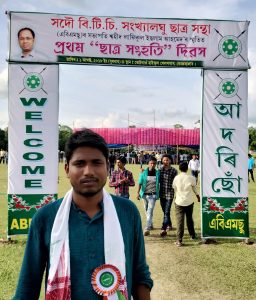
Shah Kamal, president, ABMSU. Credit: Mahtab Alam/The Wire
Many at the meet feared that the case, which they call a political conspiracy, will never be solved as it involves powerful people. “It was a political murder,” said Durga Hasda, an adivasi leader and chairman of the Birsa Commander Force (Cease Fire Group), while talking to The Wire on the side-lines of the meet.
However, Hasda did not name names as to who he thought could be behind Ahmed’s murder not did his elaborate on why it is a political murder him. Notably, in the wake of the murder, popular farmer leader and president of the Krishak Mukti Sangram Samiti, Akhil Gogoi, had also termed it a political killing and said that there were “deep conspiracies behind this to destabilise the region and incite communal clash”.
According to Hasda, Ahmed’s murder was part of continued attacks on minorities, adivasis and other marginalised groups in the state. Ahmed, he said, was as a good friend and bold leader who was not just popular amongst the Muslim minority, but all oppressed groups. “He used to protest for everyone,” recalled Hasda. "With his demise, we have lost a fearless leader and skilled organiser.”
Ahmed’s popularity across socio-political groups was also evident from the fact that the meeting was attended by representatives of different organisations active in the region. It was attended by the leaders of the All Assam Students Union (AASU), All Bodo Students' Union (ABSU), All Adivasi Students' Association of Assam and the All Koch Rajbongshi Students' Union (AKRSU).
Speaking to The Wire, Promod Boro, president of ABSU, said, “Lafikul was a first of his kind dynamic leader who was able to think beyond his community and work for peace and co-existence in the region.” Like Hasda, Boro also felt Ahmed’s was a political murder much like the late 1980s and 1990s when "secret killings were carried out".
According to Boro, Lafikul’s murder was a big jolt for socio-political organisations in BTAD because he used to play a very active role in dismantling the mis-understandings prevalent about each other in the region. “Given the conflict situation that we are living in today, a positive thinker like him is much needed. He was an asset for all of us,” said Boro.
Delhi based researcher and activist, Rafiul Alom Rahman, who came in contact with Lafikul in 2012, following the Assam violence that broke out between Bodos and Muslims in BTAD region, said, “Over the years, I saw him transform from a regular student leader to someone who really had a vision for the Muslim community. He was sharp and articulate. He believed in communal harmony and worked towards bridging the divide between communities.”
Many people, whom The Wire spoke to agreed that one of the biggest contributions of Ahmed was his sustained campaign against child marriage and child labour prevalent amongst the Muslims community in the region. It is believed that in a span of two years, he was able to stop nearly 500 child marriages. He also worked hard to promote education for girls and women’s empowerment. Notably, it was due to his initiative that a women’s wing was started in ABMSU in December 2016.
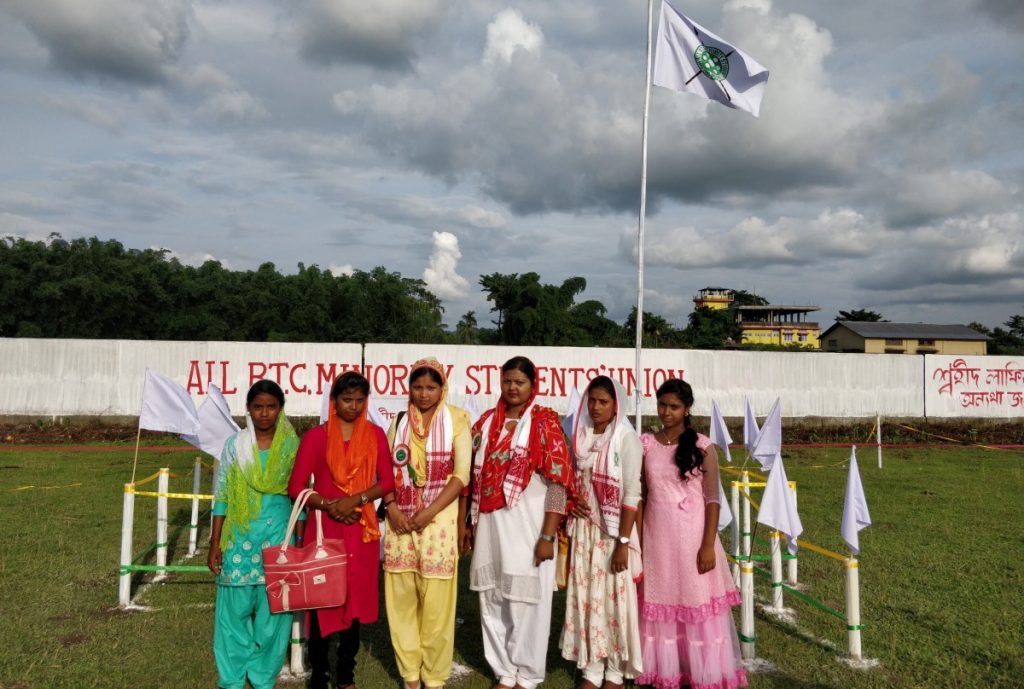
Members of ABMSU. Credit: Mahtab Alam/The Wire
Shainur Begum, the president of the women's wing, said, “He was also always concerned about women's empowerment and it was on his initiative we joined the organisation.” According to Khalida Begum, the secretary of the women’s wing, more than 200 girls and young women are currently working with the organisation. “Initially, we faced resistance from the conservative sections of our community, but we did not stop working,” Shainur, who has completed her graduation from a local college and plans to enrol in a law course in Guwahati, said.
Meanwhile, with no apparent progress in the investigation, ABMSU workers staged a road block in Baksa district of BTAD on August 6. “We protested because one year has passed since Lafikul was killed and there is still no news about who killed him and why,” Shah Kamal told The Wire, speaking over the phone from Kokrajhar.
“Our demand is to let us know what is happening with the case and punish the culprits as soon as possible,” he added. The Wire tried contacting the Chief Information Officer of CBI but he could not be reached.
This article went live on August eleventh, two thousand eighteen, at zero minutes past seven in the morning.The Wire is now on WhatsApp. Follow our channel for sharp analysis and opinions on the latest developments.


