

In Purulia, Kurmis Are Made to Pay for a Nationwide Protest Many Did Not Even Participate in


Jiudaru village (Purulia, Bengal): “Kaku (uncle), you should leave from here now. Otherwise, the police may take you away too. It will be evening soon, and the police will enter the village. All the men in our village leave their houses and take shelter elsewhere after 6 pm. My father has been arrested by the police. We are living in great fear,” said Sulekha, a class seven student, with a terrified face, in Jiudaru village in West Bengal’s Junglemahal in Purulia district.
Standing next to her, Sulekha’s mother Panchami Mahato looks equally worried as questions cloud her thoughts – when will her husband, Buta Mahato, be released from jail? When will they be able to cook at home twice a day? When will they eat in peace?
Buta Mahato had returned from a day of masonry when the police dragged him away in that state, Panchami mentioned.
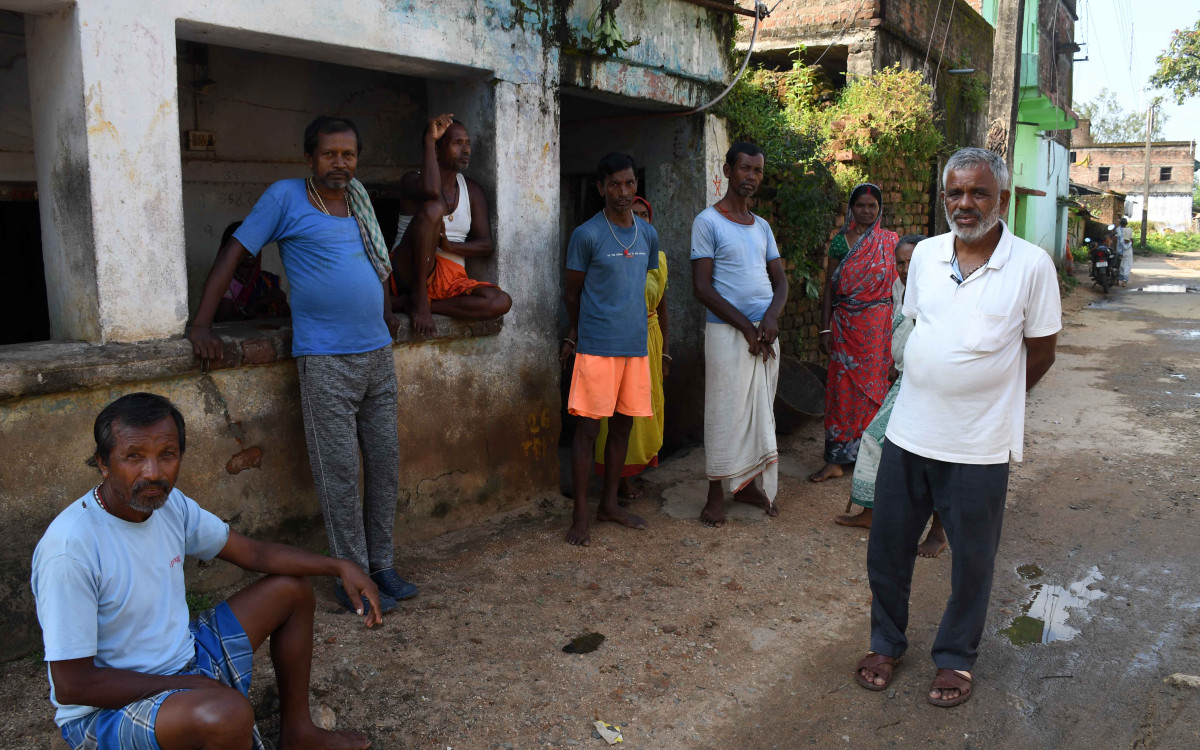
More than 200 families of Jiudaru village and its adjacent Choyadihi village have spent their days in panic during the Durga Puja festival after alleged police action. Photo: Madhu Sudan Chatterjee
This is not only the story of Panchami's family. More than 200 families of Jiudaru village and its adjacent Choyadihi village have spent their days in panic during the Durga Puja festival after alleged police action.
Purulia superintendent of police, Abhijit Banerjee, however, refuted these allegations.
“There is no panic anywhere. Some miscreants are spreading this rumour. On September 20, during the rail blockade movement called by an organisation of the Kurmi community, the people engaged in the blockade attacked the police at Kotshila station and injured five police personnel. The police have arrested those involved in the incident. Now the police are patrolling the villages to maintain law and order. No one has been arrested after September 20,” Banerjee, told The Wire.
But the vast areas under Kotshila Police Station, where the Kurmi community is dominant, do not believe the Purulia SP. They claim that the leaders who had called for the movement have been disappeared.
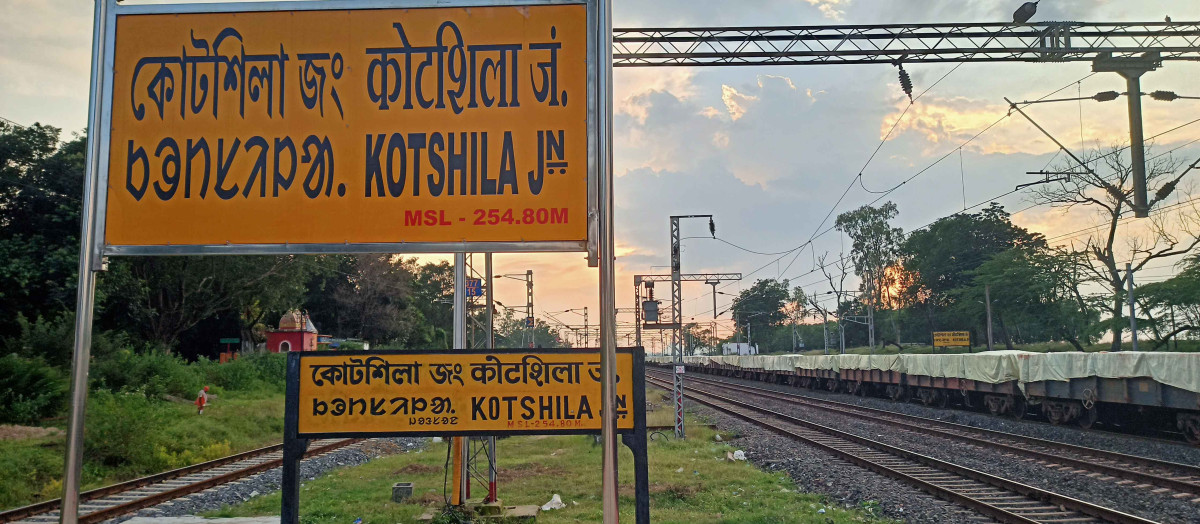
Kotshila rail station. Photo: Madhu Sudan Chatterjee
“Not only that, the local MLA ofx Joypur constituency, Narohari Mahato, and the Purulia MP, Jyotirmoy Singh Mahato, did not come to stand by the victims after the police atrocities. Both of them belong to the BJP,” said Deben Mahato of Jiudaru village.
Locals claim that people belonging to the poor and marginalised Kurmi community, many of whom did not even participate in the rail blockade movement, have been harassed by the police to such an extent that an atmosphere of fear pervades.
In India, the Kurmi community lives in the states of Jharkhand, West Bengal, Bihar, Odisha, Assam, Madhya Pradesh, and Chhattisgarh. Out of these, the largest number of Kurmi people live in Jharkhand, followed by West Bengal. In Bengal, their population is highest in Junglemahal – Purulia, Bankura, Jhargram, and Paschim Medinipur. More than 30% of the total population in Purulia district is Kurmi.
“This ancient Kurmi community was recognised as a Scheduled Tribe up to 1931. Later, in 1950, their ST status was withdrawn, and we were treated as the general category. Further, in 1991, the Central government included us under Other Backward Classes (OBC). Still, we are identified only as OBC,” said Atul Chandra Mahato, a senior lawyer of the Purulia District Court. Atul Chandra added that since the withdrawal of Scheduled Tribe status, the Kurmi community has been protesting in various ways against the Union government’s decision and demanding that Kurmis be included in the ST category. “In reality, Kurmis are a 65,000-year-old primitive tribal people of our country. Why should they be deprived of ST status?” he asked.
Bhorot Mahato, a prominent researcher of the Kurmi language and a resident of Bankura, told The Wire: “Despite the fact that the Kurmi language has been taught at Ranchi University since 1971 and most Kurmi people speak their mother tongue, Kurmali, this language has not been included in the Eighth Schedule of the constitution."
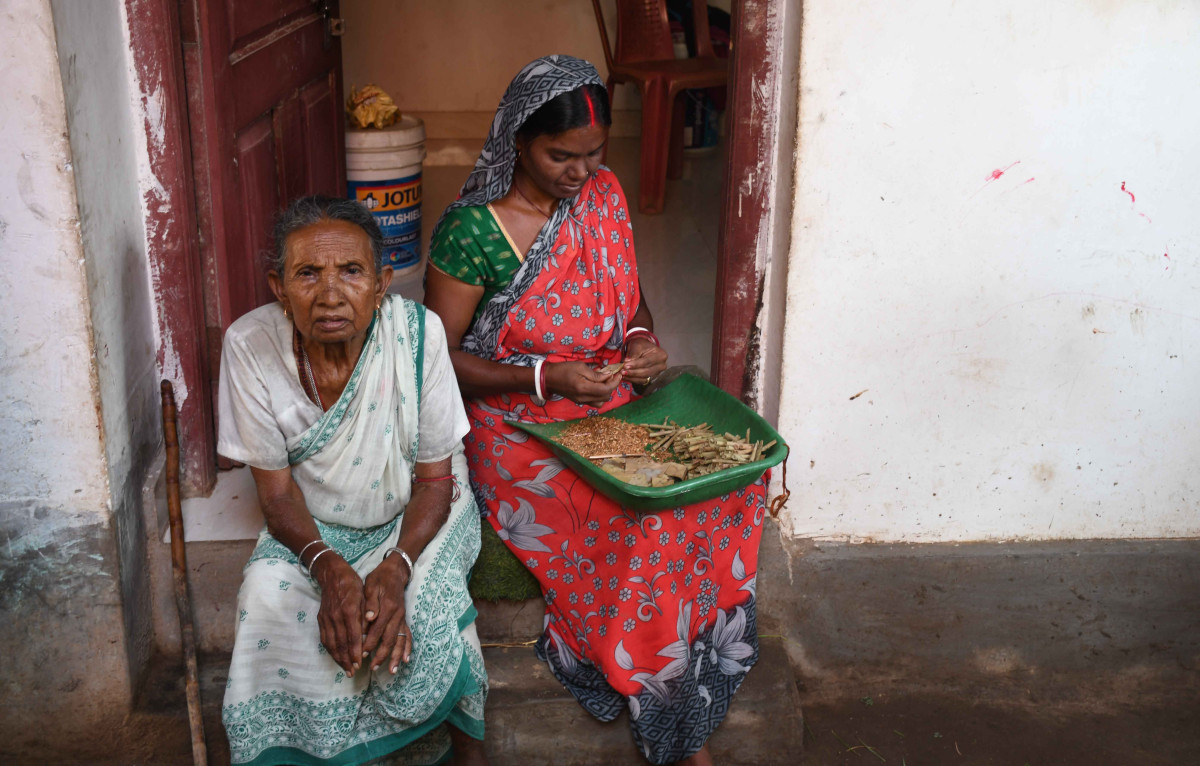
A large section of the Kurmi community feels that certain leaders exploit the movement for their own benefits in the name of the community. Photo: Madhu Sudan Chatterjee
Tapan Mahato, a resident of Lodhasuli in Jhargram, recalled that in 1989, former CPI(M) MP from Bankura, late Basudeb Acharia, raised a demand in the Union government and in the Lok Sabha to grant tribal status to the Kurmis. But the government never implemented it. The Kurmi community has continued to protest at different times, demanding tribal status, and recognition of their language and culture.
Several Kurmi leaders allege that the BJP is not willing to accept their demand. “The present Union government does not want to listen to us at all,” said Rabindranath Mahato, a resident of Barabazar, Purulia, and a leader of the Kudmi Sena organisation of West Bengal.
He further alleged that the present Trinamool Congress-led Bengal government is also silent with respect to the demands of the Kurmis. Several leaders of the ongoing Kurmi movement pointed out that despite discussions held three years ago, the Bengal government has not made any recommendations to the Union government regarding their demands.
“Currently, in our country, Aadibasi Kurmi Samaj, Negachari Kurmi Samaj, Paschimanchal Aadibasi Kurmi Samaj, Aagdoholi, Kudmi Sena, and Kurmi Samaj – these six organisations are separately agitating for the demands of the Kurmis,” said Sajal Mahato, a leader of Kudmi Sena.
The Aadibasi Kurmi Samaj organisation had called for a nationwide rail blockade on September 20 to press for their demands. But on September 18, the Calcutta high court ordered that the verdict given by the court on September 19, 2023, would remain the same.
Two years ago, the high court had ruled that rail and road blockades were illegal. At the same time, the court supported the Kurmis’ demands and directed that Nabanna (the state administrative headquarters) should hold discussions with the Kurmi community in this regard. But the Bengal government did not hold any discussions with the Kurmis during these two years.
“But the fact is that before the rail blockade programme on [September] 20, from the morning of [September] 19, the police went to several villages in the Kotshila Police Station area of Purulia district, campaigned against the rail blockade, and harassed people in various ways,” said Thakurdas Mahato, a resident of Bagudi village. His son, Bhudeb Mahato (25), and nephew Dharmendra Mahato (33) were arrested on the morning of September 20. Both had never participated in the movement.
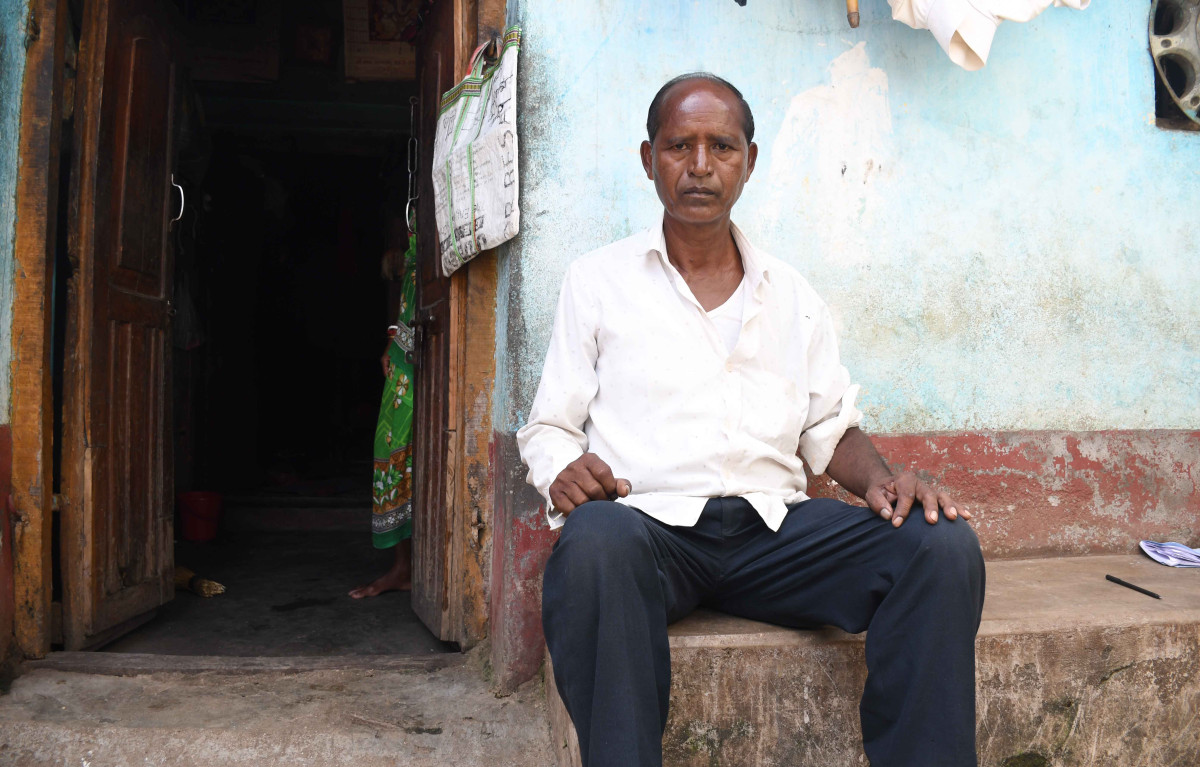
Thakurdas Mahato in his house at Bagudi village. Photo: Madhu Sudan Chatterjee
Bhudeb’s mother, Madhuri Mahato, a CPI(M) Panchayat member of Hirapur Aadardihi Gram Panchayat, said: “A relative of our family had died in an accident a few days ago. Bhudeb and Dharmendra went to see the accident spot on the morning of September 20 at Bagudi rice mill. The police arrested them without any reason while patrolling the village.”
“My son is sick and was never involved in the Kurmi movement. Why were he and my nephew arrested? They have been booked under multiple non-bailable sections,” she added.
Similarly, Jharudas Mahato told The Wire, “We are terrified because the police are still coming to the village even after a week. None of us went to Kotshila to participate in the rail blockade on September 20. The police have arrested innocent people.”

Rita Mahato at Chitor village. Her father in law and Jhumur singer Mukundo Mahato was arrested on September 20 morning. Photo: Madhu Sudan Chatterjee
Rita Mahato, a housewife from Chitorpur village mentioned how her father in law was arrested when he was simply going to his “newly constructed house” and was not involved in the Kurmi movement.
Rita said: “My father-in-law, Mukunda Mahato (65), is a Jhumur singer. He was going to our newly constructed house in the village when the police arrested him on the road at 10 am on September 20 morning. He has never been involved in the Kurmi movement.”
For the school-going students the situation is taking a toll on their studies. “The police come every evening. We are spending our nights in extreme fear and are not able to study because of this atmosphere,” Ranjit Mahato, a class 11 student from the same village, said in a fearful voice.
Many eyewitnesses from several villages under the Kotshila Police Station area – including Chitorpur, Bagudi, Ranahata, Haridi, Lakshipur, Murgama, and Uldi – alleged that from the morning of September 19, while patrolling the villages, police asked people their surnames.
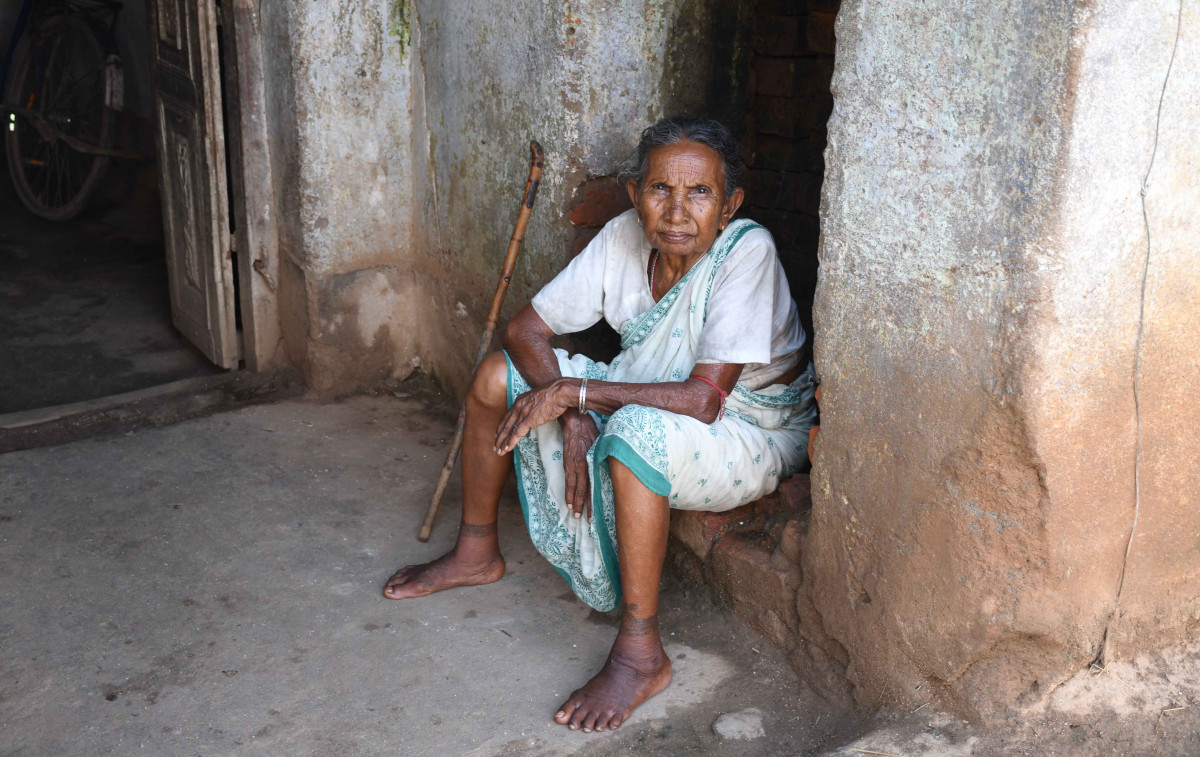
In Jiudaru village, people are questioning the leaders of the Kurmi movement, who called for and instigated the rail blockade, and are still moving around freely. Photo: Madhu Sudan Chatterjee
“People with the surname Mahato were mentally harassed by police and sternly warned not to go to Kotshila for the rail blockade on September 20. But surprisingly, the police did not say a single word to people with other surnames,” said an eyewitness.
“The Aadibasi Kurmi Samaj had called for the rail blockade on September 20 with the moral support of other Kurmi organisations. Why then did the police start patrolling several Kurmi-inhabited villages near Kotshila before the programme? The people of these villages were not campaigning for the blockade. So with what intention did the police target this particular community?” asked Atul Chandra.
Further, he underlined that cases have been filed against those arrested by police from villages even before the rail blockade was scheduled, including charges of destruction of government property and assault on the police, under several non-bailable sections.
“How can those arrested on the morning of September 20 from faraway villages near Kotshila station be held responsible for destroying government property? Do the police have any proper evidence?” Atul Chandra questioned.
SP Purulia Abhijit Banerjee, however, told The Wire that the police had gone to the villages to inform people about the high court’s order. “The police did not misbehave,” he said. However, he didn’t answer why several people from the villages were arrested just hours before the rail blockade.
Since September 20 morning, people of several villages had become agitated due to these arrests. Knowing the situation, Aadibasi Kurmi Samaj leaders Ajit Prasad Mahato and Nripen Mahato incited people to block the Kotshila rail line. “It was spread on social media,” said several people from surrounding villages.
By the afternoon, people from different villages went to Kotshila railway station and blocked it. At that time, there were no trains at Kotshila. Those involved in the blockade clashed with the police after a quarrel. The police charged heavily with batons to disperse them. In this clash, five police personnel were wounded and several protesters were seriously injured.

Arrested Bikas Mahato’s mother Lakshmi Mahato speaks of police atrocities. Photo: Madhu Sudan Chatterjee
Following this incident, the police unleashed a massive crackdown on Jiudaru village, near Kotshila railway station. Fourteen people were arrested from the village. Lakshmi Mahato, a middle-aged woman and grocery shopkeeper in Jiudaru, said: “My son was eating rice when the police entered the house and arrested him. He did not go to Kotshila for the rail blockade.”

Ananta Mahato’s mother Moni Mahato in their house at Jiudaru village. Photo: Madhu Sudan Chatterjee
Ananto Mahato, Tepu Mahato, and Putula Mahato’s mother, Moni Mahato, also asserted that the police have been coming to the village every day. Most of the men do not stay in the village after evening. The villagers are spending their days in constant fear.
“My husband, Ananto Mahato, is a tractor driver and had gone to a neighbouring village to carry fertilizer. On the night of the 20th, the police entered our house and dragged him away. We are living in great hardship. Our three-year-old son keeps asking for his father. How many times will I have to console him, telling him his father has gone to drive?” said Bandana Mahato, Ananto’s wife.

Ananto Mahato’s wife Bandana Mahato is waiting for her husband’s release who was arrested by Kotshila Police on September 20. Photo: Madhu Sudan Chatterjee
Even after days of this incident, when this reporter visited several villages under the Kotshila Police Station area, people did not dare to come forward. No one was willing to speak openly. The fear of police atrocities is still deeply rooted in the minds of the people. For them, even the Saradiya festival has lost all meaning.
Local Joypur BJP MLA Narahari said that he has not yet visited the affected villages and refused to comment on the role of the police. Meanwhile, Purulia MP Jyotirmoy did not respond to calls.
A block-level leader of the ruling Trinamool Congress in Jhalda Block 2, who belongs to the Kurmi community, spoke on condition of anonymity: “The police have tortured innocent people. We have informed our higher leadership. Once we receive instructions from the organisation, we will act accordingly.”
Several people, who did not wish to be named, questioned why the police particularly targeted the poor Kurmi community while implementing the high court’s order. They wondered whether the police deliberately choose this path to push people towards the rail blockade movement and then use it as an excuse to torture them.
So far, 51 people have been arrested on the basis of allegations made by the Kotshila Police Station and the Railway Police. But people are asking: the leaders of the Kurmi movement, who called for and instigated the rail blockade, are still moving around freely. Why have the police not arrested them? Do they have an understanding with the administration and the ruling party, as has often been seen in the recent past?
People are also demanding immediate employment and food security. A large section of the Kurmi community feels that certain leaders exploit the movement for their own benefits in the name of the community. They demand that this practice must stop immediately, as it is always the common people who face extreme danger, while the leaders remain untouched. The Kotshila incident has once again proved this reality.
This article went live on October seventh, two thousand twenty five, at zero minutes past five in the evening.The Wire is now on WhatsApp. Follow our channel for sharp analysis and opinions on the latest developments.


